table of contents
Your team manages hundreds of mobile devices. Yet risks slip through because threats change fast. In 2026, with BYOD on 65% of devices, old MDM tools fall short.
CTEM, or Continuous Threat Exposure Management, spots these gaps continuously. It goes beyond one-time scans to find real attack paths. You get actionable steps to secure mobiles in hybrid setups.
This post covers how CTEM works for mobile risks. You’ll see workflows, common issues, and fixes tied to zero trust and UEM trends.
Common Gaps in Today’s Mobile Device Management
Mobile device management keeps devices secure and compliant. But gaps persist. For example, 63% of teams worry about data leaks from unmanaged BYOD phones.
Many MDM setups handle smartphones and tablets well. They enforce policies and remote wipes. However, they miss laptops and IoT gear. This leaves blind spots as UEM adoption hits 68% of large firms.
Jailbroken devices or outdated OS versions create entry points. Lost phones add risk; double-digit loss rates hit frontline workers hard. Shadow IT apps, used by 85% of orgs, bypass controls too.
App chaos worsens it. Multiple versions run without checks. Slow patches leave 77% of devices high-risk for weeks.
These issues grow with hybrid work. Personal devices mix work data without separation. Basic MDM can’t track full histories for audits either.

Frontline breakdowns frustrate users. Crashes and lockouts happen monthly for 80% of them. Security stays basic without zero trust checks.
CTEM fixes this by scanning non-stop. It correlates assets to spot misconfigs. Teams then prioritize real threats over noise.
How MDM, EMM, and UEM Differ in Coverage
MDM focuses on device control. It locks down hardware like phones and tablets. You set passcodes and deploy apps centrally.
EMM builds on that for BYOD. It adds app and content layers. Containers separate work data from personal files. This respects privacy while protecting corporate info.
UEM expands further. It unifies phones, laptops, IoT, and wearables in one dashboard. As BYOD hits $557 billion by 2033, UEM cuts IT errors and boosts compliance by 29%.
| Feature | MDM | EMM | UEM |
|---|---|---|---|
| Devices | Phones, tablets | Mobile + apps/content | All endpoints + IoT |
| BYOD | Basic wipe | Containers | Seamless enrollment |
| Security | Perimeter | Data-centric | Zero trust + AI |
| Patching | Manual | Mobile updates | Automated |
UEM wins for 2026 because threats span devices. Standalone MDM misses desktops. EMM handles apps but skips full endpoints. Check this comparison of MDM vs EMM vs UEM for details.
Switching costs more upfront. But it pays off as hybrid setups grow. Your team gains one view of risks.
The CTEM Workflow for Mobile Risks
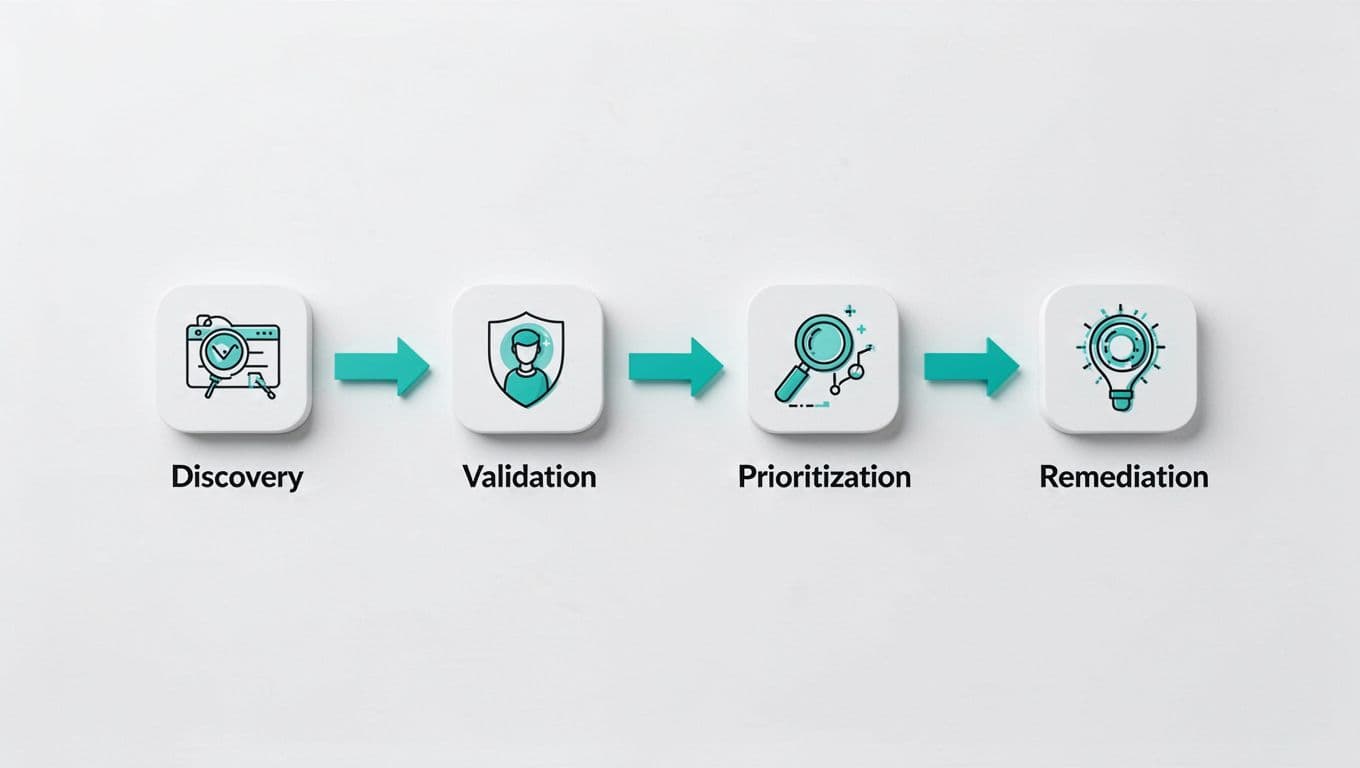
CTEM runs in cycles: discovery, validation, prioritization, remediation. Each step targets mobile gaps directly.
Start with discovery. Map all devices and apps. Include BYOD phones connecting via VPN.
Next, validate exposures. Simulate attacks to confirm paths. Test if a compromised phone reaches cloud data.
Prioritize based on impact. Focus on choke points where paths converge. This cuts effort on dead ends, which hit 75% of exposures.
Remobilize fixes. Automate patches or policy tweaks. Repeat the cycle as threats shift.
This workflow aligns with 2026 trends. Cloud MDM tools enable real-time scans. AI flags the top 5% of risks that cause most breaches.
For mobiles, integrate threat intel feeds. They update models automatically. Result? Faster fixes and fewer surprises.
Discovering Hidden Mobile Exposures
Discovery starts your CTEM cycle. List every enrolled device first. MDM consoles show inventories, but check unenrolled BYOD too.
Scan for unmanaged assets. Use agents on laptops and IoT. Network tools spot rogue phones on Wi-Fi.
Include apps and identities. Shadow IT hides risky SaaS. Query identity providers for mobile logins.
In 2026, BYOD growth means 69% of firms allow personal devices. Yet 39% block them over fears. CTEM discovers these without blocking productivity.
Automate with UEM dashboards. They pull data from endpoints continuously. Flag jailbreaks or old OS instantly.
Adjacent scopes help too. If external portals link to mobile auth, expand there next. This broadens coverage without overload.
Tools reduce manual hours. Pick ones with API integrations for your stack. Cycle back if gaps appear.
Validating Real Attack Paths on Devices
Validation confirms if exposures matter. Don’t chase every alert. Test exploitability instead.
Run simulations from mobile vectors. Does a phishing link on a phone lead to email servers? Use safe breach tools.
Check device posture. Verify encryption, patches, and compliance. Zero trust demands this at every access.
BYOD complicates it. Containers protect data, but test crossovers. Validate if personal apps leak info.
Dashboards score risks. Correlate CVEs to your fleet. Prioritize those with active exploits.

In practice, 62% of firms use zero trust for mobiles. It cuts unauthorized access by 38%. Integrate MTD for malware blocks.
Document paths. This builds evidence for compliance like GDPR or NIST. Repeat tests quarterly.
Prioritizing Mobile Risks Effectively
Not all gaps equal impact. Prioritize by business context. Ask: does this path hit crown jewels like HR data?
Score on likelihood and damage. Factor user count and exploit ease. Choke points get top spots.
Use threat intel. Feeds show trending mobile CVEs. Automate this in your CTEM loop.
For BYOD, weigh volume. 87% of businesses run company apps on personal phones. High-use devices rank higher.
Compliance adds weight. HIPAA or PCI demands quick fixes on patient apps. Map to regs upfront.
Teams often overfix low risks. CTEM focuses effort. Research shows it optimizes by ignoring 75% dead ends.
Review scores weekly. Adjust as fleets change. This keeps priorities fresh.
Step-by-Step Remediation for MDM Gaps
Remediation turns insights into action. Start small. Patch the top path first.
For unmanaged devices, enforce health checks at login. Block jailbroken phones. Quarantine others.
Lost device risks? Use selective wipes on BYOD. Tag assets in lockers for tracking.
Slow patches hurt most. Track latency as a KPI. Automate OS updates via UEM.
App chaos needs governance. Block shadow IT. Auto-update core apps.
| Gap | Quick Fix | Tool Tie-In |
|---|---|---|
| Unmanaged devices | Health checks + quarantine | UEM dashboard |
| Lost/stolen | Selective wipe + tags | MDM inventory |
| Slow patches | Auto-enforce updates | CTEM automation |
| BYOD privacy | Containers + policies | EMM layers |
Zero trust remediation verifies every access. Add MFA and posture signals.
Test fixes in validation. Mobilize teams for rollout. Cycle back to measure reduction.
Best practices for CTEM implementation outline automation details.
If gaps persist, book a discovery call with Bud Consulting. They vet experts for complex setups.
Aligning CTEM with Zero Trust and UEM Trends
Zero trust fits CTEM perfectly. Verify devices continuously, not just at login. 60% of firms plan this for MDM by year-end.
UEM unifies it. Manage mobiles alongside endpoints. Containerization cuts leaks by 33%.
Network views show paths. Phones link to clouds via gates. Secure with mTLS.

Compliance eases too. Logging simplifies audits for GDPR or SOC 2. Reduce prep by 60-70%.
In cellular nets, prioritize protect surfaces. CSA guidance helps start iteratively.
Integrate intel. CTEM feeds ZTA for real-time blocks. This shrinks breach windows.
Mistakes That Undermine Mobile CTEM Efforts
Rushing discovery skips assets. Inventory fully first, or blind spots remain.
Over-relying on scans ignores paths. Always validate with simulations.
Poor prioritization chases noise. Tie to business impact always.
Skipping cycles breaks continuity. Threats evolve; scan monthly at least.
Ignoring UEM leaves silos. MDM alone misses 2026’s multi-device reality.
Forgetting users causes pushback. Train on policies and posture needs.
No metrics track progress. Measure path reductions and compliance scores.
Fix these for real gains. See CTEM getting started guide for basics.
Key Takeaways
CTEM closes mobile device management gaps through cycles of discovery, validation, prioritization, and remediation. Focus on high-impact paths in BYOD and UEM setups.
Zero trust integration cuts risks fast. UEM unifies controls across endpoints.
Start with your inventory today. Continuous checks beat point fixes every time.
Your endpoints stay secure as threats grow.