table of contents
Internet-facing industrial control systems invite trouble. Attackers scan for them daily, targeting PLCs and SCADA setups that control factories, power grids, and pipelines. One exposed device can halt operations or endanger lives.
You manage OT security. You know theoretical vulnerabilities mean little without real exploit paths. CTEM for industrial control systems changes that. It focuses on what’s actually reachable and disruptive.
This approach cycles through scoping, discovery, prioritization, validation, and mobilization. Teams cut exposure windows and boost uptime. Let’s break down how it works for exposed ICS.
Understanding CTEM in ICS Contexts
CTEM stands for Continuous Threat Exposure Management. Gartner outlined it in 2022 as a shift from static scans to ongoing risk checks. For ICS, it matters because operations can’t tolerate downtime.
Traditional vulnerability tools flag thousands of issues. Most stay theoretical. CTEM asks if an attacker can reach a PLC from the internet and cause harm. It weighs business impact, like production loss or safety risks.
In 2026, OT threats grow. Dragos reports ransomware hit 3,300 sites last year. Nation-states probe exposed gateways. Yet, no major ICS breaches mark this year so far. Visibility gaps persist; 40% of teams lack full asset inventories.
CTEM fits ICS because it respects air-gaps and legacy gear. Platforms use passive monitoring first. They map protocols like Modbus without injecting packets. Then, they validate paths safely.
Consider a water utility. An exposed HMI runs old firmware. CTEM discovers it, checks internet reachability, and scores impact on pump controls. Remediation follows: segment or virtual patch.
Adopters see results. Full CTEM programs face three times fewer breaches. They align cyber teams with plant managers on uptime priorities.
Mapping Exposures in ICS Environments
Start with visibility. Exposed ICS often hide in flat networks. Gateways meant for vendors face the web. Remote access tools linger post-project.
CTEM’s discovery phase builds an attack surface map. It fingerprints assets via traffic analysis. PLCs, RTUs, and HMIs appear with roles and connections. No disruption to production.
In factories, 70% of vulnerabilities lurk on unpatchable devices. Internet scans reveal thousands of Rockwell PLCs and Moxa ports open worldwide. US sites hold 45% of them.
Use protocol-aware tools. They spot DNP3 chatter or Ethernet/IP flows. Combine with business context: which PLC controls conveyor belts? Prioritize those over office printers.
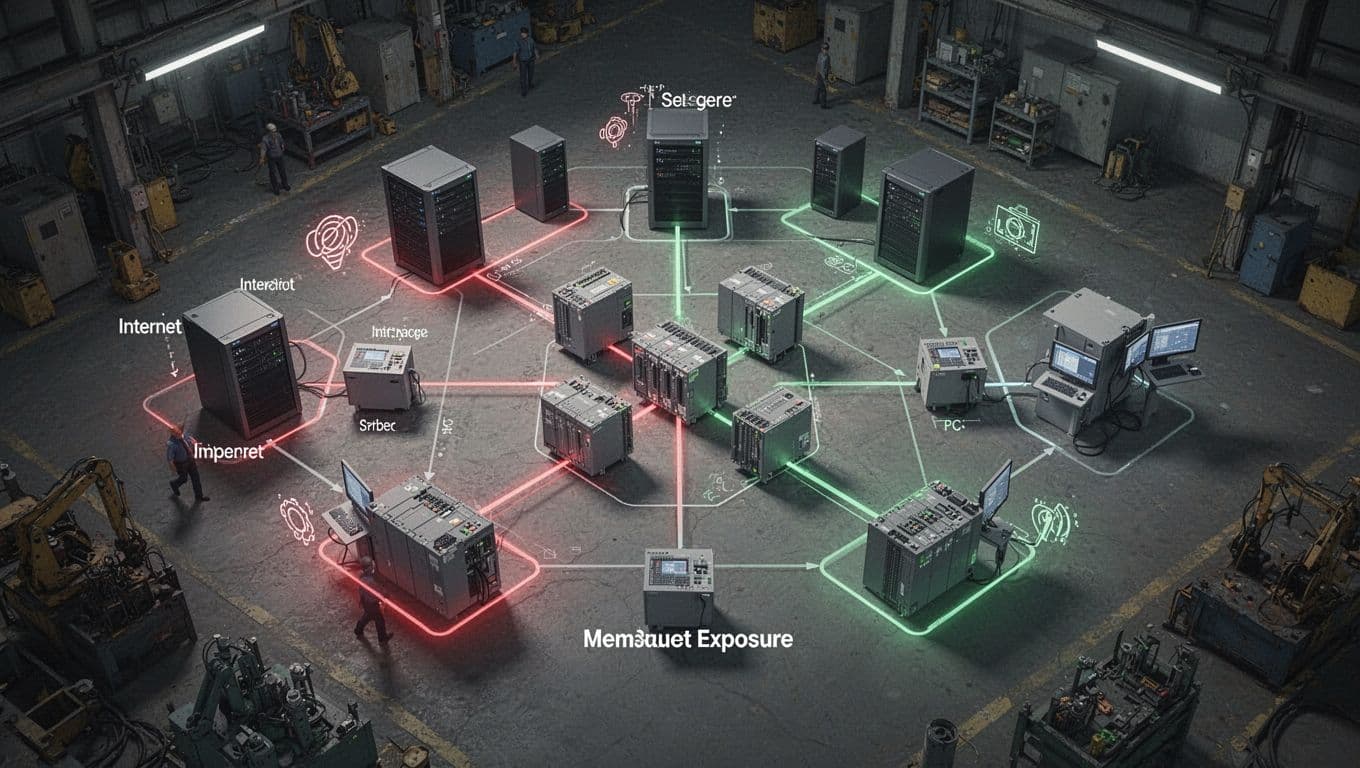
This overhead view shows a typical setup. Red marks internet-exposed assets. Green highlights segmented zones. Mapping reveals paths from web to critical controls.
CISA warns of Iranian actors hitting Allen-Bradley PLCs. They extract project files via exposed ports. CTEM maps these before exploitation.
Action step: Run weekly passive scans. Export to graphs. Tag crown jewels like safety systems. Unknown assets get P2 priority because no one watches them.
Prioritizing Risks Beyond Vulnerability Counts
Vulnerability scores like CVSS mislead in ICS. A “critical” flaw on an air-gapped RTU rates low. CTEM prioritizes by exploitability and impact.
Use EPSS for real-world odds. It predicts 30-day exploitation better than CVSS. Factor in reachability: does the flaw need internet access? Add compensating controls like firewalls.
Business context rules. A exposed Modbus server risks turbine spin-up. Score it high. An old printer? Low. Link to outage costs or safety interlocks.
In 2026, AI refines this. Platforms build attack graphs. They simulate paths from web to PLCs, weighting by KEVs and threat intel.
Forescout’s tools cover OT deeply. They score multi-factor risks for ICS. For details on OT/ICS security with CTEM, check Piscium’s approach.
Teams set SLAs: P1 exposures fix in 7 days. Track mean time to remediate. Focus shrinks the list from thousands to dozens.
Key Metrics for CTEM Programs
Metrics drive accountability. Track exposure scores, not just tickets closed. Aim for baselines that tie to uptime.
Core ones include:
- Mean Time to Exposure: Days from discovery to validation.
- Critical Asset Coverage: Percent of crown jewels continuously monitored.
- False Positive Rate: Validations that prove safe; target under 30%.
- Remediation Velocity: P1 fixes per week.
Dashboards show trends. Green for dropping exposures. Red for rising remote access paths.
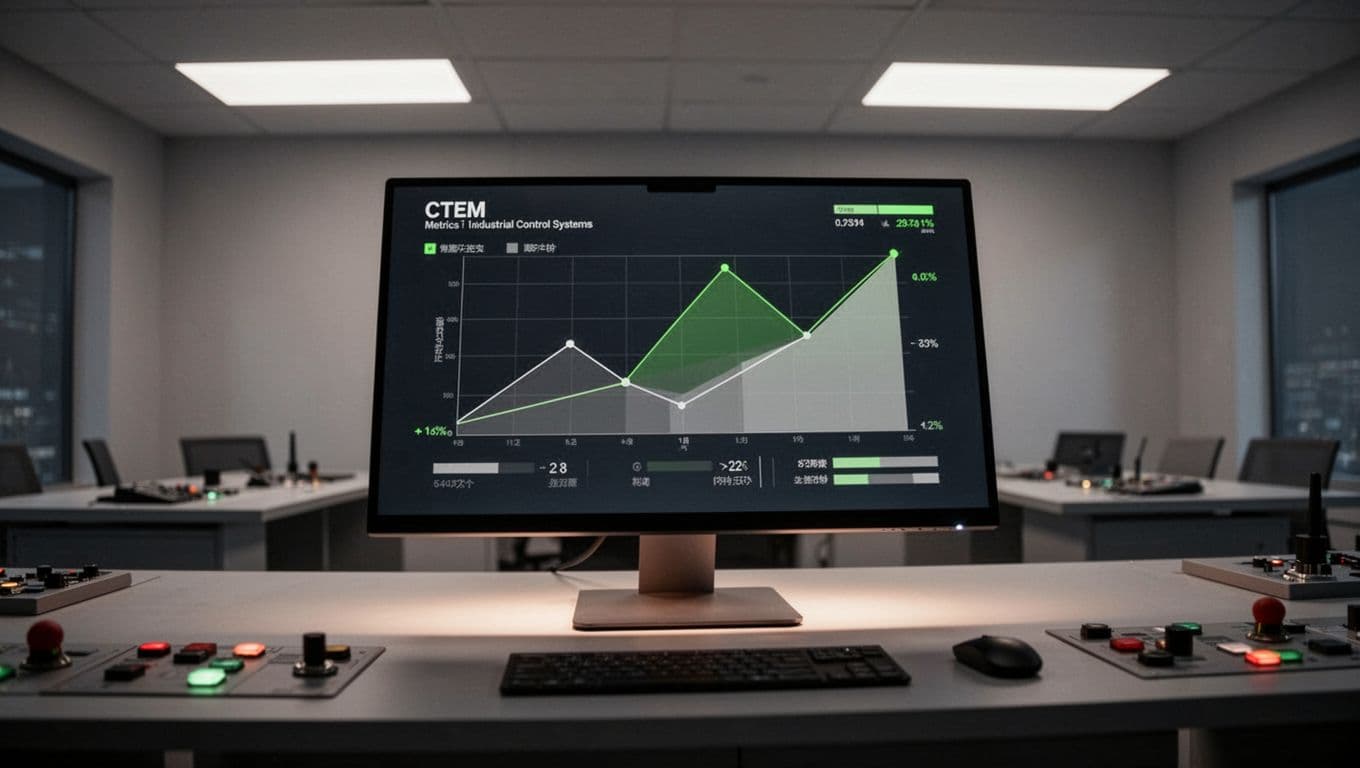
This dashboard captures ICS-specific views. Exposure scores flag internet-facing PLCs. Trends track segmentation gains.
Gartner’s phases guide: scope covers 80% of risk. Measure mobilization success via SOAR integrations. Plants using CTEM cut disruptions.
Benchmark against peers. Dragos’ 2026 OT report shows laggards face faster exploits. Set quarterly goals: reduce exposed assets by 20%.
Implementing Segmentation to Reduce Exposure
Segmentation blocks lateral moves. Flat ICS networks let one breach spread. Purdue levels help: keep Level 0/1 isolated.
Deploy data diodes for one-way flows. Firewalls at boundaries inspect OT protocols. Micro-segmentation virtualizes patches on unfixable gear.
In power plants, segment SCADA from corporate IT. Use VLANs or NSX for dynamic rules. Test with safe simulations.
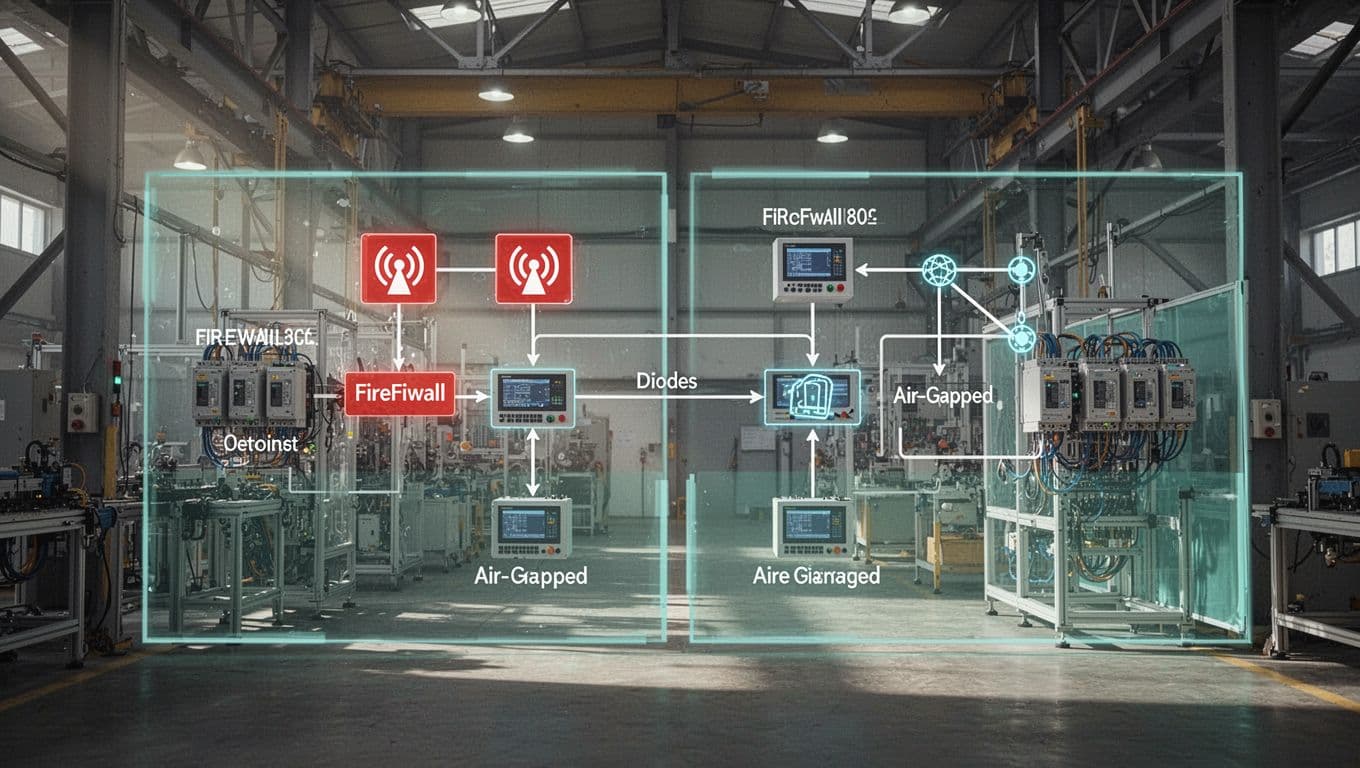
These diagrams contrast flat versus segmented setups. Barriers in green protect PLCs from external threats.
CISA’s ICS best practices stress this. 96% of OT incidents start in IT; strong boundaries stop them.
Start small: audit remote access. Kill unused VPNs. Enforce MFA and just-in-time. Re-scan post-changes.
Handling Legacy Protocols in Exposed Environments
Legacy protocols dominate ICS. Modbus, DNP3 lack encryption. Exposed, they leak commands.
CTEM validates safely. Passive mode sniffs traffic. Active probes only on duplicates.
Contrast open flows with VPN tunnels. Secure paths use IPsec or SD-WAN. Gateways translate protocols.

The split view highlights risks. Insecure lines lead to controls; tunnels protect them.
In 2026, AI spots anomalies in DNP3. Tools like Forescout CTEM handle IoT/OT mixes.
Remediate: wrap in proxies. Block direct internet binds. Train on protocol risks.
Actionable Steps to Build Your CTEM Program
Build incrementally. Scope first: list top 20 assets by downtime cost.
Choose tools: protocol-safe scanners, attack graph engines. Integrate with ITSM.
Run cycles weekly. Validate top exposures in cyber ranges like SimSpace’s.
For CTEM stages, follow these basics.
Pilot in one plant. Scale with metrics. Train OT/IT jointly.
If gaps persist, book a discovery call with Bud Consulting. They vet OT experts.
Conclusion
Exposed ICS demand continuous focus. CTEM delivers by mapping real paths, prioritizing impacts, and mobilizing fixes. Uptime and safety improve as exposures drop.
Teams with strong programs spot issues early. They segment effectively and handle legacies without full replacements.
Prioritize visibility today. Your operations depend on it.