table of contents
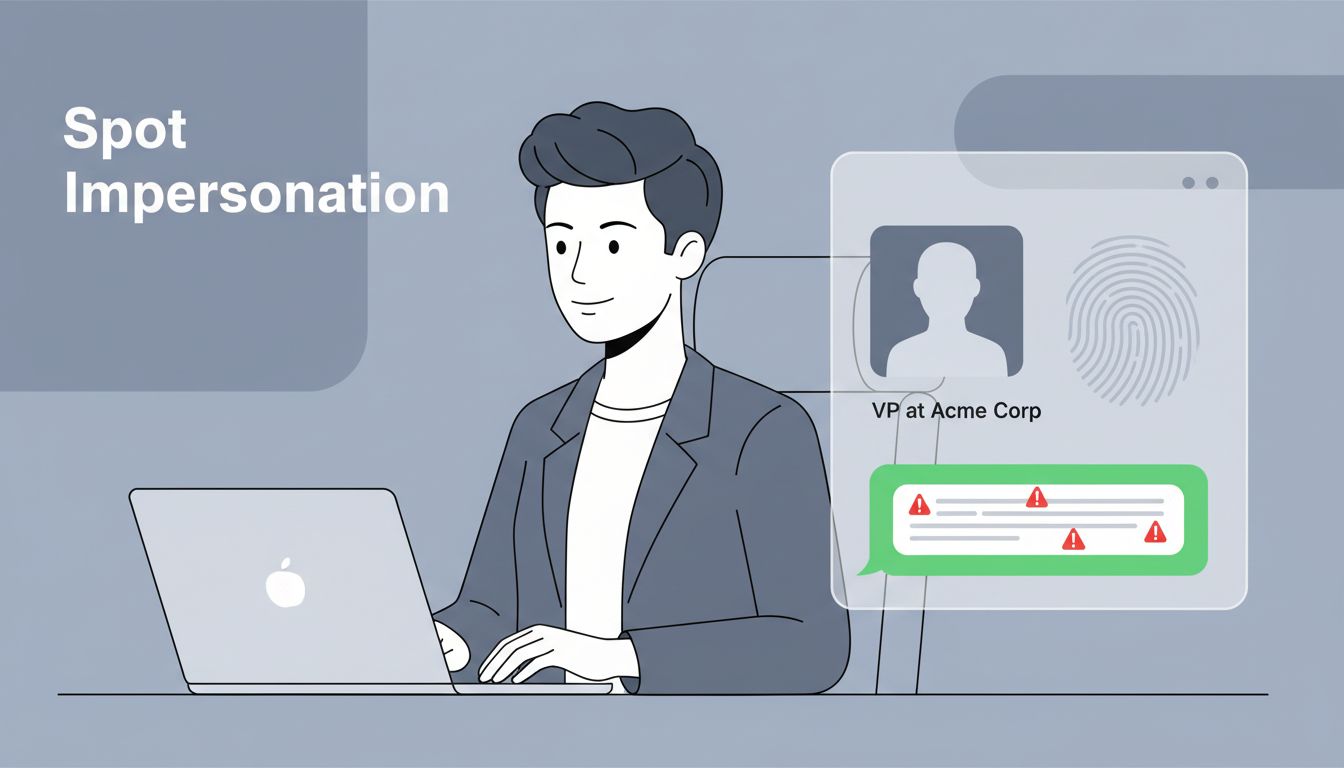
A sales rep gets an urgent LinkedIn message from a “VP at Acme Corp” eager to book a demo. The deal feels hot. Then, they push for your pricing sheet right away.
Competitor impersonation preys on that excitement. Rivals pose as buyers to steal your strategies, pricing, or customer intel. It hurts deals and leaks sensitive info.
Sales teams face rising risks from AI deepfakes and spoofed domains. You can train reps to catch these fast. Let’s break down how.
Understand Competitor Impersonation
Competitor impersonation happens when rivals pretend to be prospects. They join calls or emails to fish for your playbook. This differs from normal competitive selling, where real buyers shop around openly.
In competitive selling, prospects name-drop rivals fairly. Impersonators hide their true intent. They avoid tough questions and rush to close.
It also stands apart from general phishing. Phishing chases credentials or payments from anyone. Impersonation targets your sales process specifically for business intel.
Scammers use AI now. Tools clone voices or craft perfect emails. Early 2026 reports show impersonation scams cost billions yearly, with business email fraud surging.
Reps must know the difference. Otherwise, they hand over battle cards to fakes.
Real-World Examples in Sales Calls
Picture a rep on a Zoom with a “procurement manager.” The caller knows your product lingo but dodges company details. They press for custom quotes.
This mirrors fake buyer scams. Fraudsters spoof domains like “procurement@acme-co.com” to mimic legit firms. Or they hit LinkedIn with polished profiles.
One common play: Fake partners request “partner portal access” to scan your tools. Another involves AI deepfakes in video calls, where backgrounds glitch or faces lag unnaturally.

In B2B, these scams blend into outreach. A fake employee scheme tricked credit teams by posing as insiders, but sales reps fell first. Competitors do the same to map your weaknesses.
Reps share too much before verifying. That intel fuels rival pitches elsewhere.
Spot the Red Flags
Red flags pop in emails, LinkedIn, or calls. Train reps to pause at these.
Start with mismatched domains. Legit buyers use company emails, not Gmail. Generic profile pics or new accounts signal trouble.
Urgency stands out. “Send pricing now” or “Demo today” skips normal steps. Vague details, like no specific pain points, raise doubts.
AI amps the risk. Deepfake voices sound off on close listen. Emails with perfect grammar but odd phrasing? Check.

Here’s a quick checklist for reps:
- Domain check: Matches company site?
- Profile age: New or bare LinkedIn?
- Knowledge gaps: Knows product but not their role?
- Rush factor: Pushes for info without qualifying?
- Odd channels: Unsolicited via personal email?
Spot two or more? Flag it. This catches most impersonations early.
Build a Simple Verification Process
Reps need a fast checklist before sharing info. Make it habit.
First, verify independently. Google the name and company. Call the main line, not their number.
Second, use safe words internally. Set a phrase with your team for high-value shares.
Third, loop in a manager for demos over 30 minutes. They double-check.
On calls, ask qualifying questions. “Walk me through your stack.” Real buyers answer; fakes deflect.
For emails, hover links. Don’t click. Reply-all to test.
Practice this in role-plays. Reps run it live, then debrief. Tools like sales security training add scenarios.
This process takes 2 minutes but saves deals. No more leaks.
Training Tips for Managers
Onboard with basics. Cover red flags in week one. Use real examples from your CRM.
Run monthly sessions. Role-play impersonations. One rep acts shady; others verify.
Track metrics. Log suspected fakes and close rates post-training. Adjust as needed.
Make it stick with micro-learning. Weekly emails quiz red flags.

Tie to comp plans. Reward caught impersonations. For advanced, simulate AI calls.
Competitive intelligence exercises build skills too. Adapt for impersonation defense.
Bud Consulting helps here. Book a Discovery Call with Bud Consulting to strengthen your security culture.
Key Takeaways
Competitor impersonation threatens pipelines. Reps spot it with red flags and verification steps.
Train consistently. Use checklists, role-plays, and tracking.
Your team protects deals now. Fewer leaks mean stronger wins. Start today.