table of contents
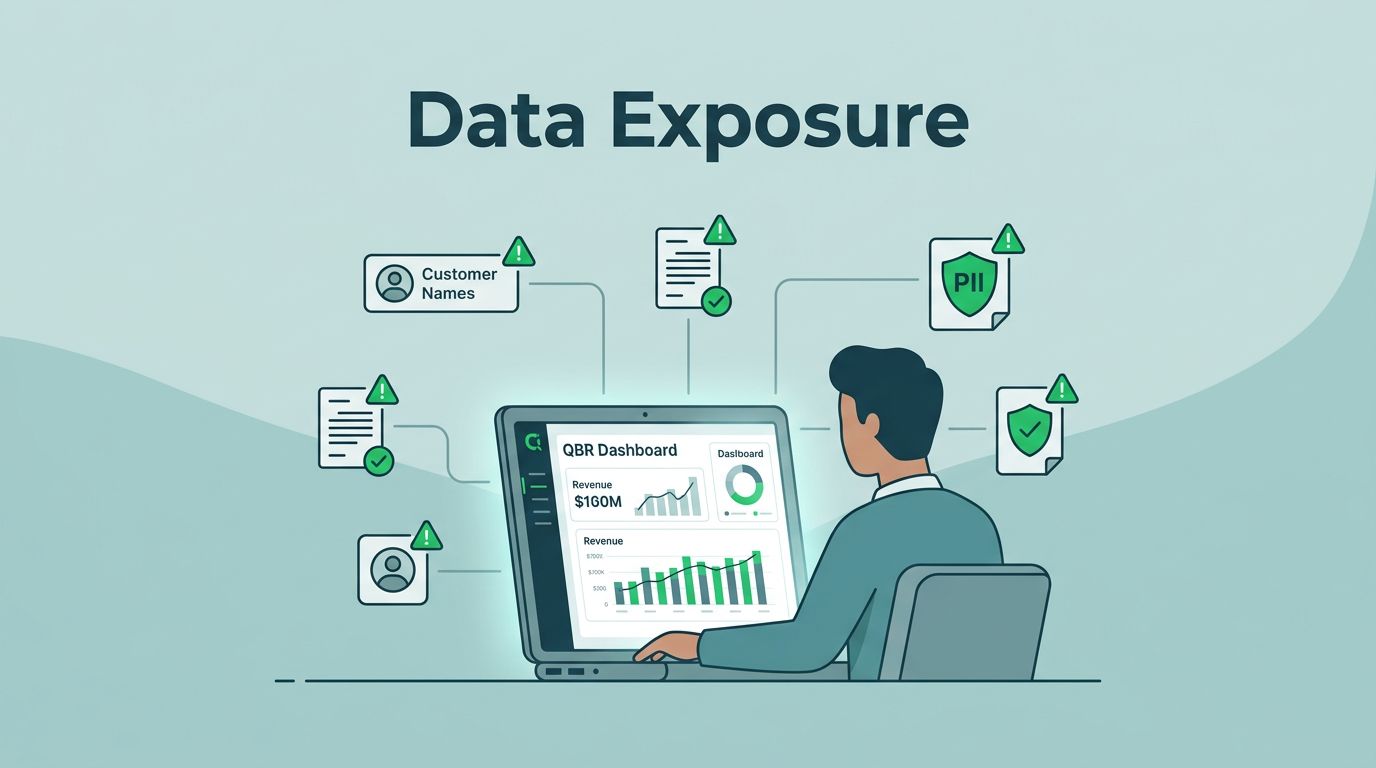
Your customer success manager pulls up a QBR slide deck. Revenue charts glow on the shared screen. But customer names, contract details, and even PII slip into view for the whole team. One click, and sensitive data spreads.
These slips happen daily in CS workflows. Teams juggle CRMs, call notes, and file shares to drive renewals and onboarding. Yet small errors expose data. In 2026, customers expect tight controls. You need customer success training that fits real work without slowing teams down.
This guide walks you through spotting risks, building a training plan, and making it stick. Start with the basics your team faces every day.
Spot Common Data Risks in Daily CS Workflows
CS teams live in tools like Salesforce or HubSpot. They log calls, share screenshots for support handoffs, and export reports for renewals. But permissions often stay wide open. A rep grants access to the wrong group. Internal chats fill with customer emails or financials.
File sharing adds trouble. You drop a onboarding deck into Slack or email. Links linger forever. Or call recordings hit unsecured drives. AI tools tempt quick summaries, but they pull data into unvetted models.
Oversharing hits account reviews hard. Managers screenshot CRM dashboards for team updates. Names and metrics go public in channels. Misconfigured exports from QBR tools dump full datasets.

Consider support coordination. A rep forwards a ticket with full customer history to engineering. No redaction. Data bounces across inboxes.
Weak access hygiene worsens it. Old reps keep CRM views after they switch roles. Everyone sees everything.
For deeper strategies on data privacy and security concerns in customer success, check this resource. It covers team training needs.
These risks build quietly. Teams mean well. They just lack clear rules.
Why Customer Success Training Matters in 2026
Expectations shift fast. Customers audit data flows before renewals. Regs like GDPR and CCPA demand proof of controls. SaaS firms face board questions on exposure.
Training bridges the gap. It turns vague policies into daily habits. Reps learn to mask PII in notes. They pick secure channels over email blasts.
Without it, breaches cost more than money. Trust erodes. Churn spikes. One exposed dataset kills a key account.
Bud Consulting sees this in client audits. CS leaders spot gaps in workflows first. Training fixes them before incidents hit.
A CX security and compliance guide outlines workflow changes. It stresses practical agent training.
You gain speed too. Secure habits cut escalations. Teams focus on value, not cleanup.
Start small. Tie training to real pain points.
Build Your Customer Success Training Framework
Craft a step-by-step plan. Make it hands-on. Fit it into 60-minute sessions.
First, assess current risks. Audit CRM permissions. Map data flows in onboarding and QBRs. List tools like Zoom recordings or Notion pages.
Next, set clear goals. Aim for zero unsecured shares per week. Track via spot checks.
Then, design modules. Cover workflows one by one.
- Run a kickoff workshop. Use real examples from your CRM.
- Break into small groups. Role-play renewals with mock data.
- Assign quick wins. Like permission reviews every quarter.
- Follow with managers. They model habits in team huddles.
Tailor to roles. Onboarding reps focus on initial shares. Renewal leads watch exports.

Build in 2026 must-haves. Teach AI guardrails. No pasting customer data into chatbots without checks.
For privacy-first SaaS customer success strategies, this guide recommends audits and staff programs.
Roll out quarterly. Refresh for new tools.
Reinforce with Scenarios and Checklists
Scenarios drive change. They mimic chaos.
Picture this: QBR prep. Rep grabs full customer list for internal review. Fix? Export masked versions only.
Or support handoff. Screenshot includes contract values. Better: Blur or summarize.
Use checklists daily. Post them in Slack or CRM dashboards.
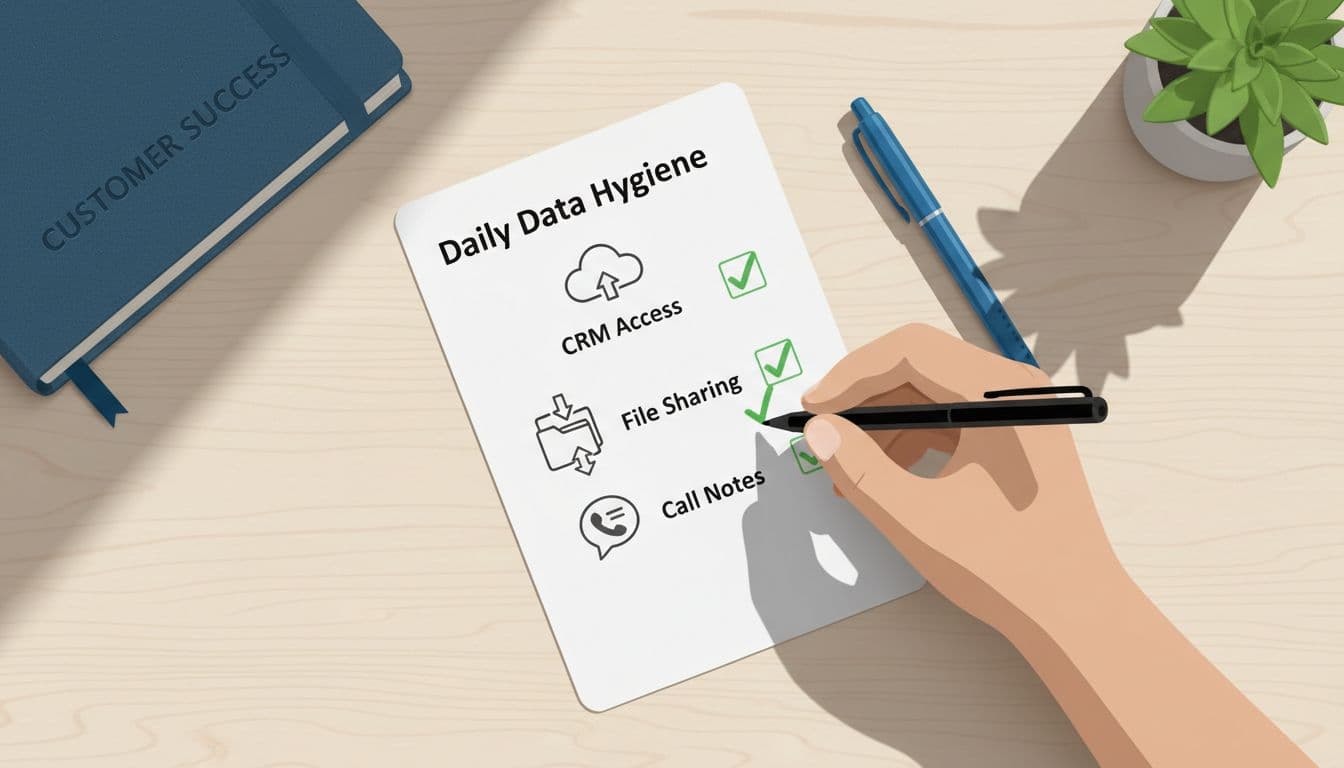
- CRM access: Revoke ex-reps weekly. Least privilege always.
- File shares: Use expiring links. No public folders.
- Notes and recordings: Strip PII before storage. Tag sensitive items.
- Channels: Slack for chats. Secure vaults for exports.
Managers enforce with one-pagers. Quiz teams monthly.
A customer data privacy guide for CX stresses minimal data collection. It fits checklists well.
These tools make habits automatic.
Measure Success and Keep Momentum
Track what counts. Log incidents pre- and post-training. Fewer slips mean wins.
Survey reps. Ask if rules feel workable. Adjust based on feedback.
Pair with audits. Check 10% of shares monthly.
Reward progress. Shout out secure QBRs in all-hands.
For vendor policies, review data sharing best practices. They tie into CS tools.
Refresh yearly. New regs demand it.
Key Takeaways
Data risks hide in CS routines. Solid customer success training spots them and builds fixes.
You now have a framework: Assess, train, reinforce, measure. Scenarios and checklists make it real.
Teams stay fast and secure. Customers notice.
Ready to strengthen your program? Book a Discovery Call with Bud Consulting for tailored advice.
(Word count: 982)