table of contents
Open cybersecurity roles can sit for months, and the cost shows up fast in burnout, delayed projects, and missed risk. A strong cybersecurity referral program can improve quality of hire, cut time to fill, and build more trust in the process. It only works, though, when the rules are clear enough for employees to use and fair enough for candidates to trust.
Recent 2026 market data points to 4.8 million open cybersecurity jobs worldwide, so hiring teams need sharper ways to find talent. That makes referrals useful, but only if they are managed with structure, not guesswork.
Start with the roles you actually want referred
Referrals work best when employees know exactly who you need. A SOC analyst, a cloud security engineer, and a GRC analyst do not come from the same background. If you ask for “good security people,” you get vague names. If you ask for a specific skill set, you get better matches.
ISC2’s 2026 hiring insights shows how important referrals still are in security hiring, especially when the market is tight. Use that reality to narrow your brief.
A good role brief should call out the problem, not just the title:
- SOC analyst: alert triage, SIEM experience, shift work, calm under pressure.
- Security engineer: scripting, detection content, endpoint tooling, automation.
- Cloud security engineer: cloud IAM, logging, guardrails, policy-as-code.
- GRC analyst: controls mapping, audit evidence, policy writing, risk reviews.
- Incident responder: containment, communication, forensics basics, fast judgment.
- Application security engineer: code review, threat modeling, developer support.
That level of detail helps employees self-filter. It also reduces noise for recruiters and hiring managers.

Give employees a referral brief they can use in one minute
A long job post does not make a good referral prompt. A short brief does. If employees need to read three pages before they share a role, participation drops.
Use a simple format that answers the basics fast:
- Name the team problem and the top three must-have skills.
- Add location, schedule, clearance, or travel needs.
- Explain what success looks like in the first 90 days.
- Share the referral link, owner, and response time.
That kind of brief turns the program into a habit, not a chore. It also helps hiring managers avoid mismatched referrals, which saves time later.
For a useful structure, see Workable’s employee referral program guide. It keeps the process simple and easy to measure.

Build fairness and compliance into every step
This is where many programs go wrong. A referral source can over-reward the same networks again and again. That creates a pipeline that looks familiar, but not necessarily better.
Keep the evaluation path the same for every candidate. Do not let a referral skip the rubric. Do not let a known name replace evidence.
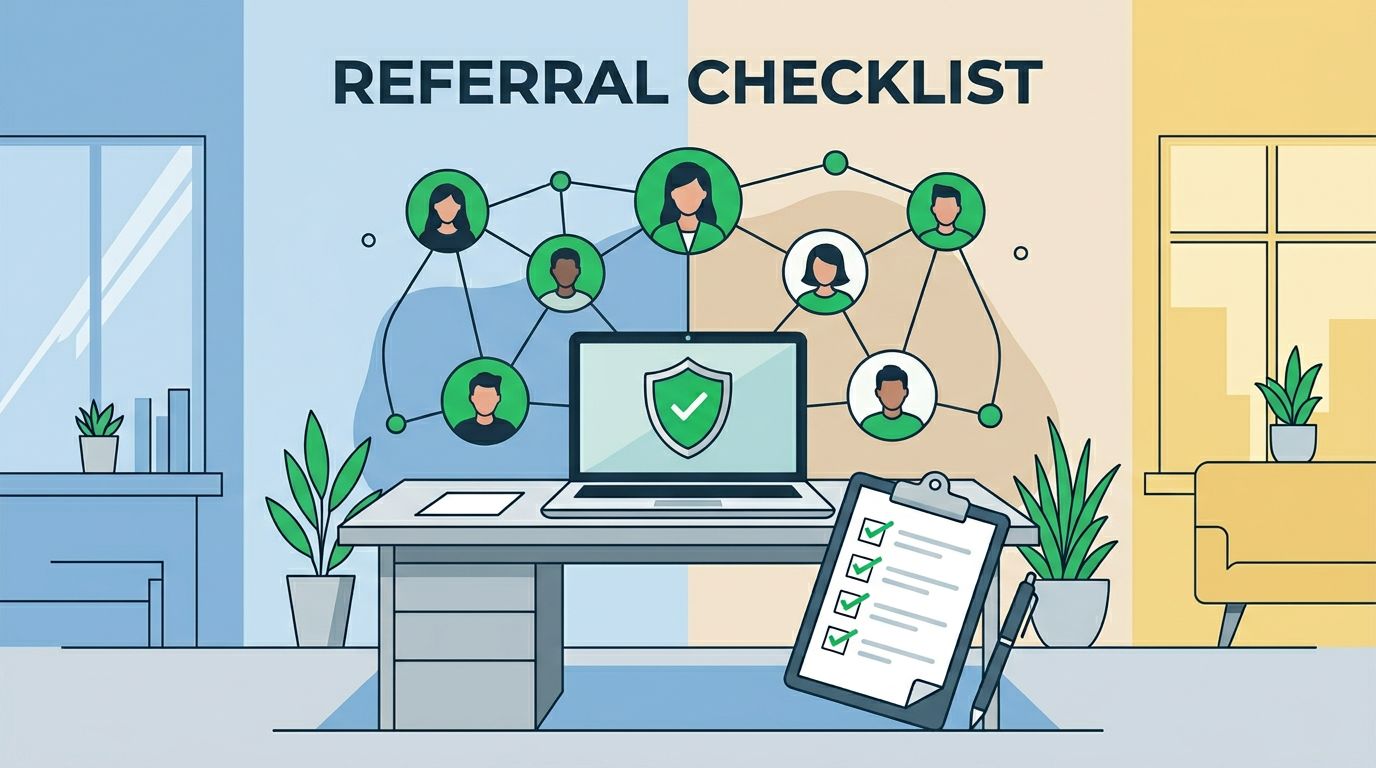
Use these guardrails:
- Apply one interview scorecard to every candidate.
- Keep early screens blind when you can.
- Review referral source mix each month.
- Train managers to judge skills, not familiarity.
- Reject any referral that misses baseline requirements.
Pin’s referral fairness and Title VII risks is a useful reminder that word-of-mouth hiring can create legal exposure if the network is too narrow.
A referral is a signal, not a shortcut. The same rubric should decide every hire.
When candidates see the same process, trust goes up. Referrers also stay engaged, because the program feels serious.
Track the metrics that show real value
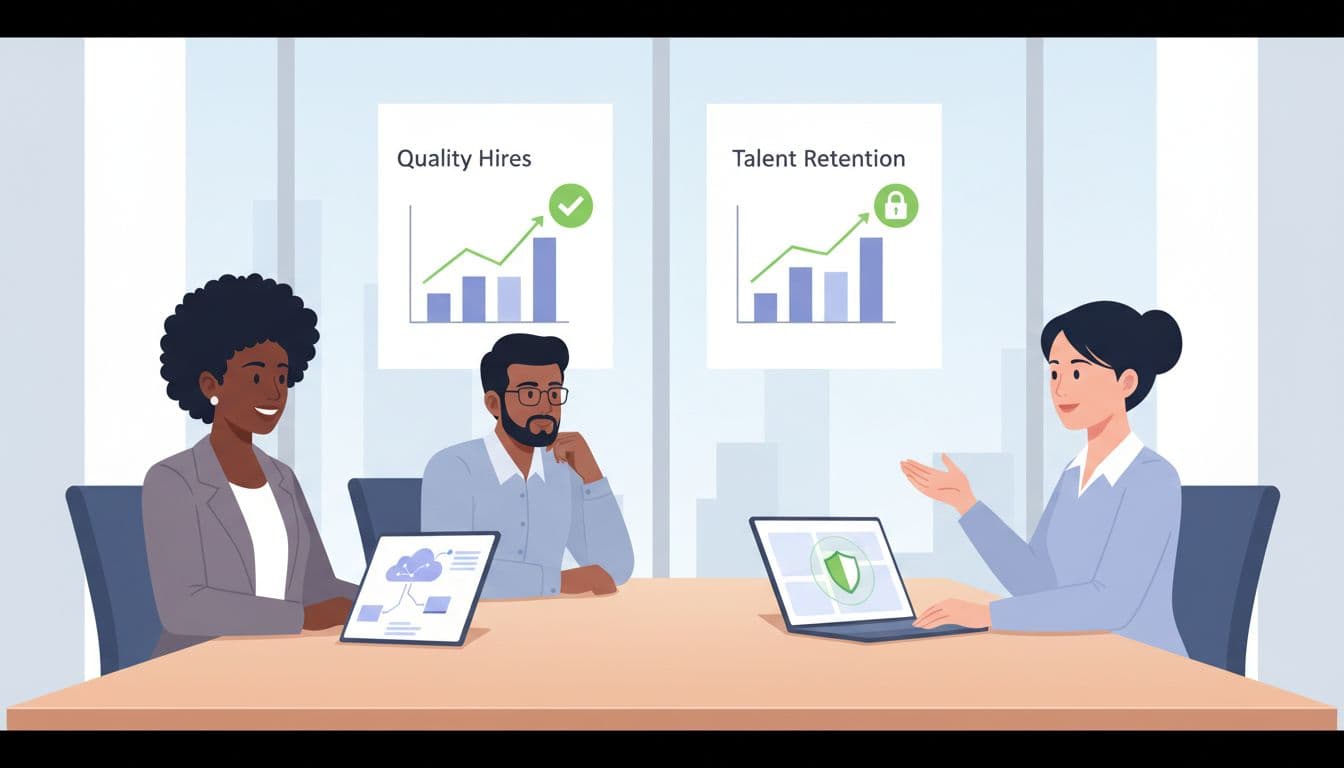
A referral program should prove more than fast hiring. It should improve the hire itself. That means tracking speed, quality, and retention together.
| Metric | What to watch | Why it matters |
|---|---|---|
| Referral-to-hire rate | How many referrals become hires | Shows whether employees understand the target profile |
| Time to fill | Days from intake to accepted offer | Shows whether referrals reduce hiring drag |
| 90-day retention | How many hires stay past the first 90 days | Catches weak-fit referrals early |
| Quality of hire | Manager rating or ramp speed | Confirms the program improves talent |
| Participation rate | Share of employees who refer | Shows whether the program feels easy and trusted |
If time to fill drops but 90-day retention falls, the program is chasing speed over fit. In cybersecurity, that tradeoff gets expensive fast.
A good referral process should also fit current demand. With U.S. cybersecurity job listings still high in 2026, every day saved matters.
Keep the program active after launch
A referral program loses momentum when leaders mention it only during a hiring crunch. Keep it in front of people during onboarding, team meetings, and monthly hiring updates. Fast feedback helps too. If someone refers a candidate, let them know what happened.
Incentives work best when they support retention, not just volume. A split payout, half at hire and half after 90 days, keeps attention on fit. For more rollout ideas, employee referral best practices for 2026 is a helpful reference.
If your team needs help building a process for hard-to-fill cyber roles, Book a Discovery Call with Bud Consulting.
Conclusion
The best referral programs in cybersecurity are simple, fair, and tied to real hiring needs. They help you fill roles faster, but they also improve trust in the process and raise the odds of a good long-term hire.
If you need SOC analysts, cloud security engineers, GRC talent, incident responders, or app sec specialists, start with a clear brief and a fair screen. That is what turns referrals into a hiring advantage.