table of contents
When a security team grows, vague titles turn into noisy promotion debates fast. One manager says someone is senior because they are dependable. Another says the same person is still mid-level because they need review. A cybersecurity role leveling guide fixes that by turning opinions into shared criteria.
For growing teams, that guide also shapes hiring, pay bands, and career talks. It gives security leaders, HR partners, and engineering managers the same reference point.
The best version is specific enough to be fair, but flexible enough to fit different security functions. Start with the decisions you need to make, then build the ladder around them.
Start with the decisions the guide must support
Write the guide for real decisions, not abstract theory. It should answer what work belongs at each level, what “good” looks like, and what evidence a manager needs before they call someone promotion-ready.
Start by listing the roles in scope, such as SOC analyst, AppSec engineer, cloud security engineer, IAM specialist, GRC analyst, and security manager. Then decide whether one ladder covers all of them or whether you need family-specific tracks with shared language.
That choice matters because compensation bands, interview loops, and promotion packets depend on it. If you blur individual contributor and manager levels, the guide gets hard to use. A clean guide gives each role a lane, but keeps the rules consistent.
If you want a public baseline, the NIST NICE work role levels give a common language for cybersecurity tasks and proficiency. Use that as a reference, then shape the guide around your company size, stack, and operating model.
Choose dimensions that fit security work
Shared dimensions keep the guide from turning into a pile of unrelated job descriptions. The labels can differ by function, but the dimensions should stay stable.

The core dimensions can look like this:
- Technical depth is how well someone handles tools, threats, and control design.
- Autonomy shows how much review they need before they act.
- Scope covers how many systems, teams, or products their work affects.
- Communication measures how clearly they write, brief, and align others.
- Business impact reflects the risk, cost, or speed their work changes.
- Leadership tracks mentoring, decision-making, and standards-setting.
- Incident ownership shows who can lead triage, response, and follow-up.
Do not score every dimension the same way. AppSec may weight communication and code review more heavily. SOC roles may weight incident ownership and speed of judgment more. That is how you keep the model fair without making it rigid.
Write level descriptions people can use
Write each level as visible behavior, not a wish list. That makes the guide useful in interviews, reviews, and promotion packets.
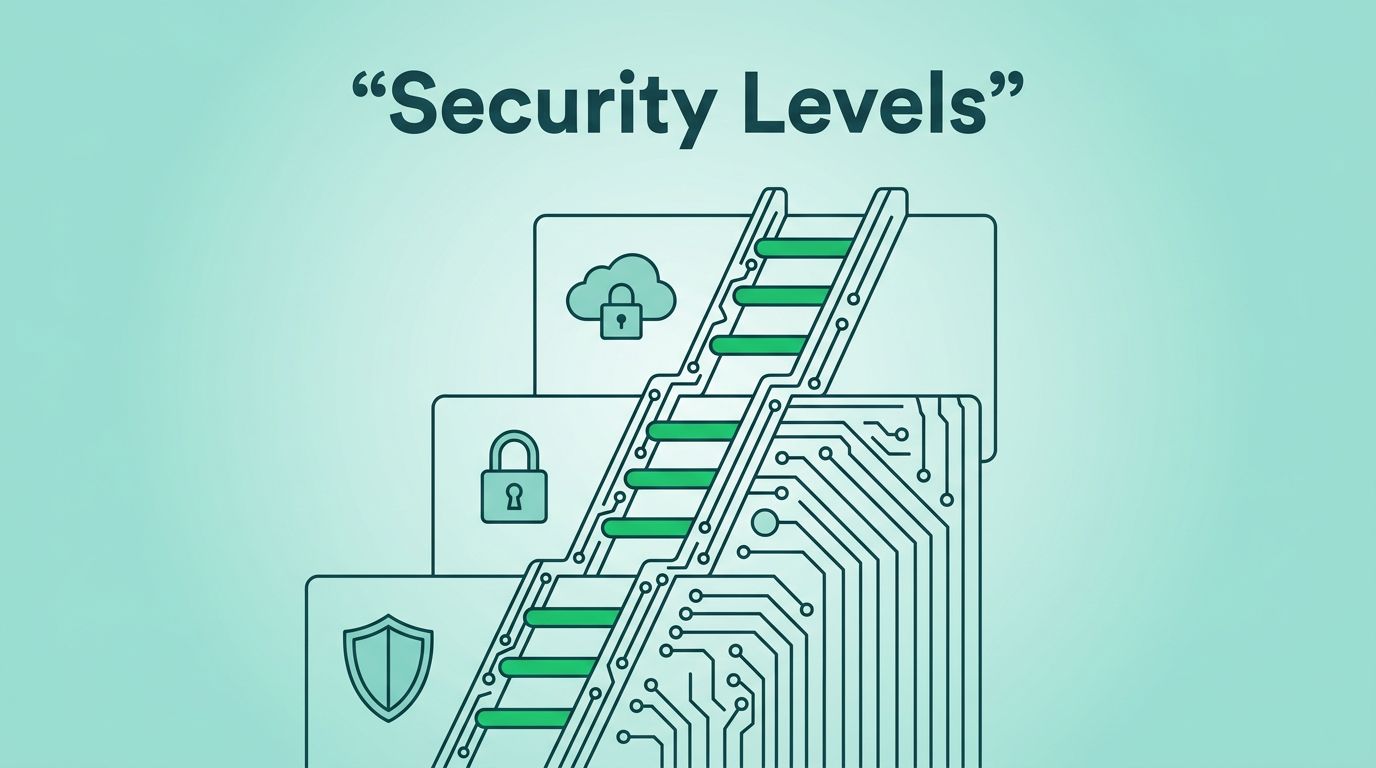
A simple four-level model can look like this:
| Level | Scope and autonomy | What strong performance looks like |
|---|---|---|
| Junior | Narrow tasks, heavy review | Follows playbooks, documents work well, and escalates early |
| Mid | Defined projects, light review | Owns cases end to end, improves docs, and makes routine decisions |
| Senior | Cross-team work, independent judgment | Designs solutions, leads complex incidents, and coaches others |
| Staff or Lead | Multi-team scope, broad influence | Aligns leaders, resolves trade-offs, and drives domain improvements |
Use the same terms across HR, hiring, and performance reviews. That way, a manager does not need a translation guide to explain what “senior” means.
A good rule is simple, a person should be able to read the level and point to their own work, or know exactly what they need next.
Tailor the ladder by security function
One-size-fits-all criteria breaks down fast. A junior AppSec engineer, a junior cloud security engineer, and a junior SOC analyst all do different work.
AppSec and DevSecOps
For application security, weigh secure design, code review, threat modeling, and developer partnership. A junior person may close findings and add secure test cases. A senior person may own standards for a product area. A staff person may shape secure development practices across several teams.
A useful outside reference is the Wiz application security engineer career guide, which shows how the role grows from finding issues to improving how teams build software. That pattern is helpful when you write your own leveling language.
Operations, cloud, IAM, and GRC
For operations roles, incident command and response quality matter more. A mid-level SOC analyst might handle triage and handoff. A senior incident responder might run the first hour of a major event.
For cloud and IAM, look at control design, automation, and service reliability. For GRC, weight risk communication, policy judgment, and program follow-through. If you want a shared cross-functional model, the SFIA mapping of NICE work roles to SFIA skills can help HR and engineering compare expectations without inventing new labels.
Calibrate before you publish
Calibration is where fairness gets built or lost. The best guide fails if every manager uses it differently.

A good ladder does not reward time served. It rewards broader scope, better judgment, and steady ownership.
Run a calibration session with security, HR, and engineering before you publish. Review a few real profiles, score them against the draft, and compare where people disagree. Use one or two anchors at each level, such as a recent hire, a solid mid-level performer, and a person who is ready for promotion.
That makes hiring calibration and promotion readiness easier to defend. It also keeps interviewers from guessing at title fit when they meet candidates with mixed backgrounds.
If you want help pressure-testing the structure against live hiring needs, Book a Discovery Call with Bud Consulting.
Conclusion
A strong cybersecurity role leveling guide turns growth into a shared standard. It helps managers hire with more confidence, gives employees a clearer path, and keeps promotion decisions tied to evidence.
The most useful guides are simple on the page and strict in practice. They define common dimensions, then let each security function prove them in its own way.
Do that well, and the ladder stops being a debate. It becomes part of how the team works.