table of contents
Executives get bombarded with alerts. They need quick facts on threats that hit the bottom line. You turn raw intel into briefings that drive decisions.
In April 2026, AI-powered malware and supply chain attacks top the list. These risks evolve fast. Your job is to spotlight business impacts and fixes.
This guide shows you how. Start with spotting threats, then build structure and visuals that stick.
Spot Emerging Threats First
You can’t brief what you miss. Track sources like CISA alerts and vendor reports daily. Focus on threats targeting your industry.
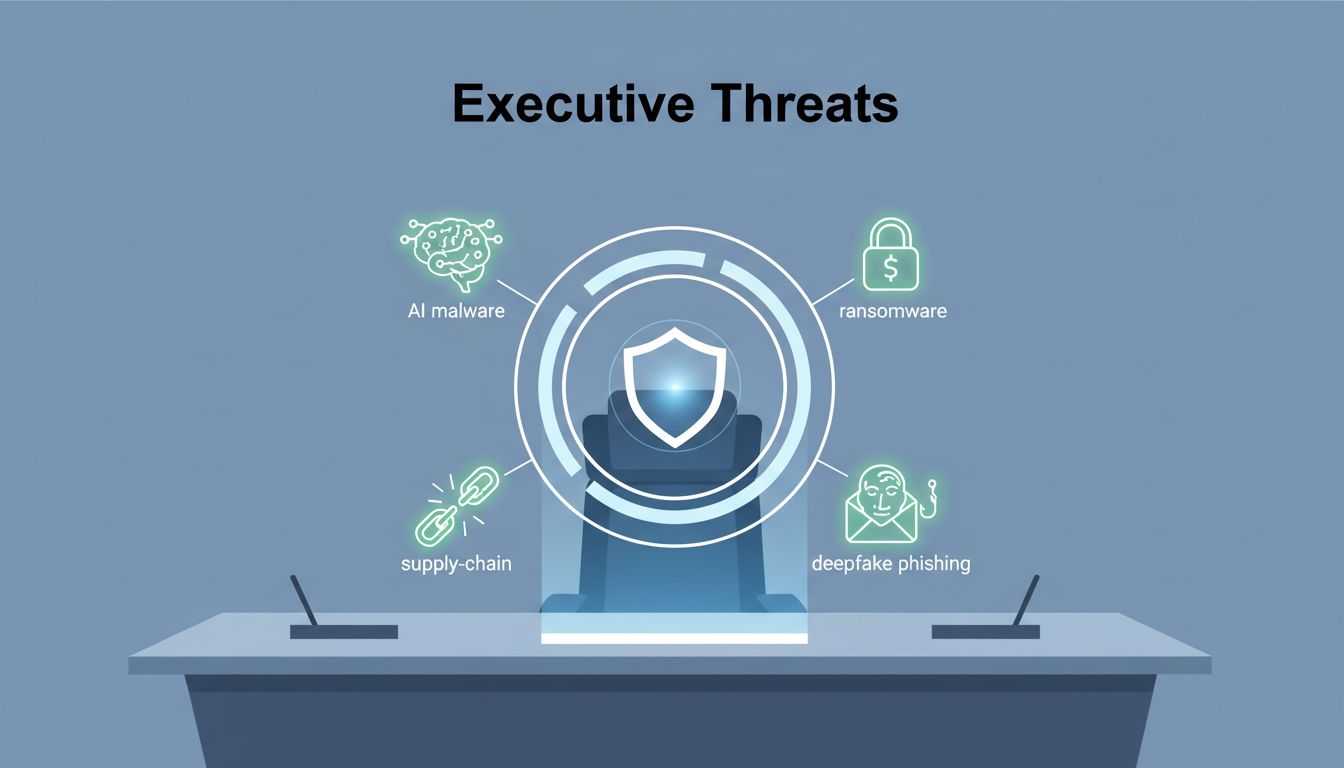
Right now, AI malware adapts to evade tools. Ransomware doubles as extortion. Supply chain hits let attackers slip through vendors. AI phishing uses deepfakes that fool everyone.
Set up a watchlist. Pull from CrowdStrike’s 2026 Global Threat Report for trends. Check your stack: cloud, endpoints, identities.
Assign one analyst to scan weekly. Cross-check with telemetry from SIEM or EDR. Note exploits in your tech.
Prioritize by relevance. Ask: Does this hit our ops? What’s the exploit rate?

Teams like this spot issues early. They discuss icons for AI attacks and supply chain risks.
Limit to three to five threats per briefing. Otherwise, leaders tune out.
Build a Clear Structure
Keep briefings to one page. Use BLUF: bottom line up front. State the threat, impact, and action in the first sentence.
Standard sections work best:
- Threat Summary: Name it, describe in plain terms.
- Business Impact: Dollars lost, ops down, rep hit.
- Likelihood and Urgency: High/medium/low scales. Tie to current campaigns.
- Recommended Actions: Three to five steps, assigned owners.
For cadence, send weekly for ongoing risks. Monthly deep dives for new ones.
Tailor to your execs. They want ROI on fixes, not tech details.
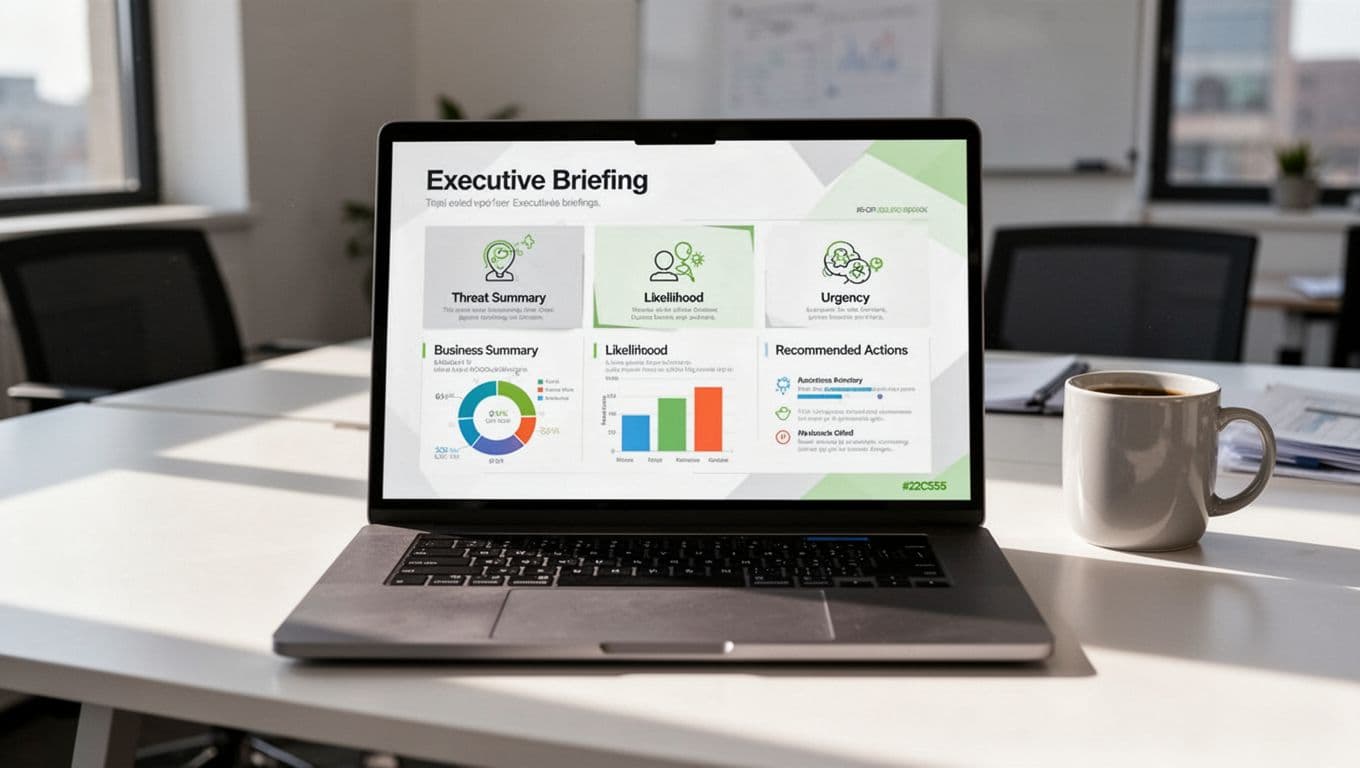
This layout keeps it scannable. Icons highlight key parts.
See UpGuard’s guide on executive summaries for more examples. Adapt their ROI mapping.
Highlight What Execs Care About Most
Leaders focus on four areas: impact, likelihood, urgency, and ops fallout. Skip deep tech.
Business Impact: Quantify. “AI ransomware could lock production for 48 hours, costing $2M.” Use your data.
Likelihood: Base on sources. “CrowdStrike notes 89% rise in AI attacks. Our cloud setup matches 70% of victims.”
Urgency: Color-code red for imminent. “Patch by Friday or face exploits.”
Ops Implications: “Supply chain breach exposes customer data. Legal reviews start next week.”
Example: AI social engineering. Impact: Wire fraud hits finance. Likelihood: High, deepfakes bypass training. Urgency: Active campaigns target finance. Ops: Review vendor access now.
Back claims with one link or stat. Execs trust facts.
Use a simple table for quick reads.
| Element | Example for AI Malware |
|---|---|
| Impact | $5M downtime, data leak |
| Likelihood | High (adapts to EDR) |
| Urgency | Patch in 72 hours |
| Actions | Update signatures, segment nets |
This table sums it up. Follow with prose details.
Deliver Step-by-Step Recommendations
Actions make briefings useful. List them numbered, specific, timed.
- Isolate affected systems within 24 hours.
- Apply patches from vendor alerts.
- Train staff on phishing signs next week.
- Test backups offsite.
Assign owners: “Finance lead reviews wires.” Set deadlines.
For 2026 threats like shadow AI, recommend scans for rogue tools. Limit vendor access in supply chains.
Test your steps. Run tabletop exercises. Refine based on feedback.
Execs approve budgets when they see clear paths. Link actions to risk drop: “This cuts exposure 40%.”
Polish with Visuals and Delivery
Visuals boost retention. Use charts for risk levels, timelines for attacks.
One bar graph shows impact vs. likelihood. Green for low risk, red for high.
Format in PDF or slide deck. Bold key phrases. Sans-serif fonts, 24pt minimum.
Deliver in 5-minute standups. Practice: Start with BLUF, end with Q&A.

Executives engage fast with visuals like these risk charts.
Tailor voice to the room. Tech leads want mechanisms; C-suite wants consequences.
Sample Briefing Template
Copy this framework. Fill for your next threat.
AI-Powered Ransomware Alert
BLUF: New strain evades backups. High impact to ops. Isolate and patch now.
Summary: Adaptive malware encrypts and exfiltrates. Hits factories per recent reports.
Impact: $3M daily downtime. Rep damage from leaks.
Likelihood/Urgency: High; 50% rise in 2026. Act this week.
Actions:
- Segment networks (IT by EOD).
- Test immutable backups (Ops tomorrow).
- Review incident response (All Friday).
Sources: Internal logs, Check Point 2026 trends.
This template fits one page. Tweak sections as needed.
Key Takeaways
Strong emerging threat briefings save time and money. Spot risks early, structure tight, focus on business needs.
You now have steps and a template. Use them weekly.
Struggling with talent to build these? Book a Discovery Call with Bud Consulting for security experts.
Threats wait for no one. Start briefing today.