table of contents
You’re knee-deep in compliance audits. Access reviews pile up, and your team struggles with joiner-mover-leaver processes. One wrong permission could trigger a breach or fail a SOC 2 check.
An identity governance analyst fixes that. They handle user access certifications and role-based controls to keep risks low. This guide shows you how to find and hire one who delivers.
Expect practical steps tailored to 2026 hiring needs, from skills to interviews.
Table of Contents
- Role Responsibilities
- Key Skills for Access Reviews
- Sourcing Top Candidates
- The Interview Process
- Salary and Offer Expectations
- Conclusion
- Frequently Asked Questions
Role Responsibilities
Identity governance analysts own access reviews. They check who has what permissions quarterly or more. This prevents over-provisioned accounts that hackers exploit.
They map roles to jobs. For example, a finance user gets ledger access but not HR data. Analysts run segregation-of-duties checks to block conflicts.
Joiner-mover-leaver workflows fall under their watch. New hires get quick onboarding. Transfers update roles fast. Departures revoke access instantly to avoid ghost accounts.
In 2026, they manage non-human identities too. Think API keys and AI bots, which now outnumber people. Tools automate much of this, but analysts oversee compliance.
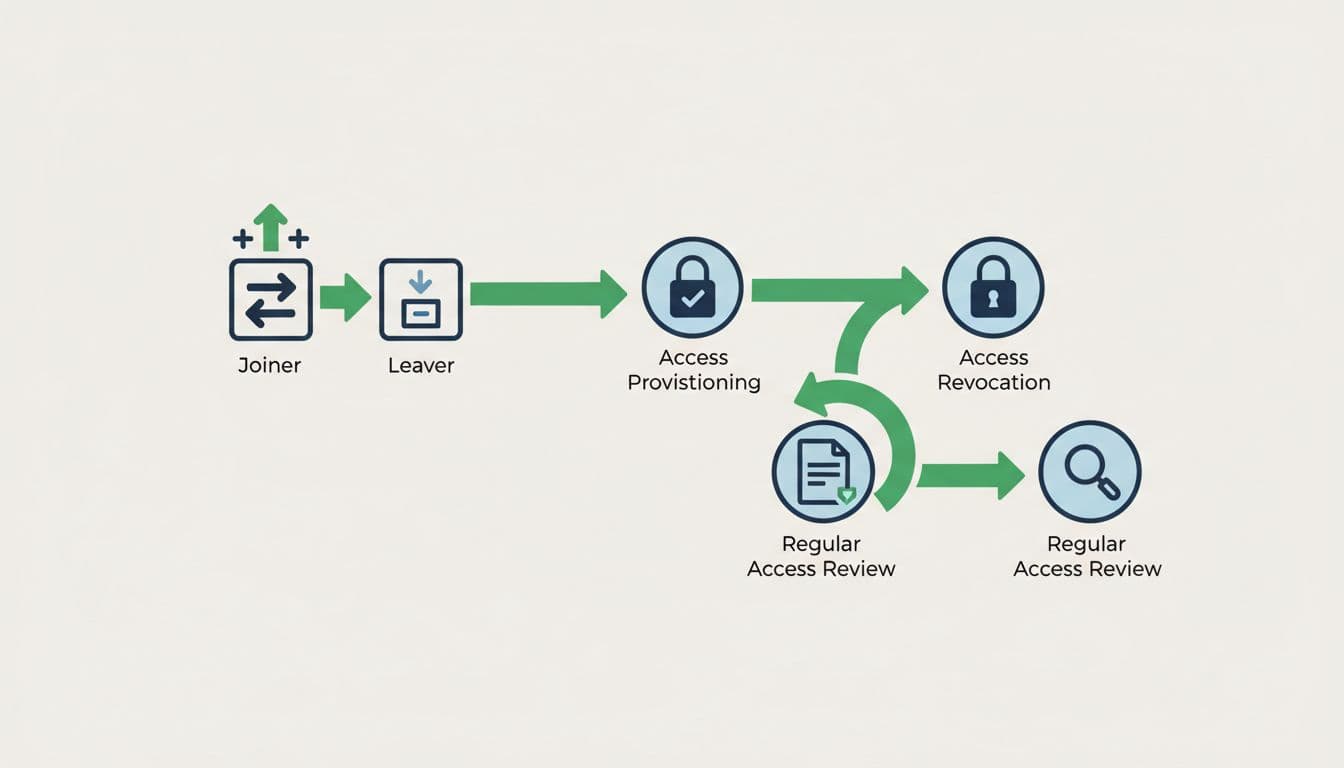
Expect them to report metrics. How many risky entitlements exist? What audit evidence do you need for NIST or GDPR? They partner with GRC teams for smooth audits.
Look at real job postings for clues. This First Interstate Bank role highlights periodic user access reviews and SOX evidence retention.
Key Skills for Access Reviews
Top analysts know IGA platforms cold. SailPoint, Okta, and Saviynt lead in 2026. They handle AI-driven reviews that flag anomalies fast.
Seek RBAC and ABAC experience. Role-based access ties permissions to jobs. Attribute-based adds context like location or time. Both cut manual work.
Compliance knowledge matters. They map controls to SOC 2, GDPR, and NIST. Continuous monitoring beats annual audits now.
AI skills rise too. Tools predict risks from behavior. Analysts interpret outputs for decisions.

Here’s a quick skills breakdown:
| Skill Area | Core Need | Example Tools/Standards |
|---|---|---|
| IGA Platforms | Automate certifications | SailPoint, Saviynt, Okta |
| Access Workflows | Handle JML and reviews | RBAC, least privilege |
| Compliance | Audit prep and reporting | NIST, GDPR, SOC 2 |
| AI/Risk Analysis | Spot drifts and threats | Behavior analytics |
Check Gartner’s IGA reviews for tool leaders. Candidates should explain how Saviynt cuts review fatigue by 75%.
Soft skills count. They explain complex risks to non-tech stakeholders. Data analytics helps too, like in Citizens Bank’s IAM role.
Sourcing Top Candidates
Start with niche boards. LinkedIn filters for “identity governance” plus “access reviews” yield pros. Boolean searches like “SailPoint OR Saviynt AND compliance” work well.
Recruiters specialize here. Firms like Bud Consulting vet IAM talent fast. Book a Discovery Call with Bud Consulting to discuss your gaps.
Post detailed jobs. List JML duties and tools. See this HealthEquity posting for SOX-focused access certifications.
Communities help. Reddit’s r/iam or ISC2 forums have active pros. Referrals from CISOs beat cold applies.
In 2026, watch for non-human identity experience. Demand grows as bots explode.
Related read: Our post on hiring IAM engineers for cloud environments.
The Interview Process
Screen resumes first. Look for 2-5 years in IGA. Certs like CISSP or tool-specific badges stand out.
Phone chat: Ask “Walk me through an access review campaign.” Good answers cover scoping, approvals, and remediation.
Technical round: Simulate a review. Give a dataset with over-privileges. They should spot issues and suggest fixes.
Behavioral: Probe JML fails. “How did you handle a leaver’s lingering access?” Use STAR method.

Final: Culture fit with your GRC team. Try Wiz’s GRC questions for compliance depth.
Offer quick. Top talent moves fast.
Salary and Offer Expectations
US salaries range from $52,000 to $129,000 total pay in 2026. Averages hit $79,000-$82,000 base.
Entry-level starts at $62,000. Mid-career reaches $81,000+. San Jose pays up to $161,000.
Factors: Experience, location, tools. Saviynt experts command more.
| Experience Level | Base Salary Range | Total Pay Range |
|---|---|---|
| Entry (0-1 year) | $52,000-$62,000 | Up to $70,000 |
| Mid (1-4 years) | $70,000-$90,000 | $81,000-$110,000 |
| Senior (5+ years) | $100,000+ | $120,000-$129,000 |
Add equity or bonuses for seniors. Match market data from PayScale.
Conclusion
Hire an identity governance analyst who masters access reviews and JML. Focus on IGA tools, compliance, and AI trends to stay ahead.
You now have a clear path: Define duties, screen skills, interview smart, and pay right. Teams with strong analysts pass audits easier and sleep better.
Build that secure foundation today.
Frequently Asked Questions
What IGA tools should an identity governance analyst know?
SailPoint, Okta, and Saviynt top lists. Check Okta’s governance page for access review features.
How often do access reviews happen?
Quarterly minimum, but continuous in 2026 with AI. Tie to compliance cycles like SOC 2.
What’s the top challenge in hiring these analysts?
Finding non-human identity experience amid bot growth. Prioritize it in job posts.
Do they need certifications?
CISSP helps, but hands-on SailPoint or Saviynt wins over paper creds.
How long to fill the role?
4-8 weeks with recruiters. Niche skills speed up via networks.