table of contents
Hiring a principal threat researcher feels tough because threats move fast. You need someone who spots patterns others miss and turns them into defenses. In 2026, with AI-driven attacks rising, this role protects your enterprise from real risks.
Expect to pay $100,000 to $149,000 base salary, depending on location and experience. Top talent demands that range for their mix of technical depth and communication skills. Let’s break down how you find and vet them right.
Define the Role Requirements
Start by writing a clear job description. A principal threat researcher analyzes advanced malware, tracks adversaries, and maps tactics to frameworks like MITRE ATT&CK. They partner with detection engineers to build rules and mentor junior staff.
This person handles vulnerability research too. They dissect exploits before they hit your systems. Daily work involves reverse engineering samples and scripting automations in Python.

Look at real postings for ideas. Salesforce’s principal threat researcher role stresses adversary disruption and AI tools in workflows. Zscaler’s version highlights browser threats and static malware analysis.
In 2026, add cloud-native focus. Researchers must hunt in AWS or Azure logs. They cluster campaigns using OSINT and DNS data, as DNSFilter requires. Set experience at 7+ years. Require hands-on tools like IDA Pro or Splunk.
Tailor to your team. If you lack detection engineers, prioritize partnership skills. This keeps expectations realistic.
Key Skills to Evaluate
Focus on a balanced skill set. Top candidates excel in malware analysis and adversary tracking first.
Malware analysis means dynamic debugging and unpacking samples. They spot C2 frameworks quickly. Adversary tracking covers TTPs for e-crime or nation-states.
Vulnerability research follows. They find zero-days or chain exploits. ATT&CK mapping turns findings into Navigator layers or heatmaps. Check MITRE’s ATT&CK CTI certification for proof.
They collaborate with detection teams on Sigma rules. Reporting distills complex intel into briefs. Stakeholders get executive summaries; engineers get raw IOCs.
Mentorship matters. They guide juniors on hunts. In 2026 trends, add AI awareness. Candidates should explain adversarial ML attacks or prompt injection in threats.
Test transferable skills. Someone from incident response can pivot if they script well. Prioritize Python for automation.
Build Your Hiring Scorecard
Use a scorecard to score candidates objectively. Rate each category 1-5. Total over 80% signals a hire.
Here’s a sample. Adjust weights for your needs.
| Skill Area | Weight | Notes/Example Evidence |
|---|---|---|
| Malware Analysis | 20% | Reverse-engineered samples; IDA usage |
| Adversary Tracking | 15% | Tracked APT group; OSINT reports |
| ATT&CK Mapping | 15% | Navigator layers; heatmap examples |
| Vulnerability Research | 10% | Disclosed CVEs; exploit chains |
| Detection Partnership | 10% | Sigma/YARA rules co-authored |
| Reporting/Communication | 15% | Published blogs; stakeholder briefs |
| Mentorship | 10% | Trained teams; code reviews |
| AI/Cloud Trends | 5% | Handled cloud hunts; ML threat knowledge |
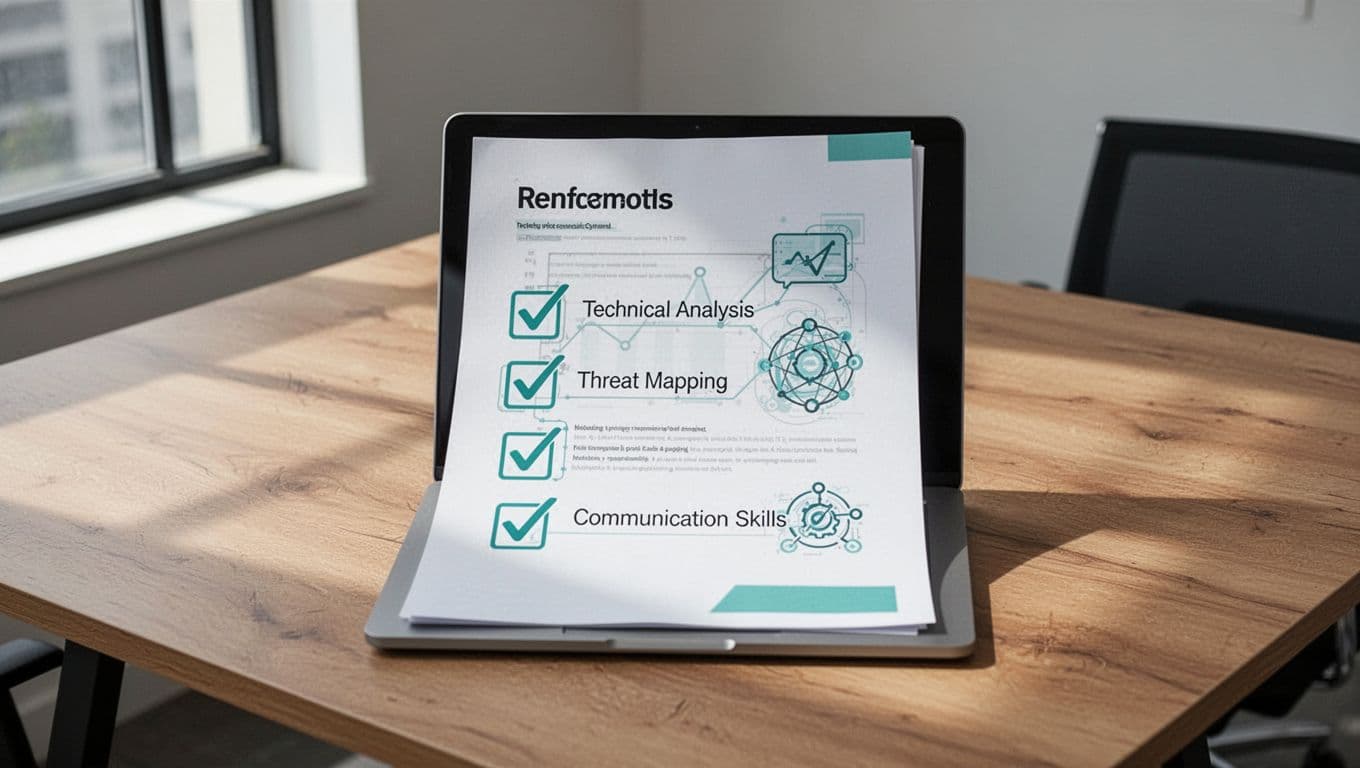
Score post-interview. Require portfolio: GitHub repos or threat reports. This table cuts bias. High scores in top categories outweigh perfect lower ones.
Conduct Targeted Interviews
Interviews reveal true fit. Mix behavioral, technical, and practical questions.
Start behavioral: “Describe tracking a nation-state actor. What TTPs did you map?” Probe: “How did you brief executives?”
Technical: “Walk through analyzing a packed malware sample.” Or: “Build a Sigma rule for this ATT&CK technique.” Give a scenario.
For partnership: “How do you work with detection engineers on false positives?” Mentorship: “Guide a junior through a hunt.”

Draw from proven sets. These threat hunting questions test investigation steps. CTI interviews cover prioritization.
Assign a take-home: Map a sample to ATT&CK. Time it to 4 hours. Review for rigor.
Sidestep Common Hiring Pitfalls
Many teams chase unicorns. They demand 5 years in 2-year-old tech like new AI tools. Fix: Focus on core skills.
Vague postings list every buzzword. Candidates ghost or underperform. Write specific must-haves.
Overlook soft skills. Tech wizards flop without clear reports. Test communication early.
Stick to job boards. Hidden talent lurks in communities. Use recruiters for seniors.
Ignore culture. They must mentor your team. Check references deeply.
Key Takeaways
Hire principal threat researchers by defining needs clearly, scoring skills fairly, and interviewing smart. This nets experts in analysis, tracking, and communication who strengthen your defenses.
Right hire pays off in faster threat response. Book a Discovery Call with Bud Consulting if you need vetted candidates now. Act on this process today.