table of contents
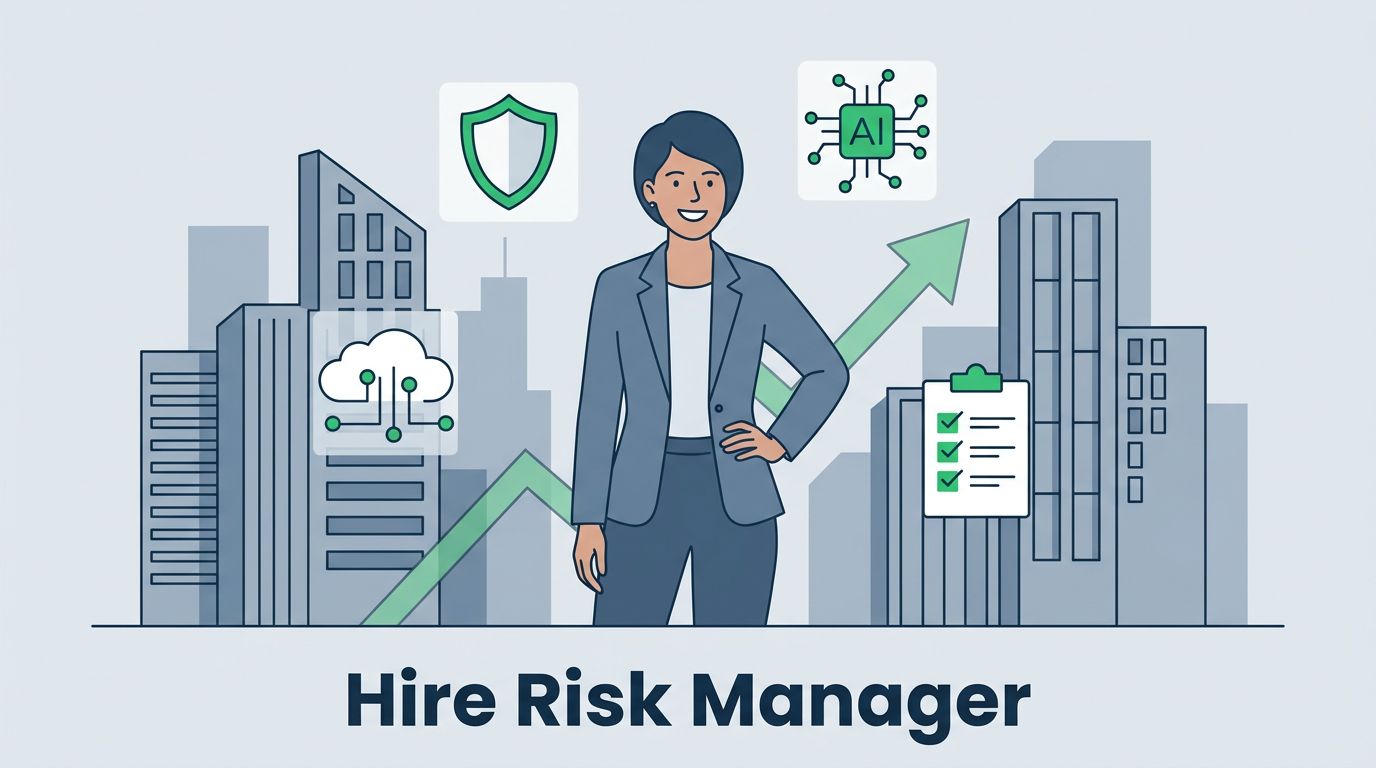
Hiring a security risk manager gets harder as a company scales. The first real security hire has to do more than write policies, it has to help the business grow without creating blind spots.
In April 2026, that means thinking about AI risk, vendor exposure, cloud controls, compliance work, and even physical security in one role. If you define the job badly, you’ll either over-hire or end up with role confusion on day one.
The good news is that a clear hiring process makes the search easier. Start with scope, then test for judgment, communication, and prioritization.
Define the Role Around Your Growth Stage
A security risk manager for a 50-person company should look different from one at 1,000 employees. Early on, you need a builder who can set up risk registers, incident playbooks, vendor checks, and reporting. Later, you need someone who can coach leaders, work across teams, and keep security decisions tied to business goals.
Be direct about what the role owns and what it doesn’t. A job that spans security operations, compliance, employee training, physical access, and AI policy is usually three roles in one. If that’s the case, split the work or you’ll frustrate the hire and the team.
If you’re unsure where the line should be, Book a Discovery Call with Bud Consulting. That kind of scoping work saves weeks of confusion later.
A security risk manager should reduce friction, not add a new layer of bureaucracy.

Look for Risk-Based Thinking, Not Security Buzzwords
In 2026, the strongest candidates understand that AI-powered phishing, shadow AI, third-party breaches, and compliance gaps are part of the same picture. For a current view of what security leaders are prioritizing, see enterprise security priorities in 2026. The right hire should be able to rank risk by business impact, not by fear.
Look for these signals:
- They explain trade-offs in plain language.
- They can tell you which risk gets fixed now, which gets monitored, and which can wait.
- They have handled vendor reviews, audit prep, or incident follow-up.
- They work well with legal, product, IT, finance, and HR.
- They make risk-based calls instead of one-size-fits-all rules.
- They know when AI tools create new exposure, even when those tools help productivity.
A good interview answer often sounds calm and specific. For example, a candidate might say they would first map where sensitive data lives, then rank the controls, then set a reporting cadence for leaders. That kind of answer shows judgment. It also shows they can keep pace with growth without turning every issue into a crisis.

Build the Interview Process Around Real Work
A high-growth security hiring guide can help you benchmark seniority, but your process should still test how the person thinks under real conditions. Use the same scorecard for every finalist.
- Write the job in plain language. List the top five risks the person must own.
- Separate must-haves from nice-to-haves. A security risk manager does not need every cert in the market.
- Give a short case study. Ask how they’d handle a new AI tool, a vendor issue, or a control gap before a customer audit.
- Interview cross-functionally. Include someone from engineering, legal, operations, and leadership.
- Check references for pattern, not praise. Ask how the candidate sets priorities, handles pushback, and communicates bad news.
This process shows whether the candidate can make decisions in real life, not only in a polished interview. It also helps you compare people on the same scale, which cuts down on gut-feel hiring.

Common Hiring Mistakes at Scaling Companies
The biggest mistake is hiring too much title too early. A company that needs a hands-on builder often gets a strategic leader who expects a larger team, a bigger budget, and more process than the business can support.
Other mistakes show up fast:
- They write a role that mixes security operations, compliance, and IT support into one impossible job.
- They test for certifications instead of judgment and communication.
- They ignore third-party and AI risk because no major incident has hit yet.
- They forget physical security, especially if the company has offices, labs, or sensitive meetings.
- They hire someone who can talk to engineers but not to the board.
Vendor risk is a good example. The 2026 third-party risk survey shows how much pressure still sits on vendor oversight, so the role should cover supplier reviews and escalation paths from day one.
If the job description reads like five jobs in one, the search will drift. If it reads like one clear role with real authority, the right candidates will spot it quickly.
Conclusion
A fast-growing company needs a security risk manager who can turn messy exposure into clear choices. The best hire understands AI risk, vendor pressure, compliance, and the limits of the team.
When you define the role by growth stage, test for judgment, and use a simple scorecard, the search gets sharper. That clarity helps security support the business instead of slowing it down.