table of contents
AI systems face attacks that move at machine speed. Agentic AI agents now scan networks and steal data without human help. Prompt injections hide in GitHub repos to hijack models. Your team needs a machine learning security engineer to fight back.
These experts protect models from data poisoning, supply chain risks, and inference abuse. They build defenses for LLMs and secure MLOps pipelines. Yet hiring one is tough. Demand outstrips supply as threats like frontier AI exploits grow.
This guide gives you actionable steps. You will learn skills to prioritize, questions to ask, and a scorecard to score candidates. Let’s start with why this role matters today.
Why Hire an ML Security Engineer in 2026
Threats hit harder this year. Nation-states use LLMs to automate 80% of attacks. Supply chain breaches like Vercel’s spread fast through AI tools. Boards now demand governance for these risks.
A machine learning security engineer spots flaws in training data and model deployment. They handle prompt injection, model theft, and privacy leaks. Without one, your AI stack stays vulnerable.
Startups see breaches cost millions. Enterprises face regulatory hits from poor AI governance. Check the OWASP Machine Learning Security Top 10 for common pitfalls like adversarial inputs.
Hiring trends show roles booming. Organizations scale generative AI but lack defenses. One report notes AI security jobs as core to risk strategies by now.
You need this hire to match attack speed with detection tools and anomaly monitoring.
Key Responsibilities of ML Security Engineers
These pros secure the full ML lifecycle. They audit datasets for poisoning. They test models against indirect prompt injections.
Expect them to run AI red teaming. That means simulating attacks on inference endpoints. They block model inversion that steals training data.
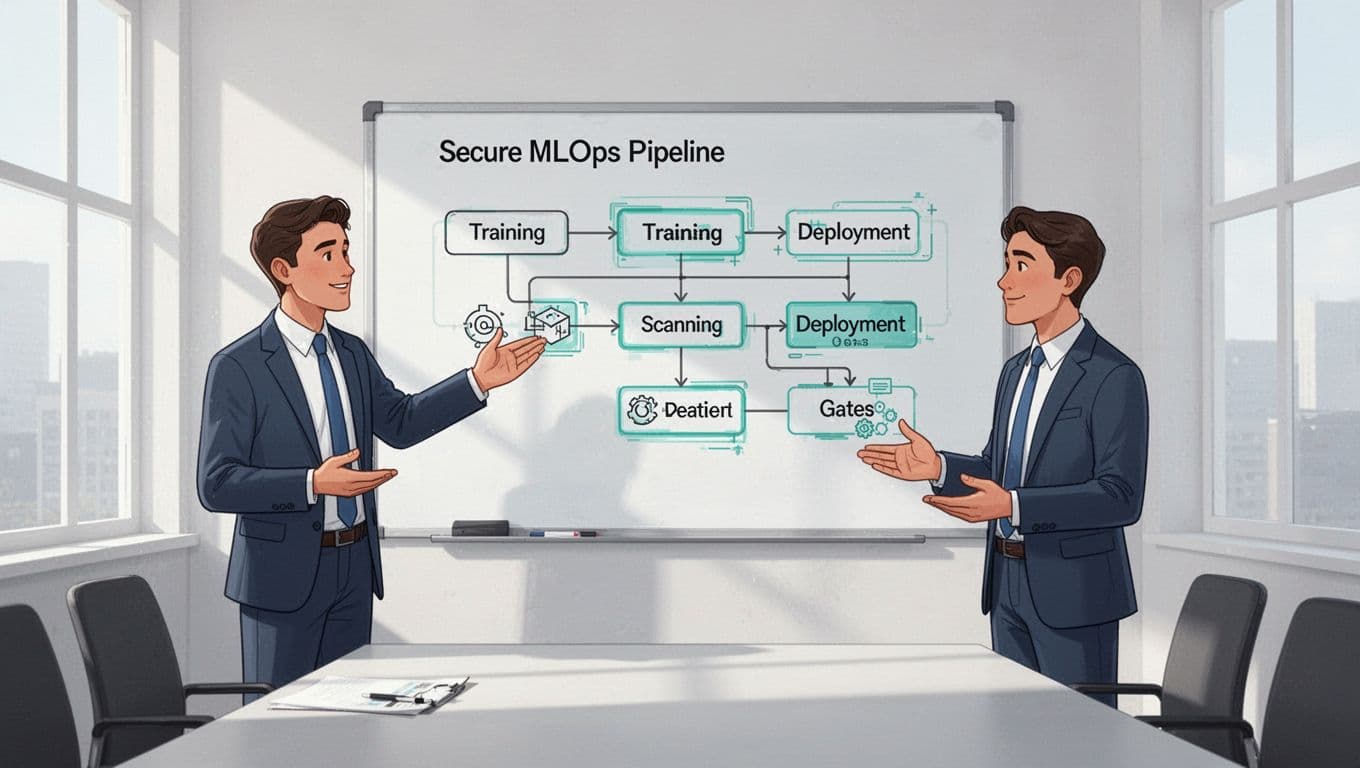
In secure MLOps, they add gates for scanning before deployment. Cloud security fits here too. They harden AWS SageMaker or Azure ML against misconfigs.
Governance rounds it out. They create policies for model access and auditing.

Daily work includes threat modeling for LLMs. They fix inference-time abuse where users trick outputs. Privacy tech like differential privacy becomes routine.
For your team, they bridge security and ML fluency. That prevents blind spots in production.
Must-Have vs Nice-to-Have Skills
Focus on proven skills over degrees. Candidates must show adversarial ML work. They need hands-on with prompt injections and data poisoning defenses.
Must-haves include secure MLOps and AI red teaming. They know tools like Adversarial Robustness Toolbox. Privacy skills cover federated learning basics.
Startups prioritize builders. Look for cloud security in Kubernetes for ML workloads. Enterprises want governance experts with compliance like EU AI Act.
Nice-to-haves: Deep research in frontier models. Or custom hardware for secure enclaves.
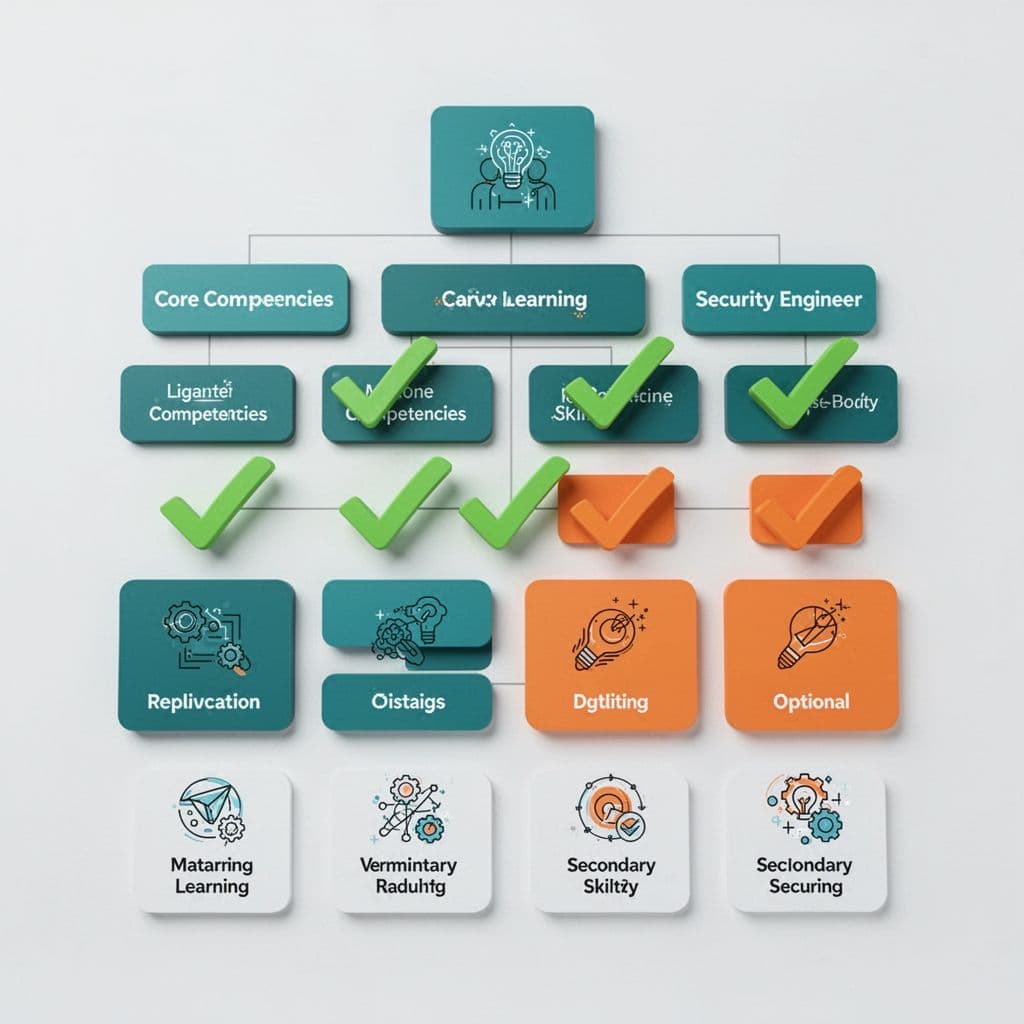
Here’s a quick skills breakdown:
| Category | Must-Have | Nice-to-Have | Startup Fit | Enterprise Fit |
|---|---|---|---|---|
| Threats | Prompt injection, data poisoning, model theft | Agentic AI exploits | High (quick fixes) | High (scale) |
| Tools | Secure MLOps (MLflow, Kubeflow), OWASP ML Top 10 | Custom red team frameworks | Medium | High |
| Privacy | Differential privacy basics | Homomorphic encryption | Low | High |
| Ops | Cloud ML security (IAM, VPCs) | On-prem secure hardware | High | Medium |
Test ML fluency with code reviews. Security depth shows in threat models. See AI red team career paths for role overlaps.
Where to Source ML Security Talent
Post on niche boards like Heisenberg Institute’s AI security listings. They track who’s hiring for these roles.
LinkedIn works, but filter for “ML security engineer” with GitHub proofs. Conferences like RSA draw experts.
Recruiters specialize here. Firms vet for supply chain and red teaming experience. For rates, check ML engineer hiring benchmarks.
Referrals beat job boards. Ask your cloud sec architect for leads.
In 2026, proof of work trumps resumes. Demand zero-trust verification through take-homes.
Sample Interview Questions and Scorecard
Probe deep. Start with: “Walk us through defending an LLM against indirect prompt injection from user uploads.”
Follow with: “How do you secure a model supply chain in CI/CD? Name tools and checks.”
Test red teaming: “Design an attack on a fine-tuned model for theft. Then mitigate it.”
For MLOps: “Build a secure pipeline for training with poisoned data risks.”
ML fluency check: “Explain backdoor attacks in transfer learning.”
Use this scorecard (scale 1-5 per area):
- Adversarial ML knowledge: __/5
- Secure MLOps implementation: __/5
- Red teaming examples: __/5
- Privacy/governance: __/5
- ML fluency (code walk-through): __/5
- Cultural fit: __/5
Total over 25? Advance. Weight threats higher for startups.
Final Thoughts
Machine learning security engineers stop AI threats cold. Prioritize adversarial skills and MLOps now. Use the scorecard to pick winners.
Your AI team gains resilience. Boards sleep better. For vetted talent, book a discovery call with Bud Consulting.
Act fast. Attacks wait for no one.