table of contents
New hires bring fresh energy to your team. Yet they also introduce risks if they miss basic security habits from day one. You want them productive fast, but secure habits stick only with clear guidance.
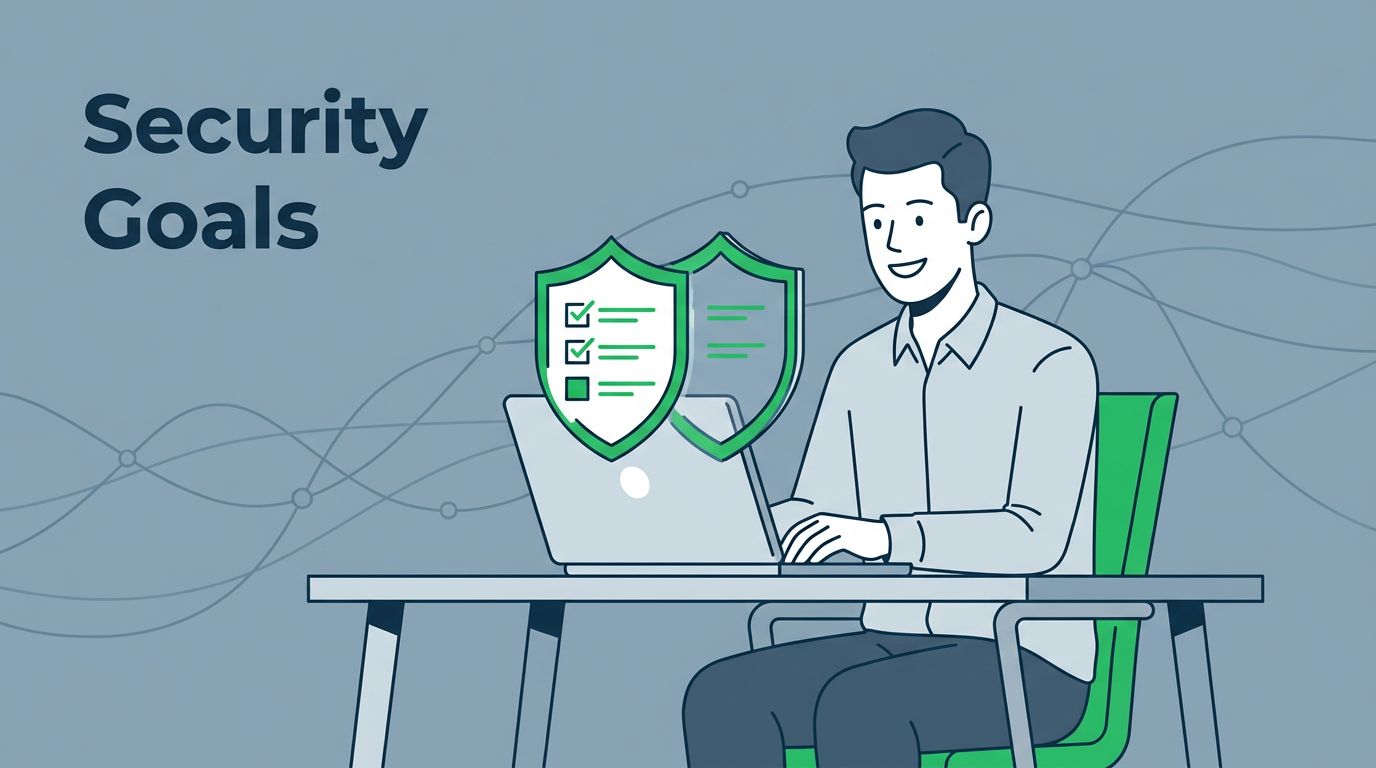
Poorly defined goals lead to confusion. Employees guess at expectations. Managers chase vague results. Security performance goals fix this. They set measurable steps tied to real work.
This guide shows you how. You’ll get principles, examples, and tips. Start building stronger onboarding today.
Why Set Security Goals Early in Onboarding
Onboarding sets the tone. New hires form habits quickly. Clear security goals make safety part of their routine, not an afterthought.
Think of it like driving rules. Everyone knows seatbelts save lives. Security goals work the same way. They prevent small slips from turning into big problems.
For general staff, goals focus on daily actions. Security roles demand deeper metrics. Either way, tie goals to business needs. This boosts compliance and cuts incidents.
Start simple. Align goals with your first 30-90 days. Track progress weekly. Adjust as needed. Results follow.
Key Principles for Writing Effective Goals
Good goals guide action. Bad ones frustrate everyone. Use SMART basics: specific, measurable, achievable, relevant, time-bound.
Specific means clear tasks. “Improve security” fails. “Complete phishing training with 90% score by week two” works.
Make them measurable. Use numbers or yes/no checks. Achievable fits new hire skills. No one hits impossible targets.
Relevant links to their role. Time-bound sets deadlines. For example, Zavvy’s guide on new employee goals stresses role fit.
Tailor to company risks. High-data firms prioritize handling rules. Remote teams stress access controls.
Write in plain words. Share examples during interviews. This sets expectations upfront.

Review goals together on day one. Ask for their input. This builds buy-in. Update quarterly based on feedback.
Common pitfall: too many goals. Pick three to five per quarter. Focus wins.
Security Goals for General Employees
Most new hires aren’t security pros. Their goals center on awareness and habits. Keep them practical for daily work.
First, onboarding basics. Require full security training in week one. Goal: “Finish mandatory modules on data handling and password rules within five days, confirmed by quiz score over 85%.”
Phishing tops the list. Send mock emails. Sample goal: “Report 100% of simulated phishing attempts in the first 30 days, with zero clicks.”
Access control matters. “Request least-privilege access only for approved tools by week two. No shared accounts.”
Data handling goal: “Tag and store sensitive files in secure folders for all projects, checked in weekly reviews.”
Incident reporting: “Report any suspected breach within one hour, using the company portal.”
For awareness: “Attend monthly security lunch-and-learns, with notes shared in team chat.”
These build culture. Track via HR tools. Celebrate hits.

Differentiate by department. Sales teams get client data rules. Engineers focus on code scans. All report progress in one-pagers.
Goals for New Security Team Members
Security hires need targeted metrics. They handle threats directly. Goals shift to technical output.
Onboarding includes tool access. Goal: “Master core platforms like SIEM and vulnerability scanners, demonstrated by triaging 20 alerts with 95% accuracy in first 30 days.”
Compliance focus: “Conduct access reviews for 50 user accounts monthly, revoking unused privileges.”
Incident response: “Document and simulate response to two common scenarios per quarter, reducing mean time to detect by 20%.”
Awareness contribution: “Deliver one team training session on emerging threats by month three.”
Vulnerability management: “Patch critical systems within 48 hours of alerts, tracked in dashboard.”
Use KPIs like Avatier’s training effectiveness metrics. These show real impact.
Balance with ramp-up time. Pair with mentors. Review biweekly.
Measuring and Reviewing Progress
Goals mean nothing without checks. Schedule touchpoints. Use simple dashboards.
Weekly one-on-ones cover hits and blocks. Monthly reports tally metrics. Quarterly deep dives adjust paths.
Tools help. Spreadsheets work for starters. Advance to platforms with auto-reports.
Common metrics: training completion rates, phishing scores, incident reports. Tie to business wins, like fewer helpdesk tickets.
Involve the team. Share anonymized scores. This motivates.

Address misses kindly. Focus on learning. Praise public wins.
For stuck goals, simplify or extend. Data guides changes.
Conclusion
Security performance goals turn new hires into safe team players fast. Start with SMART principles. Customize for roles. Measure often.
You now have samples to adapt. Pick three goals per person. Review them together.
Strong habits cut risks. Your team stays ahead. Need help scaling this? Book a Discovery Call with Bud Consulting for tailored advice.
(Word count: 982)