table of contents
Small people mistakes can create large business costs. A missed offboarding step can leave a former employee with access. A payroll error can damage trust in one cycle.
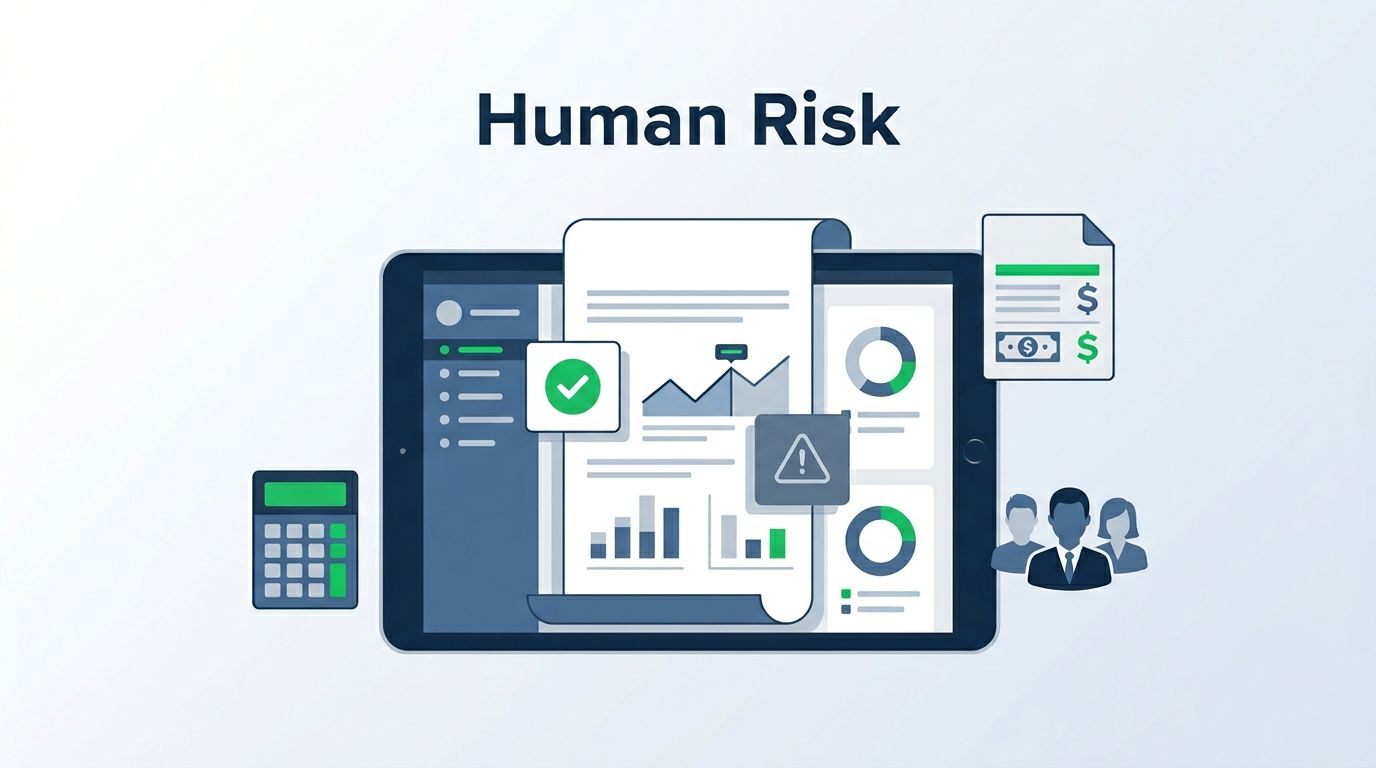
A human risk report template gives finance and HR one shared way to spot, score, and track those risks. It turns scattered concerns into a clear record that leaders can act on. The sections below show how to build one that works in daily operations.
Why human risk belongs in finance and HR reports
Finance and HR touch some of the most sensitive parts of the business. They manage pay, approvals, access, employee data, and policy rules. That means a small gap in one process can spread fast.

A shared report keeps those issues visible. It also gives both teams the same language for risk. Instead of separate notes in email threads, you get one record with one owner, one score, and one review date.
That matters because human risk is often routine before it becomes serious. A skipped training reminder seems minor. A stale access right seems harmless. Put those patterns together, and the loss can be real.
What to include in a human risk report template
A useful report stays short and practical. It should help a manager scan the risk, see who owns it, and know what happens next.
Core fields that keep the report useful
Include these fields in every version of the template:
- Risk category: Use plain labels like access control or payroll errors.
- Risk description: Say what can go wrong in one short sentence.
- Likelihood: Rate how often the issue could happen.
- Impact: Rate the damage if it does happen.
- Score: Combine likelihood and impact into one number.
- Owner: Name one person responsible for action.
- Mitigation: List the control or fix in place.
- Review date: Set the next check-in.
Keep the wording factual. Short descriptions are easier to update, and they make trend review much simpler.
A sample template you can adapt right away
A simple layout is easier to use than a long form. The table below gives finance and HR teams a direct starting point.
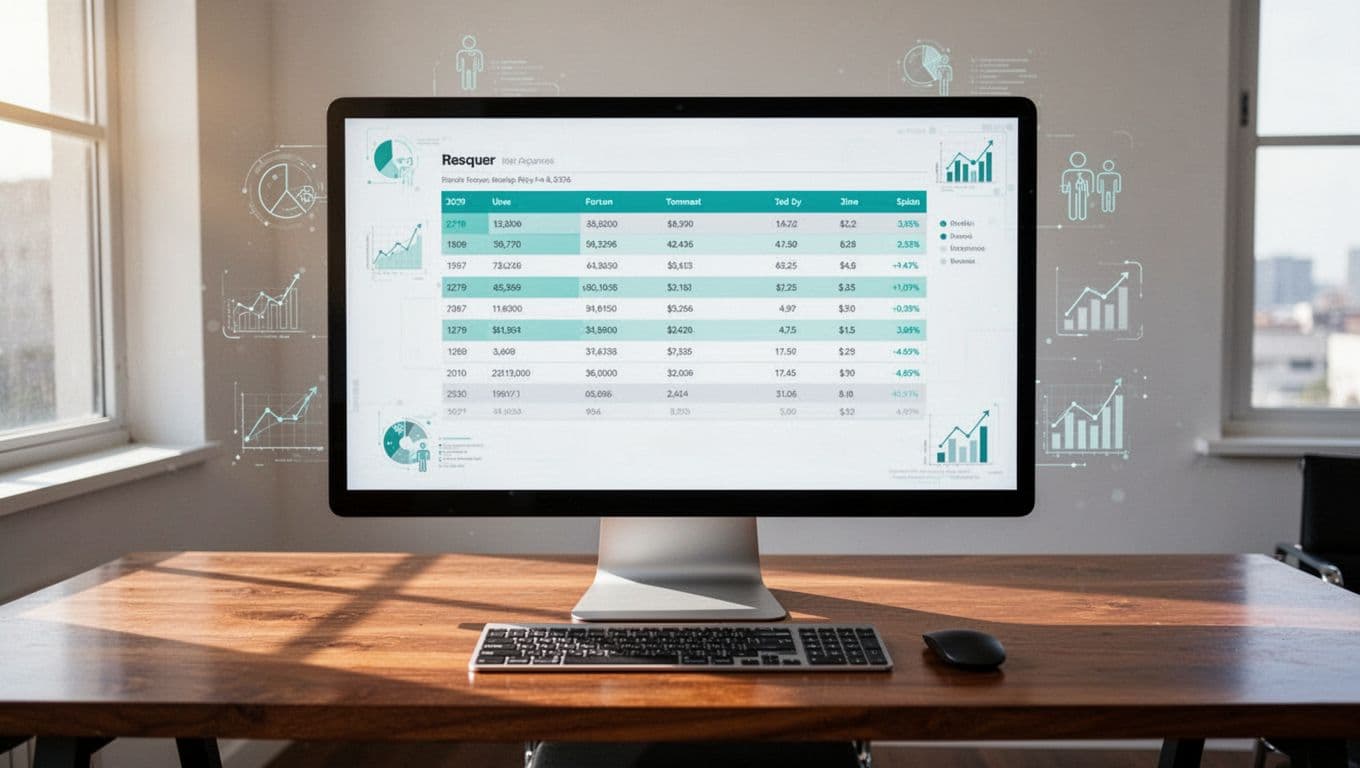
| Risk Category | Example in Finance or HR | Likelihood | Impact | Score | Owner | Mitigation | Review Date |
|---|---|---|---|---|---|---|---|
| Access control | Ex-employee still has system access | 3 | 5 | 15 | HR Ops | Remove access on role change | Monthly |
| Payroll errors | Wrong hours or pay codes hit payroll | 3 | 4 | 12 | Payroll Manager | Reconcile exceptions before close | Each run |
| Expense fraud | Duplicate or fake claims get approved | 2 | 4 | 8 | Finance Controller | Check receipts and outliers | Monthly |
| Segregation of duties | One person creates and approves payees | 3 | 5 | 15 | Finance Manager | Split setup, approval, release | Quarterly |
| Insider risk | Sensitive files leave approved channels | 2 | 5 | 10 | Security Lead | Limit exports and review logs | Monthly |
| Onboarding/offboarding gaps | New hires wait for access, exits stay open | 4 | 5 | 20 | HR Manager | Trigger access steps from HR events | Weekly |
| Training compliance | Staff miss policy training deadlines | 3 | 3 | 9 | Compliance Officer | Track due dates and reminders | Monthly |
| Data handling issues | Employee data stored or shared badly | 3 | 4 | 12 | Data Owner | Classify data and restrict paths | Quarterly |
The table works because it is easy to compare row by row. It also forces each team to name an owner, which removes confusion later.
How to score likelihood and impact without overcomplicating it
A 1 to 5 scale works well for most teams. Use the same scale across finance and HR so scores mean the same thing in every review. If likelihood is 4 and impact is 5, the score is 20.
Treat the score as a ranking tool, not a perfect measurement. A high score should push the issue to the top of the review list. A lower score still needs action if the owner sees repeat failures.
The owner field matters just as much as the score. One person should own the fix, even if several teams help with it. Mitigation also needs to be concrete. “Improve controls” is too vague. “Remove stale access each Friday” gives the team something to do.
Review dates should match the speed of the risk. Weekly review works for offboarding gaps. Quarterly review may fit training or policy checks. Keep the cadence tied to how fast the issue can grow.
If you want help shaping this into a working process, Book a Discovery Call with Bud Consulting.
Common finance and HR risks worth tracking
Some risks show up again and again because they sit inside ordinary work. In finance, access control, expense fraud, and segregation of duties are common pressure points. Payroll errors matter too, because they affect trust fast and often reach more people than expected.
HR teams see a different side of the same problem. Onboarding and offboarding gaps can leave systems open too long or slow a new hire down. Training compliance can slip when managers assume someone else is tracking it. Data handling issues also matter, especially when employee records move by email, shared folders, or exports.
Insider risk belongs on the same report because it is often tied to routine access. A person may not mean harm, but poor controls still create exposure. That is why a good template tracks both people behavior and process design.
A single report helps finance and HR spot patterns early. It also makes it easier to show leadership where control gaps sit and what has already been fixed.
A good human risk report template does one job well, it makes people risk visible before it becomes a loss. When finance and HR use the same fields, the same scoring, and the same review cycle, the report becomes part of daily control work.
Keep it short. Keep it owned. Keep it current. That is how a simple template helps reduce human risk in a way teams will actually use.