table of contents
New people managers often step into roles with big responsibilities. They approve access requests, share confidential team data, and shape how their groups handle risks. Yet many organizations treat their security onboarding like that for individual contributors. This gap leaves managers unprepared for incidents or compliance checks.
You see it happen. A promoted engineer approves broad permissions without checks. Or a new hire manager spots phishing but hesitates to escalate. Tailored onboarding fixes this. It equips them to lead securely from day one.
This guide walks you through practical steps. You’ll get differences from standard training, a phased plan, and tips for team collaboration.
Why New Managers Need Different Security Onboarding
Individual contributors focus on personal actions like spotting phishing emails. New managers do more. They decide on tool access for their teams. They discuss sensitive performance data in reviews. Plus, they model behaviors that spread across groups.
Consider a common scenario. Your sales manager gets a request from a rep for CRM admin rights. Without training, they grant it fast to keep momentum. But that opens doors to unneeded data. A strong onboarding program covers least privilege principles first. Managers learn to verify needs before clicking approve.

Standards like NIST SP 800-50 stress role-based training. For leaders, this means sessions on insider threats and reporting duties. In 2026, AI tools automate background checks during hiring. Managers must know how to oversee these without exposing data.
Another example: During layoffs, managers handle offboarding. They revoke access and log changes. Poor prep leads to lingering accounts. Onboarding drills these steps so they act confidently.
This shift matters because managers are escalation points. Teams watch them. Secure habits start here.
Essential Training Topics for New Managers
Start with basics, then build to leadership duties. Cover policies on data classification. Show how to classify emails or files as public, internal, or confidential.
Next, train on approval workflows. Use real tools like your IAM system. Practice denying risky requests. For instance, a developer asks for production database access. Guide managers to route it through security reviews.
Include culture-building. Managers influence daily choices. Teach them to run quick team huddles on phishing trends. Share stories of past incidents, anonymized.
In 2026, mobile-first training fits busy schedules. Short modules with fingerprint-secured apps deliver quizzes on the go. Pair this with simulations. Send mock access requests via email. If they approve wrongly, follow up with feedback.
Address compliance. NIST SP 800-53 requires ongoing awareness for leaders. Cover updates to ISO 27001:2022, like enhanced risk assessments. Managers learn to spot gaps in team practices.
Keep sessions interactive. Role-play escalations. What if a direct report shares credentials? They practice coaching without blame.
These topics take shape over weeks. They prevent errors and build instincts.
A 30/60/90-Day Onboarding Plan
Phased plans accelerate readiness. Structure security onboarding around days 30, 60, and 90. This matches learning curves.
Days 1-30 focus on foundations. Review policies and complete MFA setup. Assign a security buddy for questions. By day 30, managers audit their own access.
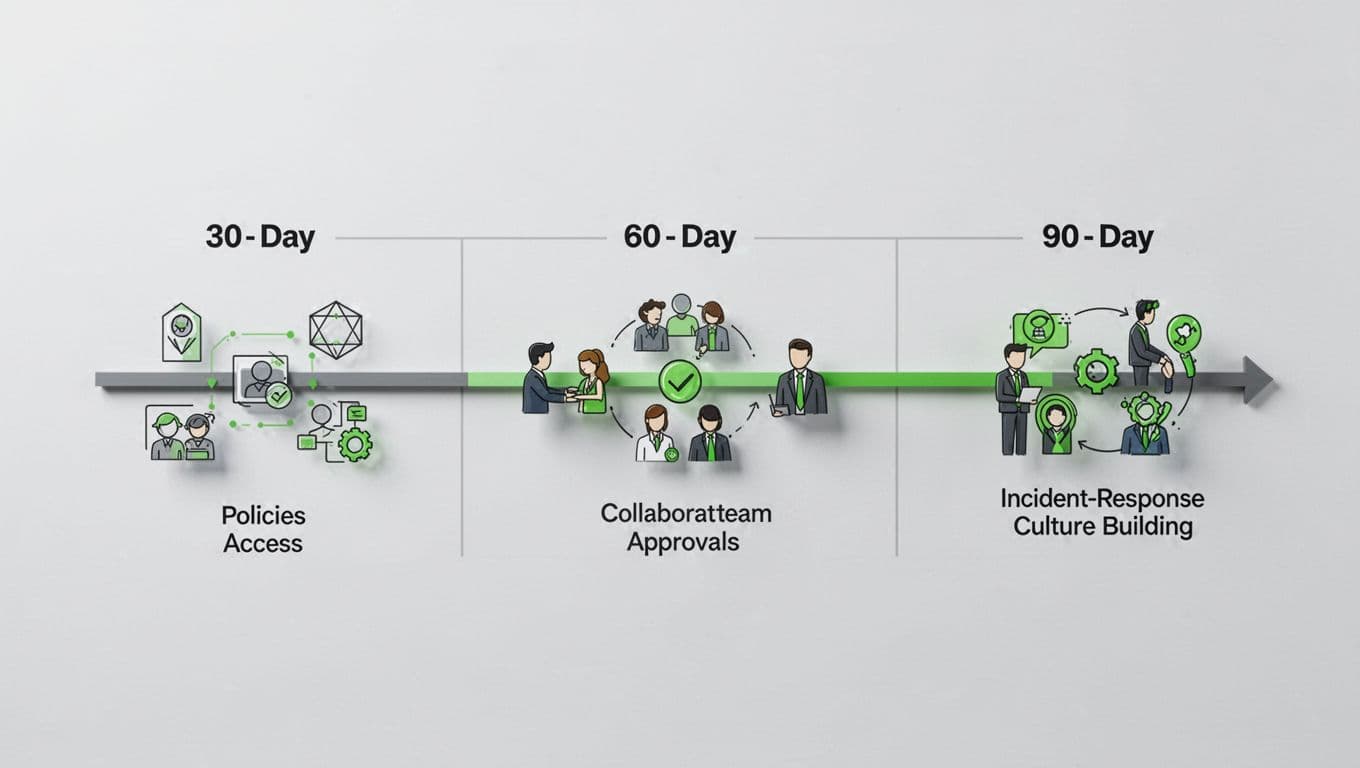
Days 31-60 shift to team scenarios. Practice approving requests. Run tabletop exercises on breaches. For example, simulate a ransomware alert. Managers decide who to notify first.
By day 90, emphasize response and culture. Lead a mock incident. Build habits like weekly security check-ins. Track metrics like training completion.
For details on security leader plans, check this 30/60/90 outline for new security leaders. Adapt it to people managers.
Use checklists in shared tools. Automate reminders. This plan reduces ramp-up time. Managers contribute securely sooner.
Foster Collaboration Across Teams
HR owns the schedule. Security designs content. IT handles access. Legal flags compliance risks. Align them early.
Hold a kickoff meeting before the manager starts. Map roles. HR shares hire timelines. Security provides modules. IT preps accounts with least privilege.

In 2026, integrate tools. Use platforms where IT vets encryption before HR deploys forms. For remote managers, ship secure devices pre-configured.
See how HR and IT collaborate on onboarding security. It stresses joint processes from day one.
If gaps persist, consider experts. Book a Discovery Call with Bud Consulting to refine your approach.
This teamwork ensures nothing falls through.
Track Progress and Adjust
Measure with simple metrics. Track completion rates for modules. Quiz scores on approvals. Number of escalations handled right.
Survey managers at 30 days. Ask about confidence levels. Follow up at 90. Use data to tweak content.
Continuous monitoring fits 2026 trends. AI flags incomplete trainings. Dashboards show team-wide gaps.
Refine yearly. Align with NIST updates or new threats. This keeps onboarding fresh.
Key Takeaways
Security onboarding for new managers prevents common pitfalls. They approve access, lead culture, and escalate issues. A phased 30/60/90 plan builds skills steadily.
Team up across HR, security, IT, and legal. Measure results to improve.
Start small. Pick one change, like approval simulations. Your managers will lead safer teams.