table of contents
Severity alone doesn’t tell you which cloud issue can hurt you first. A medium finding that opens a direct route to sensitive data is often worse than ten high findings with no path to impact.
That is why cloud exposure findings need to be ranked by attack path, not by alert volume. The goal is simple, fix the smallest change that breaks the largest route for an attacker.
Start with the path, not the alert
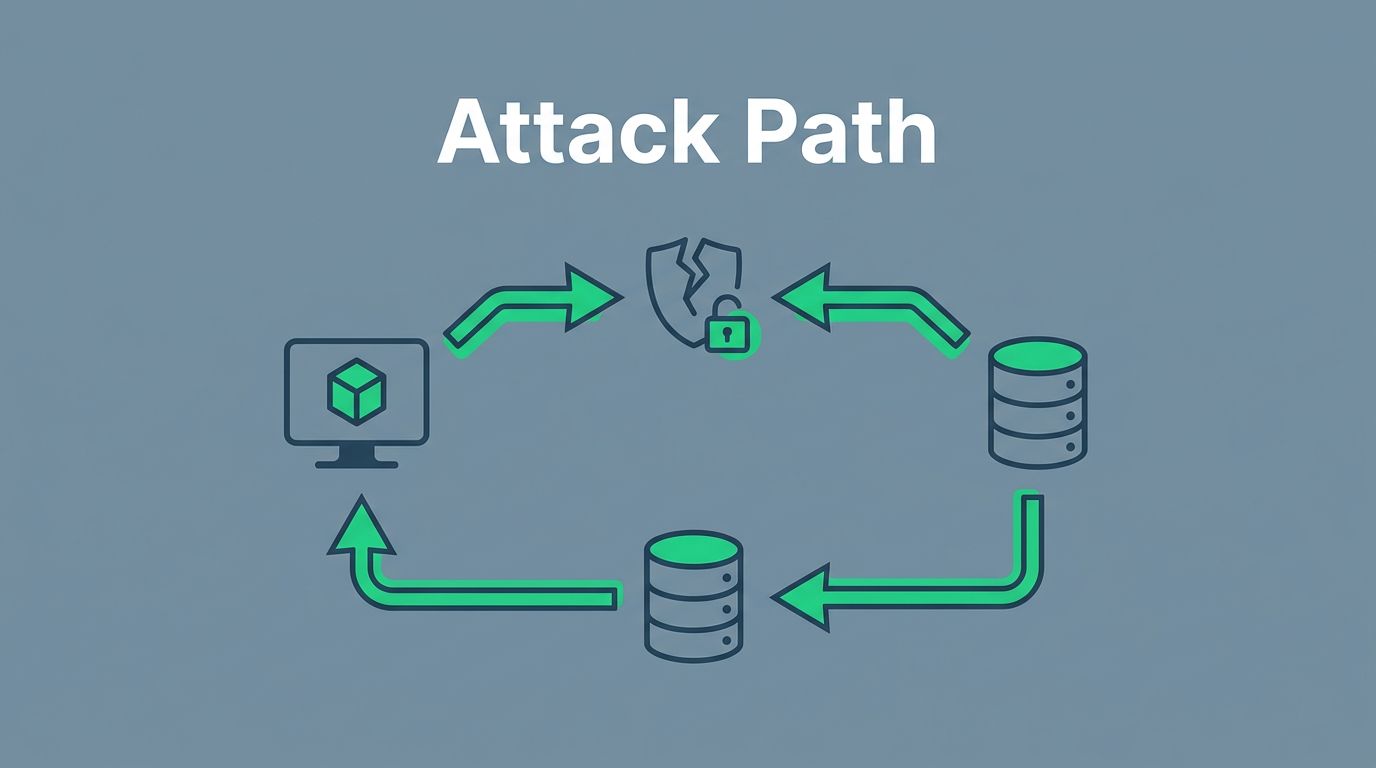
An individual finding rarely tells the whole story. A public VM, a weak IAM policy, and a reachable database might look like separate problems, but together they form one attack path.
That path usually has four parts: initial access, movement through identities or networks, privilege gain, and impact. If a finding does not help an attacker move along that chain, it belongs lower on the list.
Modern cloud security tools model this well. Azure teams can use Microsoft’s attack path guidance to see how Defender for Cloud groups risk by route to impact. Wiz also explains the same idea in graph form in its attack path analysis overview.
A finding is urgent when it sits on a path an attacker can actually use.
That means you should combine identity posture, permissions, network reachability, resource sensitivity, and attack path context before you assign a priority.
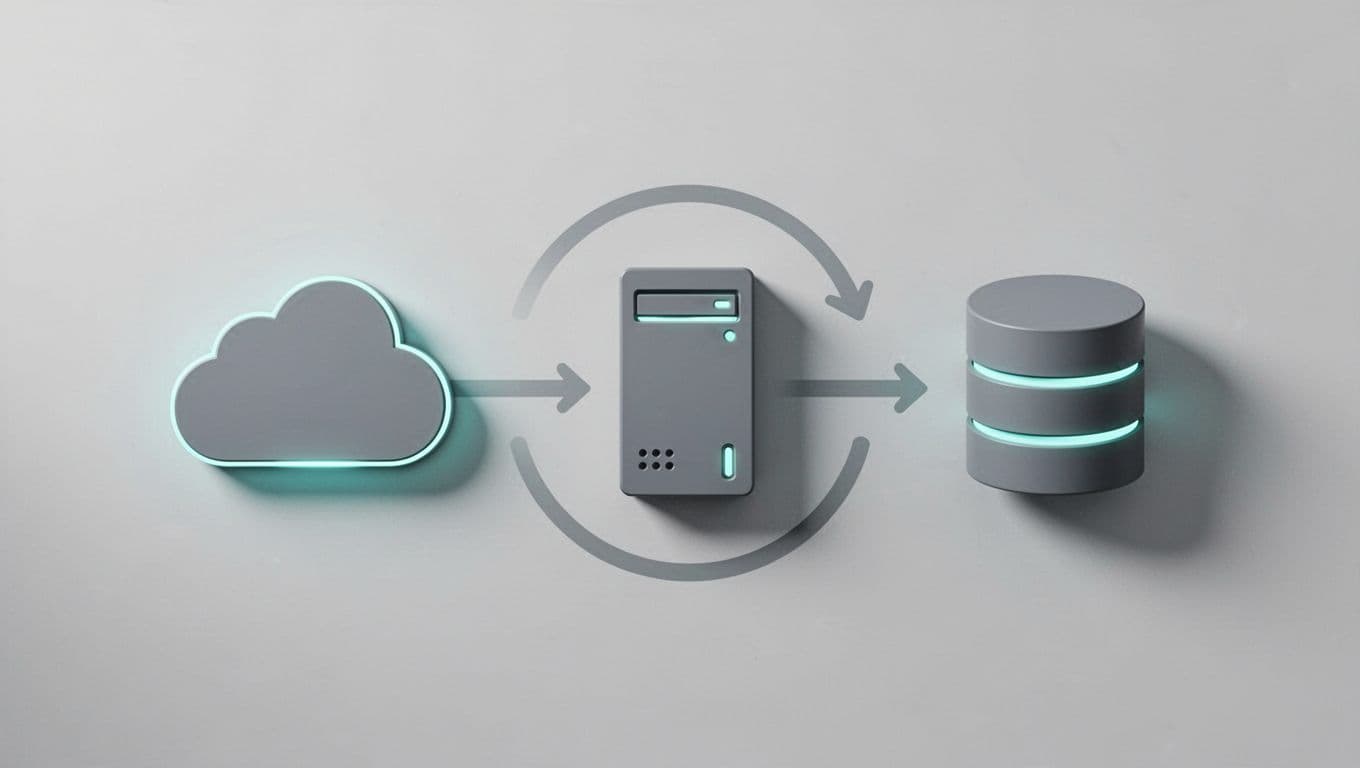
A public bucket is annoying. A public bucket that leads to an over-privileged workload and then to a sensitive database is a problem you fix first.
Build a scoring model your team can repeat
A good triage model does not need to be perfect. It needs to be consistent enough that two analysts reach the same answer.
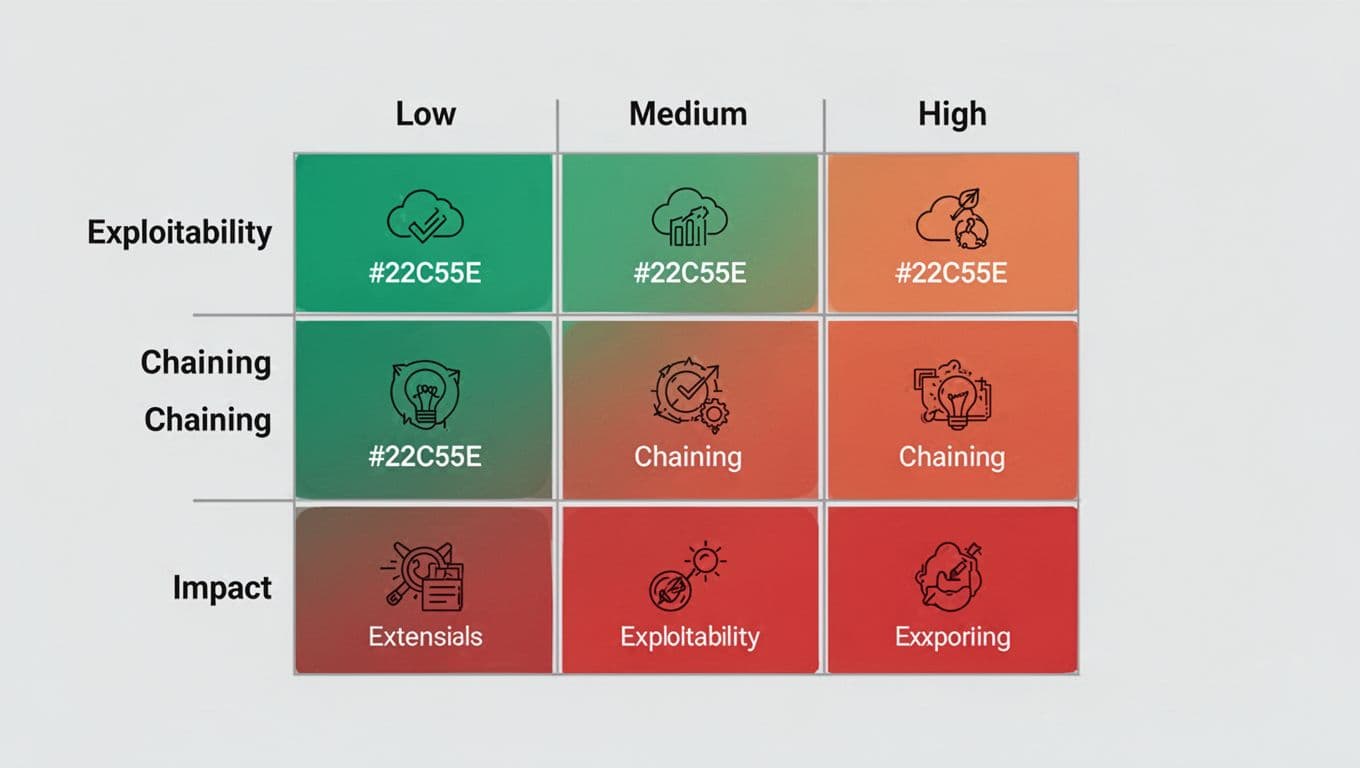
Start with five signals: exploitability, chaining potential, business impact, reachability, and credential risk. Then subtract for remediation effort. A simple 1 to 5 score for each works well.
| Factor | What to ask | What scores high |
|---|---|---|
| Exploitability | Can an attacker use this without rare conditions? | Public access, known exploit, weak auth |
| Chaining potential | Does it unlock another step in the path? | Privilege escalation, lateral movement, secret access |
| Business impact | What target can the path reach? | Prod control plane, customer data, regulated data |
| Reachability | Can it be hit from the internet or from a common foothold? | Public endpoint, broad internal access, cross-account trust |
| Credential risk | Does the path depend on stolen creds or over-privileged identities? | Long-lived keys, service principals, admin roles |
| Remediation effort | How hard is the fix? | One policy change, one security group rule, one trust update |
A simple formula works: Priority = exploitability + chaining + impact + reachability + credential risk – remediation effort. Keep the scale narrow so the team can rank work fast.
Google Cloud uses a similar idea in attack exposure scores, where findings that expose high-value resources rise above noise. That is the right direction. You want the finding that breaks the path, not the one that only looks ugly on a dashboard.
Rank the attack paths that break first
Some paths are easy to spot because they combine access, privilege, and data in one chain. These should almost always rise to the top.
| Scenario | Why it is high risk | First fix |
|---|---|---|
| Public compute instance with an admin IAM role | One foothold can become full cloud control | Remove excess permissions, tighten the instance profile, restrict egress |
| Public service linked to a sensitive database | The attacker has a direct route to valuable data | Put the database on private access, add auth checks, narrow inbound rules |
| Identity misconfiguration that enables escalation | A low-value identity can become a high-value one | Fix trust policies, remove stale keys, enforce MFA or conditional access |
In AWS, a public EC2 instance with an over-privileged role and S3 access is usually more urgent than a lone CVE on an isolated host. In Azure, a managed identity with broad Key Vault access and a public app endpoint deserves the same treatment. In GCP, a publicly reachable service account that can reach Cloud SQL or Secret Manager should jump the queue.
The pattern is the same across clouds. If an attacker can move from exposure to privilege to sensitive data with little friction, the path is hot.
Turn priority into fast remediation
Priority only matters if it changes what your team does next. After you rank the paths, assign the ticket to the owner who can break the route fastest.
That often means fixing one control, not five findings. One IAM policy change can kill three paths. One network rule can remove public reachability. One trust update can close a privilege-escalation chain.
Use a short operating rule:
- Fix paths that reach production data, admin roles, or internet-facing services first.
- Set tighter SLAs for paths with low attacker effort and high business impact.
- Re-run attack path analysis after each change, because the graph should get smaller.
If your queue still feels noisy, focus on the path context, not the alert count. If you want help turning that model into a practical triage process, Book a Discovery Call with Bud Consulting.

Conclusion
The fastest way to reduce cloud risk is not to chase the loudest finding. It is to break the attack path that gives an attacker the clearest route to impact.
When you rank cloud exposure findings by exploitability, chaining potential, reachability, and business value, the noise drops fast. What stays on top is the work that matters most.