table of contents
Quantum computers advance fast. In April 2026, enterprises face real pressure to protect data from “harvest now, decrypt later” attacks. Many CISOs still lack a clear plan, but NIST standards from 2024 make action possible today.
You handle cryptographic risks across teams. Delays cost time and expose secrets. This guide gives role-specific checklists so you prioritize effectively.
Start with defined roles. Then follow checklists for inventory, agility, and more.
Grasp NIST Timelines and Crypto Risks
NIST sets the pace for post-quantum shifts. Federal systems target full adoption by 2035, per NSM 10. Agencies must swap symmetric keys by 2030. Enterprises follow suit because attackers target everyone.
Key standards include FIPS 203 for key exchange and FIPS 204 for signatures. These replace RSA and ECC now. Check NIST’s post-quantum cryptography page for details.
Crypto-agility matters most. It lets you swap algorithms without rebuilds. Without it, updates disrupt operations. Start inventories immediately. Many firms find three to five times more crypto assets than expected, like in printers or IoT devices.
Focus on high-risk areas first, such as TLS certificates and VPNs. Use automated tools for discovery. This builds your baseline.
Key Roles in Quantum Threat Preparedness
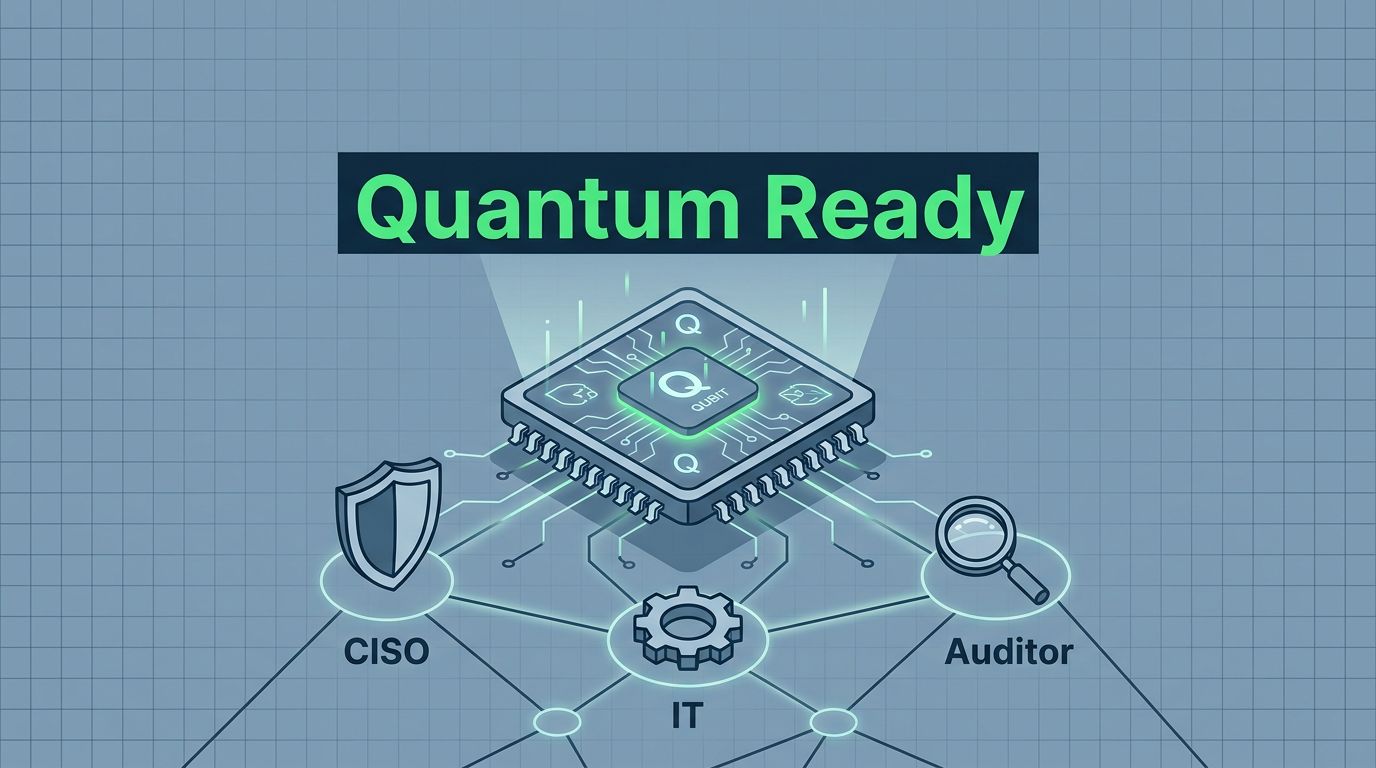
Assign clear owners across functions. CISOs lead strategy. Security architects handle tech details. IT directors execute upgrades.
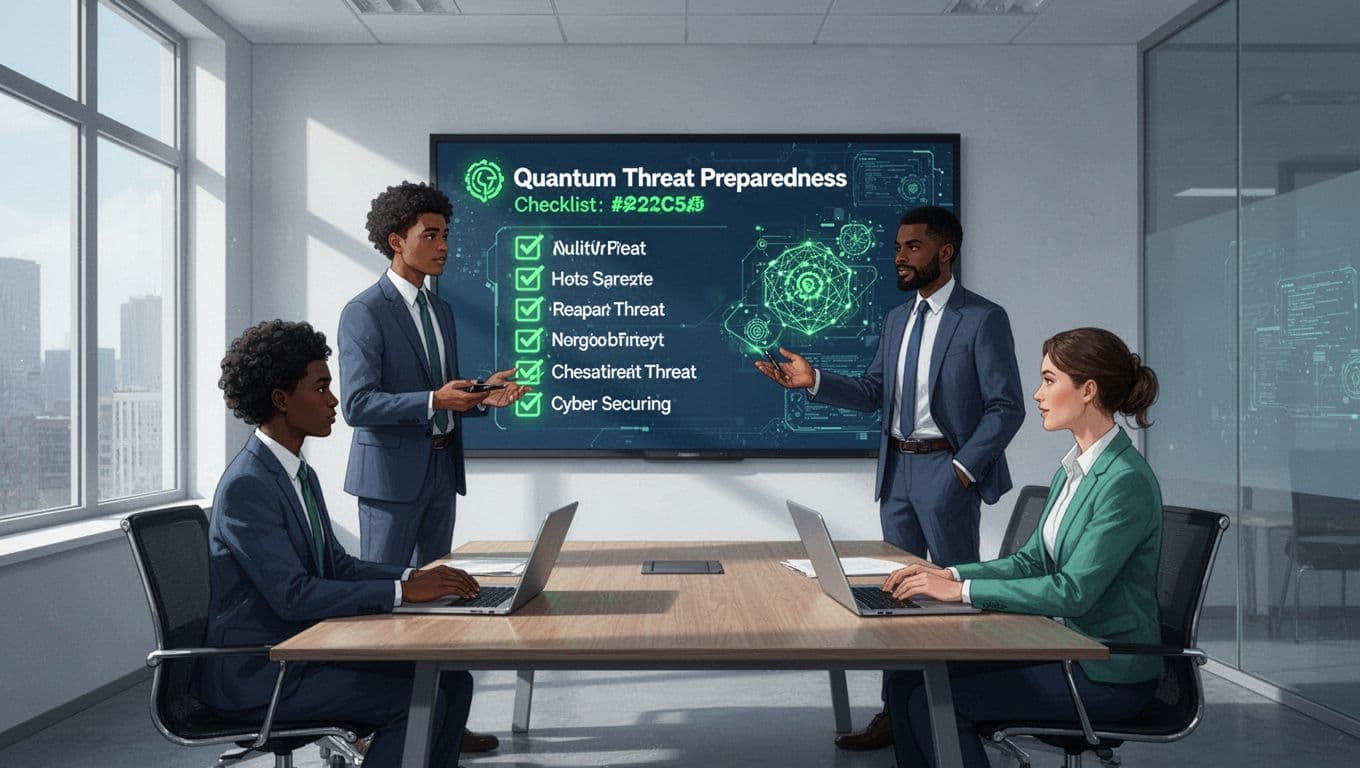
CISO responsibilities:
- Approve budgets for tools and training.
- Report progress to the board quarterly.
- Align with NISTIR 8547 migration steps.
Security Architect checklist:
- Map all protocols using quantum-vulnerable crypto.
- Test hybrid modes with ML-KEM and classical keys.
- Document interoperability risks.
Risk and Compliance Leader tasks:
- Review contracts for PQC support.
- Track vendor roadmaps against your timeline.
- Audit key rotation policies yearly.
IT Director actions:
- Deploy discovery scanners enterprise-wide.
- Pilot PQC in non-prod environments.
- Schedule firmware updates for legacy gear.
Teams collaborate weekly. This avoids silos. Roles overlap, so share dashboards for visibility.
Build Your Asset Discovery Checklist
Discovery uncovers hidden risks. Skip it, and you chase shadows.
Run scans on networks, endpoints, and cloud. Include firmware in OT and IoT. Tools flag RSA, DH, or ECC usage.
Here’s a starter checklist:
- List all certificates and expiration dates.
- Identify key lengths below NIST minimums.
- Catalog protocols like TLS 1.2 with weak ciphers.
- Prioritize by data sensitivity and exposure.
Automate where possible. Integrate with SIEM for ongoing checks. Re-scan after changes.
Expect surprises. Medical devices or cameras often run old crypto. Plan replacements early because hardware lags software.
Strengthen Key Management and Crypto-Agility
Keys drive everything. Poor management amplifies quantum threats.
Adopt crypto-agile platforms. They enforce policies and rotate algorithms seamlessly. Follow Accenture’s 8 steps for crypto-agility.
Key management checklist:
- Centralize generation and storage in HSMs.
- Set auto-rotation every 90 days.
- Validate against approved PQC lists.
- Encrypt backups with hybrid schemes.
Test agility in pilots. Swap to SLH-DSA signatures. Measure performance hits, often under 10% with optimization.
Governance ties it together. Define standards in policy. Review annually as NIST evolves. This keeps you ahead.
Tackle Vendor Risk and Compliance Pitfalls
Vendors lag. Demand their plans now.
Vendor assessment checklist:
- Request PQC timelines in RFPs.
- Audit third-party crypto usage.
- Test integrations in sandbox.
- Include clauses for non-compliance.
Supply chain risks persist. One weak partner undoes your work. Score vendors on maturity, per NIST’s migration project.
Compliance leaders, map to regs like GDPR or DORA. They echo NIST deadlines. Document everything for audits.
Dodge Common Quantum Prep Mistakes
Firms repeat errors. Don’t wait for “perfect” standards; NIST released them in 2024.
Top pitfalls include underestimating inventory scope and treating this as an IT-only issue. Get exec buy-in early.
Ignore cloud hype. Providers update services, but your apps need work. Vendors delay too, so lead them.
Build agility from day one. Hard-coded algos trap you later. Start small, scale fast.
Your Prioritized Action Plan
Phase your efforts. Aim for quick wins while planning long-term.
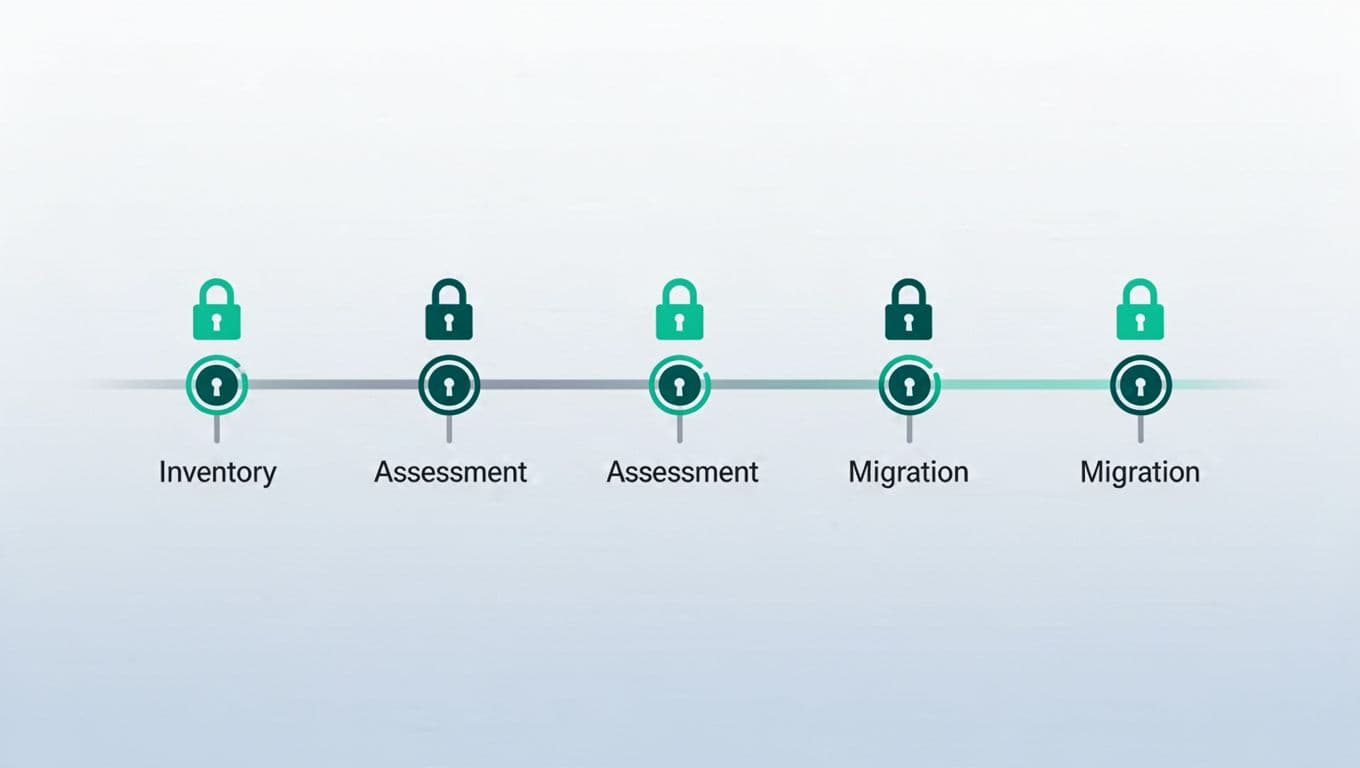
- Months 1-3: Inventory. Scan everything. Prioritize crown jewels.
- Months 4-12: Assess and pilot. Risk-rank assets. Test hybrids.
- Year 2: Migrate high-risk. Update TLS, VPNs first.
- Years 3-5: Full rollout. Hit crypto-agile across estate. Monitor continuously.
Track with KPIs like percent PQC-compliant. Adjust as quantum hardware advances.
Book a Discovery Call with Bud Consulting to fill skills gaps in PQC experts.
Key Takeaways
Quantum threats demand action now. Roles clarify ownership. Checklists guide discovery, agility, and vendors.
NIST timelines press urgency to 2035. Start inventories today. Avoid delays by prioritizing and collaborating.
Your enterprise stays secure with steady steps. Data protected means business uninterrupted.