table of contents
Startups face real threats in cloud-native setups. You hire a red team operator to test defenses, but without solid onboarding, they waste time or cause issues. Poor setup leads to scope creep, legal risks, or team friction.
This guide gives you a practical checklist. It focuses on internal operators, not external pentesters or bug hunters. You’ll learn to coordinate across legal, HR, engineering, and security. Follow these steps to get them productive fast while keeping everything compliant.
Align Stakeholders Early
Get buy-in from key players before day one. In startups with lean teams, CTOs, legal, HR, and security leads must agree on goals. Otherwise, confusion slows everyone down.
Hold a kickoff meeting. Discuss what success looks like. For example, does the operator test identity access in your AWS or Azure setup? Or probe app vulnerabilities? Set expectations now.
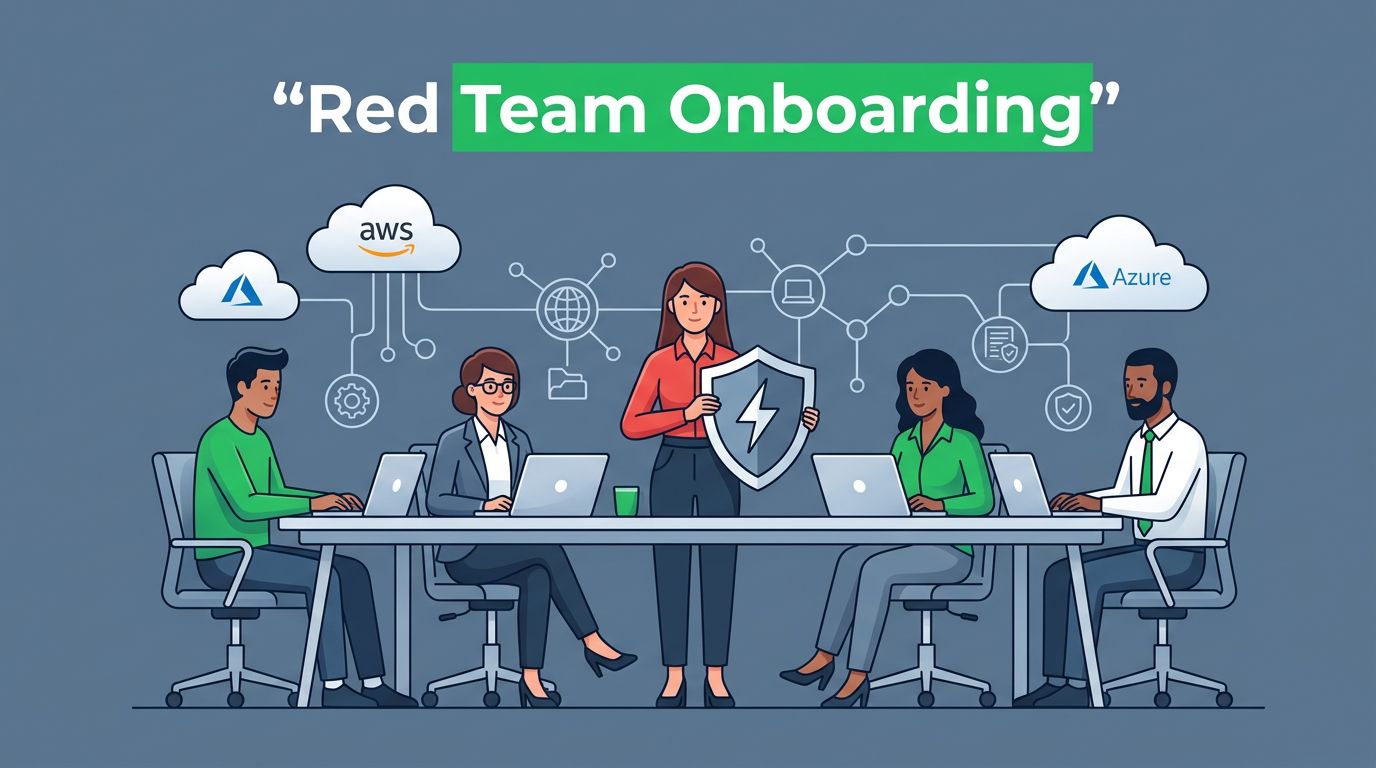
Cross-functional alignment prevents mishaps. Legal checks for compliance with data laws. HR handles background checks. Engineering preps environments.

Here’s a quick stakeholder checklist:
| Role | Responsibilities |
|---|---|
| CTO | Approve tech scope and resources |
| Legal | Review contracts and NDAs |
| HR | Complete background verification |
| Security Lead | Define detection baselines |
This table ensures no one misses their part. After the meeting, document agreements. Share with all. It builds trust and speed.
In 2026, startups run purple team exercises often. Red operators work with blue teams daily. Early alignment makes this smooth. Check resources like this pre-engagement checklist from redteams.ai for more ideas.
Define Rules of Engagement
Rules of engagement (RoE) keep tests safe and focused. Internal red teamers differ from consultants; they stay long-term, so rules evolve with your stack.
Write a clear RoE document. Specify targets, like cloud IAM or APIs. Exclude production databases unless approved. Set no-go zones, such as customer data.
Include escalation paths. If they spot a critical flaw, who notifies whom? Use Slack channels or tickets. Define “safe words” for immediate stops.
Make it mutual. Operators acknowledge rules in writing. Review quarterly as your startup grows.
A simple RoE template:
- Targets: Approved assets only.
- Methods: Authorized tools; no real malware.
- Duration: Time-bound sprints.
- Reporting: Weekly summaries.
This setup avoids accidents. It also teaches operators your priorities, like identity-centric controls in multi-cloud environments.
Prepare Technical Environments
Operators need isolated labs to test without risk. In budget-tight startups, use cloud sandboxes over full VMs.
Provision test accounts early. Set up VPN or bastion hosts. Tools like AWS SSM or Azure Bastion work well. Ensure revocable access.
Focus on 2026 realities: cloud-native apps and zero-trust models. Prep mock environments with your exact IAM policies, Kubernetes clusters, or serverless functions.

Log everything. Enable CloudTrail or equivalent. This proves compliance and helps blue teams learn.
Test the setup yourself first. Can they pivot between services? Does it mimic production? Fix gaps before they start.
Budgets matter, so prioritize free tiers. Terraform scripts automate this. It cuts onboarding from weeks to days.
Establish Access Controls and Logging
Identity is king in modern startups. Onboard with least-privilege access. Use Okta or Entra ID for just-in-time elevation.
Separate red team creds from personal ones. Rotate keys weekly. Audit trails show who did what.
Set up central logging. Splunk, ELK, or cloud-native options capture all actions. Share views with the operator for debriefs.
Define offboarding too. Even internals leave; automate revocation.
| Access Type | Tool/Example | Logging Requirement |
|---|---|---|
| Test Accounts | AWS IAM roles | Full CloudTrail |
| VPN | Tailscale or WireGuard | Connection timestamps |
| Repos | GitHub enterprise | Commit and access logs |
This prevents leaks. It also builds data for continuous improvement.
Build Company Knowledge and Training
Generic pentest skills fall short. Train on your stack: custom apps, third-party SaaS, AI models if you use them.
Pair them with engineers for shadow sessions. Walk through code deploys or auth flows.
Cover purple team basics. They simulate attacks; blue team detects. Run joint drills weekly.
Resources help. Share runbooks, diagrams, threat models. Quiz them on day three.
This speeds ramp-up. Operators spot real blind spots, like misconfigs in your CI/CD pipeline.
Foster Ongoing Collaboration
Red teaming shifted to continuous in 2026. Operators embed with SecOps, not operate solo.
Schedule purple team syncs. High-five after detections work.

Track metrics: detection rates, fix times. Adjust based on findings.
Encourage feedback loops. Operators suggest tool tweaks; blue teams tune alerts.
This turns tests into daily habits. Your startup stays ahead of threats.
Monitor Progress and Iterate
Weekly check-ins gauge fit. Review findings, adherence to RoE.
Use dashboards for KPIs: tests run, vulns found, resolutions.
After 30 days, full review. Extend probation if needed.
Adjust as you scale. Add AI red teaming if relevant.
Conclusion
Solid red team onboarding sets your startup up for ongoing defense wins. You coordinate teams, prep safe environments, and build collaboration. Operators become force multipliers.
Internal setups beat one-off consultants for speed and culture fit. Start with stakeholders today.
Need help sourcing talent? Book a Discovery Call with Bud Consulting. Your security team grows stronger.