table of contents
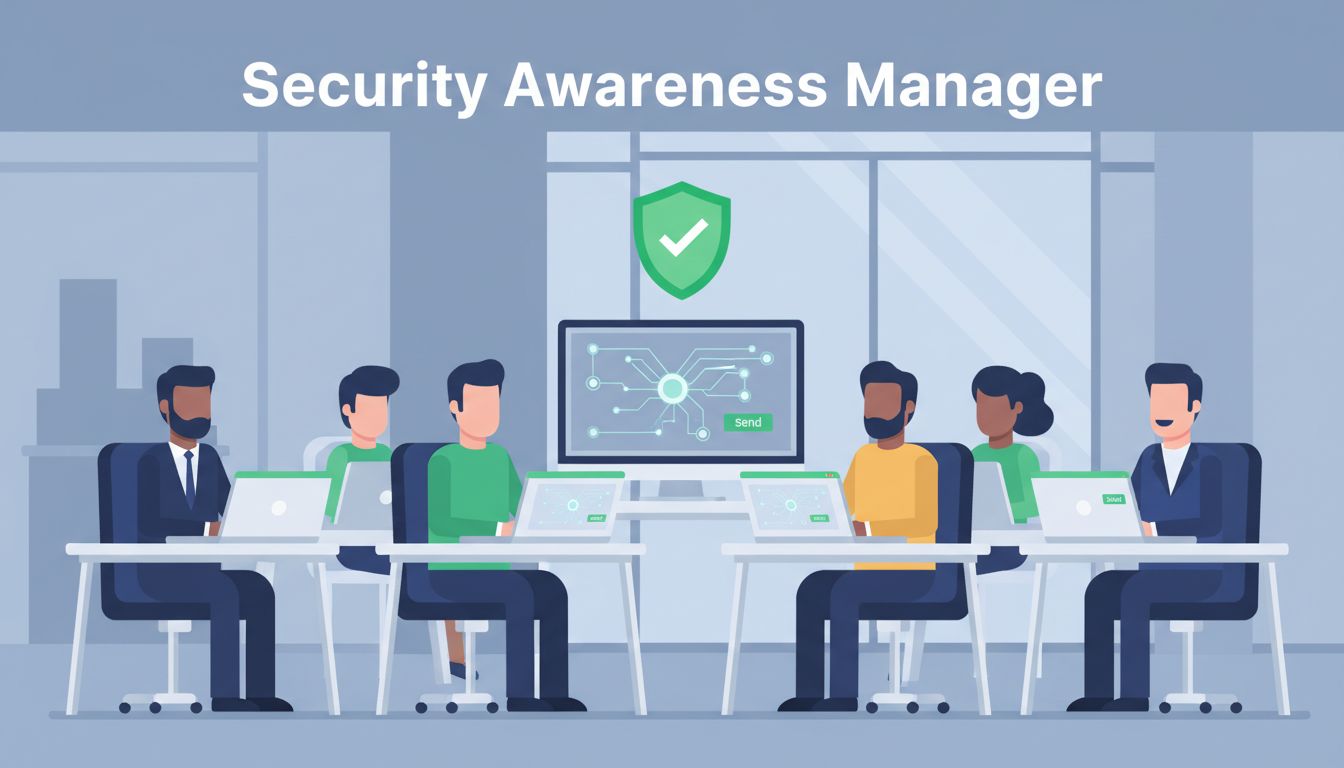
A good security awareness manager job description does more than name a training role. It helps hiring teams find someone who can change habits, not just send reminders.
Hire this role when awareness work is scattered, phishing reports are weak, or security training has become a compliance task with no clear owner. In 2026, the best postings also call out behavior change, reporting, and support for hybrid teams. Recent job posts, including Walmart’s Cybersecurity Awareness Pillar Lead and a Cybersecurity Awareness Manager posting, show how broad the role has become.
Use the template below as a starting point, then adjust it for your tools, workforce, and risk level.
When this role belongs on your team
This hire makes sense when awareness work has outgrown a side task. Maybe IT owns phishing tests, HR owns training, and no one owns the results. That gap can leave employees confused and leaders without useful metrics.
The role also fits when you need a steady voice for security habits. For example, the manager can help with phishing simulation follow-up, policy reminders, secure reporting, and simple behavior coaching. If you’re shaping the program from scratch, a practical security awareness program guide for IT managers can help align the work with HR, IT, and compliance.
Security Awareness Manager job description template
Use this starter copy and replace the brackets with your own details.
[Company Name] is looking for a Security Awareness Manager to lead employee awareness programs that reduce human risk, improve reporting, and support secure behavior across the business.
Reports to: [CISO, Director of Security, or similar]
Partners with: [HR, IT, Legal, Compliance, Internal Communications]
Location: [Remote, Hybrid, or On-site]
Success looks like: [higher reporting rates, fewer repeat clicks, stronger training completion, better policy adoption]
If you want a stronger structure for the program, compare the role scope with best practices for security awareness programs.
What the role should own
A strong Security Awareness Manager runs the program as a living process. The work should stay current and measurable.
- Plan the yearly and quarterly awareness calendar.
- Build role-based training for new hires and existing staff.
- Run phishing simulations and review the results.
- Partner with HR and Internal Communications on campaigns.
- Support policy rollouts with clear, plain-language messaging.
- Track behavior trends and report them to leadership.
- Update content for new threats, including AI-written phishing and social engineering.
The best candidates can explain security in simple words. They also know when an email campaign, a short video, or a manager message will work better than a long course. In 2026, that mix matters more than polished slides.
Qualifications to ask for
Keep the must-haves realistic. Many strong candidates come from cybersecurity, training, change management, internal communications, or risk roles.
- Bachelor’s degree or equivalent experience in cybersecurity, communications, education, or a related field.
- 3 or more years in security awareness, training, security operations, compliance, or similar work.
- Familiarity with LMS platforms, phishing tools, survey tools, and dashboards.
- Clear writing skills and confidence presenting to non-technical teams.
- Basic understanding of security concepts, incident reporting, and user behavior.
A degree alone won’t carry this role. The person has to connect security goals with human behavior. That skill is what keeps the program useful after the launch month ends.
Preferred experience that strengthens the hire
Preferred experience should improve the odds of success, not create a wish list no one can meet.
- Experience with remote, hybrid, or global teams.
- Background in behavior change, adult learning, or internal communications.
- Exposure to frameworks such as NIST, ISO 27001, or internal risk programs.
- Experience improving metrics based on campaign results.
- Comfort working with executives and line managers.

These skills help the manager do more than run training. They help the person build trust, translate risk, and keep the program tied to real business needs.
Sample KPIs for success
The clearest KPIs measure behavior, not only attendance. For more ideas on what to track, review security awareness training metrics.
| KPI | What it tells you |
|---|---|
| Training completion rate | Whether people finish required learning on time |
| Phishing reporting rate | Whether employees spot and report suspicious messages |
| Phishing click rate | Where risky behavior still needs coaching |
| Time to report suspicious email | How quickly staff respond to threats |
| Repeat simulation failures | Where targeted follow-up is needed |
Completion rates matter, but they don’t prove behavior change on their own.

Use a small set of metrics at first. Too many numbers can bury the story. A clean dashboard helps leaders see whether the program is working.
Short FAQ
Should this role sit in security or HR?
Either setup can work. The key is access to both teams. Security brings the risk view, while HR helps with training, communication, and onboarding.
Can one person own the whole program?
Yes, in smaller companies. Still, the manager should have support from IT, HR, and internal communications. A solo owner without partners will struggle to keep the program fresh.
What should this role focus on in 2026?
Focus on behavior change, reporting habits, and content that fits hybrid work. AI-assisted phishing and fast-moving social engineering tactics make short, clear training more useful than long annual refreshers.
A clear posting attracts better candidates
A strong posting tells candidates what they will own and how success will be measured. It also shows that your team treats awareness as an ongoing program, not a once-a-year task.
If you want help tightening the scope or benchmarking the role before you publish it, Book a Discovery Call with Bud Consulting.