table of contents
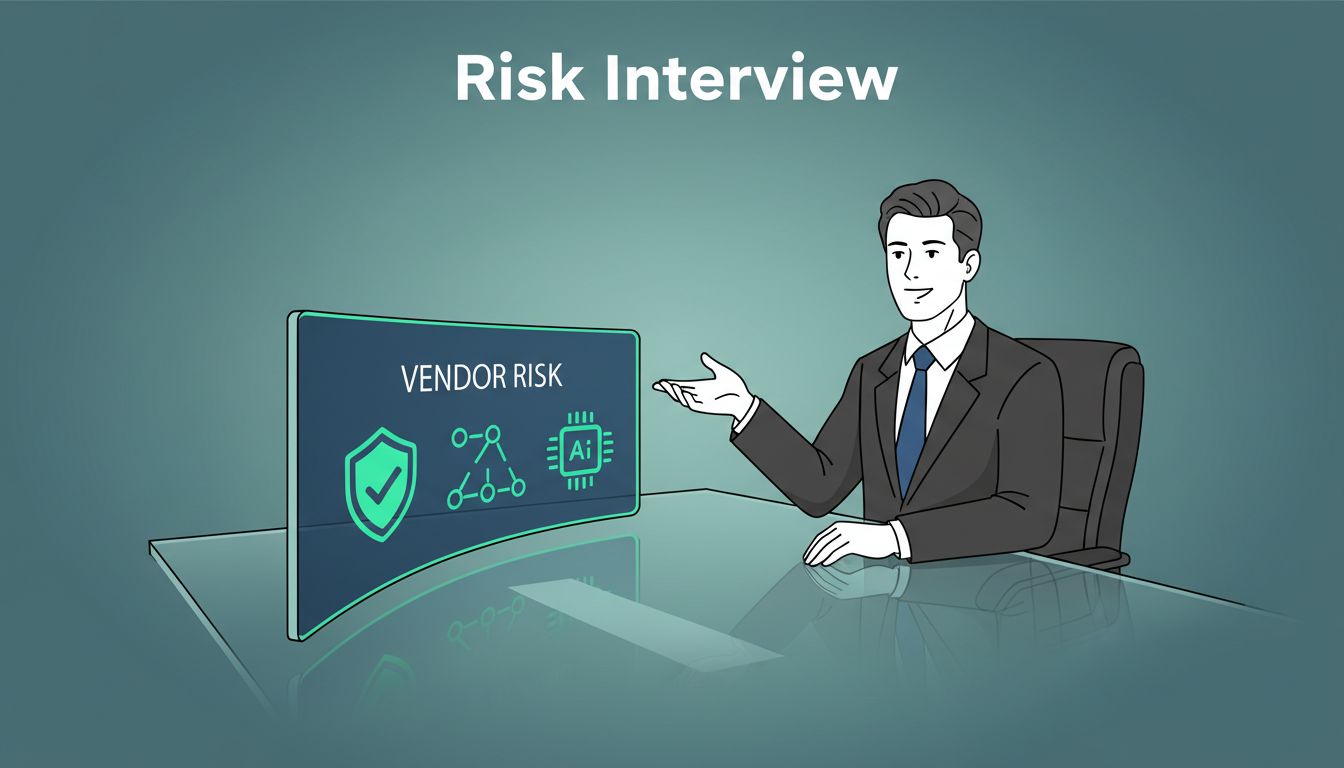
Vendor risk hiring gets messy when interviews stay vague. The best third-party risk manager interview questions force candidates to show how they think, how they decide, and how they work with the rest of the business.
In 2026, that matters more than ever. Good candidates should speak clearly about continuous monitoring, fourth-party exposure, AI in vendor tools, and current compliance pressure without hiding behind policy language.
The right questions separate someone who has filled out questionnaires from someone who can run a program. Start with the prompts below, then listen for judgment, trade-offs, and clear next steps.
Screening questions that separate real TPRM experience
For early interviews, keep the pace brisk. You want to hear how the candidate thinks before you get into tools or frameworks. If you want more sample prompts, expert answers to third-party risk management questions can help you compare your own shortlist.

How do you decide which vendors need the most review?
A strong candidate should talk about data sensitivity, service criticality, access level, geography, and subcontractor exposure. Listen for a method that changes with the vendor, because a payroll provider and a software library should never get the same treatment.
What evidence do you ask for first?
This question shows whether the candidate knows how to cut through noise. Strong answers mention the right artifacts for the risk, such as SOC 2 reports, pen test results, insurance, privacy terms, or incident history, instead of asking for everything at once.
When does a third-party program become too manual?
Good operators can spot process drag early. Look for answers that mention missed deadlines, duplicate work, poor handoffs, or review bottlenecks, then explain how they reduce it with better intake, clearer ownership, or automation.
Technical questions that show operating depth
At this stage, you want proof that the candidate can run a real program, not just advise on one. For current monitoring and tiering ideas, the third-party risk management best practices guide is a useful reference point.

Walk me through your intake to offboarding process.
This reveals whether they understand the full lifecycle. Listen for a clear flow from intake, due diligence, contract review, approval, monitoring, issue handling, and offboarding, plus the handoffs to security, legal, procurement, and compliance.
How do you connect control gaps to actual business risk?
Strong candidates do more than list gaps. They explain what the gap means for data, uptime, customer trust, or regulation, then tie the issue to a decision, such as acceptance, remediation, compensating controls, or escalation.
What do you monitor continuously after onboarding?
In 2026, annual reviews are not enough for many vendors. Look for answers that include security ratings, incident signals, access changes, contract changes, material scope shifts, and AI-driven features that may alter data handling or control expectations.
Behavioral questions that reveal cross-team skill
Third-party risk work lives between teams. The best people can push a deal forward without losing control, and they can do it without creating friction. That balance matters more than a perfect script.
Tell me about a time procurement wanted speed and security wanted more review.
You want a candidate who can handle pressure without guessing. Strong answers show calm communication, a clear risk position, and a practical way to keep the deal moving, such as narrowed scope, faster evidence requests, or a documented exception path.
Describe a process change you made with legal, compliance, or privacy.
This question shows whether they can build support instead of working around people. Listen for a real example with shared ownership, a clear problem, and a measurable result, such as shorter review time or fewer back-and-forth cycles.
Scenario questions that test judgment under pressure
Now the interview should feel like a real day in the job. If your work touches regulated sectors, TPRM regulations compliance guidance is a helpful way to frame current pressure from rules and audits.

A critical vendor refuses to share the evidence you asked for. What do you do?
This question shows whether the candidate can stay firm and still move the work forward. A strong answer explains how they assess alternatives, involve stakeholders, document the gap, and decide whether to accept, escalate, or walk away.
A low-risk vendor suddenly gets access to customer data. How do you respond?
Look for fast reclassification, not a slow debate. The best candidates talk about re-scoping the review, bringing in privacy and security, updating contract terms, and checking whether monitoring and controls need to change right away.
The deal is ready to sign, but the review is unfinished. What happens next?
This tests whether the candidate can hold the line under deadline pressure. Strong answers include clear escalation, risk acceptance only when justified, and a record of who approved what, because last-minute shortcuts become audit problems later.
How to score answers without guessing
Bring security, legal, procurement, and compliance into the scorecard early. Each group hears a different part of the risk story, so the rubric should reflect more than one viewpoint.
A strong answer sounds like a decision, not a documentation tour.
Use a simple scorecard built around five signals:
- Decision logic: The candidate names the risk, the business impact, and the next step.
- Collaboration: They explain how they move work across teams without losing control.
- Evidence discipline: They know which artifacts matter and which ones waste time.
- Escalation: They can say when to approve, when to accept risk, and when to stop.
- Follow-through: They describe monitoring after onboarding, not just the intake phase.
If your team needs help sharpening the rubric or sourcing senior talent, Book a Discovery Call with Bud Consulting.
The best interviews for this role feel practical, not theatrical. They ask about tiering, evidence, monitoring, and escalation, then check whether the candidate can work with the people who own the deal.
When those answers are clear, you usually find more than a vendor risk manager. You find someone who can keep the program moving without losing control.