table of contents
Your security team handles rising threats, tight budgets, and board scrutiny. Yet, how do you know if they stack up? Many leaders feel stuck without clear comparisons.
Security benchmarking reveals gaps in staffing, processes, and tools. It accounts for your company’s size, sector, rules, and risks. This guide shows you practical steps to measure up.
Start by picking metrics that fit your setup. Then compare against trusted sources.
Why Security Benchmarking Matters Now
Boards demand proof that security spend delivers results. In April 2026, reports show over half of organizations run with one or fewer full-time security staff. That’s despite 93% ranking cybersecurity as a top priority.
Benchmarking helps you spot weaknesses early. Smaller firms often blend security into IT roles. Enterprises face regulatory pressures that swell team needs. Compare your ratios to peers for a reality check.
Consider your context first. A manufacturing plant differs from a fintech startup. Industry benchmarks adjust for that. For example, financial services aim for NIST CSF Tier 3-4 maturity by now.
Internal tracking shows year-over-year gains. Peer data highlights if you’re lagging. Standards like ISO 27001 provide baselines everyone respects.
This approach builds trust. You justify hires or tools with data, not guesses.
Key Metrics to Track for Your Team
Focus on metrics that tie to business risk. Mean Time to Detect (MTTD) measures breach spotting speed. Top teams clock hours, not days.
Mean Time to Respond (MTTR) tracks fix times. Add Mean Time to Autonomous Recovery for AI-driven fixes against fast attacks.
Coverage counts matter too. Check percent of devices with EDR, monitored clouds, MFA rollout, and secured privileged accounts.
Staffing ratios reveal understaffing. Aim for benchmarks from recent surveys of 250+ firms.

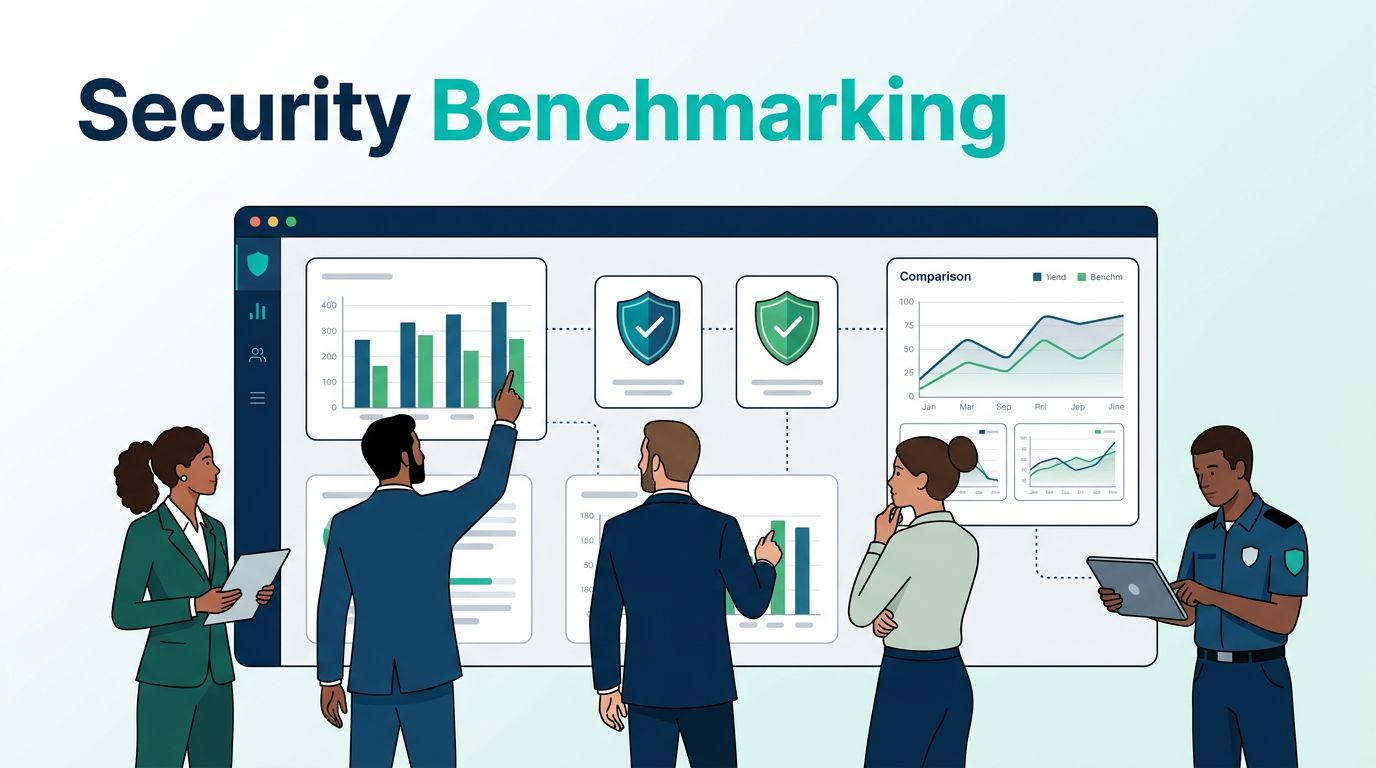
Review dashboards like this to monitor trends. Boards want incident counts, peer gaps, and dollar impacts from threats like ransomware.
Ask these questions: What’s our MTTD versus industry averages? Do we hit 99% MFA coverage? Track quarterly to show progress.
Operational metrics include training completion rates and backup recovery tests. These prove maturity beyond alerts.
Select Benchmarks Tailored to Your Organization
Pick sources that match your profile. NIST CSF 2.0 offers tiers from partial to adaptive. Tech sectors target 85% maturity; healthcare 75%.
Safe Security’s 2026 guide outlines standards, peer, and internal methods. It maps controls to NIST or ISO 27001 gaps.
For industry splits, see NIST CSF benchmarks by sector. Financial aims over 80% in identity and response.
ISO 27001 scorecards cover risks, audits, incidents, and vendors. This ISMS metrics guide lists corrective actions and governance checks.
NIST CSF assessment tools suit SMBs with phased plans. Pair with KRIs from Risk Publishing for board reports.
Adjust for maturity. New teams chase basics; mature ones focus on adaptive responses. MITRE ATT&CK helps test detection.
Steps to Run Your Security Benchmark
Gather your data first. Pull metrics from tools like SIEM or EDR.
Map to frameworks. List controls against NIST functions or ISO annexes. Note gaps.
Compare peers. Use surveys or platforms for ratios in your sector and size.

Hold sessions like this to review findings. Set targets, like cutting MTTR by 20%.
Share results up the chain. Tie to risks in business terms.
Repeat every six months. Track improvements to validate budgets.
If staffing lags, book a discovery call with Bud Consulting. They vet senior roles to fill gaps fast.
Watch for These Benchmarking Traps
Don’t ignore context. Raw averages mislead without size or industry filters.
Overlook maturity levels. A Tier 2 score beats Tier 1 progress.
Skip internal baselines. Peers set direction; your trends prove value.
Chase vanity metrics. Focus on risk reducers like coverage over alert volumes.
Third-party audits add credibility. They catch blind spots.
Key Takeaways
Benchmarking your security team starts with tailored metrics and frameworks like NIST CSF 2.0 or ISO 27001. Staffing ratios, MTTD, and coverage reveal true performance against peers.
Adjust for your risks and size. Regular checks drive improvements boards notice.
You now have steps to start. Run one metric comparison this quarter. See the gaps close.