table of contents
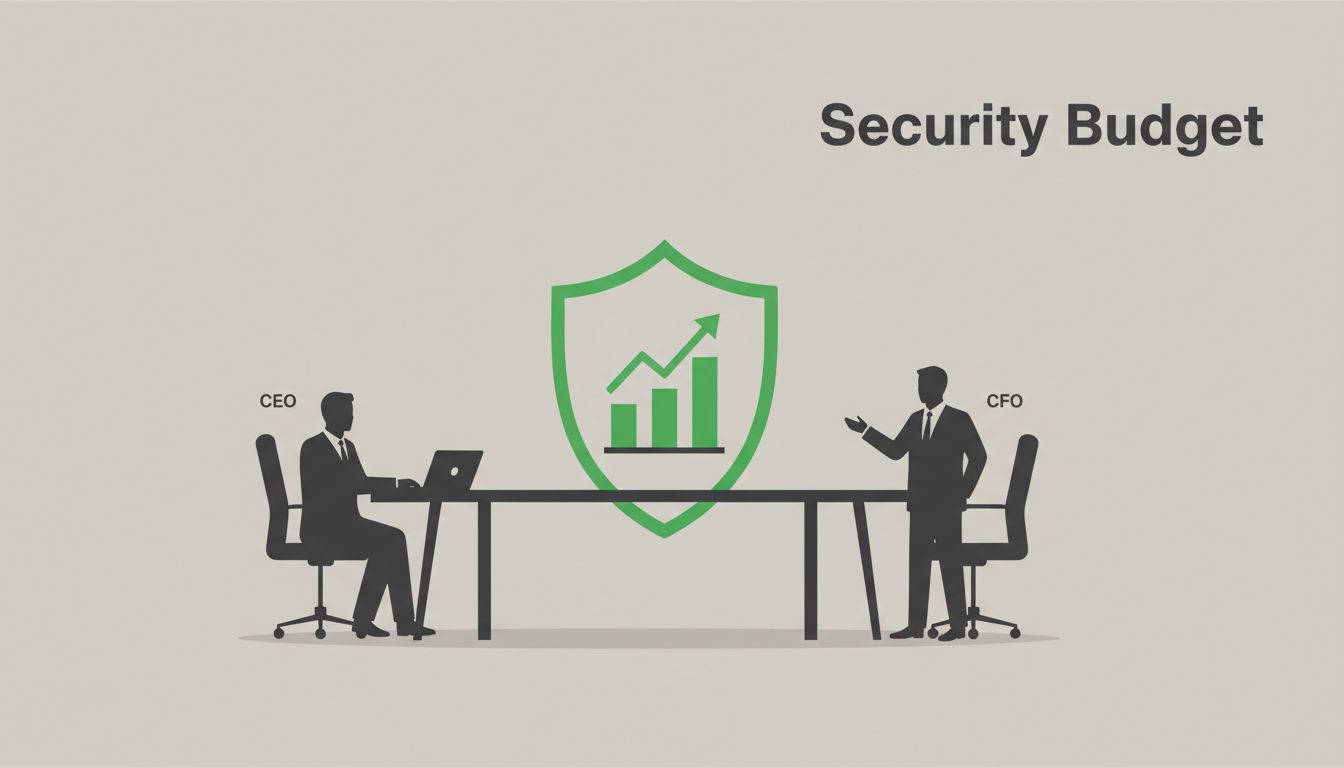
You’ve got a solid plan to protect your company from cyber threats. But the CEO and CFO see it as just another expense. How do you turn that no into a yes?
Nontechnical leaders care about cash flow, steady operations, and avoiding scandals. They approve budgets that safeguard revenue and reputation. This guide shows you how to frame your security budget justification in their language.
Start by linking threats to real money losses. Then build a clear case step by step.
Know What Matters to Your Executives
Executives focus on four big risks: financial hits, business downtime, rules that could fine the company, and damage to the brand. Security stops those pains.
Think about your last board meeting. Did the CFO grill costs? Or the CEO ask about growth impacts? Tailor your pitch to match.
Use simple stories. A ransomware attack might lock customer data. That means lost sales and bad press. Boards hate that.
Global cybersecurity spending hits $240 billion in 2026, up 12.5% from last year. Yet many firms keep security at 8-12% of IT budgets. High-risk sectors like finance push to 15%.
Show you fit industry norms. Pull data from your sector. For example, healthcare breaches cost millions on average. Compare that to your ask.
Prep talking points like these:
“You know our revenue depends on uptime. One breach could cost us $2 million in recovery, per IBM stats. This budget cuts that risk by half.”
Keep it short. Execs skim.
Quantify the Real Costs of Cyber Risks
Numbers grab attention. Skip tech talk. Show breach costs in dollars.
Average data breach runs $4.88 million worldwide. Factor in notifications, legal fees, and lost trust. Your industry might differ. Finance hits $5.9 million; retail $3.3 million.
Calculate your exposure. List assets at risk: customer lists, IP, payment systems. Assign rough costs if hit.
Use a risk formula: Threat likelihood times impact equals exposure. Say phishing hits 20% chance yearly. Impact: $1 million downtime. Total risk: $200,000 expected loss.
Your budget request should beat that. A $100,000 tool drops likelihood to 5%. Net savings: $150,000.

Boards respond to contrasts. Show inaction costs versus investment returns. For deeper tips on translating threats to finance, check Velero Consulting’s guide to executive buy-in for 2026 budgets.
Practice this pitch: “Without this, we face $X in potential losses. With it, we save $Y and sleep better.”
Align Security with Business Goals
Security isn’t a silo. It supports sales, expansion, and compliance.
Link spends to priorities. New cloud migration? Budget for secure access. AI rollout? Add defenses against deepfakes.
Regulations like GDPR or SEC rules demand proof. Fines start at millions. Show how your plan meets them without extras.
Reputational wins matter too. Customers trust secure firms. One outage tanks stock 5-10%.
Frame it as growth enabler. “This hire spots threats early, so we launch products faster.”
For a framework on tying budgets to outcomes, see Praetorian’s cybersecurity budget planning approach.
Build trust with past wins. “Last year, our tools blocked 500 attacks. Saved $300K.”
Break Down Your Budget Request
Execs want transparency. Split your ask into clear buckets.
Typical 2026 breakdowns: 40% software, 30% people, 15% hardware, 15% services. Match your needs.
Use a table to show options.
| Category | Amount | Purpose | Expected Savings |
|---|---|---|---|
| Staff (2 hires) | $300K | Monitor threats 24/7 | $1M breach avoid |
| Tools | $200K | Automate detection | Faster response |
| Training | $50K | Reduce human errors | Fewer incidents |
| Total | $550K | $2M+ net gain |
Present three tiers: basic, balanced, full. Basic keeps ops running. Full drives ahead.

This setup proves you thought it through. Answer questions fast.
Your Sample Budget Justification Template
Grab this one-pager. Adapt it for your pitch.
Executive Summary: Our $550K ask protects $50M revenue. Breaches cost 10x more.
Risk Snapshot:
- Top threats: Phishing (30% risk), ransomware (25%).
- Exposure: $2.5M expected loss.
Budget Details: (Insert table above)
ROI Projection:
- Year 1 savings: $1.2M from prevented incidents.
- Compliance: Meets SEC cyber rules.
Next Steps: Approve by Q2 for Q3 rollout.
Print it big. Walk through in 10 minutes.

For a full slide deck example, review CyberDB’s data-driven template for CISOs.
Key Takeaways to Nail Your Pitch
Tie every dollar to business protection. Use hard numbers on costs and savings. Show breakdowns and options.
You’ve got the tools now. Practice once. Watch approvals roll in.
Struggling with talent or strategy? Book a Discovery Call with Bud Consulting to strengthen your team.
(Word count: 982)