table of contents
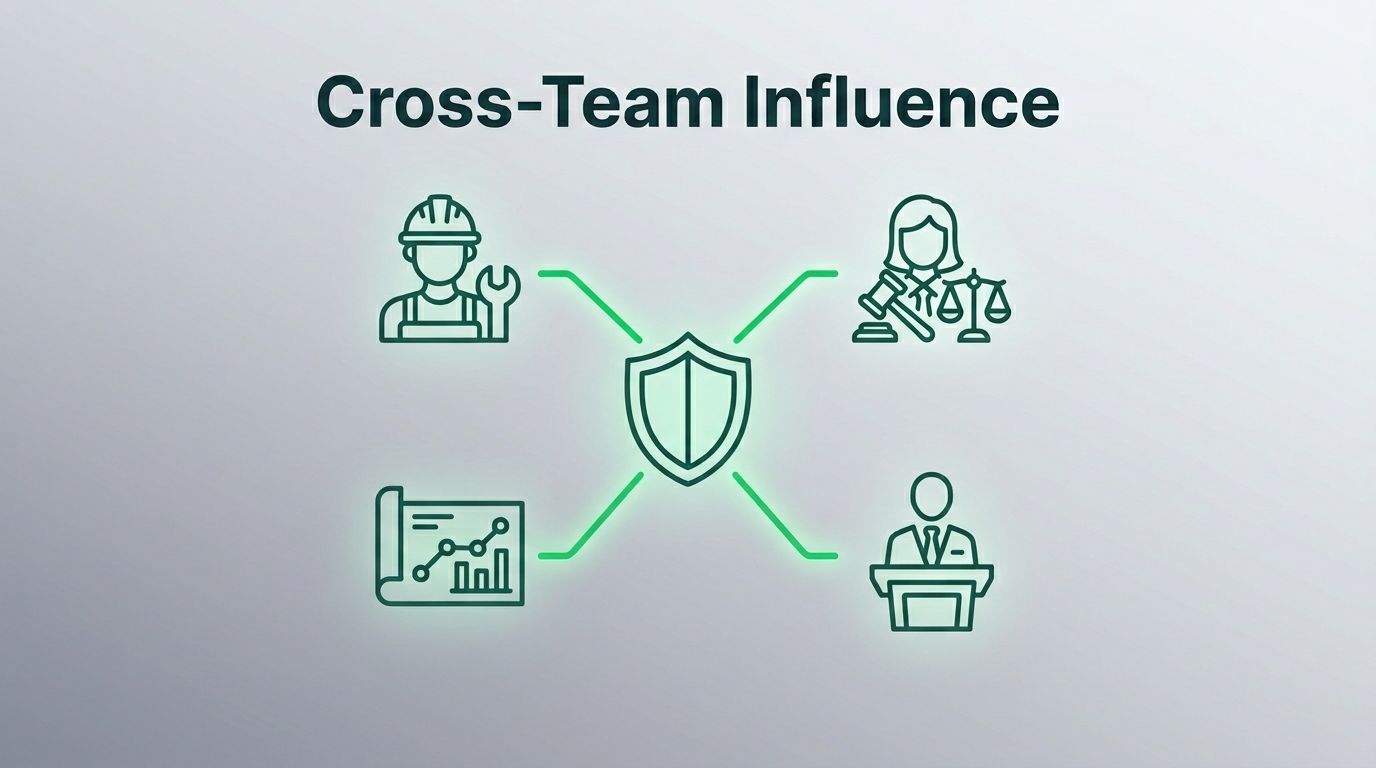
Security roles demand more than technical chops. You need candidates who sway engineers to prioritize fixes, convince product leads to bake in safeguards, and align legal teams on compliance trade-offs. Without that influence, even top experts stall out.
Hiring managers often chase resumes heavy on certs and tools. Yet those hires flop when they can’t rally cross-functional support. This leaves gaps in your defenses. You can fix this with targeted assessments that spot real influence during interviews.
Start by shifting focus from smooth talkers to proven movers.
Why Cross-Team Influence Defines Security Success
Security pros work at the edges of every team. Engineers push ship speed. Product folks chase user features. Execs eye costs. A candidate’s ability to bridge these pulls outcomes.
Influence goes beyond communication. It’s about results: changed behaviors, adopted policies, resolved conflicts. Look for past wins where the candidate drove action without direct authority.
Consider a cloud security architect. They spot IAM risks in dev pipelines. Engineers resist slowdowns. The architect must frame fixes as reliability boosters, not hurdles. Strong influencers build quick alliances and track adoption metrics.
Data backs this. Teams with high collaboration handle threats better, as seen in cyber defense studies. Yet many security hires lack these ties. For deeper context on hiring challenges, check ISC2 insights on aligning skills in cybersecurity.
Assess this early. It separates solo coders from team shapers.
Key Behavioral Questions to Uncover Influence
Behavioral prompts reveal patterns. Ask for specific stories. Probe decisions and impacts.
Try this: “Tell me about a time you convinced engineering to delay a release for a security fix.” Strong responses outline context, their pitch tailored to devs’ pain (bugs, outages), alliances formed, and proof like faster patches post-change.
Weak ones ramble on tech details or blame resistance. “I explained the vuln; they still shipped.” No ownership or adaptation.
Another: “Describe influencing product on a feature with privacy risks.” Listen for empathy. Did they quantify user trust erosion? Rally stakeholders? A top answer: “I shared breach stats from peers, ran a quick prototype demo, and we cut the feature scope. Churn dropped 15%.”
Contrast that with: “I sent docs; they ignored me.” It shows no strategy.
Distinguish talk from sway. Communication lists meetings. Influence cites shifted priorities. For more on these dynamics, see CaseBasix guide to cross-functional behavioral interviews.
Use follow-ups: “What pushback did you get? How did you adjust?” This tests persistence.
Build a Rubric for Consistent Evaluations
Standardize with a simple rubric. Score on scales: 1-5 for preparation, adaptation, results.
Columns might cover: Stakeholder mapping (did they ID key players?), Tailored messaging (matched audience needs?), Follow-through (tracked changes?).

Rate responses live. A 5: Candidate named three stakeholders, customized arguments, delivered metrics. A 3: Vague story, some adaptation. A 1: No outcomes.
This curbs subjectivity. Everyone scores the same criteria. Tools like shared sheets speed consensus.
Train your panel first. Align on anchors. It boosts fairness, as in Markle’s cybersecurity hiring toolkit.
Rubrics turn gut feels into data.
Test with Realistic Cross-Team Scenarios
Simulations mimic real friction. Present cases like: “Engineering wants to launch an app with weak auth. Product balks at delays. Legal flags regs. How do you align them?”
Watch the plan. Strong candidates prioritize: Meet devs first for empathy, data on breaches. Pitch product on retention gains. Loop legal for compliant paths. Propose phased rollout.
Weak: Mandate fixes. Ignores buy-in.
Another: Compliance audit stalls IT upgrades. “Execs cut budget. Sell the fix.”
Top response: Tie to revenue risks, benchmark peers, suggest pilots. They anticipate objections.
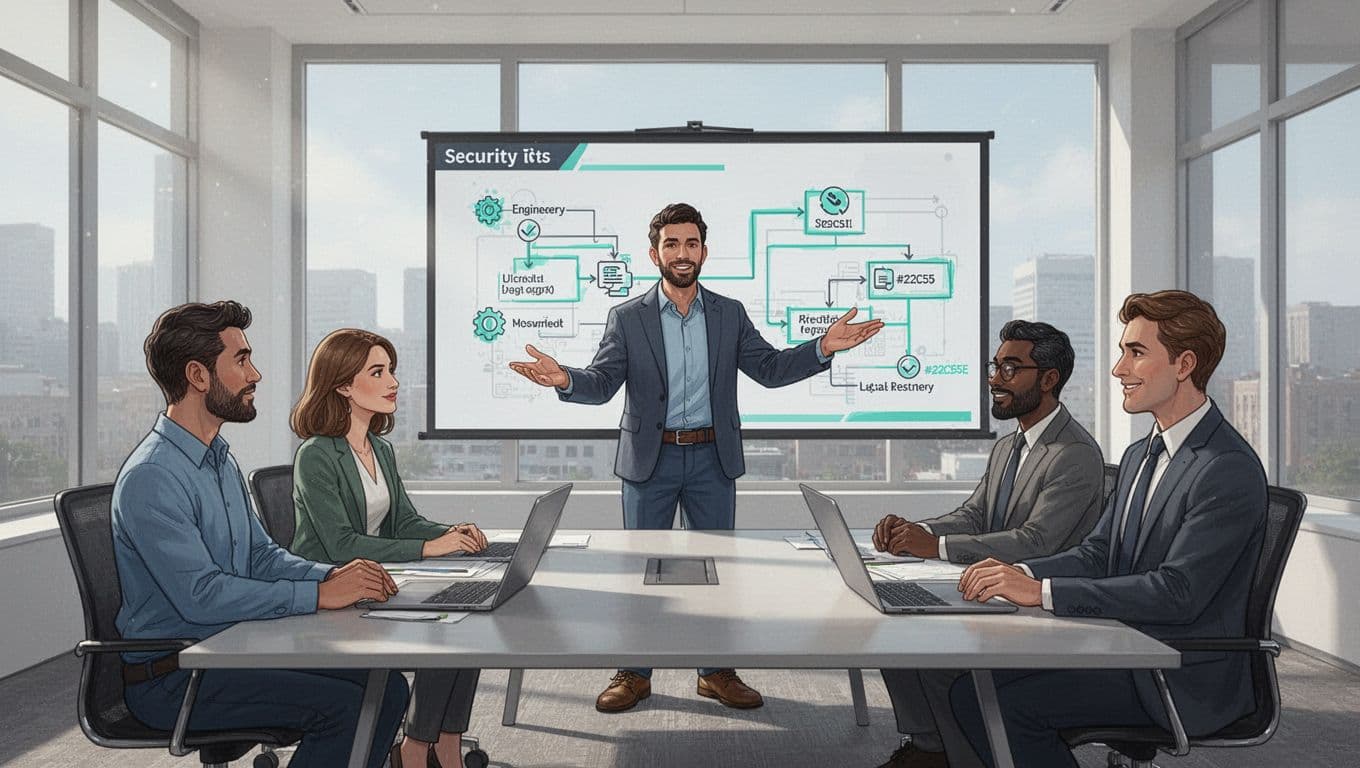
Role-play if possible. Note coalition-building. This predicts on-job wins.
Spot and Sidestep Common Hiring Pitfalls
You chase charisma. It dazzles but fades against resistance. Focus on evidence.
Overvalue solo heroes. They shine in pods, flop cross-team. Ask for group impacts.
Ignore context. A candidate swayed one team before; does it scale to execs? Probe breadth.
Skip bias checks. Familiar backgrounds sway you. Use blind rubrics first.

Panel diversity helps. Rotate roles. Common trap: One veto kills a influencer. Require consensus data.
For security-specific tips, review Phil Venables’ guide to conducting interviews.
Fix these, land better fits.
Cut Bias from Your Security Assessments
Bias creeps in via names, schools, accents. Counter it.
Blind resumes to basics first. Score stories on merits.
Fixed questions and rubrics level fields. All face same probes.
Diverse panels catch blind spots. Rotate interviewers across functions.
Skills tests pre-filter. But pair with influence checks.
This widens talent pools. Results follow.
Key Takeaways for Stronger Security Hires
Targeted questions, rubrics, and scenarios reveal influencers. They drive security across teams.
Ditch charisma hunts. Demand proof of shifted actions.
Apply these now. Your next hire shapes defenses. Need help vetting? Book a Discovery Call with Bud Consulting.
Influence wins threats.