table of contents
When a policy or GRC interview ends with a take-home exercise, the work should feel close to the job. The best security GRC exercises test judgment, clarity, and prioritization, not free labor or clever formatting.
That matters for candidates and hiring teams alike. A good prompt shows how you think under a real deadline. A bad one wastes time and says more about the hiring process than the role.
What a strong exercise should test
A solid exercise asks for decisions, not just a document. Can you spot the real issue, explain it in plain language, and separate signal from noise?
For policy and GRC roles, that usually means writing for different audiences. A policy owner wants practical edits. A security leader wants risk, tradeoffs, and next steps.
A good rule is the one Can Duruk describes in Take-Home Exercises, keep the task small enough to finish in an afternoon. That limit helps both sides. It keeps the scope fair and makes the output easier to compare.
Common policy and GRC take-home exercises
If you want more prompt ideas, GRC analyst hands-on projects and this senior GRC analyst role blueprint show the kinds of work teams actually do.

| Exercise | Objective | What good looks like | Likely evaluation criteria | Red flags |
|---|---|---|---|---|
| Policy gap analysis | Compare a draft policy to a framework or business need | Finds missing clauses, outdated terms, and clear fixes | Accuracy, prioritization, stakeholder fit | Generic rewrite, no rationale, no scope |
| Third-party risk review | Judge a vendor’s security posture from a short packet | Flags missing evidence, contract asks, and risk level | Reasoning, evidence use, escalation judgment | Checkbox scoring only, fear-driven tone |
| Control mapping to frameworks | Map controls to ISO, NIST, SOC 2, or similar | Clean traceability and honest notes on partial matches | Framework fluency, precision, assumptions | Incorrect mapping, overclaiming coverage |
| Exception or risk memo writing | Recommend an exception, conditions, and expiry | Clear decision, compensating controls, owner, and review date | Executive tone, risk framing, decision quality | No recommendation, vague language, no timeline |
| Audit response drafting | Draft a response to an auditor request | Short, factual answer with linked evidence and scope | Accuracy, tone, proof of operation | Defensive wording, unsupported claims |
| Lightweight risk register creation | Turn a scenario into a prioritized risk list | Realistic likelihood, impact, owner, and treatment | Prioritization, structure, practicality | Too many risks, missing owners, inflated scoring |
The pattern is simple. Strong submissions show judgment, a clear decision trail, and enough detail to act on.
How candidates can handle the work well
If the prompt is close to the real job, treat it that way. Start with the answer you would send in the role, then tighten it.
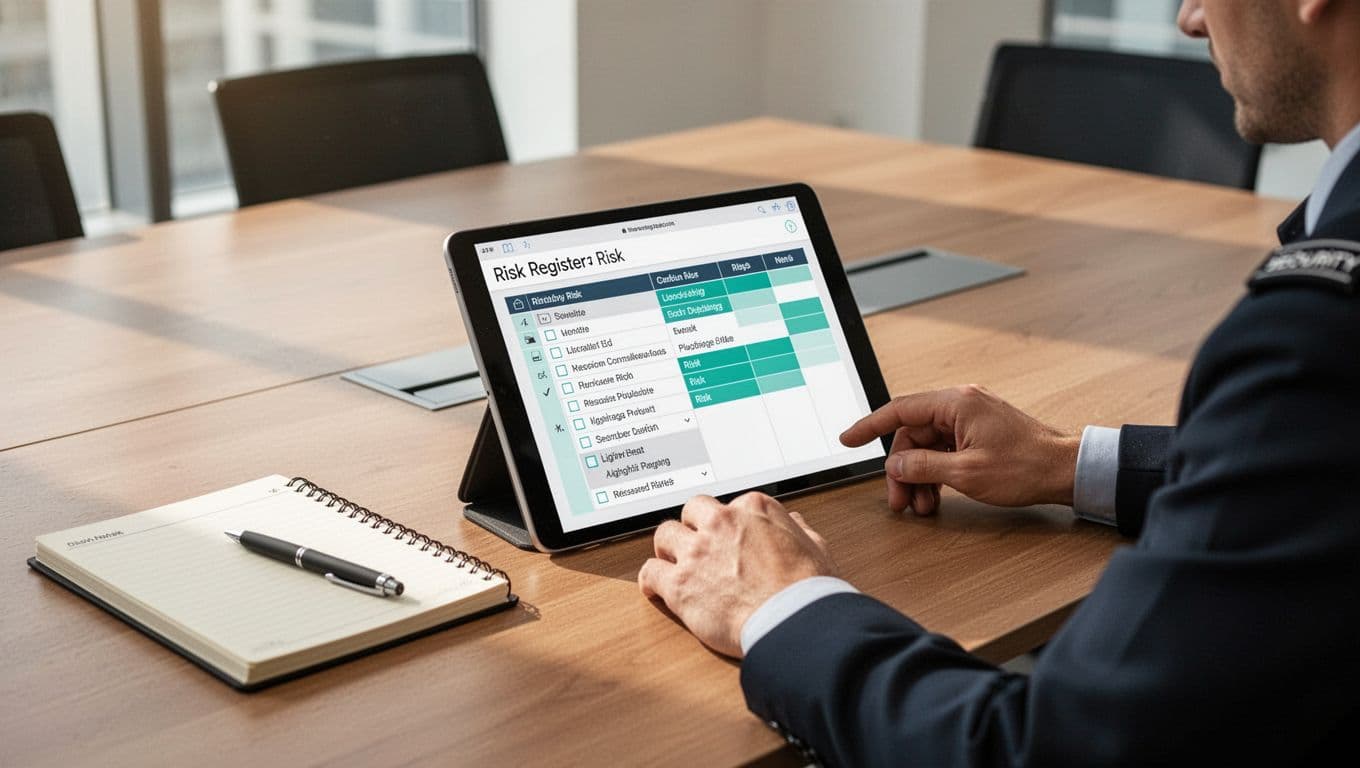
A vague prompt invites vague work. A clear brief lets good judgment stand out.
A few habits make a big difference:
- Timebox the work. Spend most of the time on analysis, then reserve a block for cleanup and proofreading.
- State assumptions up front. If the scope, policy owner, or framework is unclear, say what you assumed.
- Write for a busy reader. Short headings, direct language, and one clear recommendation beat a long wall of text.
- Finish with a call. Say approve, reject, escalate, or revise. A memo without a decision feels unfinished.
Presentation matters too. Use consistent formatting, keep tables simple, and make the first page easy to scan. If you want more context on the type of work these roles handle, the GRC Analyst role guide is a useful reference.
How hiring teams should design fair exercises
A take-home exercise should measure role fit, not test how much unpaid work someone will do. That means keeping it short, relevant, and tied to real tasks.

Use a clear rubric before you send the prompt. Decide what matters most, such as judgment, writing quality, framework knowledge, or stakeholder awareness. Then score the work against that rubric, not against a gut feeling.
A fair exercise usually has four traits:
- It is time-bounded. If it takes more than a few hours, it is too large for most candidates.
- It uses sanitized inputs. Realistic is good. Exposing sensitive data is not.
- It mirrors the role. Policy edits, vendor review, evidence review, and risk writing are all fair. Busywork is not.
- It comes with feedback. Candidates should know how the result will be used.
If your process needs a stronger structure, Book a Discovery Call with Bud Consulting to talk through a tighter GRC hiring workflow.
Conclusion
The best policy and GRC take-home exercises feel like a small slice of the real job. They ask for clear thinking, honest assumptions, and practical writing.
For candidates, the win is simple. Make your judgment easy to follow. For hiring teams, the goal is just as clear. Ask for enough to learn, but not so much that the exercise becomes the job.
A good prompt leaves both sides with more trust than they started with.