table of contents
A strong security hire can calm a room, explain risk, and keep work moving. A weak process can miss that and reward polished jargon.
If you lead hiring but don’t live in security every day, you don’t need a technical interrogation. You need a security interview loop that tests judgment, communication, and fit for the job.
The right structure keeps the process fair and gives you clean evidence. It also helps technical teammates spend their time on what they know best.
Start with the role, not the fear
Start by writing down the problem the role solves. Are you hiring someone to protect cloud accounts, manage incidents, guide product teams, or run policy? Each job needs a different mix of pace, calm, and influence.
That clarity matters because security hires often work across the business. A manager who can talk to engineers, legal, sales, or finance needs a different profile than a hands-on analyst.
If you want a simple frame for nontechnical interviewing guidance, look for behavioral and situational questions tied to real work. That keeps the loop grounded in the job, not in trivia.
Design interview stages that fit the job
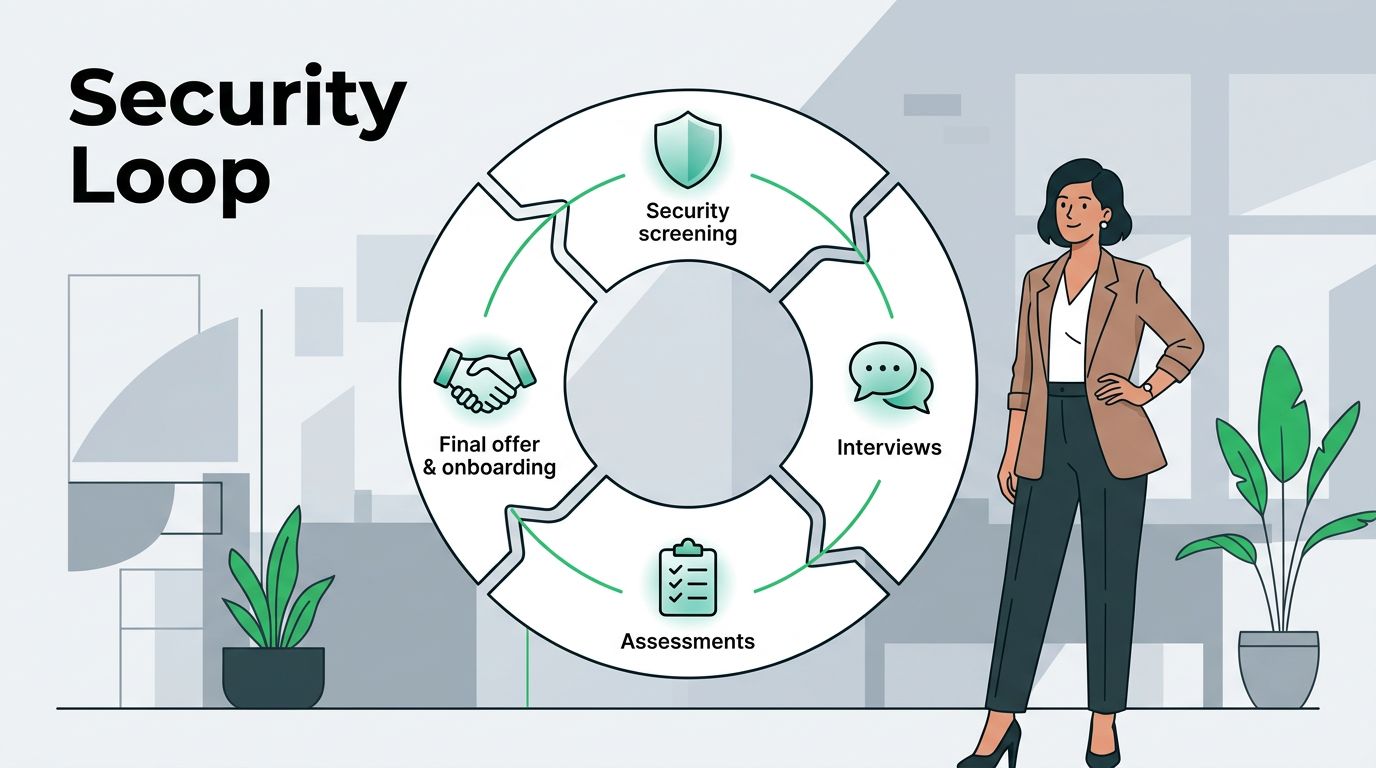
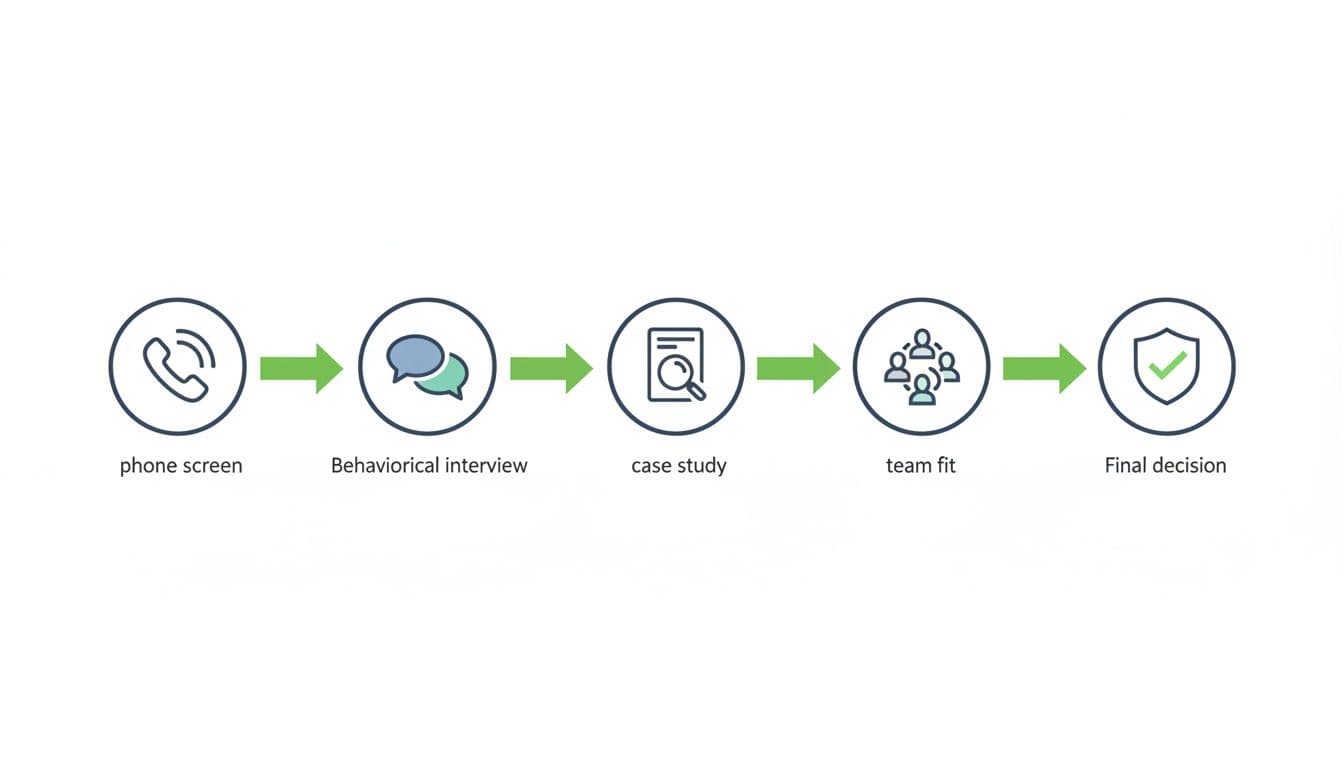
A simple loop is easier to run and easier to compare. Four stages are enough for many security hires:
- Hiring manager screen, 20 minutes. Confirm scope, motivation, and communication.
- Behavioral interview, 45 minutes. Test collaboration, judgment, and follow-through.
- Scenario walk-through, 30 minutes. Ask how they handle a breach, policy clash, or risky exception.
- Technical partner panel, 30 minutes. Let a security lead test depth while you watch for clarity and ownership.
This structure gives you signal without pretending to run a deep technical exam.
A clear flow also helps candidates know what to expect.
Build a scorecard you can use every time
A scorecard turns gut feel into evidence. Use the same categories in every interview, then compare notes after the loop.
| Category | What good looks like | Red flag |
|---|---|---|
| Communication | Explains risk in plain language and adjusts for the audience | Uses jargon or can’t simplify the point |
| Judgment | Names tradeoffs and explains why one path is safer | Wants a single perfect answer |
| Stakeholder management | Brings the right people in early and keeps them aligned | Blames other teams or avoids conflict |
| Incident response thinking | Escalates fast, stays calm, and knows who needs what | Freezes or jumps to tools before facts |
| Role alignment | Connects past work to the scope you need | Tells impressive stories that don’t match the job |

A candidate who can explain risk in plain English is often easier to trust in a real incident.
Use a 1 to 4 scale. A 4 means the candidate gives clear examples, names tradeoffs, and shows ownership. A 3 means the signal is good, but you still want more proof. A 2 means the answer stays vague. A 1 means you do not have enough evidence to move forward.
A process like this also keeps you from over-weighting buzzwords or certifications. Good question design should pull out behavior and judgment, not just tool names. Cybersecurity interview question design is a useful reference when your panel drifts toward credentials instead of evidence.
Ask questions that reveal how they work
Ask questions that force a candidate to show how they think. Keep them open enough to invite examples, but specific enough to avoid vague answers.
- “Tell me about a time you explained a security risk to a non-security leader.” Look for plain language, not a wall of terms.
- “Describe a time you had to choose between speed and control.” Look for tradeoff thinking and a clear reason.
- “When an incident starts, how do you decide who to involve first?” Look for calm escalation and role awareness.
- “Tell me about a security recommendation that was rejected.” Look for persistence without ego.
- “How do you keep product, legal, and operations aligned on a fix?” Look for stakeholder management and follow-through.
For more manager-friendly prompts, security interview questions for HR is a helpful reference.
Red flags show up fast. The candidate stays abstract, hides behind acronyms, or blames other teams for every delay. Another warning sign is when every answer sounds polished but none include a real decision, mistake, or outcome.
Partner with technical interviewers
Your technical interviewer should own depth. Your job is to judge how the person works with the rest of the company.
Before interviews start, agree on who asks which questions and what a strong answer looks like. Then compare notes against the same scorecard, not against memory or gut feel.

If you are hiring a senior or hard-to-fill role, Book a Discovery Call with Bud Consulting when you want help calibrating the loop and the scorecard.
Tailor the loop by seniority
Seniority changes the loop. For early-career or first-time manager roles, keep the process short and focus on clarity, collaboration, and follow-through.
For director or executive roles, add a scenario about competing priorities, board communication, or a cross-team incident. At that level, you want clearer thinking, stronger judgment, and better pressure management.
A senior candidate should bring more context, not more jargon.
Conclusion
A good security interview loop gives nontechnical managers a way to make sound calls without pretending to be security experts. It also keeps technical teammates focused on depth, where they add the most value.
When the role is clear, the scorecard is simple, and the questions test real behavior, strong candidates stand out quickly. That is the real advantage of a well-run loop.