table of contents
Security teams often fight fires. They patch vulnerabilities and run drills. Yet business leaders care about revenue, customer trust, and smooth operations. You feel the gap. Your work protects the company, but it does not always show in quarterly results.
Security OKRs fix that. They tie your efforts to outcomes like risk reduction and faster product delivery. This approach wins budgets and seats at the strategy table. Let’s walk through how you build them step by step.
Understand OKRs and Why They Matter for Security
OKRs stand for Objectives and Key Results. Objectives set bold goals. Key results measure progress with numbers. Companies like Google use them to focus teams.
Security teams benefit most. Traditional metrics track tickets closed or scans run. Those miss the point. Business OKRs target revenue growth or compliance fines avoided. Your security OKRs must link directly.
For example, if the company aims to launch a new app on time, your objective could protect customer data during rollout. Key results might cut high-risk vulnerabilities by 80% and pass a third-party audit.
This alignment shows value. It shifts security from cost center to enabler. Leaders see how fewer breaches protect $2 million in annual revenue.
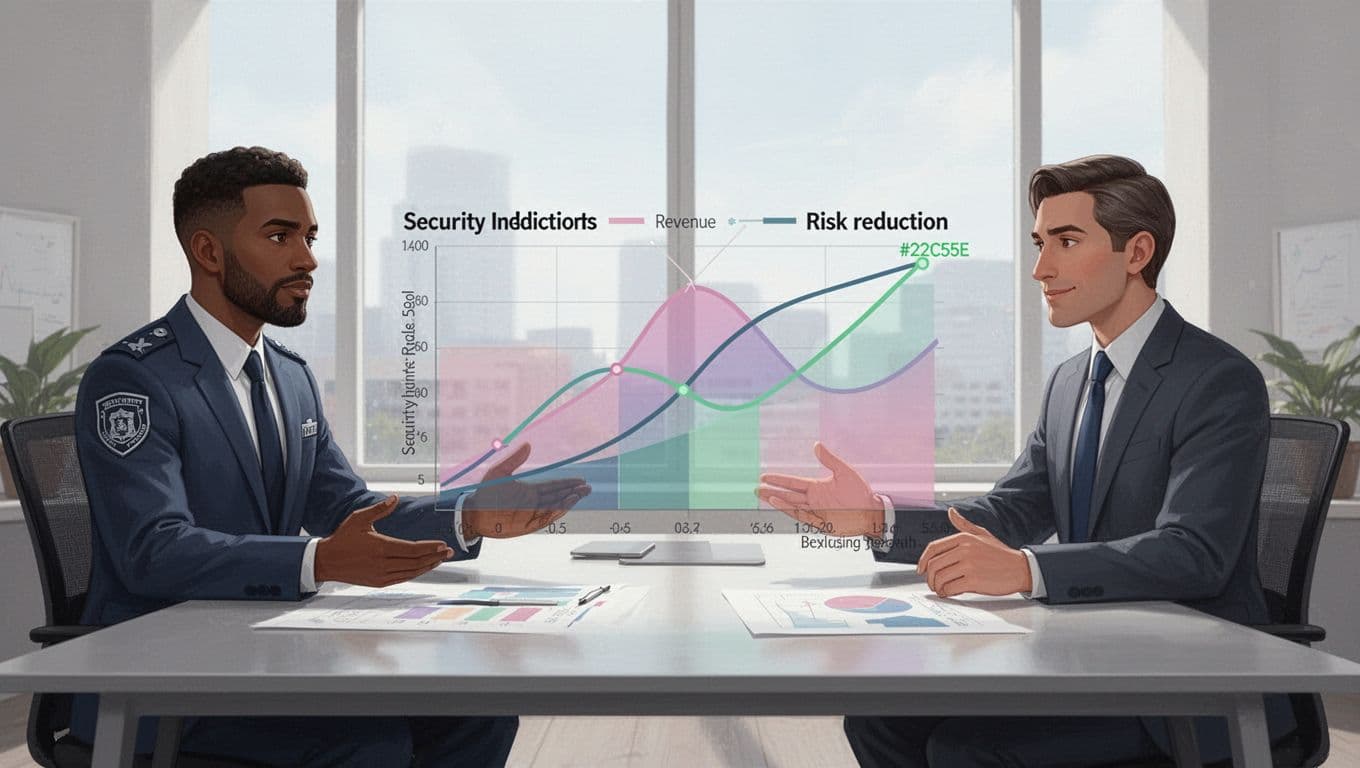
See cybersecurity OKR examples from Hyring. They bridge security tasks to business wins like faster breach detection.
Spot Misalignment in Your Security Goals
Bad goals isolate security. They focus on activity, not impact. Good ones connect to business priorities.
Consider this poor example: “Train 90% of employees on phishing.” It sounds solid. But does it tie to revenue? No. Employees forget. Risks linger.
A better version: “Boost phishing report rate by 50% to cut incident costs by $500K.” Now it links to operational resilience.
Here’s a quick comparison:
| Aspect | Poor Security Goal | Strong Aligned OKR |
|---|---|---|
| Objective | Run 12 penetration tests | Secure payment system for holiday sales surge |
| Key Results | Tests completed on time | Zero exploits in prod; 99.9% uptime; $10M sales protected |
| Business Tie | None direct | Revenue protection, customer trust |
| Measurement | Count-based | Outcome-focused (uptime, revenue at risk) |
Poor goals get shrugs from execs. Strong ones earn support. Spot yours by asking: Does this prevent fines or speed launches?

The table highlights the shift. Focus on results that matter to finance or product teams.
Craft Objectives and Key Results That Stick
Start with company OKRs. Review finance reports, product roadmaps, and legal risks. Pick two or three that security touches.
Objective: “Strengthen defenses for cloud expansion.” This supports engineering’s growth goal.
Key results need specifics. They must be time-bound and verifiable:
- Remediate 95% of critical cloud misconfigs in Q2.
- Achieve zero ransomware simulations succeeding.
- Cut mean time to respond by 40%, saving $1M in potential downtime.
Test them. Can anyone measure progress weekly? Do they drive behavior?
Another example from sales push: Objective: “Protect customer data to build trust.” Key results: Pass SOC 2 audit with no major findings; reduce data leaks to under 1%; survey shows 20% trust score lift.
Avoid vague terms. Use numbers tied to outcomes like compliance costs or delayed shipments. This makes your case ironclad.
Foster Collaboration Across Teams
Security does not work alone. Pull in engineering, product, finance, legal, and execs early.
Host quarterly alignment sessions. Share business OKRs first. Ask: “How does security enable your goals?” Engineers flag risky features. Finance shares breach cost models.
Build a shared dashboard. Track security OKRs next to business ones. Everyone sees links.
For instance, product wants faster releases. Your team commits to automated scans that block 90% of bad code. Legal needs GDPR proof. You deliver audit-ready reports.
This cross-talk reduces friction. Budgets flow easier. Leaders view security as partner.
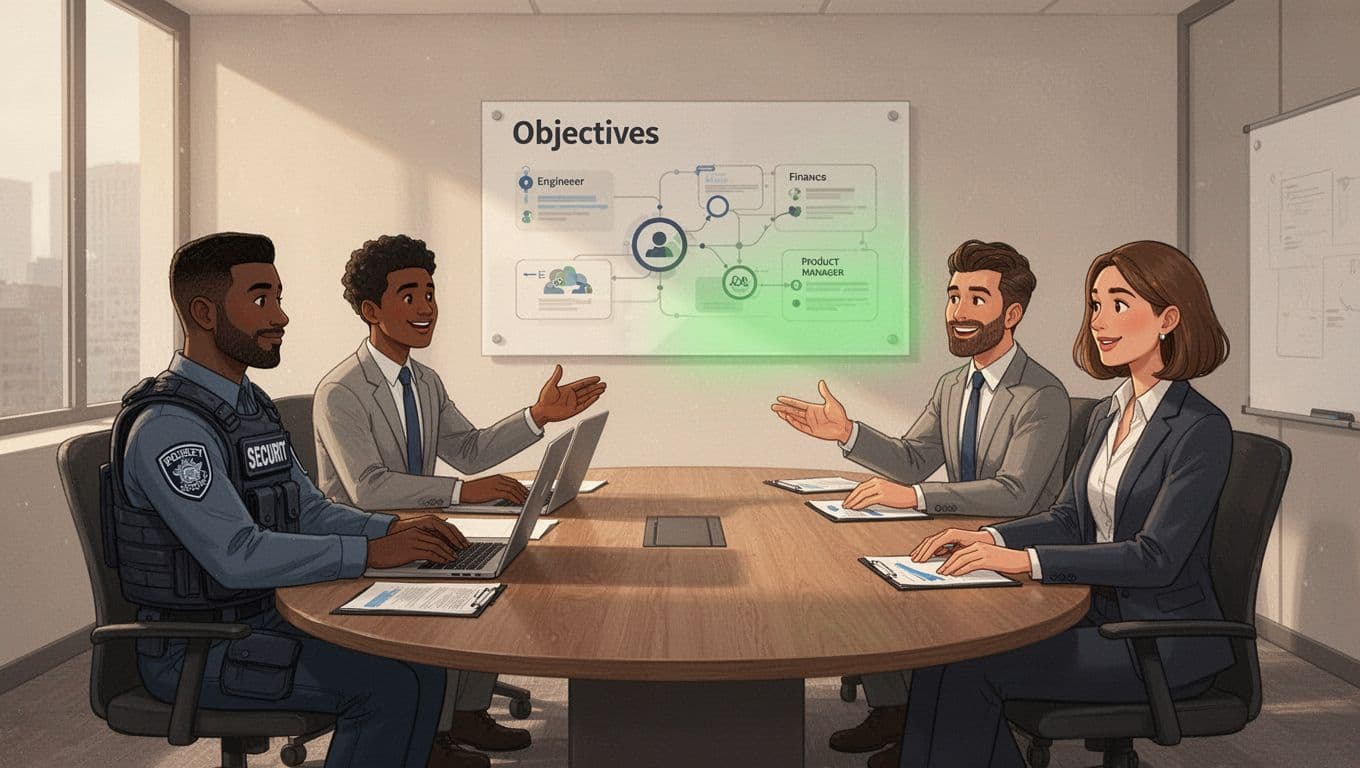
Check this guide on aligning cybersecurity with objectives. It stresses mapping tables for clear impact.
Track Progress and Adjust Quarterly
Set review cadences. Monthly check-ins keep momentum. Quarterly resets adapt to shifts.
Use tools like spreadsheets or OKR software. Plot actuals against targets. If you miss 70% on a KR, dig why. Was the objective off-base?
Celebrate wins. A 50% incident drop? Tie it to $750K saved. Share in all-hands.
Adjust as needed. If revenue goals change, pivot security OKRs. This agility builds trust.
Bud Consulting helps teams nail this. Book a Discovery Call with Bud Consulting to align your security talent with business needs.
Key Takeaways
Aligning security goals with business OKRs transforms your role. You move from fixer to strategist. Focus on outcomes like revenue shields and trust gains.
Start small. Map one objective today. Collaborate across teams. Measure ruthlessly.
Your efforts now drive the bottom line. Security becomes a business strength.