table of contents
Hiring top security talent feels great, but watching them sit idle for weeks hurts. You need them productive fast in your SOC or ops team. Yet skipping basics like access controls risks breaches or compliance slips.
The fix? A tight process that hits essentials first, then ramps speed. This approach cuts time-to-productivity to 30-60 days for most roles. Let’s break down how to make it happen.
Build a Phased Onboarding Timeline
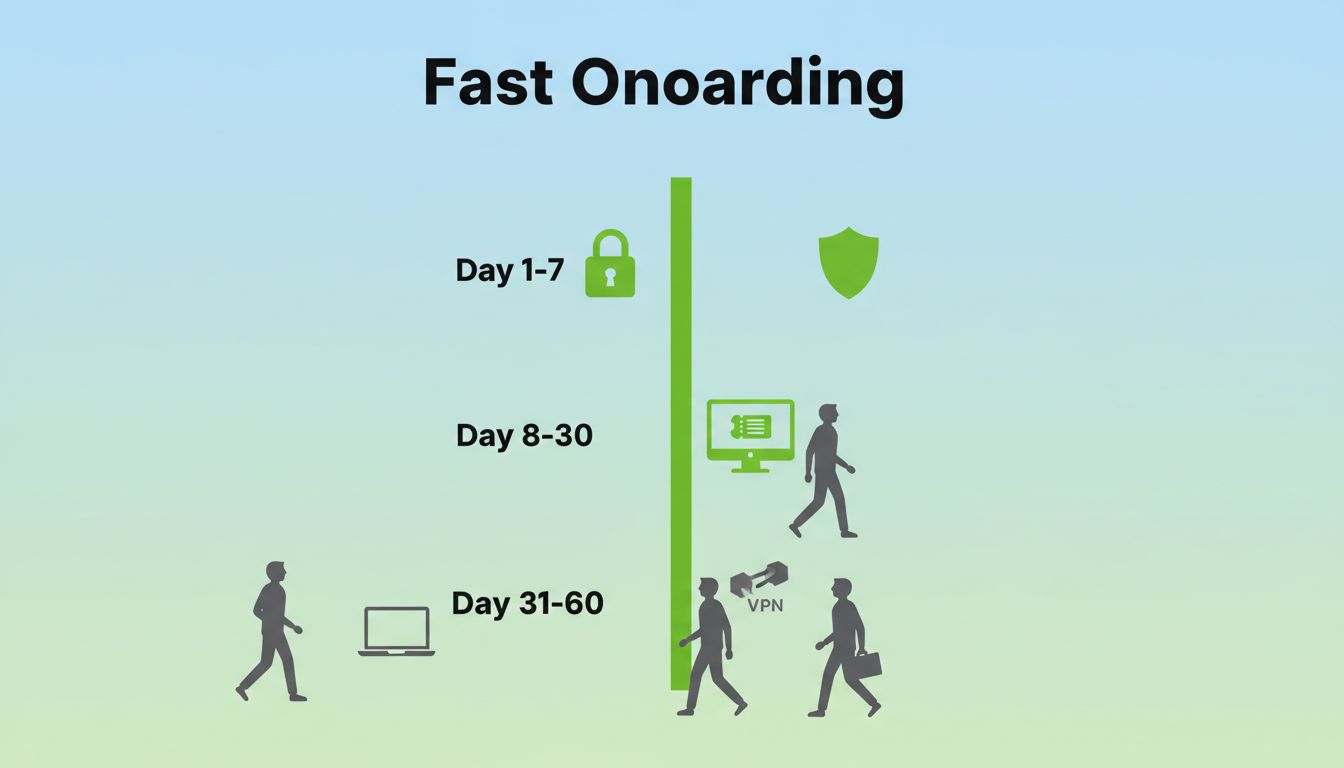
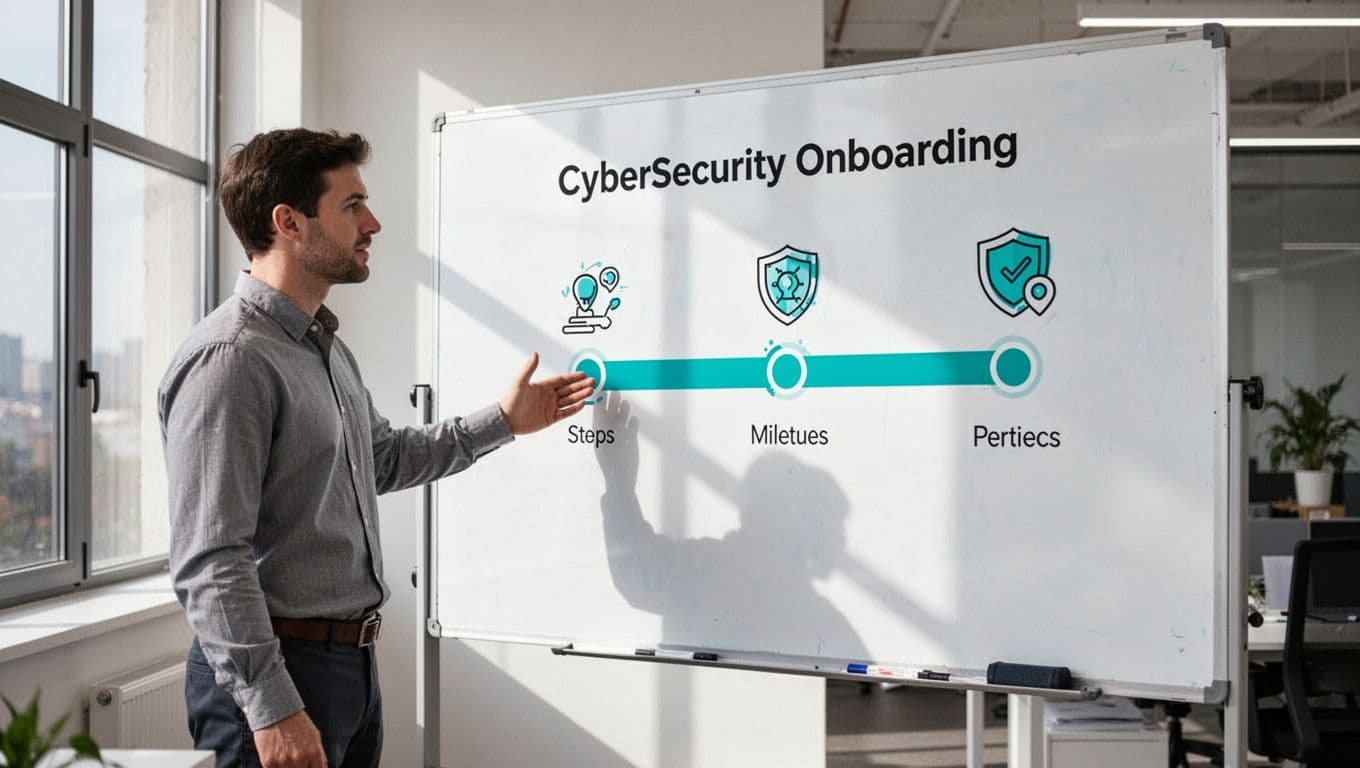
Start with a clear roadmap. Divide onboarding into days 1-7, 8-30, and 31-60. This structure keeps new hires focused and managers accountable.
Day 1 sets the foundation. Grant least-privilege access only. Walk them through your SIEM, ticketing system, and VPN. No full toolbox yet; that comes later.
By day 7, they shadow shifts. They observe triage without touching alerts. Pair them with a buddy for questions.
Weeks 2-4 shift to hands-on. Assign low-risk tickets. Require sign-off on escalations.
After 30 days, aim for solo low-severity work. For SOC analysts, this matches plans like Hack The Box’s 30-60-90 day checklist.
Tailor phases to role. Cloud security architects need IAM deep dives early. DevSecOps hires focus on CI/CD pipelines.
Document milestones in a shared sheet. Review weekly. This timeline speeds ramp-up by 40% in many teams because everyone knows next steps.
Nail the Core Basics Checklist
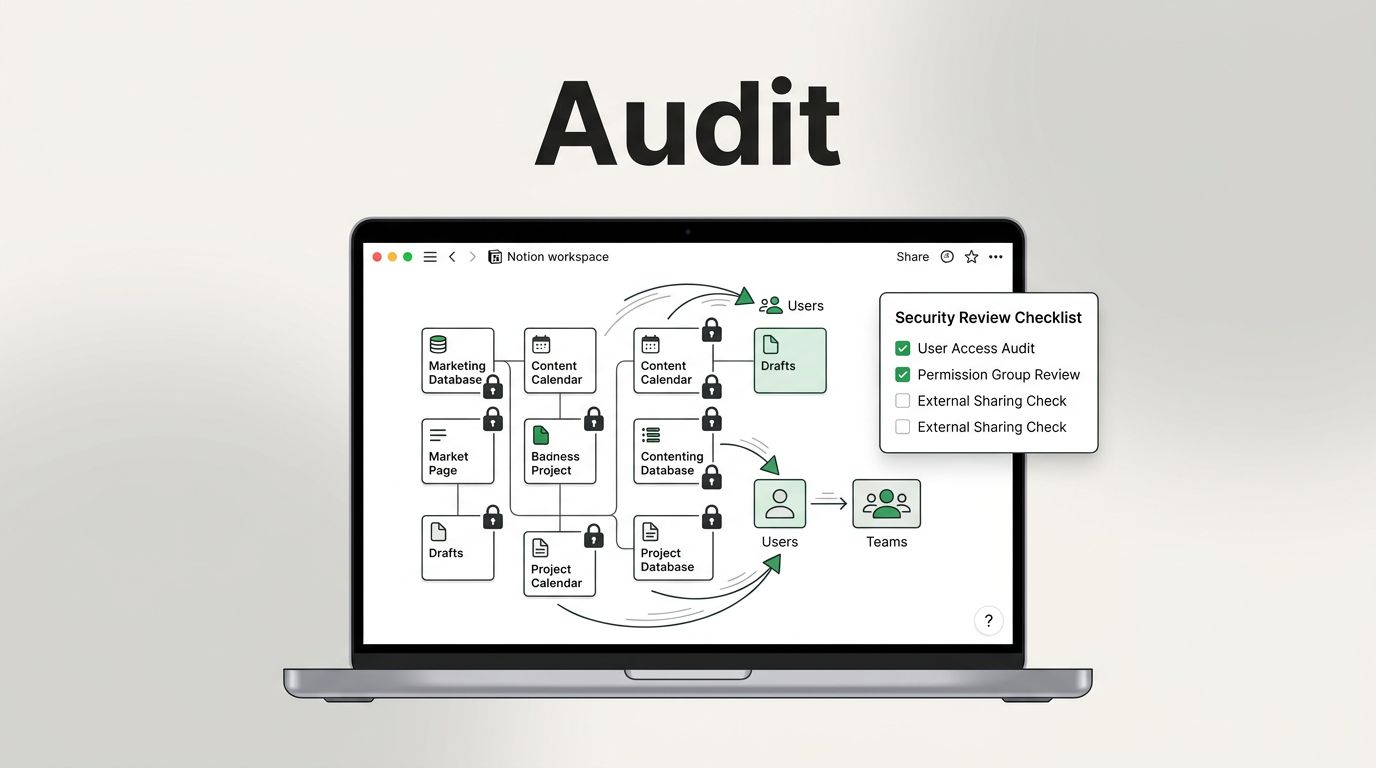
Basics prevent mistakes. Use a one-page checklist for every hire. Cover access, training, and processes before solo work.
First, access. Enforce MFA and least-privilege from hour one. Block personal devices until vetted.
Next, tools. Demo your stack: Splunk or Elastic for logs, Jira for tickets. Hands-on labs beat videos.
Incident response comes third. Map escalation paths. Show runbooks for common alerts like phishing or brute force.
Compliance training fits here too. Quiz on GDPR or NIST basics. Tie it to real scenarios.
Don’t forget documentation. Teach ticket notes and shift handovers.
Here’s a sample checklist:
- Access: MFA enrolled, role-based permissions set (Day 1)
- Tools: SIEM login test, ticketing walkthrough (Day 1-3)
- Processes: Escalation tree reviewed, first mock incident (Day 3-5)
- Training: Compliance module complete, phishing sim passed (Day 7)
- Docs: Sample ticket written and approved (Day 7)

Resources like Hack The Box’s blueprint for cybersecurity pros expand this. Check off items daily. It builds habits fast.
Track Progress with Measurable KPIs
What gets measured improves. Set KPIs tied to productivity. Track them in a dashboard.
Time to first resolved ticket is key. Target 14 days for analysts.
Training completion hits 100% by day 10. Use quizzes for proof.
Ramp-to-independence: Solo handle 80% of low alerts by day 30.
Retention at 90 days shows fit.
| KPI | Target | How to Measure |
|---|---|---|
| First Resolved Ticket | 10-14 days | Ticket system logs |
| Training Completion | 100% by day 10 | LMS reports |
| Solo Alert Rate | 80% by day 30 | Shift audits |
| 90-Day Retention | >90% | HR records |
These match benchmarks from onboarding metrics guides. Review biweekly. Adjust if a hire lags.
Low scores signal issues like tool gaps. High ones mean scale the process.
Strengthen Team Bonds from Day One
New hires flop without fit. Integrate culture early to boost retention.
Schedule intros day 1. Pair with a mentor for daily 15-minute chats.
Host team lunches week 1. Share war stories over coffee.
By week 2, include in standups. Assign a “culture buddy” outside their pod.
Track belonging via quick surveys. Ask: “Do you know who to ping for help?”

This cuts isolation. Productive teams resolve incidents 25% faster.
Conclusion
Fast security onboarding balances speed and safety. Phased timelines, checklists, KPIs, and team ties get hires productive in weeks, not months.
Prioritize least-privilege and processes first. Your SOC gains strength without risks.
Struggling to source talent? Book a Discovery Call with Bud Consulting to fill gaps quick. Start today; your threats won’t wait.