table of contents
You’ve just launched a new SaaS feature. Users love it. Then a vulnerability surfaces. Rework delays the next release by weeks. Sound familiar?
Product teams face this cycle too often. Security feels like an afterthought. It slows delivery and erodes trust.
You can change that. Start with security in your product roadmap. This approach cuts rework. It boosts compliance and customer confidence. Let’s walk through practical steps.
Build Cross-Functional Teams
Security works best when product, engineering, and security teams collaborate from the start. Silos create gaps. Product managers set priorities. Engineers build features. Security spots risks. Together, they align on goals.
Invite one rep from each group to weekly syncs. Discuss upcoming features. Ask simple questions. How might attackers target this? What data flows here? These chats build shared understanding.
For example, a SaaS team building user onboarding added security early. The product manager shared wireframes. The engineer flagged weak auth flows. Security suggested multi-factor options. Result? A smoother rollout.

Teams like this reduce surprises. They treat security as a team effort. Schedule a quarterly security roadmapping session. Revisit threats and priorities. This keeps everyone on track.
Start small. Assign a security champion in product. They bridge gaps. Over time, this habit speeds delivery. No one feels blindsided.
Embed Security During Discovery
Discovery sets your roadmap foundation. Skip security here, and fixes pile up later. Include it upfront to avoid costly changes.
Map user journeys with security in mind. Sketch flows. Mark sensitive steps, like login or data upload. Add threat questions. Could this expose PII? What if inputs aren’t sanitized?
A software team did this for a dashboard feature. They whiteboarded the journey. Security noted API risks. Product adjusted scopes. They baked in rate limiting from day one.

Use lightweight threat modeling. Pick STRIDE for basics: spoofing, tampering, etc. Run 30-minute sessions. No deep dives needed. Focus on top risks.
Document findings in discovery notes. Link them to user stories. This makes security visible. It ties to business value, like faster compliance audits.
Early habits pay off. Teams report 40% less rework. Customers notice secure experiences. They stick around longer.
Prioritize Security in Roadmaps
Your security product roadmap needs clear priorities. Don’t bolt it on. Weave it into features.
Break roadmaps into phases: discovery, build, release. Assign security weight to each item. Score features on impact, effort, and risk. High-risk items rise.
For instance, a fintech SaaS prioritized encryption in their payment flow. They slotted it next to UX tweaks. Not as tech debt. As core value.
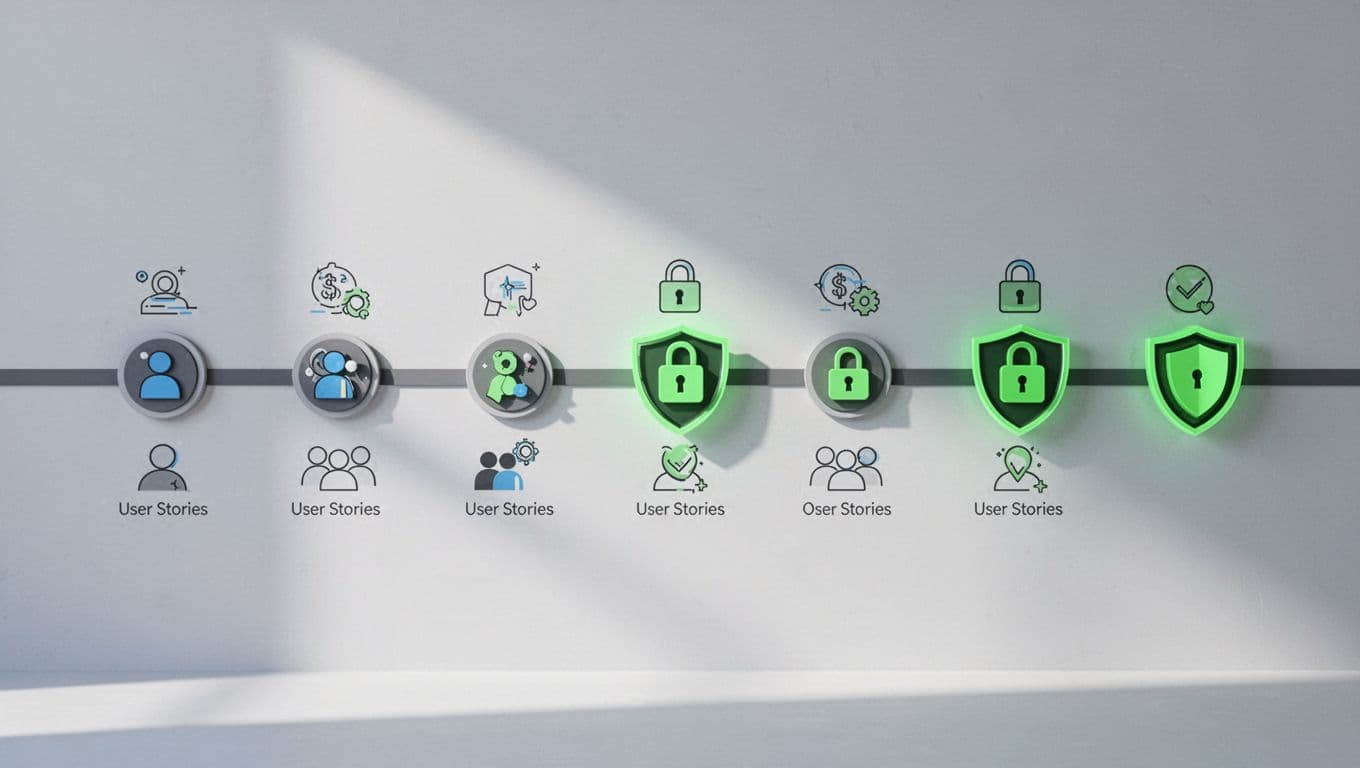
Add security checkpoints. Automate scans in CI/CD. Require sign-off before merges. Tools flag issues early.
See these 10 practices for ideas. They cover auth flows and testing. Adapt to your stack.
Balance is key. Security shouldn’t block ships. Quantify risks. Show how mitigations enable growth. Product leaders buy in when they see the numbers.
Streamline Security in Reviews and Releases
Regular reviews keep security alive. Hold bi-weekly roadmap scrums. Product leads present changes. Security gives quick feedback. Adjust on the spot.
In release planning, checklist security last. No. Embed it. Define acceptance criteria with controls. Test auth in staging. Scan for vulns pre-deploy.
One startup team integrated this. Their release notes included security summaries. It built trust with users. Compliance stayed smooth.
Track metrics. Measure rework hours saved. Monitor breach attempts. Share wins in all-hands. This reinforces the practice.
Collaborate on pre-mortems. Imagine failures. Plan around them. Engineering owns code. Product owns outcomes. Security owns risks.
If gaps persist, bring in experts. Book a Discovery Call with Bud Consulting. They help source security talent.
Key Takeaways
Integrate security early. Build teams that collaborate. Embed it in discovery and prioritization. Review often.
This cuts rework. It speeds delivery over time. Customers trust secure products more.
Your roadmap shapes success. Make security part of it. Start today. Watch velocity rise.
(Word count: 982)