table of contents
Business leaders skip meetings that feel like status updates. They want forums where security ties to revenue and risk. A strong security steering committee turns that around. It aligns cybersecurity with company goals so executives see real value.
You face breaches that hit headlines and boardrooms. Yet security often stays siloed in IT. This committee fixes that. It pulls in cross-functional voices for decisions that matter. Read on to build one that drives action.
Assemble the Right Team
Start with the people. Pick members who own business outcomes, not just tech. Include your CISO or security lead as chair. Add the CIO, a business unit head like sales or finance, legal counsel, and HR. In 2026, bring in an AI or data officer too. They spot risks from agentic AI or shadow tools.
This mix ensures diverse views. Business leaders join because they see their stakes. For example, the sales VP flags customer data needs during expansions. Legal covers compliance gaps. Aim for 5-8 members. Meet quarterly, plus ad-hoc for crises.
Diversity boosts buy-in. One firm cut breach costs 30% after adding non-tech voices. They caught overlooked supply chain risks early.

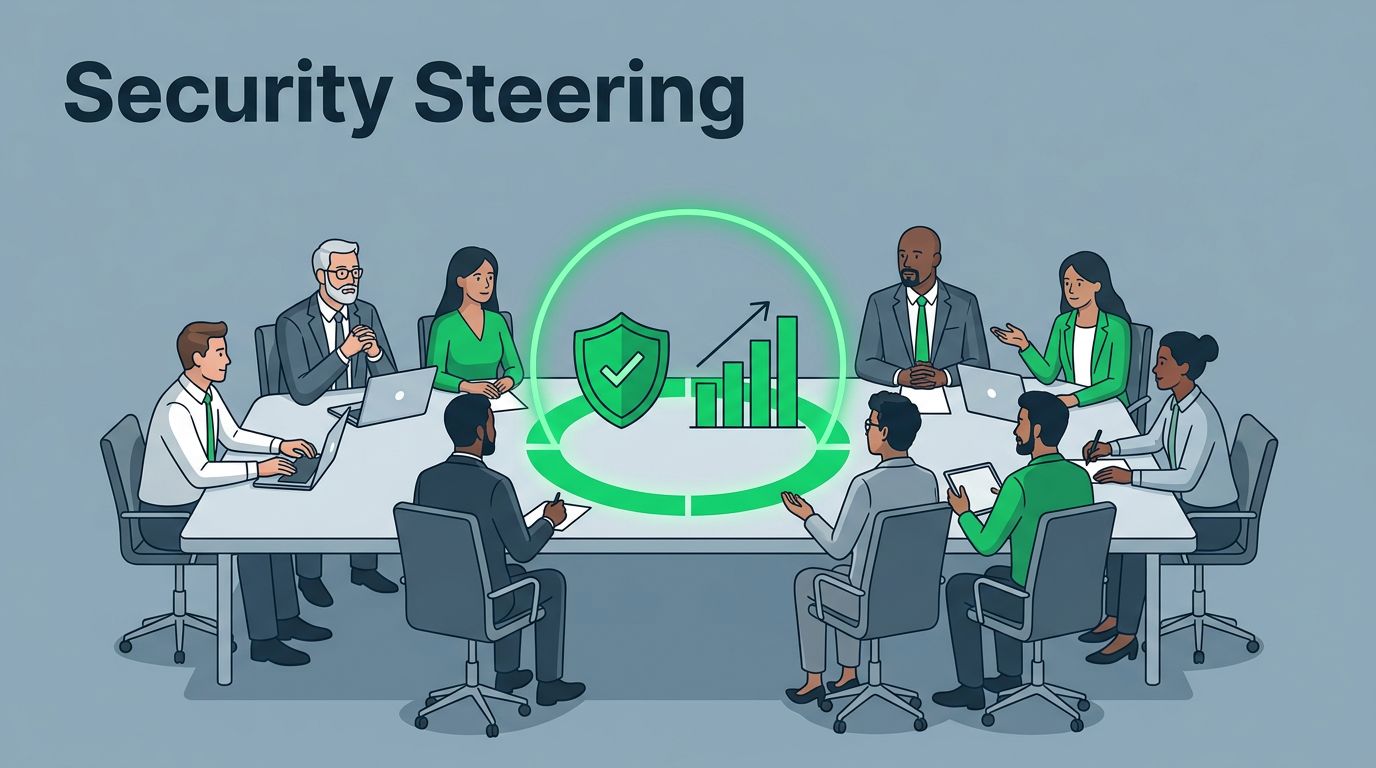
Executives discuss risk metrics in this setup. One points to the screen. The group stays engaged on shared priorities.
Keep attendance high. Send agendas 48 hours ahead. Tie topics to their goals. If a leader misses twice, replace them. Rotate guests for fresh input, like a DevSecOps lead on zero trust shifts.
Forrester outlines a solid ISSC charter template to define roles clearly. Use it to lock in commitments.
Define Purpose and Operating Rules
Committees fail without focus. Write a one-page charter. State the goal: align security with business strategy. List responsibilities like approving budgets, risk thresholds, and vendor reviews.
Separate it from IT steering groups. Security spans the enterprise. Info-Tech Research stresses this in their guide to improve security governance. It needs its own space.
Set rules upfront. Meetings last 90 minutes. Decisions use RACI: responsible, accountable, consulted, informed. Escalate deadlocks to the CEO.
In 2026, add AI observability. Committees now check all AI agents for data leaks. Centralize oversight to plug gaps from fragmented teams.
Share the charter enterprise-wide. It shows security as a business enabler. Leaders participate when they own outcomes.
Craft Meetings That Spark Decisions
Ditch slide decks. Use live dashboards. Start with wins: threats blocked last quarter. Then risks: top three with business impact.
Sample agenda:
- Quick wins review (10 min).
- Risk dashboard (20 min).
- Deep dive: one priority (30 min).
- Decisions and actions (20 min).
- Next steps (10 min).
For the deep dive, pick AI risks or zero trust rollout. Present data simply. What if we ignore shadow AI? Lost IP or fines follow.
End with votes. Assign owners and dates. Follow up before next meeting. This shifts from reports to action.
Microsoft’s blog on cybersecurity board committees shares roadmaps. Track three-year plans with progress bars.
Business leaders stay because they decide. Approve that $2M zero trust tool? They own it.
Track Progress with KPIs and KRIs
Metrics prove value. Focus on business ties, not tech counts. Use KPIs for performance, KRIs for early warnings.
Key ones:
- Compliance rate: 95%+ on audits. Ties to fines avoided.
- Mean time to respond: Under 4 hours. Cuts breach costs.
- Risk reduction score: 20% yearly drop via scoring.
- Phishing click rate: Below 5%. Shows culture shift.
- AI agent inventory: 100% visibility.
Review them quarterly. Link to revenue: high compliance wins deals.
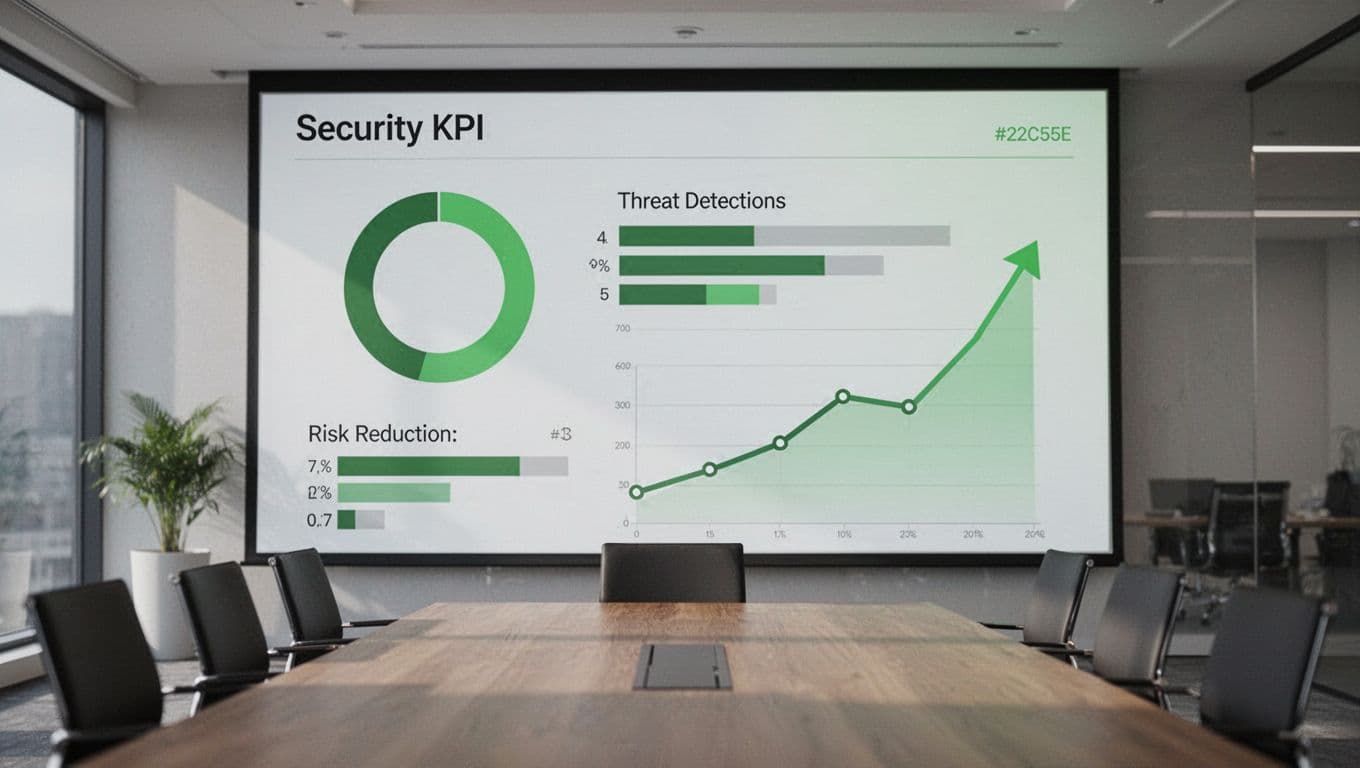
A dashboard like this highlights progress. Green accents show gains in compliance and risk drops.
Automate with tools. In 2026, AI feeds real-time data. Committees act fast on KRIs like unusual logins.
Make Real Decisions That Align Business and Security
Decisions build trust. Common ones: set risk appetite, like 5% downtime tolerance. Approve budgets for quantum-ready encryption. Prioritize projects, such as edge device security.
Vet vendors. Reject one with weak AI controls? Document why.
Tackle culture. Mandate training tied to bonuses. In fragmented teams, unify under one leader.
RSM’s guide on setting up a security steering committee lists cross-business reps. They raise policy flags early.
Leaders engage when security protects growth. One committee greenlit AI defenses, dodging a major leak.
Key Takeaways
A security steering committee works when it delivers business wins. Assemble diverse leaders, charter clearly, run tight meetings, track metrics, and decide boldly. In 2026, focus on AI and zero trust to stay ahead.
Executives show up for impact. You build alignment that lasts.
Ready to strengthen yours? Book a Discovery Call with Bud Consulting for tailored advice.
(Word count: 982)