table of contents
Hiring a freelance developer feels straightforward until it isn’t. One bad pick can delay your project by weeks or cost thousands in fixes. In 2026, with remote work standard and AI tools everywhere, you need a solid freelance developer vetting process more than ever.
Specialized skills like AI integration and blockchain top demand lists. Rates hit $100 to $200 per hour for top talent. Yet trust issues persist because developers juggle clients and work asynchronously.
This guide gives you a practical framework. You’ll get a sample workflow, evaluation criteria, interview questions, and a scorecard. Follow it to cut risks and hire reliably.
Why Strong Vetting Processes Matter in 2026
Remote freelance hiring booms. Platforms like Upwork and Toptal connect you to global talent fast. But flexibility brings risks. Developers split time across projects, so delays happen if you skip checks.
Security stands out now. You share code and data early. A sloppy freelancer exposes vulnerabilities. Always verify secure coding habits during vetting.
Async tools like Slack shape work. Expect video responses over live calls. This saves time across time zones. Still, poor communicators slip through without structure.

Trends show companies favor fixed-price or milestone payments. This works if you vet reliability first. Otherwise, you chase incomplete work.
A strong process predicts performance. It filters 70% of mismatches early. You save hours and focus on fits. Start here to build trust from day one.
Define Your Core Requirements First
Clarity prevents bad hires. List exact skills before posting. Need React for a web app? Specify versions and integrations.
Break needs into must-haves and nice-to-haves. Must-haves include tech stack match and availability. Nice-to-haves cover extras like DevSecOps experience.
Consider 2026 realities. AI-assisted coding speeds tasks, but check if candidates use tools ethically. Ask about GitHub Copilot habits later.
Post on targeted sites. Upwork suits broad searches. Toptal or Arc.dev work for seniors. Tailor job posts with your list.
Screen submissions against criteria. Reject mismatches in minutes. This narrows your pool fast.
Use a simple pre-qualification form. Ask for portfolio links, hourly rate, and time zone. Add niche questions like “Describe your experience with secure API builds.”
Refine as you go. Track what works in a shared doc. Your process improves over time.
Source Candidates from the Right Places
Quality sources beat volume. Skip generic boards for specialized ones. For full-stack needs, try Arc.dev’s developer directory. It pre-screens talent.
Networks matter too. LinkedIn posts attract pros. Tag skills like “remote React developer” to draw responses.
Referrals cut risks. Ask peers for names. One trusted contact beats 50 strangers.
In 2026, offshore talent surges. Canadian firms hire globally at skill-based rates. Vet overseas carefully for communication.
Aim for 10 to 20 candidates per role. More overwhelms. Less limits choices.
Track sources in a spreadsheet. Note response rates. Double down on winners.
Initial Screening to Cut Mismatches Early
First pass saves time. Review profiles in 2 minutes each.
Check portfolios for real projects. Live sites or GitHub repos prove skills. Ignore static images.
Red flags include vague descriptions or no recent work. Pass on those.
Send a quick questionnaire. Use Google Forms. Questions like “What’s your process for handling production bugs?” reveal thinking.
Video intros work well. Request 2-minute Loom responses to prompts. See clarity and enthusiasm.
For compliance, confirm location and payment prefs. Tools like Xolo handle this.
This stage drops 50% of applicants. You focus on potentials next.
Your Sample Vetting Workflow
Build a repeatable flow. It takes 6 to 10 hours total but pays off.
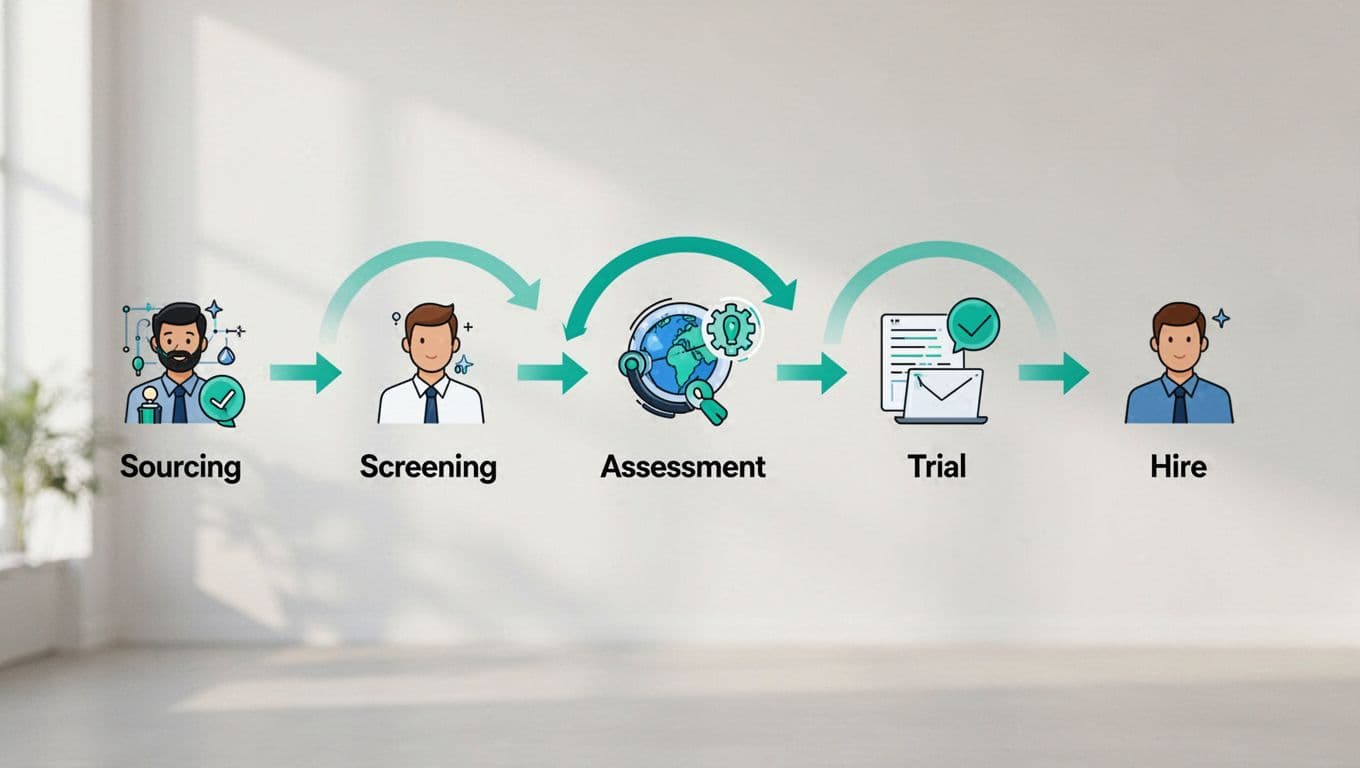
Here’s a 6-stage process. Adapt it to your team size.
- Source and Post: Define needs, post job, collect 20 apps (1 hour).
- Screen Profiles: Review portfolios and forms (1 hour).
- Async Video Check: Send prompts, score responses (1 hour).
- Technical Test: Assign short task, review code (2-3 hours).
- Live Interview: 45-minute call on fit and questions (1 hour).
- Paid Trial: 10-hour project at half rate (optional, 1 week).
Use tools like Calendly for scheduling. Notion tracks progress.
Test it on your next hire. Refine based on results.
Run Technical Assessments That Predict Real Performance
Tests reveal true skills. Skip brainteasers. They don’t match job work.
Assign realistic tasks. Build a simple API endpoint. Time it at 2 hours max.
Focus on code quality. Check for tests, error handling, and security. Does it sanitize inputs?
AI tools complicate this. Ask candidates to note tool use. Review for over-reliance.
Platforms like HackerRank automate grading. But manual review spots nuances.
For seniors, simulate code reviews. Share sample code. Ask for fixes and explanations.
Common pitfall: Unrealistic tests. A 10-hour unpaid task scares talent. Keep it short and paid if possible.
Follow Second Talent’s vetting table for time estimates per area.
Share feedback fast. Top candidates wait 24 hours max.

This predicts production work better than trivia.
Conduct Interviews That Uncover Fit
Calls confirm soft skills. Prep 8-10 questions.
Start behavioral. “Tell me about a project that went wrong. How did you fix it?”
Tech follows. “How do you secure authentication in a Node app?” Probe for specifics.
Async fits 2026. Use Loom for follow-ups. Gauge response speed.
Check cultural match. “How do you handle feedback loops in remote teams?”
End with their questions. Eager ones ask about your stack or challenges.
Record calls. Review later for blind spots.
Sample questions:
- Experience: “Walk through your last full-stack project. What tools did you pick and why?”
- Process: “Describe your deployment pipeline.”
- Security: “How do you prevent SQL injection? Give an example.”
From CV Owl’s list, adapt for your needs.
Two rounds max. First screens, second dives deep.
Build Your Evaluation Scorecard
Score consistently. Gut feels bias you.
Create a 1-5 scale across categories. Total 100 points max.
| Category | Weight | Criteria Example | Score (1-5) |
|---|---|---|---|
| Technical Skills | 40% | Code quality, problem-solving | |
| Communication | 20% | Clarity in video/writing | |
| Reliability | 15% | References, timelines | |
| Cultural Fit | 15% | Feedback handling, autonomy | |
| Security Awareness | 10% | Secure practices in test |
Tally after each stage. Advance 4+ averages.
Customize weights. Security-heavy roles bump that score.
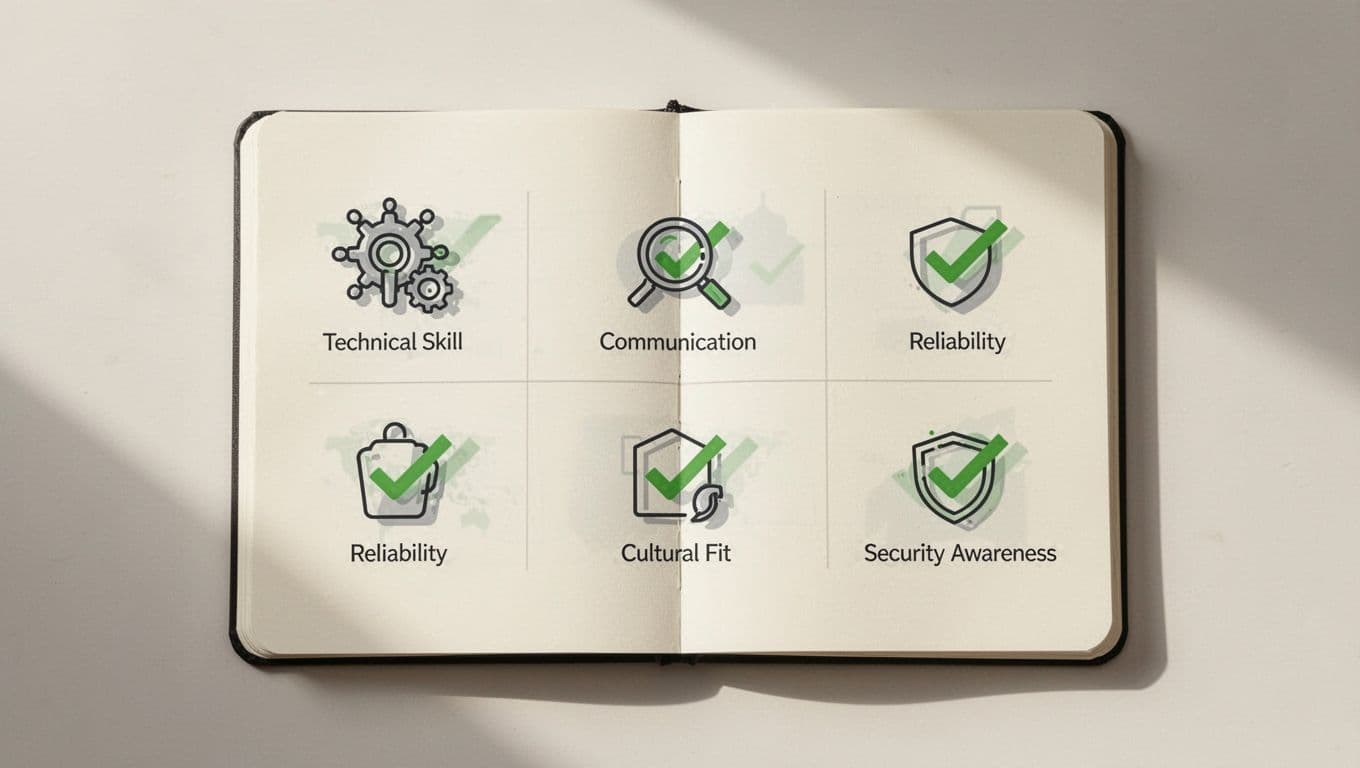
Share with your team. Discuss borderline cases.
This turns hiring into data-driven decisions.
Avoid These Common Vetting Mistakes
Resumes lie. Focus on portfolios instead.
Unpaid marathons repel pros. Pay for trials.
Skip references at your peril. Contact two past clients.
Ignore async fit. Test response times early.
Overlook security. Use NDAs for tests. Check privacy habits.
Rushing hires for deadlines backfires. Stick to process.
Follow Truffle’s red flag guide for portfolios.
Fix these, and your success rate jumps.
Conclusion
A tight freelance developer vetting process hires winners consistently. Use the workflow, scorecard, and tips here to start.
You’ll spot skills, fit, and risks early. Projects finish on time with fewer headaches.
In 2026’s remote world, this framework adapts to AI shifts and security needs. Apply it now for better results.
Need help with cybersecurity-focused hires? Book a Discovery Call with Bud Consulting.