table of contents
Warehouse operations rely on IoT devices like sensors, cameras, and automated guided vehicles. These tools boost efficiency. Yet they create security risks that traditional methods often miss.
You manage a busy warehouse with connected systems. One overlooked exposure could halt shipments or endanger workers. CTEM for IoT in warehouses offers a better way. It focuses on real threats, not just lists of vulnerabilities.
This article covers CTEM basics, differences from old approaches, and practical steps. You’ll see how to apply it in your environment.
IoT Challenges in Warehouses
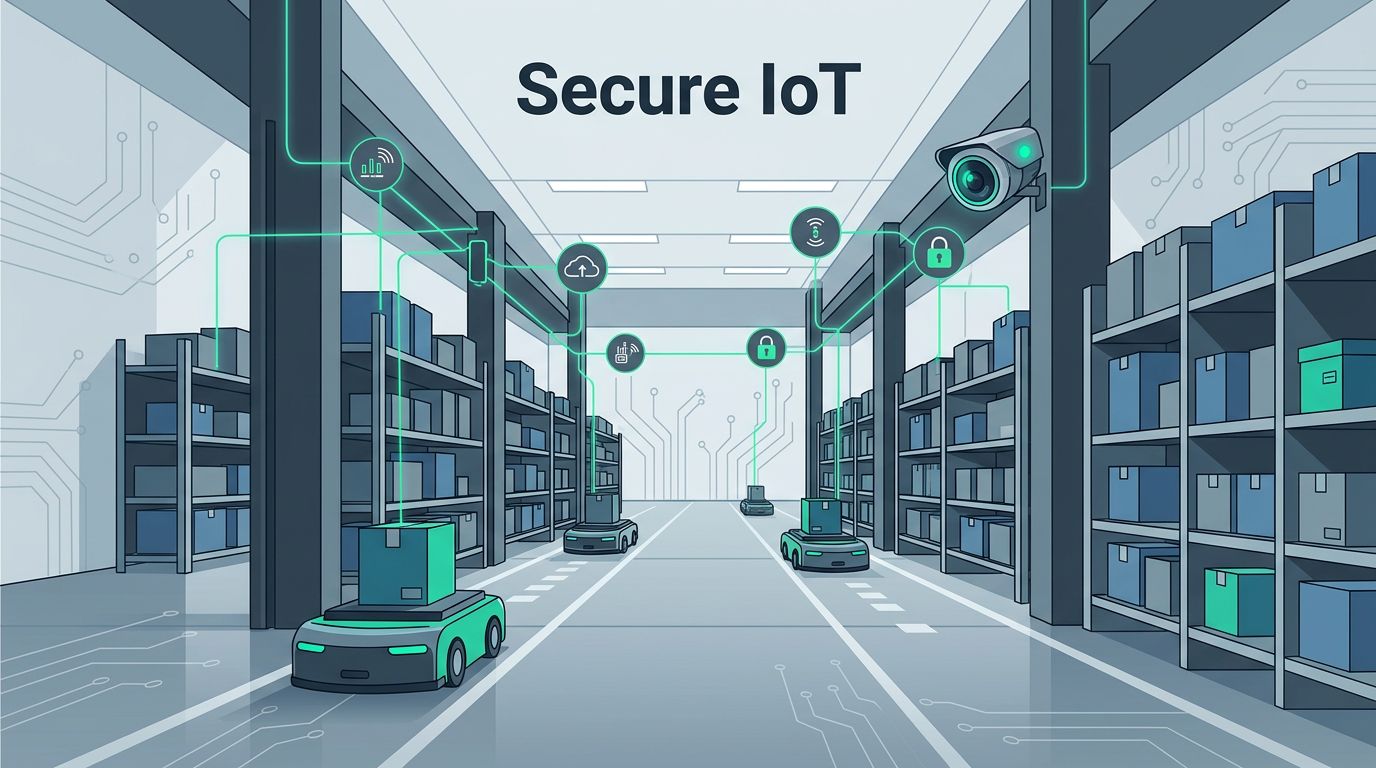
Warehouses use IoT for inventory tracking, climate control, and robot navigation. Sensors monitor humidity. Cameras watch aisles. Forklifts send location data.
These devices connect to networks. Many run old firmware. They lack strong authentication. Attackers target them because they lead to operational technology (OT) systems.
Consider a typical setup. An automated guided vehicle (AGV) fleet pulls data from a central server. A compromised sensor could inject bad commands. This causes collisions or data leaks.
Networks blend IT and OT. IT handles orders. OT runs machinery. Convergence expands the attack surface.

Shadow devices add risks. Third-party HVAC monitors or vendor cameras appear without IT approval. They connect via Wi-Fi. No one tracks them.
In 2026, threats target supply chains. Ransomware hits logistics firms. IoT entry points speed up attacks.
Common issues include weak protocols like Modbus or MQTT. Default passwords persist. Internet-facing ports expose controls.
You need visibility across all assets. Without it, blind spots grow. CTEM addresses this head-on.
What Is Continuous Threat Exposure Management?
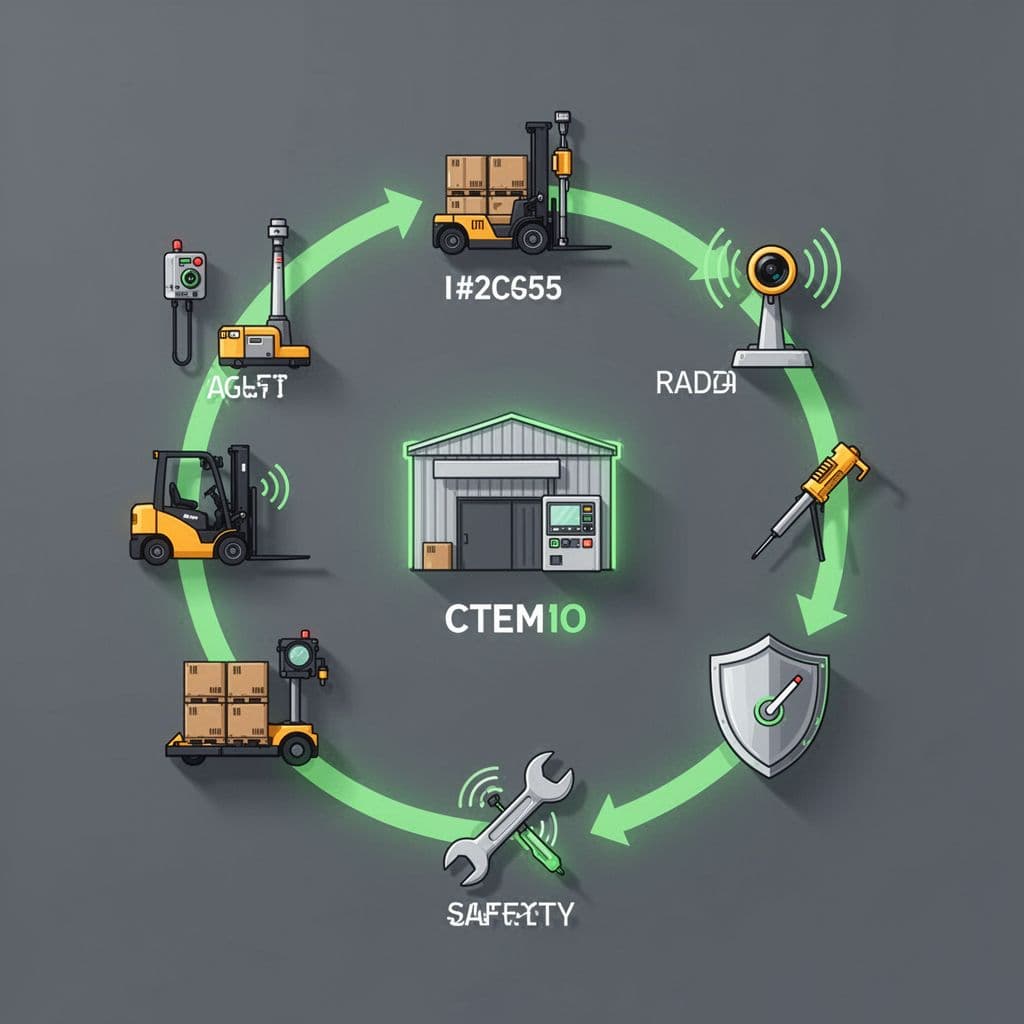
Continuous Threat Exposure Management (CTEM) cycles through five phases: scope, discover, prioritize, validate, and mobilize. It runs ongoing, not quarterly.
Scope defines what matters. Include all IoT, OT, cloud apps, and vendors.
Discover finds assets. Agents or passive scans map devices without disruption.
Prioritize scores risks by business impact and exploitability, not just severity scores.
Validate tests exposures safely. Simulations check real reachability.
Mobilize pushes fixes. Automate tickets, firewall rules, or patches.
Gartner outlined this model. It fits warehouses where downtime costs thousands per hour.
For IoT, CTEM handles unpatchable devices. Network controls compensate.
Forescout’s CTEM page details asset coverage for IoT and OT.
Teams gain a live attack surface view. Decisions align with operations.
How CTEM Differs from Traditional Vulnerability Management
Traditional vulnerability management scans for known flaws. It lists CVEs by CVSS score. Teams patch high ones first.
This approach overwhelms. Warehouses have thousands of devices. Many CVEs lack exploits.
CTEM shifts focus. It considers context. A low-score flaw on a critical PLC ranks higher than a high-score office printer bug.
Traditional tools use static scans. CTEM adds dynamic validation.
Here’s a quick comparison:
| Aspect | Traditional VM | CTEM |
|---|---|---|
| Frequency | Periodic scans | Continuous cycle |
| Prioritization | CVSS scores | Business impact + exploitability |
| Coverage | Known vulnerabilities | All exposures (config, identity) |
| IoT/OT Fit | Limited, disruptive | Agentless, safe |
| Action | Manual patching | Automated mobilization |
CTEM integrates threat intel like EPSS or KEVs. It models attack paths.
Tenable explains CTEM scope across IT, OT, and IoT.
In warehouses, traditional VM misses shadow IoT. CTEM discovers them continuously.
Continuous Discovery in Warehouse IoT Networks
Start with full visibility. Use agentless tools. They scan passively to avoid OT crashes.
Cover AGVs, sensors, PLCs, and WMS apps. Include cloud-linked inventory systems.
Passive discovery watches traffic. Active pings confirm devices gently.
In 2026, platforms map subsidiaries and partners. Vendor devices count too.
Example: A warehouse finds 200 unknown sensors. CTEM tags them by protocol.
Siemba’s five pillars stress asset inventory for IoT.
Run discovery daily. New devices trigger alerts.
Integrate with NAC for instant classification. This builds your foundation.
Prioritizing Exposures in CTEM for Warehouses
Not all flaws matter equally. Prioritize by impact.
Ask: Does this hit shipments? Worker safety? Compliance?
Score with multi-factors: asset role, reachability, active exploits.
Tag critical assets. PLCs and AGV controllers top the list.
AI helps. It simulates paths from IoT to OT.

Focus on 5-10% of exposures causing 90% risk.
Real-time data from 2026 shows EPSS predicts exploits better than CVSS.
Business leaders see clear reports. “This sensor path risks $50K downtime.”
Safe Validation of IoT Exposures
Validation confirms exploitability. Use non-intrusive sims.
Tools mimic attacks without harm. Test Modbus ports on PLCs.
In warehouses, check Wi-Fi to OT jumps. Validate camera feeds.
Safe probes run in phases. Start external, move internal.
Results feed prioritization. False positives drop.
Example: A sensor vuln seems bad. Validation shows firewall blocks it.
This step prevents alert fatigue.
Mobilizing Remediation for Warehouse Devices
Action closes loops. Automate where possible.
Push firewall rules. Block risky ports instantly.
For unpatchable IoT, add micro-segmentation. Limit protocols.
Integrate with SOAR. Tickets open for humans.
Virtual patching works. Compensate via network.
Seubert’s warehouse tips recommend segmentation.
Track metrics. Measure risk reduction.
Phased Rollout Approach
Don’t boil the ocean. Start small.
Phase 1: Pilot one zone. Pick high-value area like AGV charging.
Discover and baseline. Fix top exposures.
Phase 2: Expand to half warehouse. Add sensors, cameras.
Phase 3: Full coverage. Include vendors.
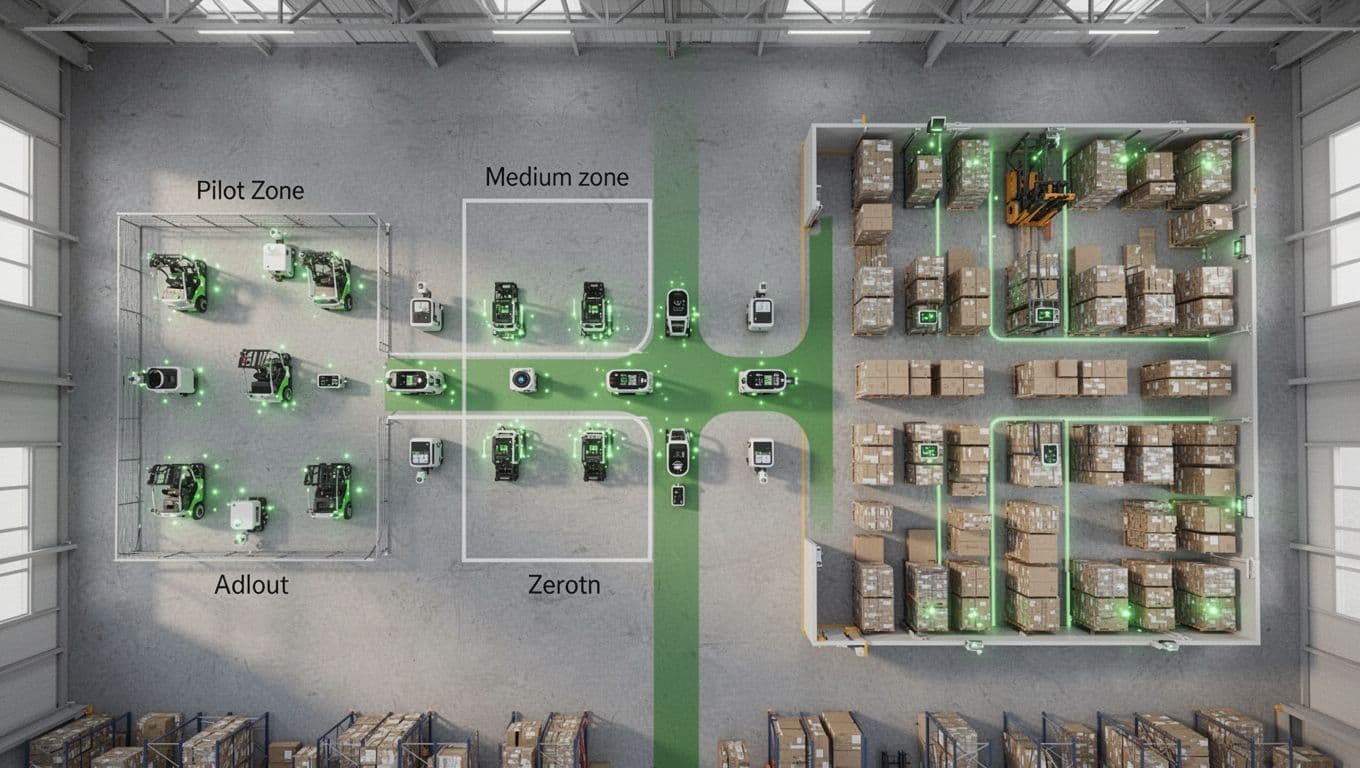
Each phase tests integrations. Train teams.
Timeline: 3 months per phase. Adjust for size.
This builds buy-in. Shows quick wins.
Common Pitfalls and Fixes
Overlook OT protocols. Fix: Train on Modbus, OPC-UA.
Ignore unpatchables. Compensate with zoning.
Skip validation. Wastes time on ghosts.
Vendor blind spots. Extend discovery outward.
Poor metrics. Report business impact, not CVE counts.
Nozomi’s IoT webinar covers asset steps.
Budget for tools. Start open-source, scale up.
Involve ops early. They know critical paths.
Integrating Zero Trust and Automation
Layer CTEM with Zero Trust. Devices prove identity.
Enforce least privilege. Sensors talk only to collectors.
Automation shines in 2026. AI drafts rules.
SOAR triggers ZTNA blocks.
Supply chain: Monitor APIs, third-party ports.
Hadrian’s manufacturing CTEM fits warehouses.
This combo cuts blast radius.
Measuring Success in CTEM Programs
Track exposure scores over time. Aim for 50% drop.
Mean time to mobilize under 24 hours.
Breach simulations show improvements.
Report to execs: Uptime gains, cost savings.
Gartner notes CTEM firms face fewer incidents.
Align with compliance like NIST OT.
Conclusion
CTEM transforms warehouse IoT security. It moves from reactive scans to continuous control.
You now know the cycle, differences from old VM, and rollout steps. Start with discovery in one zone.
Real risks drop when you prioritize impact and automate fixes.
For tailored advice, book a discovery call with Bud Consulting. Your operations stay safe and efficient.