table of contents
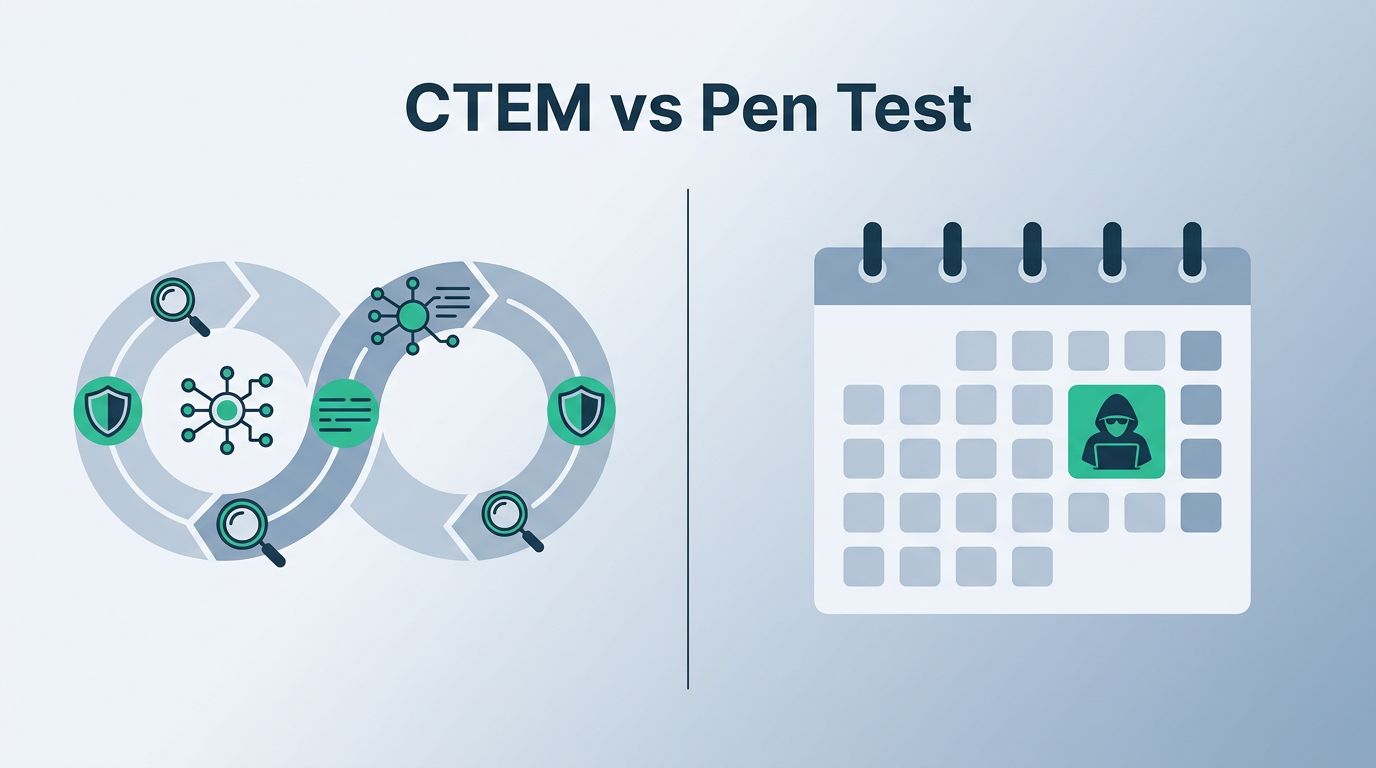
Lean security teams face tough choices. You have limited budgets and staff, yet threats hit fast. CTEM, or Continuous Threat Exposure Management, runs ongoing cycles to spot and fix risks. Annual penetration testing delivers a yearly snapshot of vulnerabilities through simulated attacks.
CTEM fits better for most SMBs. It automates checks across your attack surface, prioritizes real threats, and tracks fixes without constant manual work. Penetration testing shines for deep dives but leaves blind spots the rest of the year. This guide compares CTEM vs. penetration testing. It offers a framework to pick the right approach for your team.
Table of Contents
- What CTEM Means for Your Security
- Annual Penetration Testing Basics
- CTEM vs Penetration Testing: Key Differences
- Budget and Team Size Fit for SMBs
- Visibility and Prioritization Gains
- Compliance Needs and Tradeoffs
- Decision Framework for Lean Teams
- Conclusion
- FAQ
What CTEM Means for Your Security
CTEM cycles through five steps: scope assets, discover exposures, prioritize by risk, validate exploitability, and mobilize teams for fixes. This loop runs continuously. It aligns security with business impact.
Gartner defined this model. It helps teams focus on threats that matter. For example, CTEM scans cloud setups, SaaS apps, and identities all year. Tools automate most work, so small teams stay ahead.
In 2026 trends, CTEM adoption grows because AI-driven attacks evolve quickly. Teams report 50% better visibility into attack paths. It cuts false positives by 84%, per recent data. Lean SMBs use it to feed threat intel into daily ops.
CTEM builds on basics like vulnerability scans. But it validates if issues chain into breaches. Check Gartner’s CTEM roadmap summary for the full cycle.
Your team gets a backlog of exposures with owners and deadlines. Results improve over time as you retest fixes.
Annual Penetration Testing Basics
Penetration testing mimics real hackers. Testers probe networks, apps, and configs for weaknesses. They exploit flaws and report paths to compromise.
Most teams run it once a year. Engagements last weeks. Outputs include detailed reports with proof-of-concepts. You fix high-risk items before the next test.
This method excels at depth. It covers lateral movement and privilege escalation. NIST recommends it for key systems. See NIST Cybersecurity Framework for risk management ties.
Costs run high, though. External experts charge $20,000 to $100,000 per test, based on scope. Internal teams need rare skills, which strains lean groups.
Blind spots emerge post-test. New flaws appear monthly, but you wait 11 months to check. 2026 data shows 96% of teams skip exploitability tests outside annual runs.
Pen testing proves controls fail. It complements other tools but stands alone poorly for ongoing needs.
CTEM vs Penetration Testing: Key Differences
Side-by-side, CTEM offers breadth and speed. Penetration testing provides targeted depth. Here’s a quick comparison.
This table highlights core contrasts for lean teams:
| Aspect | CTEM | Annual Penetration Testing |
|---|---|---|
| Frequency | Continuous cycles | Once or twice yearly |
| Coverage | Full attack surface, automated | Scoped snapshot, manual |
| Output | Prioritized backlog, metrics | Exploit reports |
| Team Needs | Low; automation handles most | High; experts required |
| Cost for SMBs | Subscription, $10K-$50K/year | $20K-$100K per engagement |
| Visibility | Ongoing, 50% better per trends | Gaps 11 months |
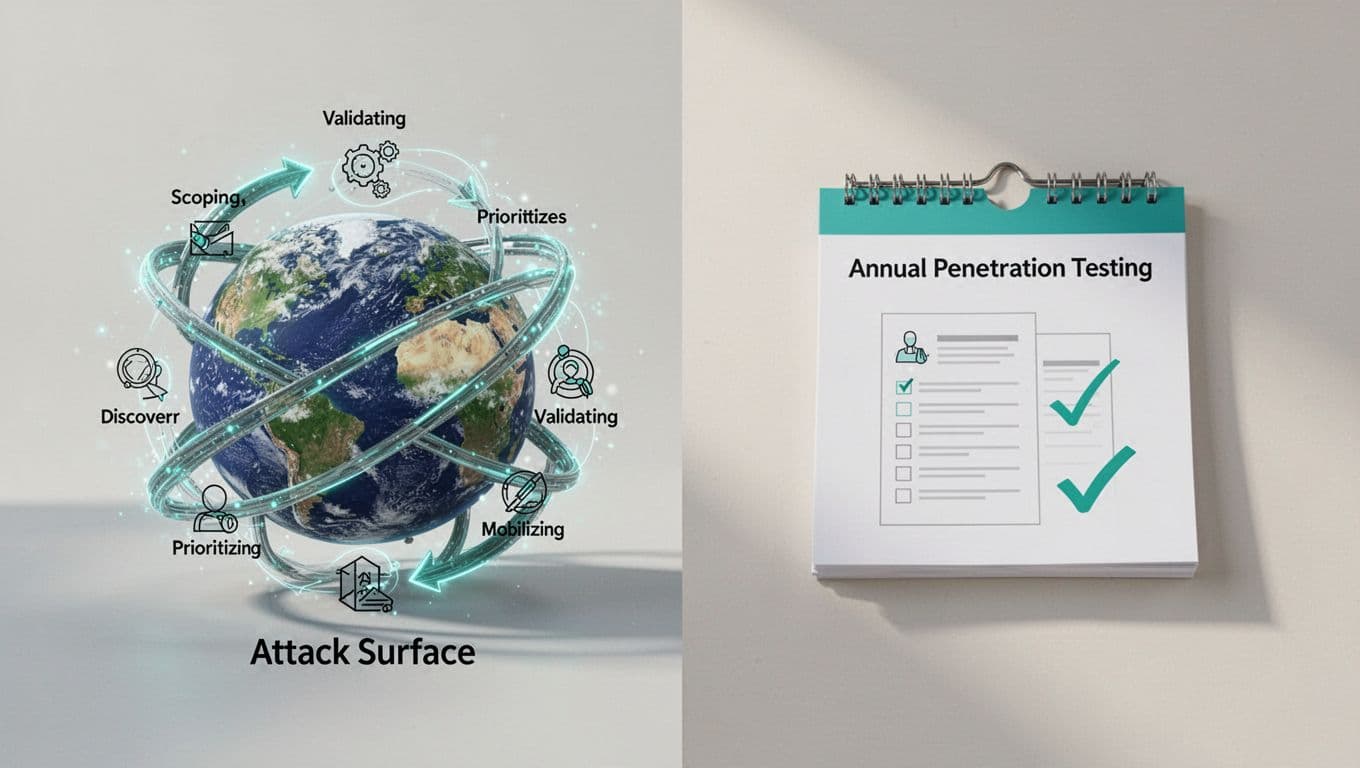
CTEM turns pen test findings into a loop. Retest fixes immediately. For details, see this CTEM vs penetration testing breakdown.
Pen testing fits validation in CTEM’s cycle. Use both if budget allows. Alone, it misses daily drifts.
Budget and Team Size Fit for SMBs
Lean teams can’t afford pentest experts yearly. CTEM uses SaaS platforms with automation. Monthly costs scale to your size.
SMBs save because CTEM needs no full-time pentesters. One security manager oversees it. Trends show it fits budgets under $50K annually.
Pen testing demands planning. You hire firms or train staff, which pulls from ops. Delays hit when reports pile up without follow-through.
Real tradeoff: CTEM starts cheap but requires scoping discipline. Pen tests deliver quick wins for compliance audits. Start CTEM if staff stays under five.
Visibility and Prioritization Gains
Annual tests blind you to changes. A patch fails, or cloud expands; you learn next year. CTEM scans weekly, prioritizing by exploit chance and impact.
It ranks the top 2-5% of risks. Business context guides fixes, like customer data paths. Remediation speeds up 3x in mature programs.
For lean teams, this means fewer meetings. Dashboards show progress. Integrate with MITRE ATT&CK mappings for threat focus.
Pen tests validate deep but don’t track. CTEM fills gaps, proving controls hold.
Compliance Needs and Tradeoffs
Regulations like PCI-DSS or SOC 2 require annual pen tests. CTEM supports ongoing evidence, which auditors like.
Tradeoff: Pen tests check boxes fast. CTEM builds proof over time, better for frameworks like NIST CSF 2.0.
Lean teams pick CTEM for audits plus visibility. It reduces breach odds by chaining vulns to paths. Costs balance when you skip redundant tests.
Decision Framework for Lean Teams
Ask these questions to choose.
First, assess team size. Under five people? Go CTEM. It automates 80% of checks.
Budget tight? CTEM subscriptions beat per-test fees.
Need compliance proof? Start with pen test, then loop into CTEM.
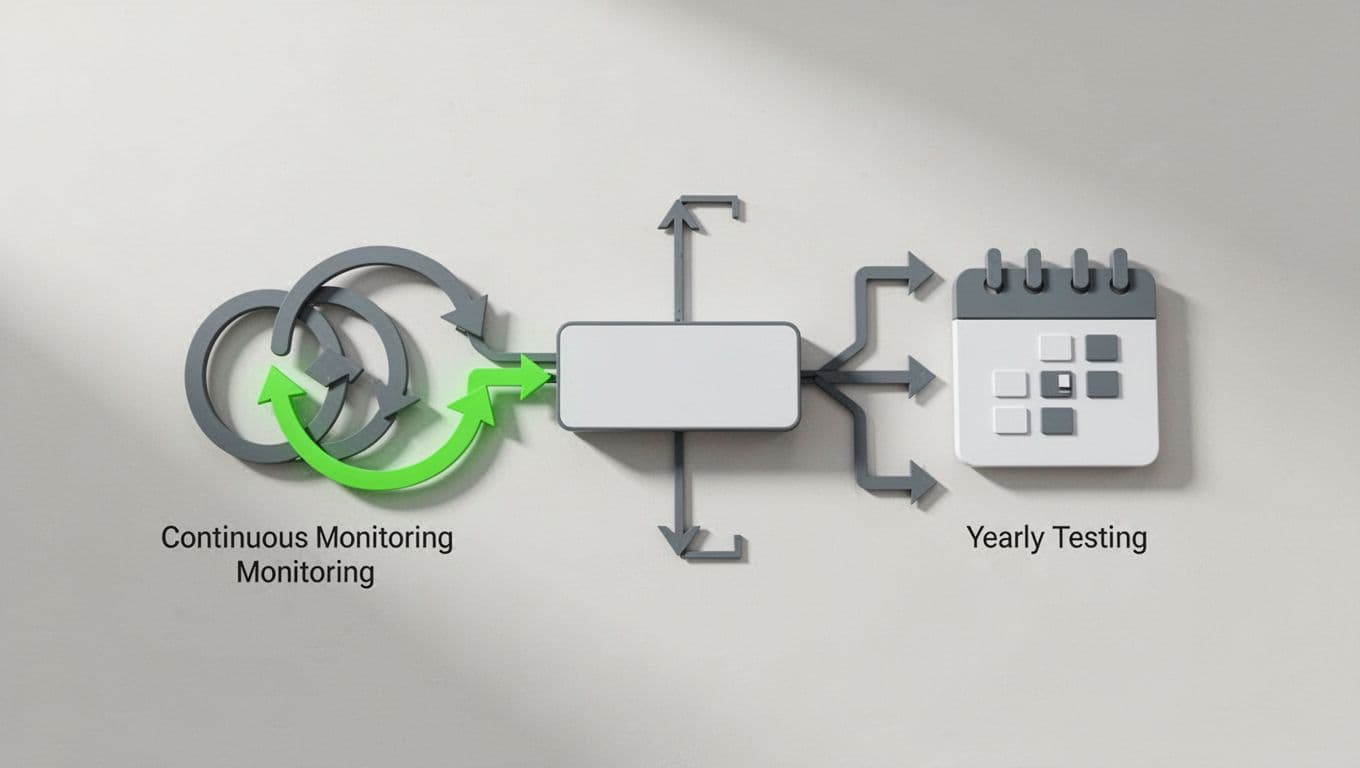
This visual maps paths. CTEM wins for most SMBs in 2026.
Book a Discovery Call with Bud Consulting to tailor it.
Conclusion
CTEM outperforms annual penetration testing for lean teams. It delivers constant visibility, smart prioritization, and budget fit. Pair them if possible, but start with CTEM’s cycle.
Your risks drop as automation handles the load. Act now to scope assets and build maturity.
FAQ
What’s the main difference in CTEM vs. penetration testing?
CTEM runs continuous cycles for broad exposure management. Penetration testing offers point-in-time deep exploits.
Can lean SMBs afford CTEM?
Yes. Platforms cost less yearly than one pen test. Automation cuts staff needs.
Does CTEM replace annual pen tests?
No. It enhances them by retesting fixes ongoing. Use pen tests for validation depth.
How does CTEM help with compliance?
It provides audit trails and metrics. Aligns with NIST and CISA guidance.
What if my team lacks skills?
CTEM tools guide scoping and prioritization. Outsource setup if needed.
(Word count: 1487)