table of contents
Your on-premises legacy applications keep business running. But they sit exposed to threats because patches often fail or risk downtime. You face unpatched vulnerabilities and hidden assets that scanners miss.
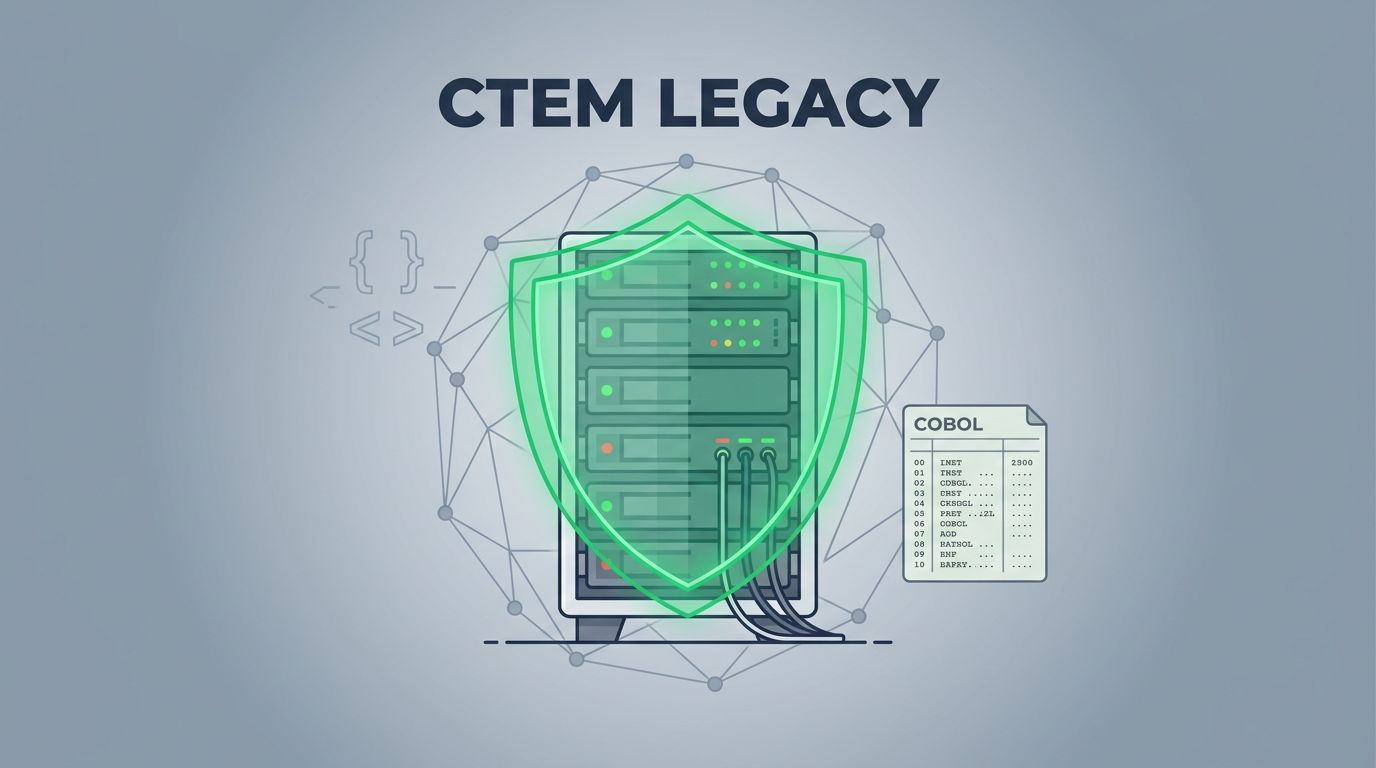
CTEM changes that. It continuously maps exposures, ranks real risks, and drives fixes without full replacements. In 2026, with only 16% of teams fully using it, you gain an edge by focusing CTEM on these tough spots first.
This approach cuts false alarms by up to 84% and boosts visibility. Let’s walk through how to make it work for your setup.
Understand CTEM Basics for Legacy Systems
CTEM follows Gartner’s five steps: scoping, discovery, prioritization, validation, and mobilization. For on-prem legacy apps, it shifts from reactive patching to ongoing risk checks.
Legacy systems like mainframes or custom COBOL apps resist modern tools. Vendors dropped support years ago. Direct exposure to exploits grows as attackers target weak protocols.
Start with scoping. List critical apps tied to revenue or compliance. Then discovery finds forgotten servers. Tools like CyCognito or Armis map on-prem assets continuously, unlike quarterly scans.
Prioritization ranks by exploitability, not just CVSS scores. Use EPSS from FIRST.org for real-world odds. Validation tests if paths exist in your network. Mobilization assigns owners via Jira tickets.
Tradeoffs exist. CTEM adds tooling costs, but it prevents breaches that cost millions. Teams see 50% better risk reduction. Balance by piloting on one app cluster.
NetSPI outlines how CTEM handles non-patchable flaws in legacy integrations. It fits because your old systems need exploitability checks over perfect patches.
Discover Your Legacy Assets
Hidden legacy apps create blind spots. Attackers probe them daily. CTEM discovery builds a full inventory to expose these.
Use agentless scanners for on-prem networks. They detect shadow IT, expired certs, and third-party links without agents on fragile servers. Run daily to catch changes.
Combine passive and active methods. Passive listens to traffic; active pings safely. For example, a bank found unmonitored Oracle servers leaking data via CTEM tools.
Focus on high-value assets first. Map dependencies like databases feeding your ERP. This scoping sharpens later steps.
Challenges include air-gapped systems. Bridge with periodic manual checks or hybrid tools. Document ownership gaps as P2 risks by default.

Once mapped, validate reachability. Tools simulate external views to mimic attackers. This step alone drops noise.
Prioritize Risks with Clear Criteria
You drown in alerts without prioritization. CTEM ranks exposures by business impact and exploit likelihood for legacy apps.
Score using EPSS over CVSS. EPSS predicts 30-day exploitation odds. Factor in asset criticality, like finance apps over test servers.
Include compensating controls. A firewall blocks a vuln? Drop its score. Chain analysis shows if one flaw leads to others.
For legacy, prioritize unowned assets or those with known exploited vulns from CISA’s KEV list. Set SLAs: fix criticals in 7 days.
Here’s a simple framework:
| Factor | Weight | Example for Legacy |
|---|---|---|
| Exploit Probability (EPSS) | 40% | High if >0.5 |
| Business Impact | 30% | Revenue loss score |
| Reachability | 20% | Internet-facing? |
| Controls Gap | 10% | No segmentation |
XM Cyber details prioritization across CVEs and misconfigs in one dashboard. It works for on-prem because it contextualizes risks.
Test your model quarterly. Adjust based on incidents. This keeps teams focused on 2% of exposures that matter.
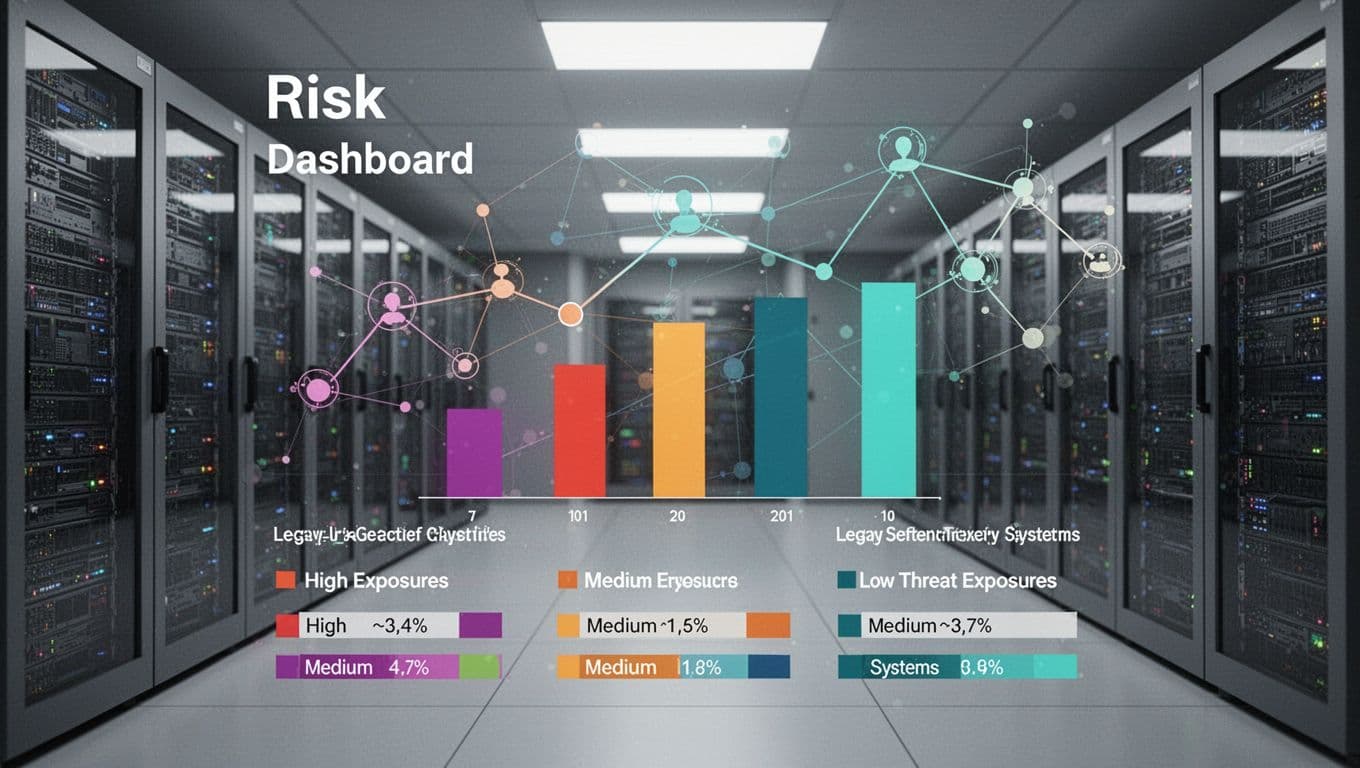
Prioritization prevents burnout. Teams fix what counts.
Validate Exposures Before Remediation
Prioritized lists mean little without proof. Validation tests if exposures lead to breaches in your environment.
Simulate attacks ethically. Use BAS or pentest tools to probe legacy apps. Confirm if a vuln chains to data access.
For on-prem, check internal paths too. Legacy servers often talk freely across VLANs. Validation reveals 84% false positives.
Run continuously but throttle to avoid disruption. Integrate with SIEM for alerts.
Tradeoff: Time investment. Start with top risks. CTEM.org stresses this for defensible rankings.
Palo Alto Networks explains CTEM’s closed-loop validation across assets. It suits legacy because it tests behaviors, not just scans.
Document results. Share with compliance teams. This builds trust.
Segment and Control Access Effectively
Segmentation isolates legacy apps. It stops lateral movement even if exploited.
Use microsegmentation for granular control. Tools like Akamai Guardicore enforce allow-lists without touching app code.
Map flows first in monitor mode. Log violations for weeks. Adjust for legit traffic, like DB queries. Then enforce.
Combine with zero trust access. Least privilege for users and services. MFA where possible, though legacy resists.
Risks include outages from bad rules. Test in dev nets. VLANs work for basics; micro for precision.
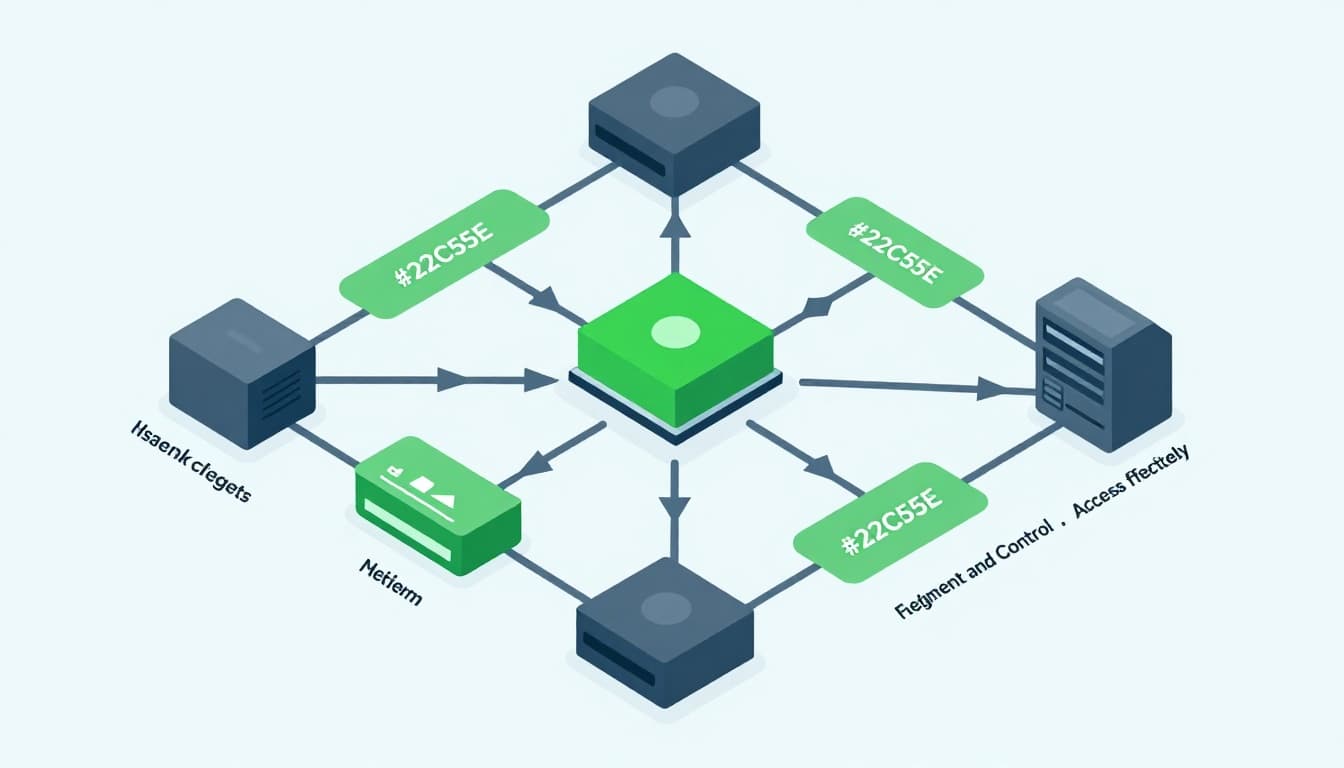
TechSAA covers safe microsegmentation for legacy with monitor phases. Apply it to limit blast radius.
Access controls pair with segmentation. Revoke dormant accounts. Audit logs feed CTEM loops.
Apply Virtual Patching and Monitoring
Legacy apps can’t patch easily. Virtual patching blocks exploits at the edge.
Deploy WAF or IPS rules for known CVEs. Test in detect mode first. Tools like Wallarm create endpoint blocks.
Monitor 24/7 with EDR tuned for old OS. Watch anomalies like unusual ports.
Integrate alerts into CTEM. Auto-prioritize based on detections.
Challenges: False positives disrupt ops. Tune rules iteratively. Costs add up, but breaches cost more.

Akamai shows microsegmentation as virtual patching. It protects without code changes.
Combine with ASM for external views. This closes gaps.
Align Stakeholders for Lasting Success
CTEM fails without buy-in. Engage IT, devs, and execs early.
Share dashboards with business impact scores. Tie to compliance like HIPAA.
Set joint KPIs: mean time to remediate under 14 days. Review monthly.
Challenges: Resistance to change. Train on risks. Budget fights? Show breach stats.
Book a Discovery Call with Bud Consulting to assess your legacy posture.
NDAY Security highlights mobilization workflows. It drives fixes across teams.
Alignment turns CTEM into habit.
Key Takeaways
CTEM prioritizes real risks for on-prem legacy applications. Discovery maps assets; prioritization and validation focus efforts; segmentation, patching, and monitoring contain threats.
You reduce breaches by 50% without rip-and-replace. Start small, measure wins.
Teams that implement fully lead in 2026. Act now on your exposures.