table of contents
You’re under pressure to stop endpoint threats fast. Ransomware hits harder, AI tools change attacks, and XDR platforms demand new skills. An endpoint response team lead keeps your analysts sharp and incidents short. They handle daily triage and guide the shift to unified detection.
This role matters now more than ever. Teams face staff shortages and complex clouds. You need a leader who turns alerts into action. Let’s break down what to look for, from skills to interview tips.
What Does an Endpoint Response Team Lead Do?
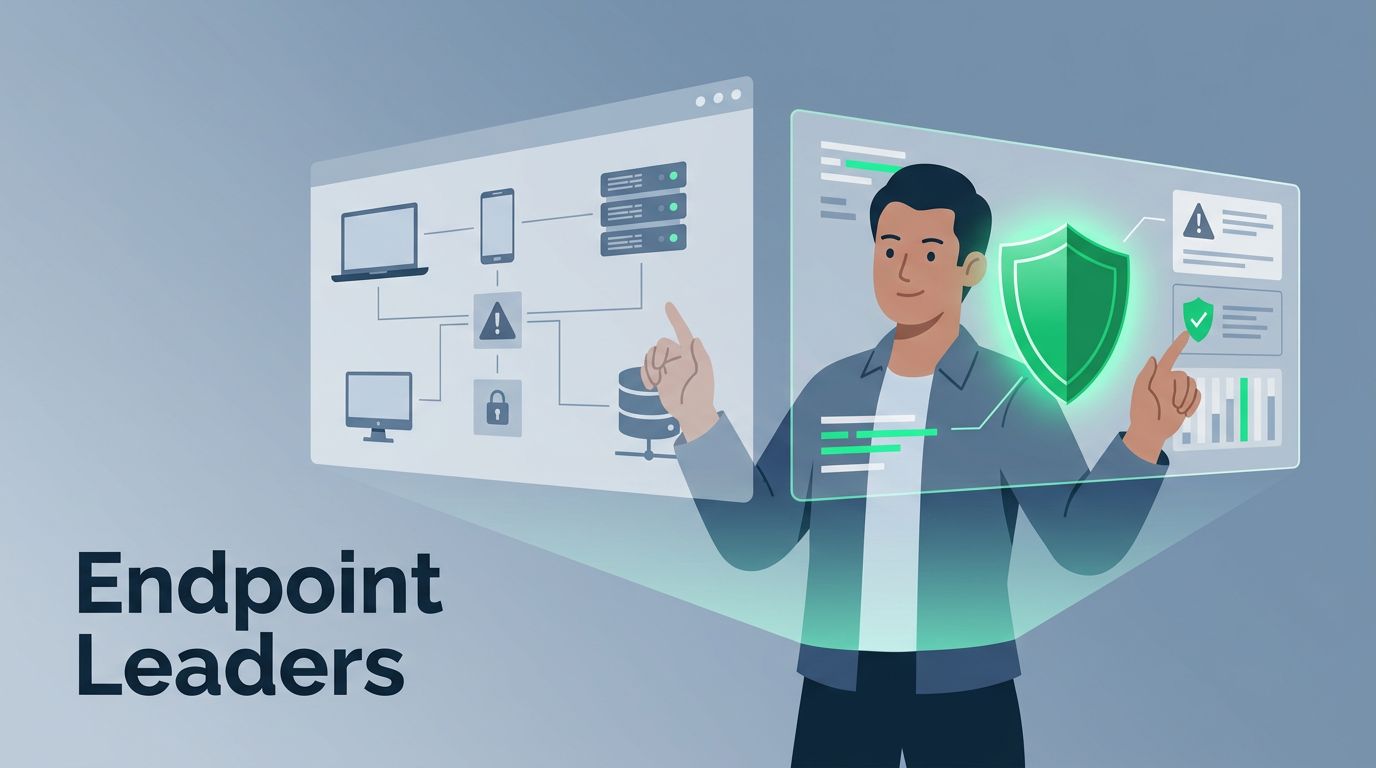
Endpoint response team leads run the show for device threats. They oversee analysts who monitor EDR and XDR tools like CrowdStrike Falcon or SentinelOne. Daily work starts with alert review. They assign triage tasks and ensure quick containment.
These leads dig into incidents first-hand. They isolate endpoints, run forensics, and coordinate fixes. For example, if malware spreads via a phishing link, the lead directs traffic blocks and memory scans. They also build playbooks for repeats, like ransomware rollbacks.
In 2026, XDR trends push them beyond devices. They correlate endpoint data with cloud logs and identity signals. AI flags anomalies, but leads validate them to cut false positives.

Expect them to report metrics too. Mean time to respond (MTTR) drops under their watch. They track coverage gaps, like unpatched IoT devices. Endpoint security management team leads often integrate EDR into SIEM for better visibility.
Mid-market orgs need hands-on leads who script automations. Enterprises want strategic input on vendor shifts. Either way, they train juniors and escalate to IR teams.
How This Role Differs from Similar Positions
Many mix up endpoint response leads with SOC managers or IR managers. Each has a focus. Endpoint leads zero in on device signals. They own EDR/XDR workflows from alert to resolution.
SOC managers run the full operations center. They handle network, email, and cloud alerts too. An endpoint lead reports to them but drills deep into endpoint tactics. For instance, SOC managers set shift schedules; leads tune EDR rules.
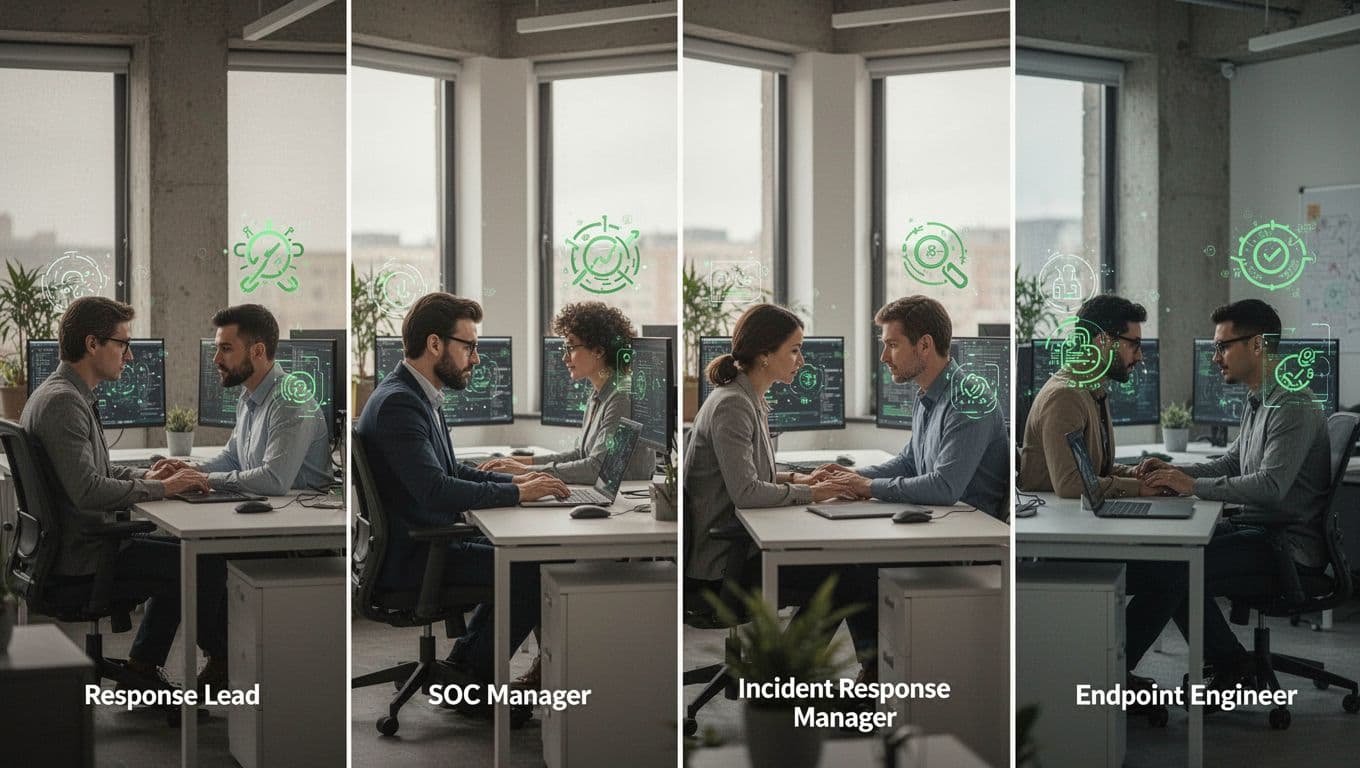
Incident response managers command major breaches. They activate plans across teams and notify regulators. Endpoint leads feed them device details but don’t own enterprise-wide coordination. IR managers lead from detection to resolution, while endpoint leads focus on initial containment.
Endpoint engineers build and maintain tools. They deploy agents and patch platforms. Leads use those tools daily and guide investigations, not code them.
| Role | Core Focus | Key Difference from Endpoint Lead |
|---|---|---|
| Endpoint Response Lead | EDR/XDR triage and team ops | Hands-on incidents, playbook tweaks |
| SOC Manager | Full SOC strategy and staffing | Broader oversight, less device depth |
| IR Manager | Major incident command | Cross-team escalation, not daily alerts |
| Endpoint Engineer | Tool deployment and config | Builds platforms, doesn’t respond |
This table shows why endpoint leads bridge ops and response. Hire for that niche.
Key Skills for EDR and XDR Operations
Strong candidates master incident triage first. They scan alerts for severity, like behavioral anomalies in PowerShell. A good lead groups related events fast. They pivot from endpoint to network flows.
Containment comes next. They isolate devices without downtime. For example, in a living-off-the-land attack, they kill processes and revoke tokens. XDR helps here; leads must query unified data.
Forensics demands precision. They collect memory dumps and timelines. Tools like Velociraptor or Volatility help. Candidates should explain chain-of-custody basics.

In 2026, AI integration sets them apart. They override false positives and tune models. XDR platforms like Palo Alto Cortex dominate, per recent trends. Leads handle multi-cloud endpoints too.
Test for scripting. Python or PowerShell automates hunts. They reduce MTTR by 40% in real cases.
Mid-market leads juggle tools solo. Enterprises expect SOAR ties for auto-playbooks.
Building Playbooks and Tracking Metrics
Playbook development keeps teams consistent. Leads write steps for common threats, like credential dumps. They test them quarterly with purple team drills.
Metrics prove value. Track MTTD, MTTR, and coverage rates. A dashboard shows alert volumes and resolution times. Leads benchmark against peers; aim for under 30 minutes on high-severity.
They spot trends too. Rising lateral movement? Update rules. Tools like Splunk or Elastic help visualize.
For enterprises, tie metrics to business risk. Downtime costs matter. Mid-market leads focus on quick wins, like agent deployment rates.
Candidates share past playbooks. Look for adaptable ones, not rigid scripts.
Leadership and Stakeholder Communication
Team leadership starts with mentoring. Leads coach analysts on hunts and tools. They rotate shifts and handle burnout.
Hiring and onboarding follow. They spot talent with hands-on tests, not just certs.

Stakeholders need clear updates. Execs hear impact: “This breach cost $50K; we contained it in 20 minutes.” Use simple charts.
In 2026, cloud shifts mean talks with DevOps. Leads align on agent policies.
Strong leads foster culture. They run simulations and celebrate stops.
2026 Hiring Criteria: Enterprise vs. Mid-Market
Hiring trends favor practical experience. Certs like GCED help, but real incidents win. Demand rises for XDR pros amid shortages.
Enterprises seek 7+ years. They want cloud-savvy leads for hybrid setups. Budgets cover $180K-$250K salaries.
Mid-market needs versatile players. 4-6 years suffice; focus on MDR tools. Salaries hit $140K-$190K.
Both value AI fluency and scripting. Test for ransomware response.
| Criteria | Enterprise | Mid-Market |
|---|---|---|
| Experience | 7+ years, multi-tool | 4-6 years, 2-3 tools |
| Tech Stack | XDR + SOAR + cloud | EDR/MDR focus |
| Salary Range | $180K-$250K | $140K-$190K |
| Team Size | 10+ analysts | 3-6 analysts |
Cybersecurity job stats show endpoint roles above pre-pandemic levels. Prioritize doers.
Sample Interview Questions and Evaluation Rubric
Probe technical depth with these.
- Walk us through triaging a high-severity EDR alert for lateral movement.
- How do you contain a ransomware hit without full network isolation?
- Describe building an XDR playbook for cloud credential abuse.
- What’s your approach to false positive reduction with AI?
- How do you report an incident to execs? Give an example.
- Share a time you led a team through a major endpoint breach.
- How do you mentor juniors on forensics?
Use this rubric (score 1-5 per category):
| Skill Area | Strong (4-5) | Weak (1-2) |
|---|---|---|
| Triage/Containment | Details tools, steps, outcomes | Vague, misses basics |
| Playbooks/Metrics | Shares examples, metrics impact | Generic ideas |
| Leadership | Specific coaching stories | No team experience |
| Communication | Clear, business-focused | Too technical/jargon |
| 2026 Trends | Knows XDR/AI/cloud | Outdated knowledge |

Average scores over 4 hires fast.
Quick Hiring Checklist
- Review resumes: Seek EDR/XDR hands-on, 4+ years leading.
- Phone screen: Ask triage scenario.
- Technical test: Simulate incident in tool demo.
- Panel interview: Use rubric above.
- Reference check: Confirm MTTR improvements.
- Offer: Match market salary, equity for retention.
Print this for your team.
Key Takeaways
Pick endpoint response team leads who own device threats and adapt to XDR. They cut response times and build strong teams. Focus on proven skills over certs.
Your security gets tighter with the right hire. Book a Discovery Call with Bud Consulting to find them quick. Start today.