table of contents
Ransomware hit healthcare harder in early 2026. Attacks rose 10% from last year, with 120 on providers alone in Q1. Clinics shut down. Surgeries delayed. Patient data leaked online.
You lead compliance or security in a hospital or health system. Breaches cost millions in fines and fixes. OCR audits ramp up. Yet daily ops pull you away from planning. A solid healthcare security roadmap ties rules to real risks. It cuts threats and proves value to execs.
This guide walks you through building one. You’ll get steps, priorities, and a sample framework. Let’s start with why it matters now.
Why Healthcare Teams Need a Security Roadmap Now
Threats spike in 2026. Health-ISAC reports AI-driven attacks top concerns. Ransomware groups like Qilin exploit unpatched devices. Healthcare saw 165 attacks in early 2026, per Comparitech data.
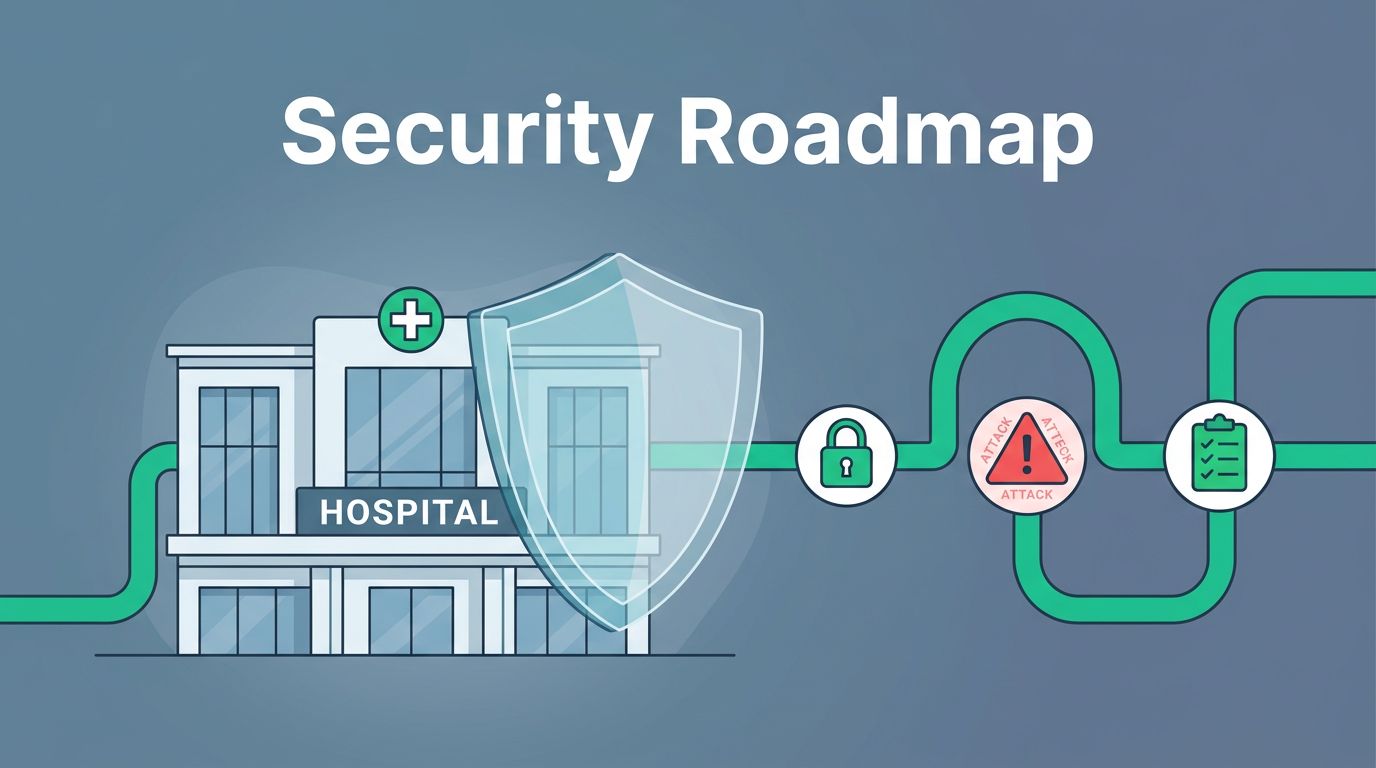
Without a roadmap, teams react. You patch one hole, another opens. A roadmap plans ahead. It maps risks to fixes over time. Hospitals use it to segment networks and train staff. Result? Faster recovery and fewer breaches.
Consider a mid-size clinic. Phishing fools a nurse. Attackers steal PHI. A roadmap would have mandated MFA and drills first. Now, fines hit under HIPAA.
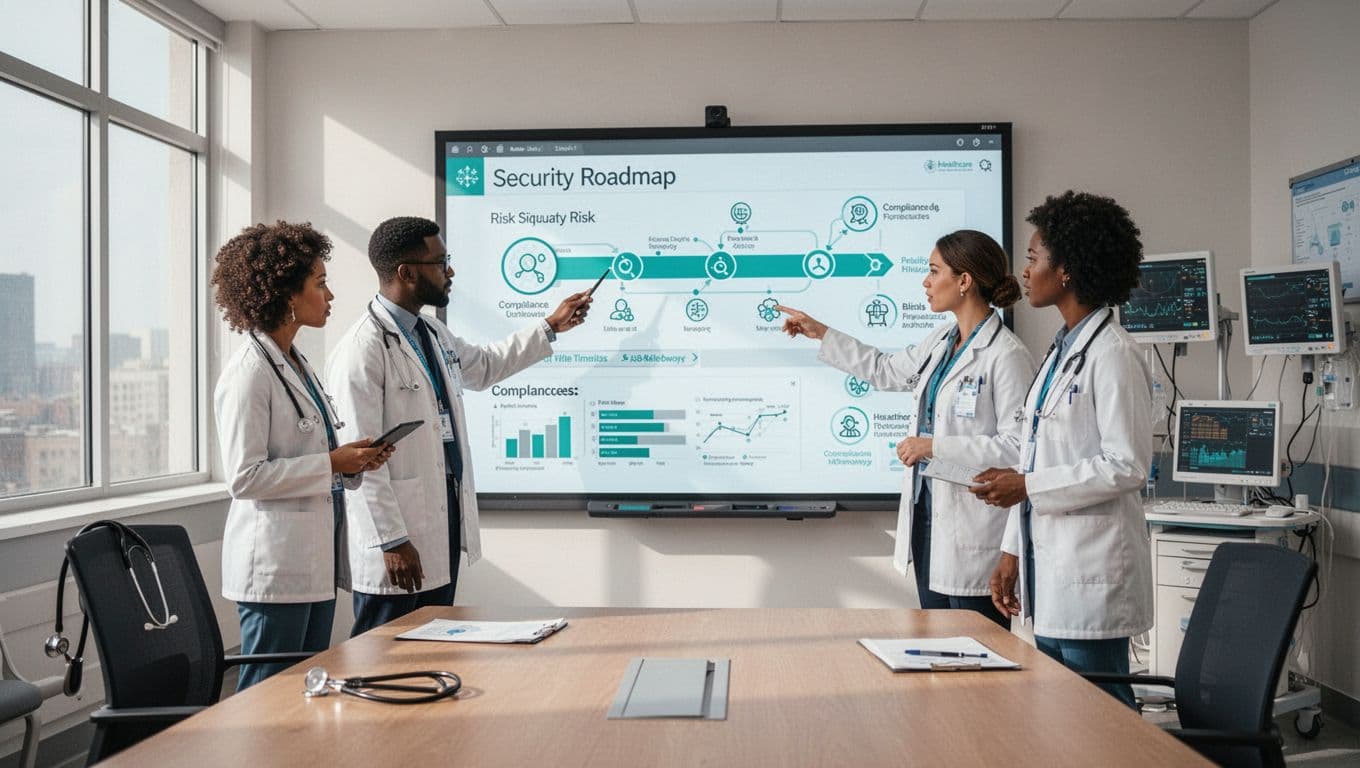
Teams need this plan because cyber risks disrupt care. IoMT devices carry 53% critical flaws. Third-party vendors leak data. A roadmap prioritizes. It aligns IT budgets with compliance. Execs see ROI in lower downtime.
Start small. Assess your gaps quarterly. Build from there. This approach works for digital health firms too. They face same threats but lighter resources.
Key Regulations Shaping Your Roadmap
HIPAA sets the base. It demands safeguards for ePHI. HITECH adds breach rules and fines. OCR enforces both, with audits up in 2026.
NIST CSF 2.0 guides implementation. Use its crosswalk to HIPAA, from Censinet’s alignment tool. Detection maps to security officers. Response covers incidents.
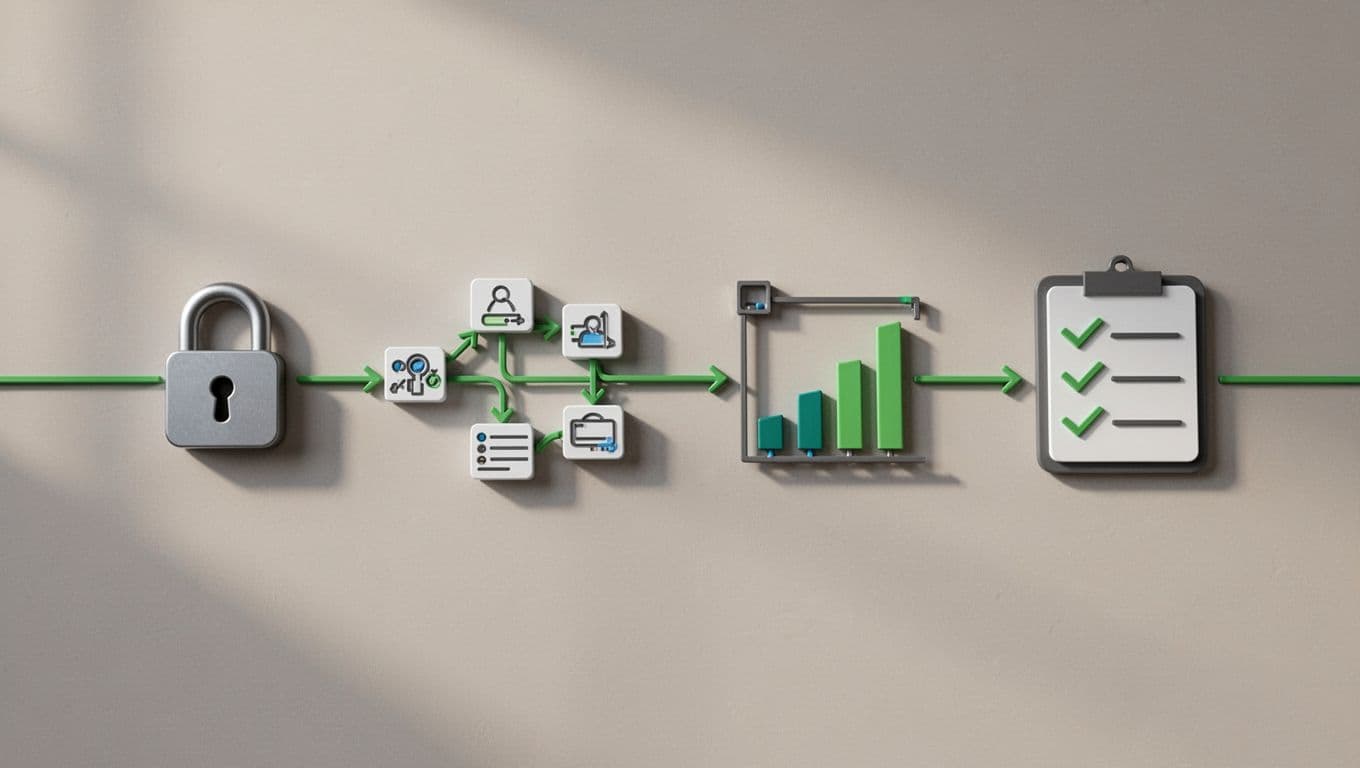
HITECH requires notifications in 60 days. Miss it, pay more. NIST SP 800-66 details controls like access limits.
OCR focuses on vendors now. State laws stack on top. A roadmap weaves these in. For example, map NIST controls to HIPAA via NIST SP 800-66 guide.
Health systems adapt by phasing compliance. Q2 2026: Align policies. Q3: Audit vendors. This meets rules without chaos.
Roadmaps reduce audit stress. They show progress. Tie regs to risks like ransomware. That justifies budgets.
Steps to Create Your Healthcare Security Roadmap
Build your plan in five steps. First, assess risks. Scan networks, IoMT, and cloud. Tools flag known exploited vulns.
Next, set goals. Link to regs and threats. Aim for 90% MFA coverage by year-end.
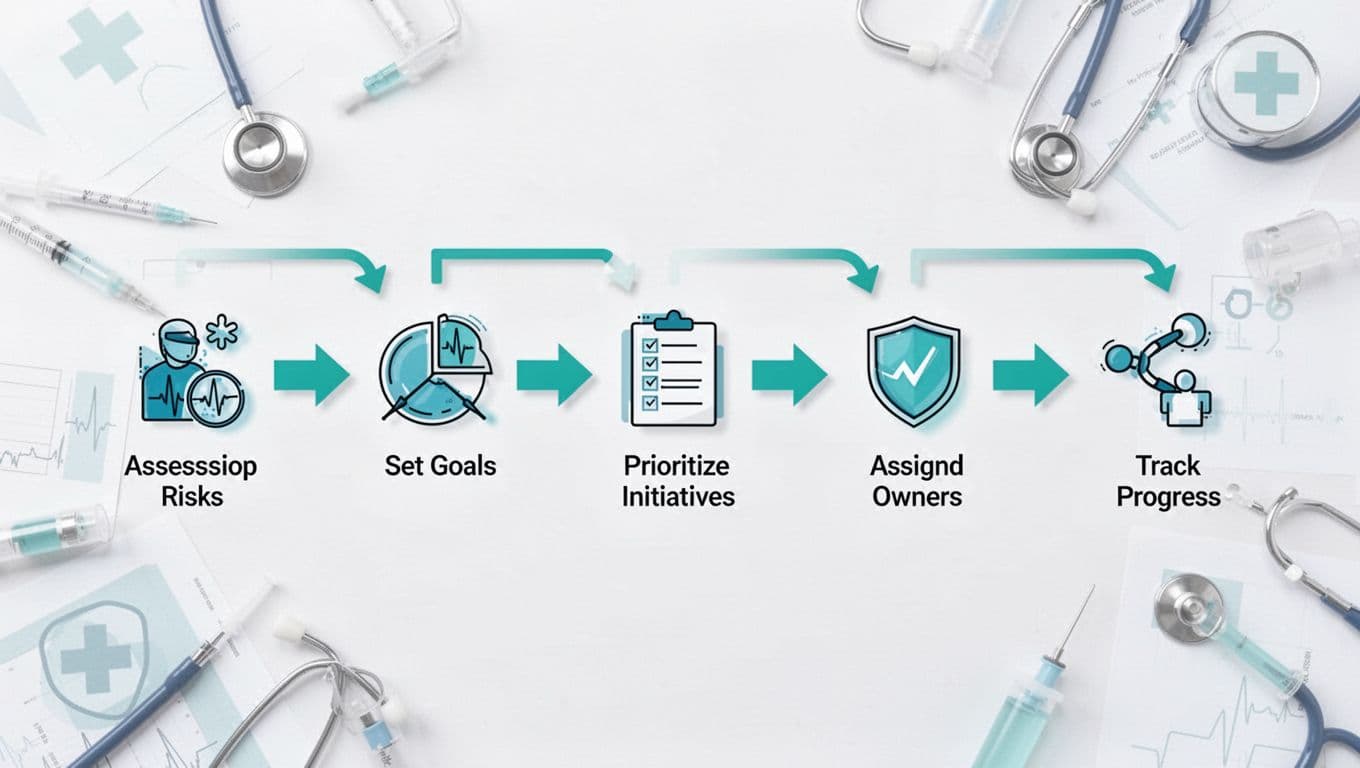
Third, prioritize initiatives. Rank by impact. Use a matrix: high risk, low effort first.
Fourth, assign owners. CISO owns tech. Compliance handles policy. IT rolls out patches.
Finally, track progress. Quarterly reviews. Adjust for new threats.
A hospital example: Step one finds old EHR software. Goal: Patch in 90 days. Owner: IT lead. Track via dashboard.
This process takes four weeks. Involve 10 stakeholders max. Keep it simple.
Use Heights Consulting’s matrix approach for controls. It correlates NIST to HIPAA gaps.
Repeat yearly. Threats change fast.
Prioritizing Initiatives in Your Roadmap
Focus on high-impact moves. Phishing training tops lists. Staff click 60% more AI fakes.
MFA rollout next. Block 99% account takeovers.
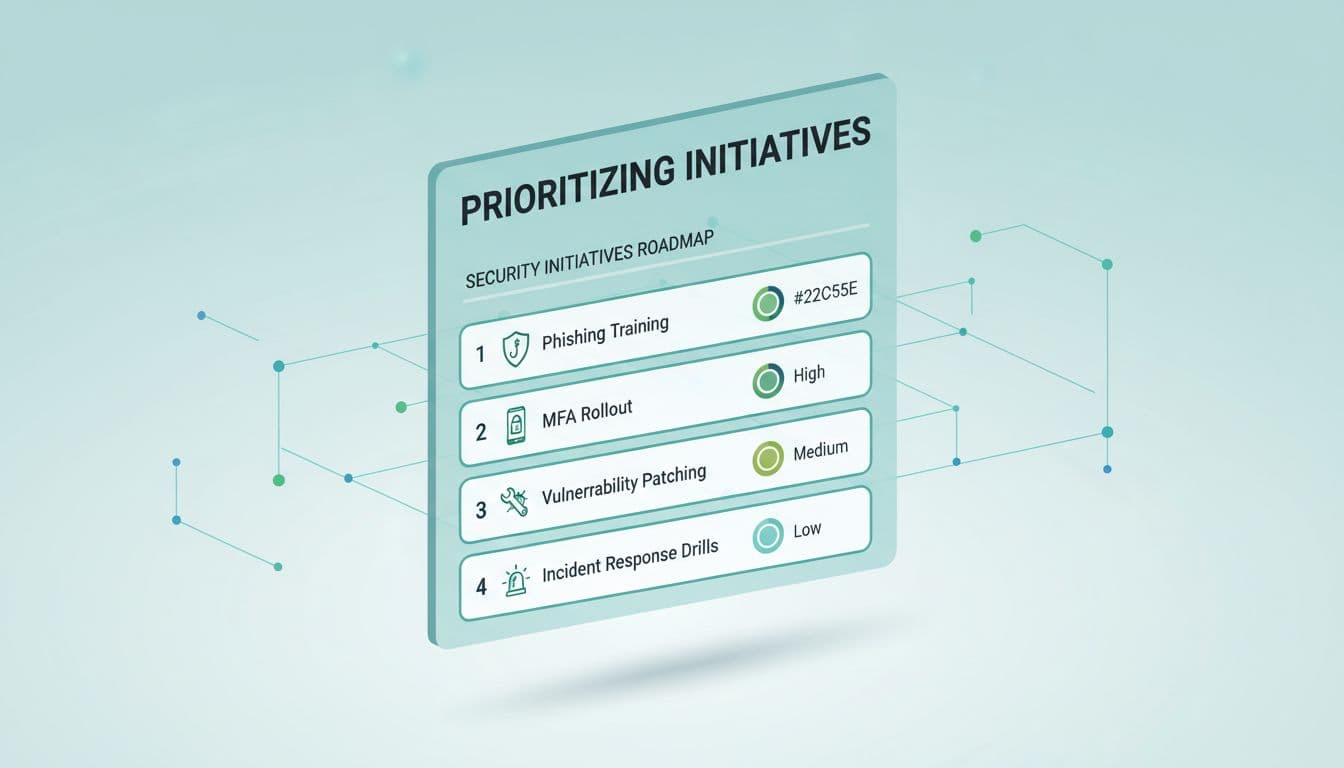
Patch vulns weekly. 29 CVEs hit healthcare in Q1 2026, per Securin.
Incident drills build muscle memory.
Here’s a priority table for a typical clinic:
| Initiative | Risk Reduced | Effort Level | Timeline |
|---|---|---|---|
| Phishing Training | High (staff errors) | Low | Q2 2026 |
| MFA Everywhere | High (accounts) | Medium | Q3 2026 |
| Vuln Patching | High (exploits) | Medium | Ongoing |
| Response Drills | Medium (outages) | Low | Quarterly |
Start with top row. Measure uptake. For hospitals, add IoMT segmentation.
Digital health orgs prioritize cloud backups. 3-2-1 rule: three copies, two media, one offsite.
This cuts breach costs 50%. Tie to exec reports.
Aligning Cross-Functional Teams for Roadmap Success
Roadmaps fail without buy-in. CISO drives tech. CIO funds it. Compliance checks regs.
Privacy officers flag PHI risks. Ops ensure no downtime.

Hold monthly huddles. Share one-page updates. Assign clear roles.
Example: Clinic CISO picks MFA tool. IT deploys. Compliance tests HIPAA fit. Ops trains night shift.
Challenges arise. Budget fights happen. Show risk data. One breach pays for years of fixes.
For health systems, include vendor reps. They own supply chain risks.
RiskAware’s 2026 guide stresses team alignment. It boosts execution 40%.
If gaps persist, book a discovery call with Bud Consulting. They help fill security roles.
Alignment turns plans into action.
Measuring Progress and Reporting to Execs
Track metrics that matter. Compliance score from audits. Threat detections blocked.
Audit readiness percentage. Use dashboards.
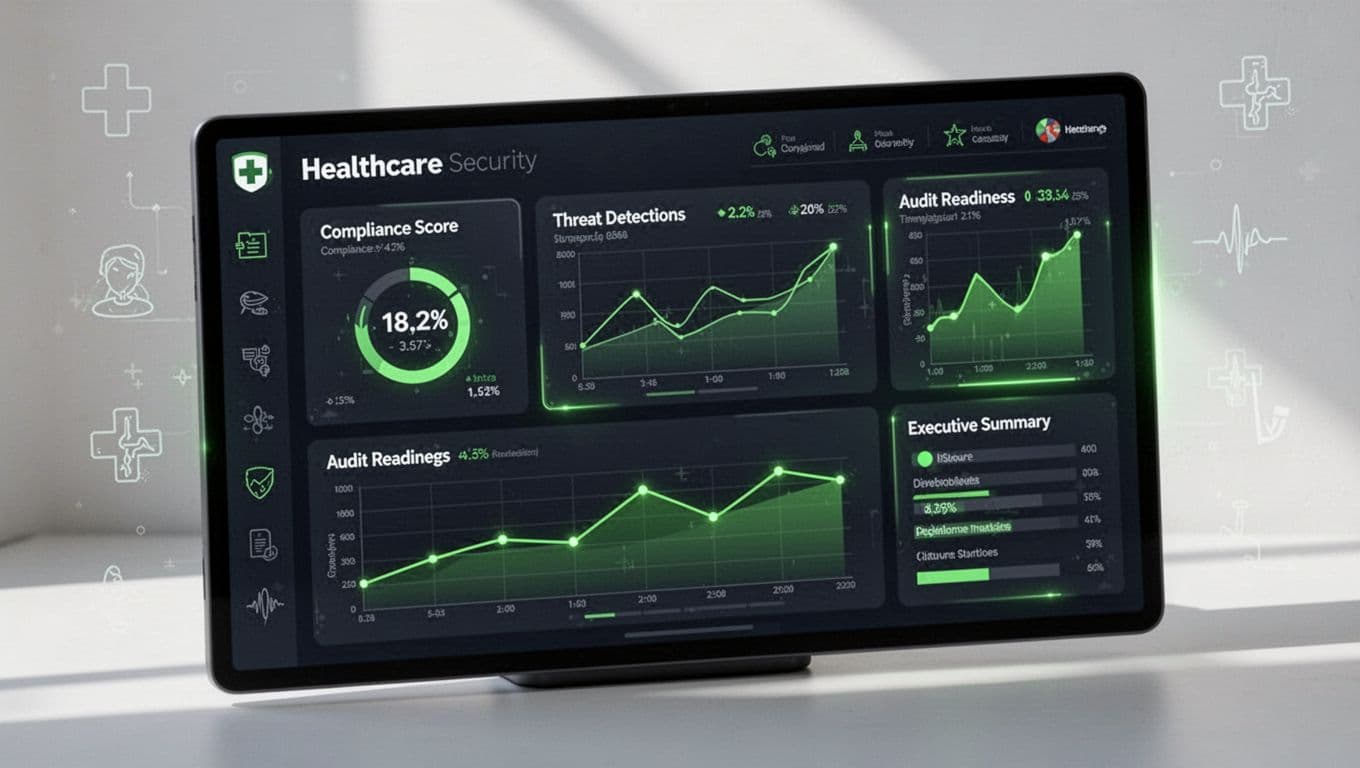
Report quarterly. One slide: Risks down 30%. MFA at 85%.
Execs want ROI. Show downtime saved. Fines avoided.
Tools like SIEM log blocks. NIST metrics guide baselines.
Hospital case: Post-roadmap, detections rose 200%. Breaches dropped zero.
Adjust for 2026 trends. AI threats need new KPIs.
Tie reports to budget asks. Progress builds trust.
Sample Healthcare Security Roadmap Framework
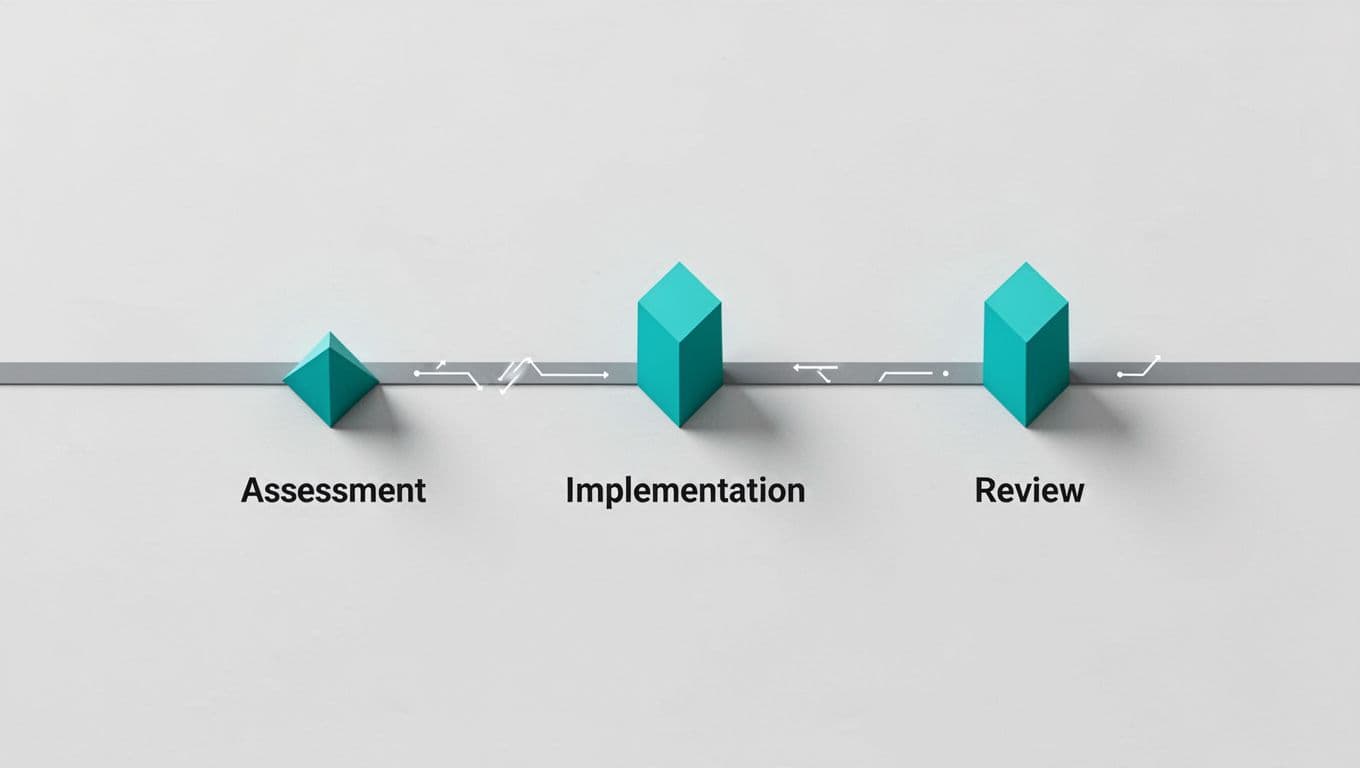
Adapt this one-year template. Phases match threats.
| Phase | Milestones | Owners | Metrics |
|---|---|---|---|
| Assessment (Q2) | Risk scan, gap analysis | CISO/IT | 100% assets inventoried |
| Implementation (Q3-Q4) | MFA, patches, training | All teams | 90% coverage, 80% trained |
| Review (Ongoing) | Audits, drills, updates | Compliance | 95% audit pass rate |
Scale for size. Clinics skip big segments. Systems add vendor tiers.
Review at NIST’s 2026 HIPAA event.
This framework proves compliance. It reduces risks too.
Key Takeaways
A healthcare security roadmap connects regs to daily wins. Ransomware falls. Audits pass. Execs back you.
Act now. Assess risks this month. Prioritize MFA and training. Align teams weekly.
You control breaches. Build the plan. Watch threats drop. Care continues uninterrupted.