table of contents
You know the drill in cybersecurity. Zero Trust demands constant verification. But how do you prove it’s working? Teams often chase vague goals without clear measures. A solid zero trust metrics dashboard changes that. It turns raw data into actionable insights across identity, devices, networks, data, and more.
These dashboards show progress in real time. They help CISOs spot gaps fast. Security ops teams respond quicker. Compliance folks meet audits with evidence. As of May 2026, frameworks like CISA’s Zero Trust Maturity Model guide this effort. Let’s break down how to build and use them right.
Why Zero Trust Needs Metrics Dashboards
Zero Trust shifts security from perimeter walls to every access point. You verify users, devices, and data each time. Without metrics, progress stays hidden. Dashboards make maturity visible.
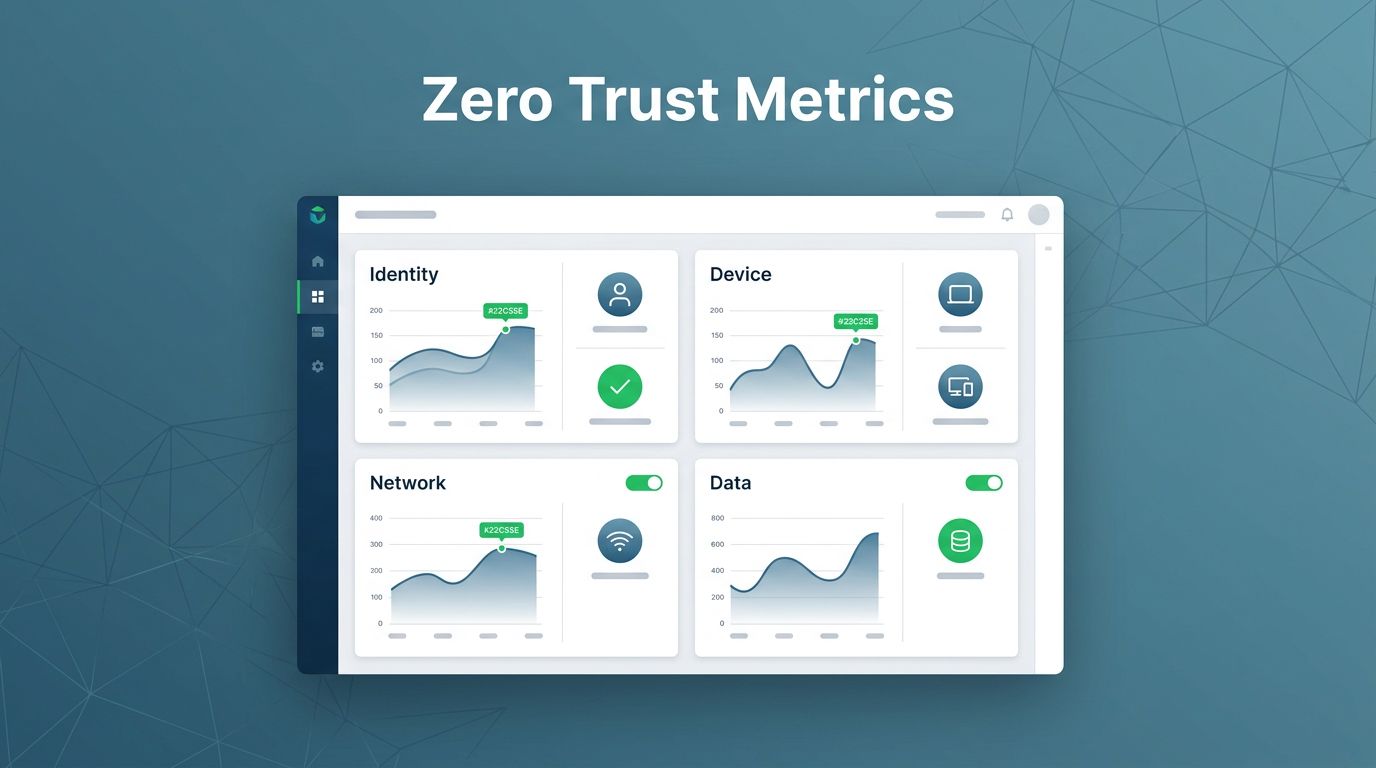
Consider CISA’s model. It outlines stages from traditional to optimal across five pillars: identity, device, network, application, and data. Each stage has clear benchmarks. Dashboards pull data from IAM tools, EDR, SIEM, and DLP systems. They display scores, trends, and alerts.
Good dashboards focus on outcomes, not activity. Track mean time to detect threats, not just log counts. This avoids vanity metrics that look good but mislead. For example, high firewall rules mean little if east-west traffic slips through.
Industry updates in 2026 emphasize AI-driven scores. NIST SP 800-207 revisions stress verification speed under one second. Forrester adds trust density per minute. Dashboards aggregate these into pillar scores. You see if you’re at initial or advanced stage.
Start simple. Pull MFA coverage from Okta or Entra ID. Add device compliance from CrowdStrike. Network segmentation from Illumio. Data trends from Symantec DLP. Over time, automate with APIs for live updates.
These tools prove ROI to executives. Lower MTTR saves millions in breach costs. Compliance dashboards satisfy regulators. Ops gets tactical alerts. Everyone wins with shared visibility.
Key Metrics to Track Zero Trust Maturity
Pick metrics that are measurable and tied to outcomes. They must resist gaming. Focus on coverage rates, response times, and denial ratios. Base them on CISA pillars for alignment.
Identity metrics lead the pack. MFA coverage shows phishing-resistant adoption. Aim for 100% on FIDO2 or passkeys. Track privileged access reviews. Quarterly completion over 95% prevents standing privileges. Orphaned accounts under 1% keeps hygiene tight.
Device metrics check posture. Compliance rate measures patched, encrypted endpoints. Target 98% with EDR enrollment at 100%. Non-compliant denials block risky logins.
Network stats cover segmentation. Policy coverage hits 90% for micro-segments. East-west visibility logs all lateral moves. Blocks over 99% stop breaches cold.
Data metrics flag exfiltration. Classification coverage labels 95% of files. DLP incident trends show blocks per week. Aim for zero escalations.
Response times seal it. MTTD under one hour. MTTR in hours for high-risk. Third-party access risk scores vendors on controls.
Here’s a quick view of targets by maturity stage, drawn from CISA ZTMM Version 2.0:
| Pillar | Initial Target | Advanced Target | Optimal Target |
|---|---|---|---|
| Identity | 60% MFA | 90% continuous verify | 100% AI behavior |
| Device | 80% compliance | 95% posture checks | Real-time auto-trust |
| Network | Basic segments | 90% micro-segment | Full encryption flows |
| Data | 70% classified | 95% DLP coverage | Auto-protection everywhere |
These numbers guide your baseline. Adjust for your industry. Healthcare pushes data encryption to 100% for PHI.
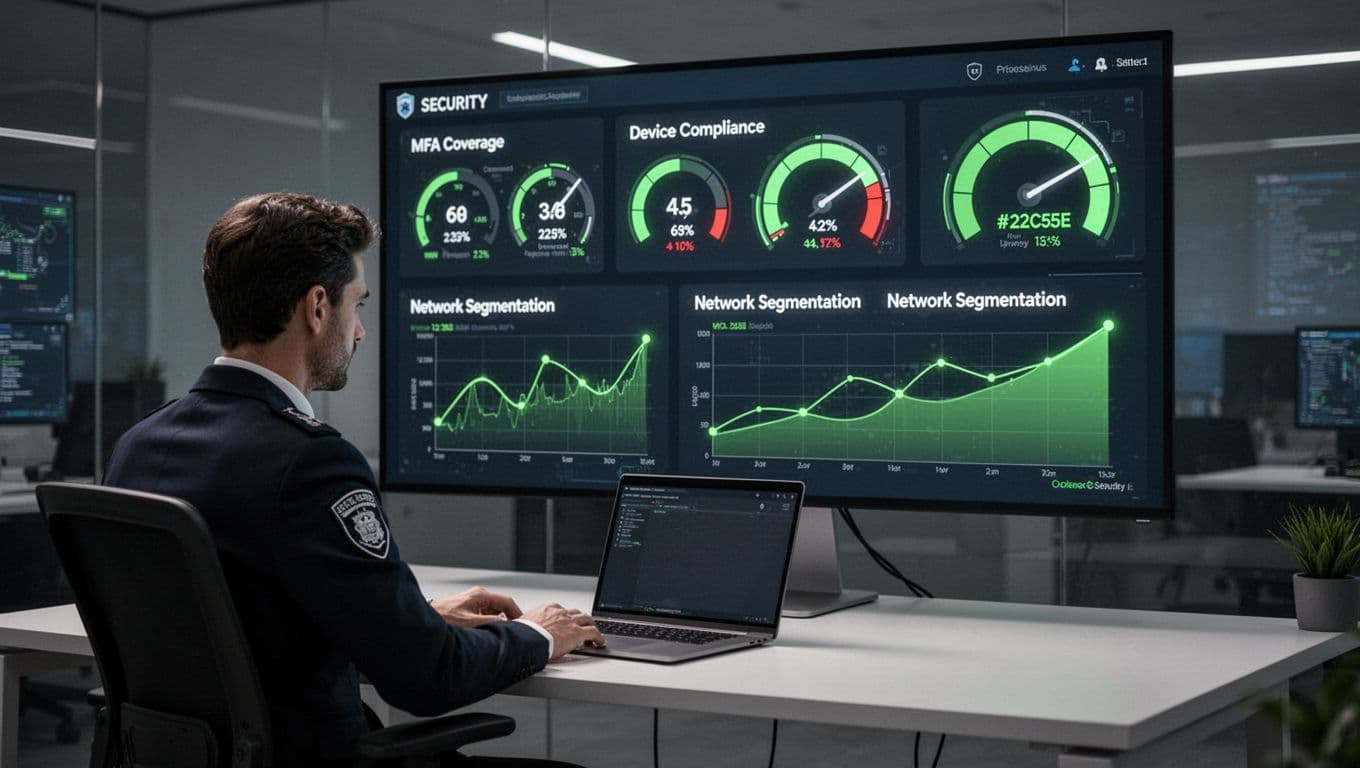
A dashboard like this brings metrics to life. Gauges for MFA hit 92%. Device compliance at 97%. Segmentation policy at 88%. Trends reveal improvements weekly.
For deeper benchmarks, check the CISA Zero Trust Maturity Model. It maps pillars to stages perfectly.
Tailored Dashboard Views for Stakeholders
One dashboard fits all? No way. Customize views for executives, SOC, and compliance. Each needs different depth.
Executives want high-level scores. Overall maturity at 2.8 out of 4. Pie charts break pillars. Trend lines show MTTD dropping from 12 to 2 hours. Risk heatmaps flag top gaps like third-party access.
SOC managers dive into ops. Real-time alerts on DLP spikes. East-west traffic flows with block counts. Incident trends by MITRE tactic.
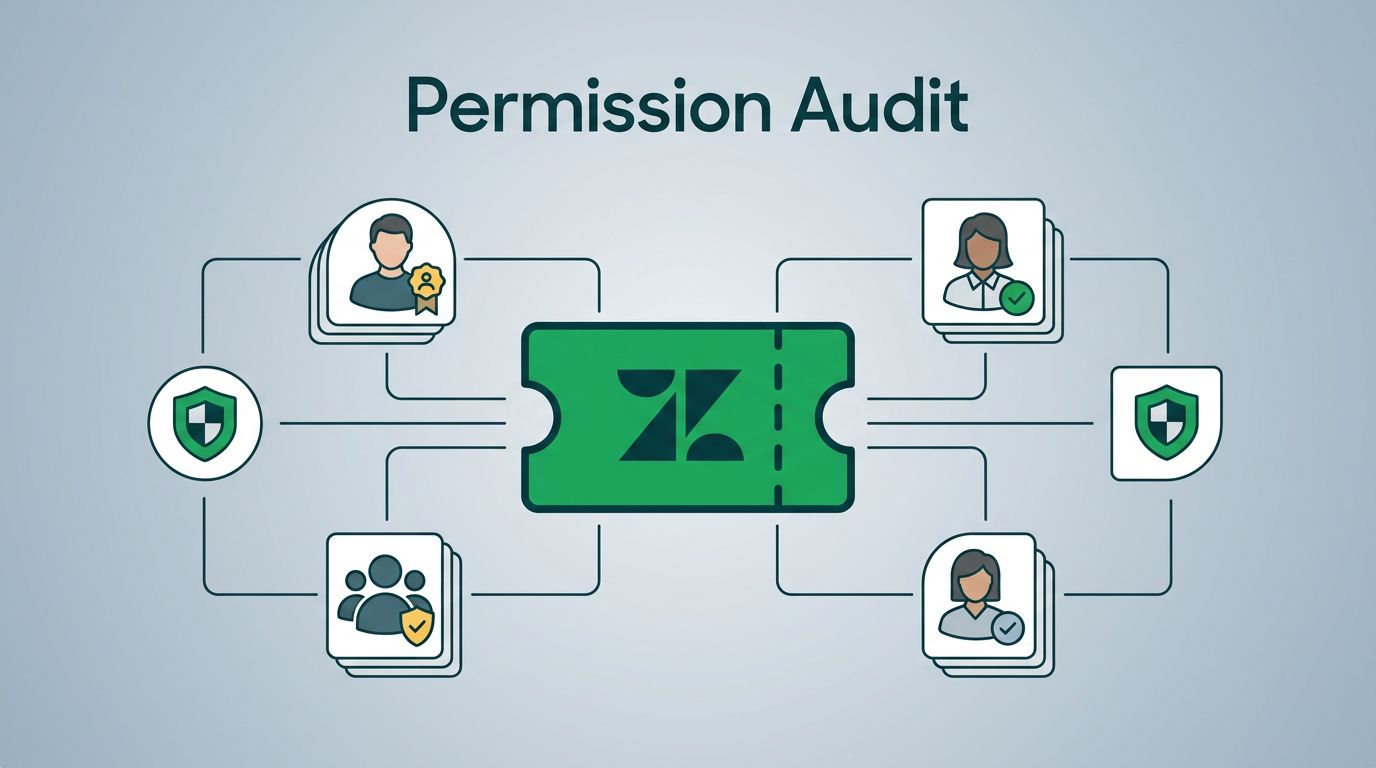
Compliance teams track audits. Policy coverage widgets. Privileged review completion. Vendor risk scores. Drill-down to evidence for SOX or FedRAMP.
Build role-based access. Use tools like Splunk or Grafana. Filter by persona.
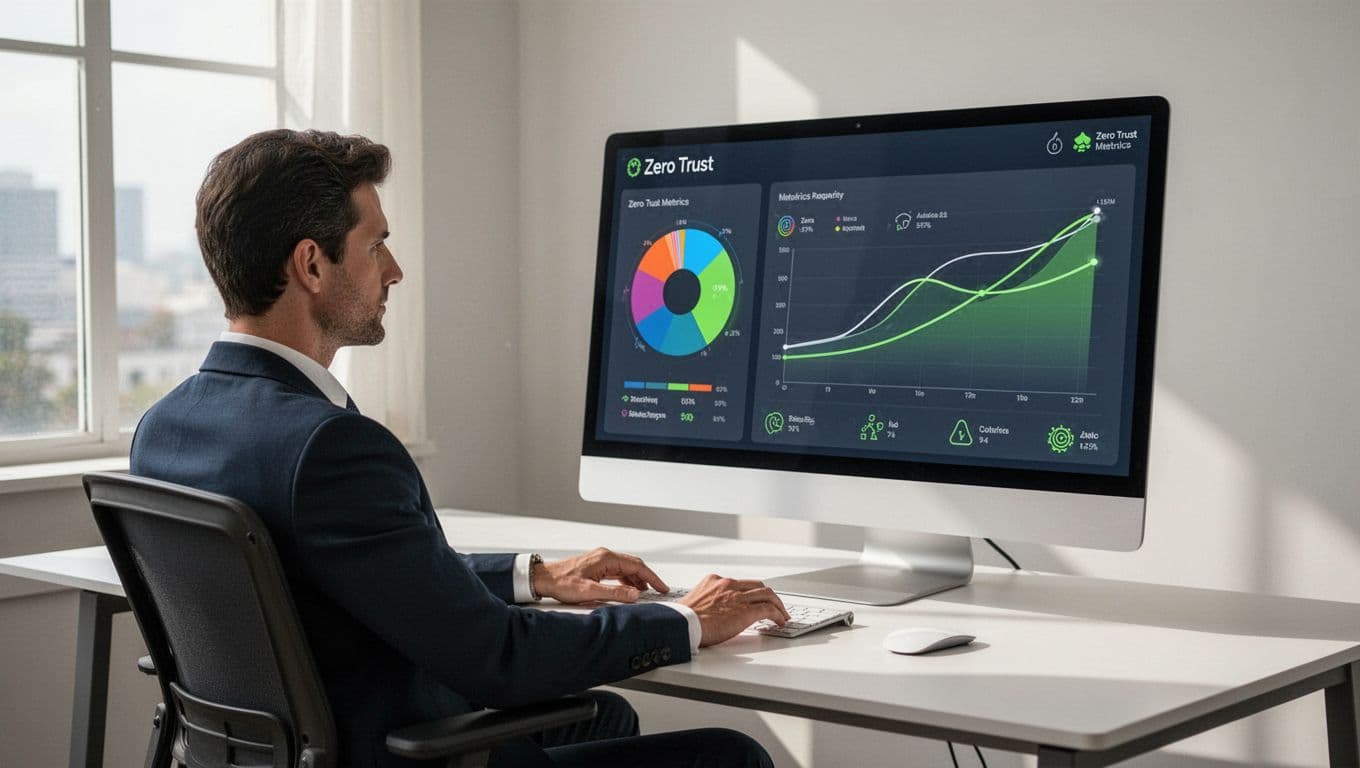
This executive view simplifies board talks. Maturity score dominates. Risks prioritized by impact.
Switch to compliance. Widgets highlight audit rates at 96%. Third-party risks color-coded red for high exposure.

Tablets make reviews mobile. Policy gaps jump out. Trends confirm progress.
Forrester’s 2026 ZTXT framework suggests these views. It adds workload pillars for devs. See their guidance on maturity tracking for scorecard ideas.
Tailor or risk disinterest. Execs ignore details. SOC skips summaries.
Building Your Zero Trust Metrics Dashboard
Start with data sources. IAM for identity. EDR for devices. Network tools like Zscaler for traffic. DLP for data. SIEM unifies it.
Choose a platform. Power BI for exec polish. Grafana for ops flexibility. Splunk for deep analytics. Integrate via APIs. Pull live feeds.
Design for scannability. Top: Maturity score. Middle: Pillar cards with gauges. Bottom: Trends and alerts. Color-code stages: red traditional, green optimal.
Add interactivity. Click MFA for user lists. Hover MTTR for incidents. Mobile views for on-call.
Test for accuracy. Feed synthetic data first. Validate against logs. Automate refreshes every five minutes.
Here’s core widgets by domain:
- Identity: MFA gauge, JIT access %, anomaly alerts.
- Device: Compliance pie, denial rate line.
- Network: Segmentation heatmap, east-west blocks bar.
- Data: Classification trend, DLP incidents sparkline.
- Response: MTTD/MTTR clock, third-party risk dial.
Palo Alto’s Zero Trust Posture Center offers similar setups. It scores configs across pillars.

SOC dashboards shine here. Alerts pulse on spikes. Flows map threats live.
Reference NIST SP 800-207 for architecture fits. Their Zero Trust guide stresses explicit verification metrics.
Scale gradually. Begin with identity and devices. Add network next. Review quarterly.
If gaps persist in talent or setup, Book a Discovery Call with Bud Consulting. They specialize in Zero Trust implementations.
Avoid Common Pitfalls in Metrics Tracking
Vanity metrics kill progress. Activity counts like tickets closed impress no one. Focus on outcomes: denials prevented, MTTR slashed.
Data silos block views. Unify sources early. Use SOAR for automation.
Overcomplicate. Too many charts overwhelm. Limit to 10 widgets max.
Ignore baselines. Measure before changes. Track deltas.
Stale data misleads. Automate pulls. Alert on lags.
Gaming happens. Tie metrics to business impact. Quarterly audits catch tweaks.
Forrester notes this in 2026 updates. Trends favor AI to spot anomalies automatically.
CISA’s model helps. It defines stages clearly. Use their maturity PDF as a checklist.
Fix these, and your dashboard drives real maturity.
Conclusion
Zero Trust maturity hinges on visible metrics. Dashboards with MFA coverage, MTTD, and segmentation scores make it real. Tailor views for stakeholders. Build iteratively with CISA pillars.
You’ve got the blueprint now. Start measuring today. Progress follows data. Your org reaches optimal faster.
(Word count: 2487)