table of contents
Mergers promise growth. They also expose gaps. You’ve just closed the deal, and now IT teams from two companies stare at mismatched tools, policies, and risks. One side runs mature endpoint detection; the other lacks basics. Business demands quick integration, but haste invites breaches.
Post-merger IT security demands balance. Keep operations running while you harden defenses. This guide gives you a practical roadmap. It starts with assessment and builds to long-term maturity.
You face real choices on day one. Let’s map them out.
Assess Current Security Posture
Start here. Map both companies’ setups fast. Delays compound risks as attackers probe the distraction.
Security leaders often find surprises. One firm might segment networks tightly. The other exposes endpoints to the internet. Compare maturity across key areas: identities, endpoints, networks, and data flows. Use automated scanners first. They spot vulnerabilities without manual toil.
Pull teams together for workshops. Ask pointed questions. What controls block lateral movement? How do you detect anomalies? Document gaps side by side.

This assessment reveals priorities. For example, if the acquired firm skips multi-factor authentication, that’s day-one work. Score risks by impact. High ones get immediate fixes; others queue up.
Governance kicks in early. Assign a joint steering group with CISO reps from both sides. They approve findings and set baselines. PwC outlines this in their IT cyber security guide for post-merger integrations. It stresses parity in protection levels.
Inventory assets too. List servers, apps, and cloud tenants. Tag shadow IT. Without this view, you integrate blind.
Expect friction. Teams defend their stacks. Focus on data, not blame. In one case, a bank merger uncovered 40% duplicate tools. They cut costs 25% after rationalization. Your numbers will vary, but clarity pays off.
Set metrics now. Track mean time to detect threats. Baseline both sides. Reassess quarterly. This posture check takes 2-4 weeks. It fuels your roadmap.
Set Governance and Prioritization Frameworks
Governance glues efforts. Without it, silos persist. Define roles day one.
Appoint a security integration lead. Give them cross-team authority. They report to CIOs or a merger PMO. Create a RACI matrix for decisions: who approves tool cuts or policy changes?
Prioritize by risk and business value. Use a simple framework. Score threats on likelihood and impact. Factor in revenue ties. Customer data wins over internal HR systems.
| Risk Category | Example | Priority Score (1-10) | Business Impact |
|---|---|---|---|
| Identity Gaps | Weak MFA | 9 | High (breach entry) |
| Network Overlaps | Dual firewalls | 6 | Medium (cost redundancy) |
| Endpoint Drift | Unpatched legacy | 8 | High (ransomware vector) |
This table helps. It ranks issues clearly. After scoring, assign owners and deadlines.
Communicate weekly. Share dashboards on progress. Execs need risk views, not tech details. Tie security to deal value. Delays erode synergies.
Policies harmonize next. Pick the stronger baseline. Blend where needed. For instance, adopt zero-trust principles if one side leads there.
Thornhall Consulting shares post-merger IT integration practices that start with IAM and segmentation. They match your needs.
Audit compliance early. GDPR or SOX gaps trigger fines. Map requirements across entities.
This framework prevents chaos. Teams align because leaders enforce it. Review monthly. Adjust as integration advances.
Your Phased Post-Merger Security Roadmap
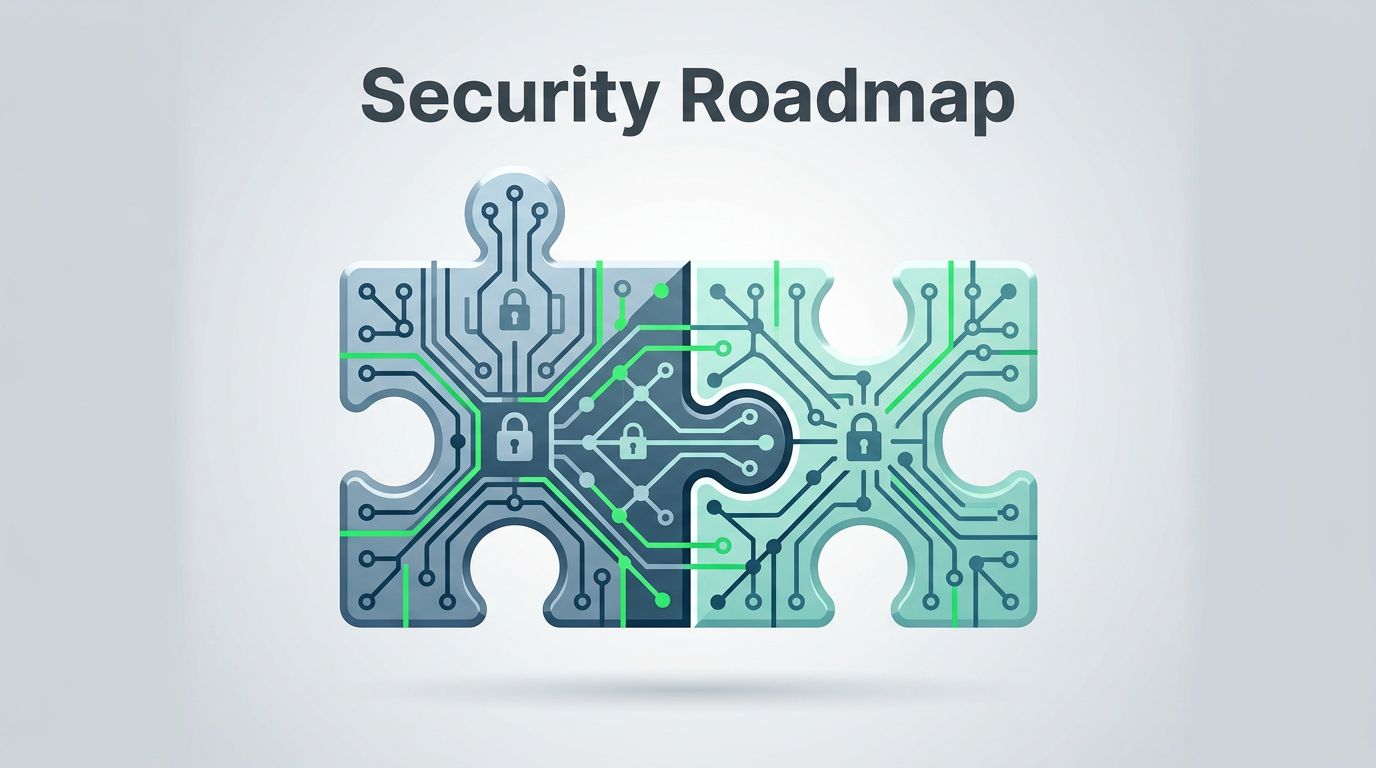
Roadmaps turn plans into action. Break yours into three phases. Each builds on the last. Near-term stabilizes; mid-term integrates; long-term matures.
Focus on quick wins first. Then consolidate. Finally, optimize.

Near-Term Priorities: Stabilize in 30-90 Days
Day one: Isolate networks. Firewalls block east-west traffic between firms. This stops immediate threats.
Inventory everything. Scan for assets and vulnerabilities. Deploy temporary EDR if gaps exist.
Enforce MFA everywhere. Cut standing privileges. Validate backups daily.
Set monitoring baselines. Centralize logs in a SIEM. Alert on anomalies.
Business continuity matters. Test failover paths. Avoid outages during cuts.
Fortress MSSP details post-merger security phases, starting with isolation. It fits tight timelines.
Measure success. Zero critical vulns unpatched. Full log coverage.
Mid-Term Priorities: Integrate in Months 2-6
Harmonize identities. Migrate to a single Active Directory or Entra ID. Phase users to avoid disruption.
Rationalize tools. Pick winners: one EDR, one firewall stack. Pilot before full swap.
Update policies. Train on unified rules. Run tabletop exercises for incidents.
Segment networks fully. Apply least privilege to data flows.
Abnormal AI’s 90-day M&A framework covers consolidation here. It emphasizes policy alignment.
Track metrics. Reduce alert fatigue 50%. Ensure 99% uptime.
Long-Term Priorities: Mature Beyond 6 Months
Build a SOC. Staff for 24/7 if scale demands.
Automate threat hunting. Integrate AI for anomaly detection.
Pursue certifications. SOC 2 or ISO 27001 unifies audits.
Foster culture. Embed security in DevOps.
Tyson Martin’s M&A cyber checklist extends to day 100+. It stresses ongoing rhythm.
Aim for parity. Both legacy teams operate at top maturity.
Tool and Technology Consolidation
Duplicates waste money. They confuse teams. Consolidate thoughtfully.
Audit stacks first. List EDR, SIEM, firewalls per company. Score on efficacy, cost, support.
Pick platforms that scale. Cloud-native often wins post-merger. They handle hybrid loads.
Migrate in waves. Start with low-risk tools. Test in sandboxes.

Vendor negotiations help. Multi-year deals cut licenses 30-40%.
Edvantis highlights IT integration complexities, urging security audits during QA.
Train on survivors. Cross-certify staff.
Watch integrations. APIs must secure data shares.
Yorktel’s post-merger consolidation practices stress risk mitigation per phase.
End state: One stack. Reduced attack surface. Lower OpEx.
Identity and Access Management Overhaul
Identities are keys. Weak ones unlock everything.
Unify directories. Choose Entra ID or Okta. Federated auth bridges gaps.
Revoke old accounts. Onboard with just-in-time access.
Implement zero standing privileges. Tools like BeyondCorp enforce it.
Monitor for anomalies. Behavioral analytics spot compromises.
LinkedIn’s cybersecurity best practices recommend assessments first.
Audit quarterly. Tie to HR offboarding.
This cuts insider risks 70% in merged firms.
Data Protection and Compliance Alignment
Data flows multiply risks. Classify assets first.
Encrypt at rest and transit. Tools like Azure Key Vault centralize.
Govern access. RBAC with audit trails.
Map regulations. Harmonize controls for SOX, HIPAA.
Run penetration tests post-integration.
Test DR plans jointly. Simulate breaches.
Compliance gaps cost millions. Align early.
People and Culture Integration
Tech fails without people. Blend teams deliberately.
Joint training sessions build trust. Share war stories.
Define career paths. Retain top talent.
Hire for gaps. Specialists in cloud IAM speed progress.
Measure culture. Surveys on security buy-in.
Security champions per team enforce habits.
Ongoing Monitoring and Adaptation
Security never ends. Build feedback loops.
Daily attack surface scans. Weekly risk huddles.
Annual red teams test maturity.
Adapt to threats. Patch cycles tighten.
Dashboards for execs. Show ROI on spends.
Key Takeaways for Post-Merger Success
Post-merger IT security succeeds through phases and governance. Stabilize fast, integrate smart, mature steadily. Assessments reveal gaps; roadmaps close them.
Prioritize identities and tools. They block most attacks. Balance speed with rigor to protect value.
Teams unify when leaders align them. Your roadmap sets the pace.
Need expert guidance? Book a Discovery Call with Bud Consulting to tailor this for your merger.