table of contents
You’ve seen the headlines. A single data breach costs companies an average of $4.5 million. Boards face pressure to prevent that hit.
As a board member, you approve budgets and set strategy. But cybersecurity often feels like a black box. A security roadmap changes that. It turns vague threats into a clear plan with timelines and costs.
This guide breaks it down. You’ll learn what it covers, why it fits your oversight role, and how to spot a strong one. Let’s start with the basics.
Why Security Roadmaps Fit Board Oversight
Boards own risk. Cyber threats top that list because they hit revenue, reputation, and compliance.
A security roadmap aligns defenses with business goals. It shows how investments cut risks over time. Think of it as a GPS for your company’s protection efforts.
Without one, teams chase fires. Resources scatter. Breaches surprise everyone. With a roadmap, you see progress. You tie spending to outcomes like fewer incidents or faster recovery.
Regulators watch too. Frameworks like NIST or GDPR demand planned security. A roadmap proves readiness. It answers questions from shareholders or auditors.
You don’t need code skills. Focus on priorities. Does it match top risks? Boards that review these gain confidence. They make smarter calls on hires or tools.
In short, roadmaps bridge tech and strategy. They help you sleep better at night.
Key Parts of a Security Roadmap
Most roadmaps span 12 to 36 months. They list actions, owners, costs, and milestones. Simplicity rules. Overly complex plans fail.
Core elements include risk assessments first. Teams identify weak spots like old software or weak passwords. Then they prioritize fixes based on impact.
Next come controls. Firewalls block attacks. Training stops phishing clicks. Audits check compliance.
Upgrades follow. Move to cloud security. Add monitoring tools. Each step builds layers.
Timelines matter. Short-term wins build momentum. Quarterly reviews track delays.
Costs tie to value. A $500,000 tool might prevent $5 million losses. Boards love that math.
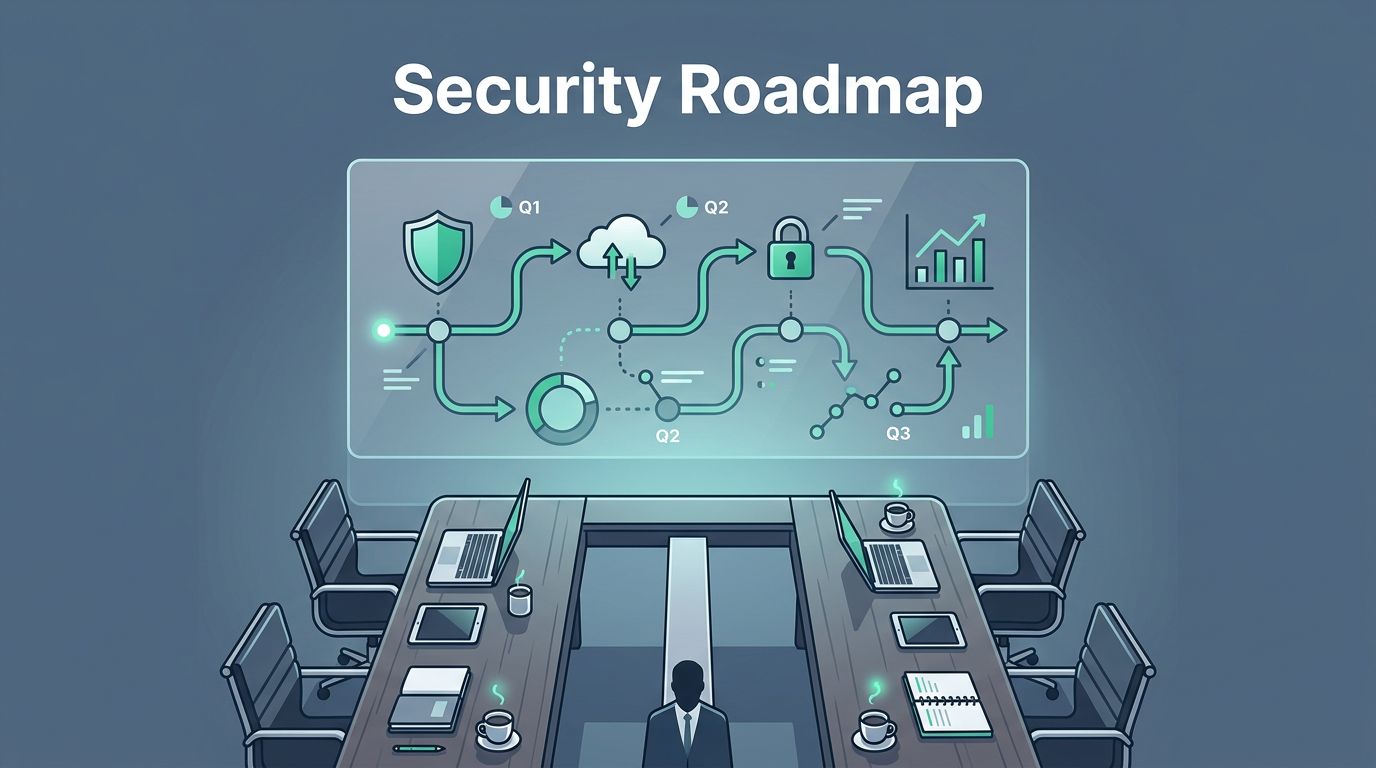
Here’s a visual of typical components:
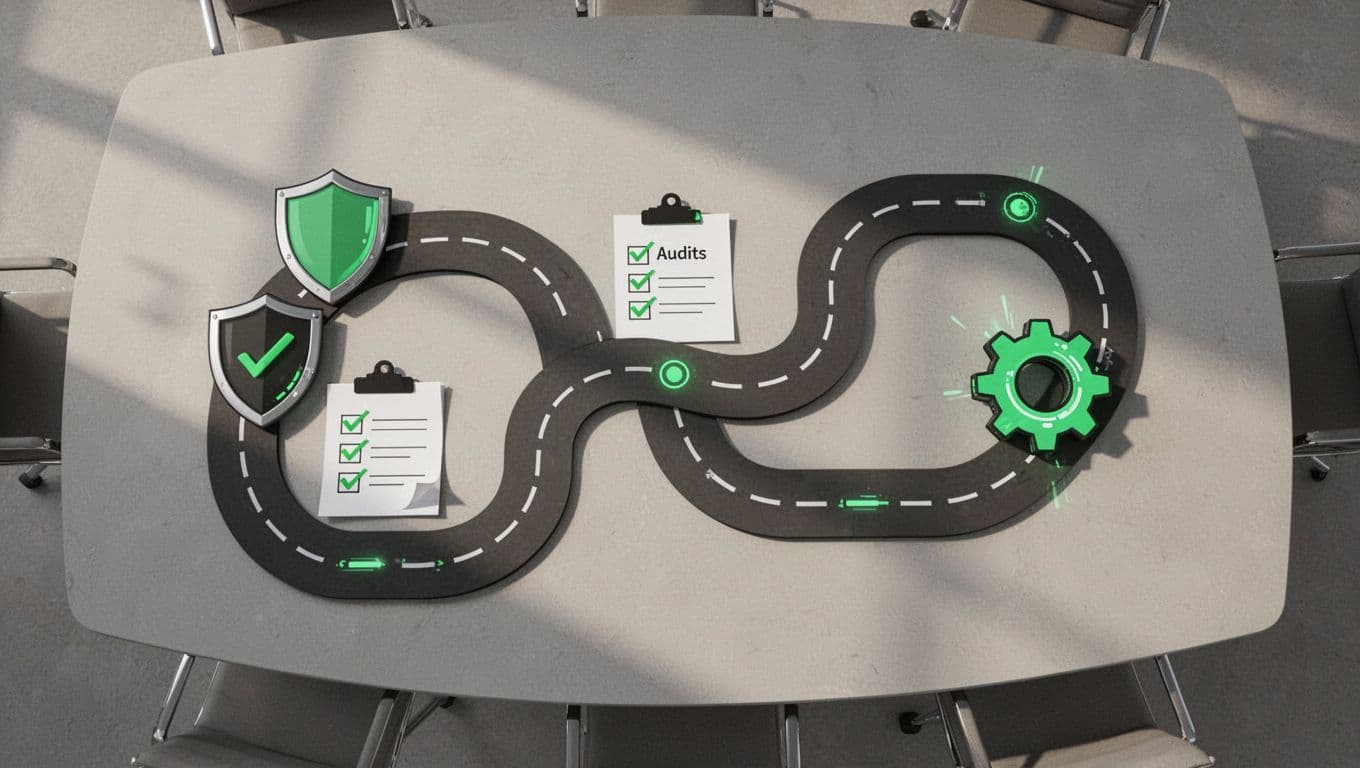
This path shows protection shields, audit checklists, staff training, and system upgrades. Milestones mark progress.
Roadmaps evolve. New threats shift focus. Annual updates keep them fresh.
How to Spot a Strong Security Roadmap
Good roadmaps answer key questions. What risks do we face? How do we measure success?
Look for business alignment. Does it protect crown jewels like customer data? Vague goals like “improve security” don’t cut it. Seek metrics: reduce incidents by 30% in year one.
Ownership counts. Assign names to tasks. No vague “IT team.” Progress stalls without accountability.
Budget realism helps. Break costs by phase. Include ongoing expenses like maintenance.
Flexibility stands out. Plans with contingency buffers handle surprises. Rigid ones break.
Test for completeness. Cover people, processes, and tech. Training often gets short shrift, yet humans cause 74% of breaches.
Examples help. A retail board might prioritize payment security. A manufacturer focuses on supply chain scans.
Weak signs include no baselines. How do you know if things improve? Or endless lists without priorities.
Strong roadmaps use simple visuals. Gantt charts show timelines at a glance.
Board Checklist for Reviewing Security Roadmaps
You need a quick tool. Use this five-point checklist at your next review.
First, check risk coverage. Does it address your top threats?
Second, verify priorities. Are high-impact items first?
Third, confirm metrics. How will success look?
Fourth, assess resources. Budgets and staff match the plan?
Fifth, review timelines. Realistic dates with milestones?
| Review Step | Key Question | Yes/No |
|---|---|---|
| Risk Coverage | Matches top threats? | |
| Priorities | High-impact first? | |
| Metrics | Clear success measures? | |
| Resources | Budget and staff fit? | |
| Timelines | Realistic with milestones? |
This table sets context for oversight. Fill it in during meetings. It spots gaps fast.

After the table, discuss findings. Assign follow-ups.
If gaps appear, ask your CISO for fixes. For expert input on talent or strategy, Book a Discovery Call with Bud Consulting.
Conclusion
Security roadmaps turn cyber risks into managed priorities. They give boards visibility and control.
Pick the strongest takeaway: Use the checklist. It ensures plans deliver value.
Your oversight protects the company. Review one soon. Strong defenses start with informed questions.