table of contents
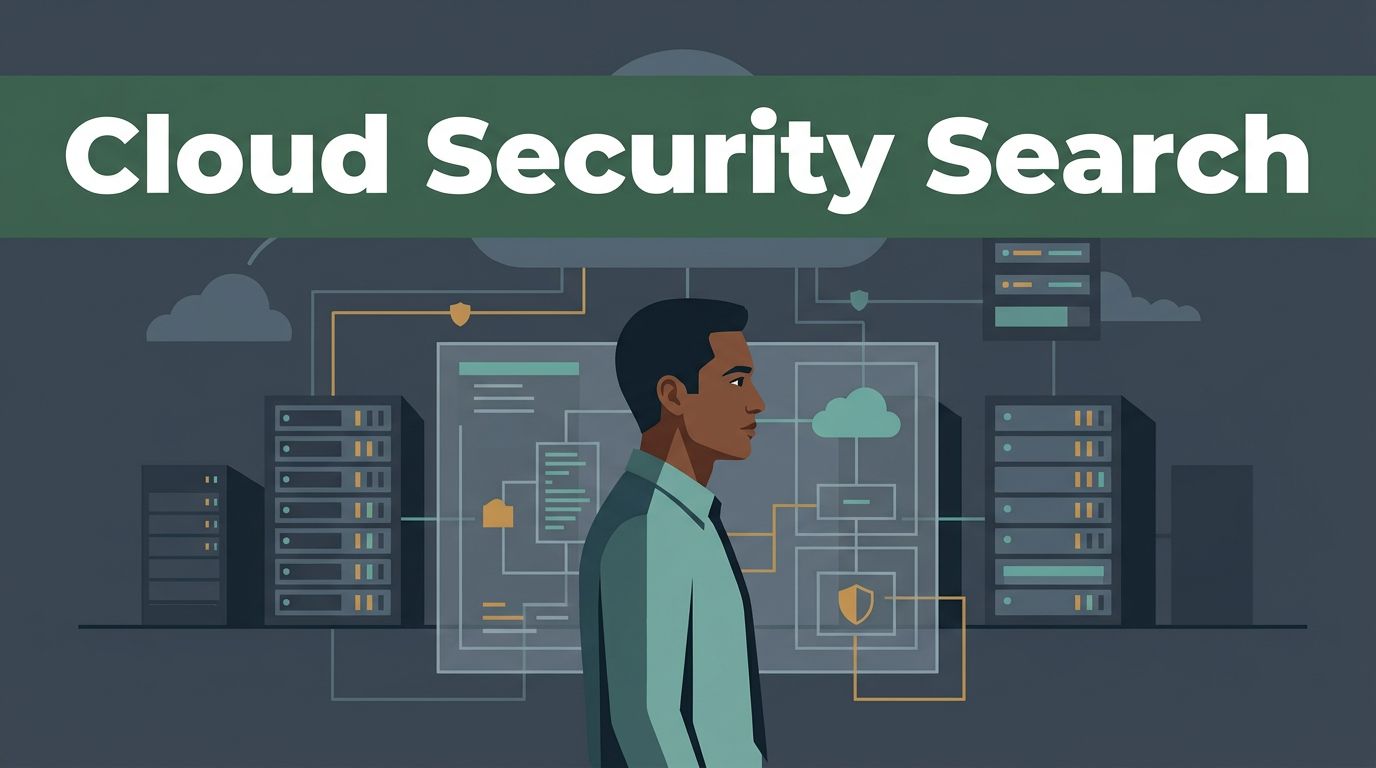
A cloud security hire can determine whether security controls work in production or remain documented intentions. That is why cloud security engineer executive search requires more than finding someone with AWS or Azure on their CV.
Senior candidates need to understand cloud architecture, identity, software delivery, regulatory exposure, and business priorities. Employers need a person who can make sound technical decisions and explain those decisions to executives. The right search process tests both.
The market is tight in 2026. Current reporting shows strong demand for cloud security engineers, multi-cloud architects, IAM specialists, and DevSecOps practitioners. A clear role definition and disciplined assessment process are now required.
Why Cloud Security Engineer Executive Search Needs a Different Approach
Cloud security engineering sits between architecture, operations, software development, and risk management. The role may report to a CISO, CTO, CIO, or head of infrastructure. Its scope changes with the company.
In one business, the engineer may build AWS security controls and support incident response. In another, the person may own Azure policy, Kubernetes security, identity governance, and cloud compliance across several business units. Some roles are highly technical. Others include architecture ownership, team leadership, vendor management, and executive reporting.
A standard security recruitment process often misses these differences. It may focus on certifications, job titles, and keywords. Those details help with initial sourcing. They don’t prove that a candidate can secure a complex production environment.
Executive search is useful when the role has broad influence or when the cost of a weak appointment is high. A senior cloud security engineer can shape:
- Cloud platform standards and guardrails
- Identity and access management controls
- Infrastructure-as-code practices
- DevSecOps processes
- Security monitoring and response
- Regulatory evidence and audit readiness
- Hiring plans for the wider security team
The role also carries operational pressure. Security controls must support engineering speed without creating unmanaged exceptions. The person must know when to block a deployment, when to accept risk, and when to redesign a process.
This is why the search should assess judgment, not only technical knowledge. A candidate who knows every feature in a cloud console may still struggle to define a practical control model for a large organization.
Employers can review specialist market coverage through resources such as cybersecurity executive recruiting firms, but the provider’s process matters more than its directory position. Ask how the search team evaluates technical depth, leadership range, communication, and evidence of delivery.

Define the Role Before You Start Sourcing
The job description is not the role scorecard. A job description lists responsibilities. A scorecard defines what success looks like.
Start with the business problem. Is the company moving from a single cloud to a multi-cloud model? Is the security team responding to audit findings? Is engineering adopting Kubernetes and continuous delivery? Is the organization building a cloud security function for the first time?
Each situation requires a different hire.
A useful scorecard should state the outcomes expected in the first 90 days, six months, and 12 months. For example, early outcomes may include reviewing privileged access, mapping cloud accounts, and identifying high-risk exposures. Six-month outcomes may include policy-as-code controls, improved detection coverage, and a clear exception process. A 12-month target may involve a repeatable cloud security operating model across business units.
The scorecard should also separate required skills from preferred skills. Requiring every possible tool creates a narrow search and excludes strong candidates who have solved similar problems on another platform.
Use these questions to set the boundaries:
- Which cloud providers are in scope, and how are they used?
- Does the role own architecture, engineering, governance, or all three?
- Which identity platforms control workforce and workload access?
- How much of the environment is managed through Terraform or another infrastructure-as-code tool?
- Does the person need Kubernetes, container, or service mesh experience?
- Which regulations and customer commitments affect the role?
- Will the hire manage people, influence without authority, or both?
- What decisions will the person make without executive approval?
A strong search partner should challenge unclear requirements. If the hiring team wants an AWS expert, Azure architect, Kubernetes specialist, IAM leader, compliance owner, and people manager in one person, the market response will be weak.
The title also needs care. “Cloud Security Engineer” may attract hands-on engineers. “Cloud Security Architect” may attract design-focused candidates. “Head of Cloud Security” suggests wider ownership. “Principal Cloud Security Engineer” often signals technical leadership without direct reports.
The title must match the authority, pay structure, and decision rights. Senior candidates identify gaps quickly.
The Skills That Matter in 2026
Cloud security roles now require wider skill coverage than they did a few years ago. The market is moving toward combined expertise in cloud platforms, identity, application security, and delivery systems.
A candidate doesn’t need equal depth in every area. The hiring team should know which capability is primary and which capabilities can be developed after joining.
Multi-cloud and cloud-native security
Multi-cloud experience is not the same as listing AWS, Azure, and Google Cloud on a CV. The candidate should explain how controls differ between providers and how the organization can maintain consistent policy without forcing identical implementations.
Look for experience with cloud accounts, subscriptions, projects, network segmentation, logging, secrets, workload identities, key management, and security posture management. Ask how the candidate handles differences in native services and control coverage.
Cloud-native security also includes containers, Kubernetes, serverless services, managed databases, ephemeral workloads, and software supply chains. A senior engineer should know where traditional perimeter controls stop working.
A practical interview question is:
“A development team deploys a customer-facing service across AWS and Azure. What controls would you standardize, and what would you keep provider-specific?”
The answer should cover identity, logging, configuration, deployment controls, detection, and ownership. It should also acknowledge operational limits. A response based only on a tool list is not enough.
Identity and access management
Identity is a central control plane for cloud environments. The candidate should understand workforce identity, workload identity, privileged access, federation, service accounts, role design, access reviews, and lifecycle management.
In 2026, cloud identity work increasingly includes Microsoft Entra ID, AWS IAM, Google Cloud IAM, privileged access management, and identity governance. The candidate should be able to connect these services to business processes.
Ask for an example of an access model the candidate designed or repaired. What problem existed? How were excessive permissions found? How did the team handle service accounts that could not be changed immediately? How were developers involved?
Strong candidates discuss access as a production dependency. They don’t treat IAM as a compliance document owned by another team.
DevSecOps and application security
Cloud controls fail when they arrive after deployment. The engineer should understand how security checks fit into build pipelines, code review, infrastructure provisioning, and release approval.
Relevant experience may include static and dynamic application testing, dependency analysis, secrets detection, container scanning, infrastructure-as-code scanning, admission controls, signed artifacts, and policy-as-code. The correct mix depends on the software delivery model.
Candidates should explain how they reduced risk without creating a queue of manual security reviews. They should also know when a finding needs immediate action and when the team can record, monitor, and fix it through normal delivery work.
The current hiring market reflects this shift. DevSecOps roles increasingly ask for people who can turn security requirements into repeatable pipeline controls, evidence, and guardrails.
How to Assess Technical Depth Without Running a Trivia Contest
Senior technical assessment should focus on decisions, trade-offs, and delivered results. Trivia questions about product features have limited value. Product interfaces change. Judgment remains relevant.
Use a structured interview with the same core questions for each finalist. Ask for specific examples and follow the answer with detailed questions.
Good assessment areas include:
- Cloud architecture review
- Identity and privilege design
- Detection and response
- Infrastructure-as-code controls
- Kubernetes and container security
- Software supply chain risk
- Regulatory evidence
- Incident leadership
- Technical debt and remediation planning
A practical exercise can reveal more than a long interview. Give the candidate a short architecture diagram and a defined business context. Ask them to identify the highest risks, recommend three actions, and explain what they would not change yet.
The exercise should not require unpaid consulting work. It should test thinking, not extract a security program from the candidate.
Look for a clear order of operations. A strong candidate usually starts with asset visibility, identity, exposure, logging, and critical business services. They should distinguish between a control gap and an immediate exploitable path.
Ask how the candidate measures progress. Useful answers may include reduced standing privilege, improved logging coverage, fewer critical misconfigurations, faster remediation, stronger deployment controls, and better evidence collection. Metrics should connect to risk and operations.
Technical references also need structure. Ask former managers about the candidate’s ownership, decision quality, reliability during incidents, and ability to work with engineering teams. Ask former peers whether the person could influence without relying on job title.
A reference that only confirms employment is not enough for an executive-level technical appointment.
Executive Search for Multi-Cloud and Security Architecture Roles
Multi-cloud hiring creates a common problem. Organizations want broad experience, but they often define the role around one provider.
AWS remains widely represented in cloud security postings. Azure is gaining ground, particularly in enterprises using Microsoft identity and productivity services. Google Cloud appears in data, artificial intelligence, and cloud-native engineering environments. Oracle Cloud and Alibaba Cloud also appear in selected markets and industries.
The provider mix should not become a proxy for ability. A candidate who secured a large Azure estate may have strong control design, identity, and governance skills that transfer to AWS. A candidate with deep AWS experience may need time to learn Azure-specific operations.
The search process should test transferable architecture knowledge. Ask candidates to describe:
- How they establish a cloud account or subscription baseline
- How they manage identity across providers
- How they centralize logs without losing local ownership
- How they apply policy to infrastructure-as-code
- How they handle exceptions and temporary access
- How they detect public exposure and excessive permissions
- How they work with platform engineering teams

Cloud security posture management tools can support visibility, but tools don’t replace operating models. A candidate should explain how findings move from discovery to ownership, prioritization, remediation, and verification.
The same applies to tools such as Wiz, Prisma Cloud, Microsoft Defender for Cloud, Orca Security, Lacework, and native provider services. Tool experience is useful. Tool dependence is a risk.
The recruiter should also search adjacent talent pools. Strong candidates may hold titles such as platform security engineer, security architect, DevSecOps lead, infrastructure security engineer, or IAM architect. A narrow title search will miss them.
Specialist firms that cover IAM and cloud security recruitment can help widen the search, but the hiring company still needs to make the final capability decisions.
Regulatory Risk Must Be Part of the Hiring Brief
Regulatory requirements change the work. A cloud security engineer in a financial services company faces different pressures from one working at a software startup, healthcare provider, or defense contractor.
The candidate should understand how security controls support frameworks and obligations such as SOC 2, ISO 27001, PCI DSS, HIPAA, FedRAMP, NIS2, and sector-specific rules. They don’t need to be the organization’s legal adviser. They do need to translate requirements into technical controls and usable evidence.
Ask how they handled an audit request that exposed a real control weakness. Did they hide behind documentation? Did they create an impractical control? Or did they identify the risk, assign ownership, set a remediation plan, and report the position accurately?
Good cloud security leaders distinguish compliance from security. A passed audit doesn’t prove that every cloud workload is safe. A failed control test doesn’t always mean that the business faces immediate material exposure. Judgment is required in both cases.
Regulatory risk should also influence location and clearance requirements. Northern Virginia and Washington, D.C. continue to attract cloud security talent because of federal cloud programs and defense demand. New York has strong financial services and NYDFS-related hiring. Boston has significant life sciences and regulated technology demand.
European searches may require experience with NIS2, GDPR, digital operational resilience, and local employment rules. Cloud security hiring trends in Europe provide useful market context, but requirements still need to be checked against the employer’s exact sector and operating countries.
Executive Stakeholder Communication Is a Core Skill
A senior cloud security engineer may spend hours with code, policies, logs, and architecture diagrams. The appointment still fails if the person can’t communicate with business leaders.
Executives need clear information. They need to know what is exposed, which services matter, what action is required, how much it will cost, and what risk remains after the action.
The candidate should be able to explain technical risk without hiding behind terms such as “misconfiguration” or “attack surface.” Those labels are starting points. The executive conversation needs business impact.
Ask the candidate to explain a cloud security issue to three audiences:
- A platform engineering team that must fix it.
- A CFO who must approve resources.
- A board committee that needs a risk position.
The technical action may be the same. The language and level of detail should change.
Strong candidates use short, direct statements. They state the current position. They identify the decision. They explain the consequence of delay. They don’t exaggerate every finding to gain attention.
The hiring manager should also assess conflict management. Cloud security often creates friction with engineering, product, legal, and procurement teams. Ask for an example of a disagreement and what happened next.
A senior leader needs enough technical authority to challenge unsafe decisions. They also need enough business awareness to avoid treating every exception as misconduct. Security becomes part of delivery when the process is clear and the ownership is visible.

Compensation, Location, and Candidate Expectations in 2026
Compensation data varies by country, city, company size, clearance requirement, equity plan, and level. Employers shouldn’t treat a published range as a universal rate.
Current US market reporting places cloud security engineering base salaries across leading hiring markets in a broad range of roughly $155,000 to $255,000. Senior security engineering reports also show ranges around $180,000 to $280,000. These figures are market indicators, not guarantees.
Northern Virginia, Seattle, New York, Boston, and Dallas-Fort Worth remain strong markets. Some current data places median base salaries near $198,000 in Northern Virginia, $196,000 in Seattle, $185,000 in New York, $178,000 in Boston, and $172,000 in Dallas-Fort Worth. Actual offers vary widely.
Cleared talent may command a premium. One 2026 market report places that premium at approximately 10% to 15%, but clearance level, transferability, location, and contract demand all affect the result.
Remote work also needs a clear policy. Current posting data shows onsite work gaining share while remote roles remain available. Senior candidates may accept hybrid work for the right scope, decision authority, and package. They are less likely to accept unclear office expectations after the process has started.
Candidates assess more than salary. They look at:
- Reporting line and executive sponsorship
- Authority over cloud security decisions
- Engineering support and budget
- On-call expectations
- Existing technical debt
- Security team maturity
- Equity and bonus structure
- Location and travel requirements
- Promotion and succession paths
Employers should disclose difficult facts early. A role with weak executive backing will attract candidates, but it may not retain them. A role with a large scope and no budget should not be presented as a transformation position.
For a wider view of how firms compare their search models, review US cybersecurity recruiting agencies, then ask each provider how it handles technical evaluation and candidate engagement.
A Practical Search Process for Employers and Candidates
A disciplined process reduces delay and protects candidate experience. It also gives executives a clear view of progress.
Begin with a role intake involving the hiring manager, security leadership, engineering, HR, and one business stakeholder. Agree on the scorecard, compensation range, interview panel, decision rights, and timeline before approaching candidates.
Build a target market map. Include direct competitors, cloud providers, security product companies, regulated enterprises, consultancies, and adjacent technical teams. Search by capability as well as job title.
Initial screening should confirm scope, platform depth, leadership expectations, location, compensation alignment, and motivation. Candidates shouldn’t spend weeks interviewing for a role that cannot meet their basic requirements.
The interview process should contain four parts:
- A leadership and operating model interview.
- A technical architecture and cloud controls interview.
- A practical case or design discussion.
- A stakeholder and reference assessment.
Keep the panel small. Too many interviewers create repeated questions and inconsistent feedback. Each interviewer should own a defined area.
Set a decision deadline before final interviews. Strong candidates often have several options. Delays give the market time to remove them.
Candidates should evaluate the employer with the same discipline. Ask what problem led to the hire, what authority comes with the role, which controls are missing, and how success will be measured. Ask to meet a platform engineering leader. Ask how executives respond when security work affects delivery dates.
A specialist search partner can support market mapping, confidential outreach, assessment design, and offer management. Bud Consulting supports senior cybersecurity searches across cloud security, DevSecOps, application security, IAM, offensive security, and security leadership. If the role needs a focused market discussion, Book A Call With Us.
What Good Hiring Outcomes Look Like
The correct outcome isn’t the candidate with the longest tool list. It is the person who can improve security without losing operational control.
Within the first months, that person should make the cloud estate easier to understand. They should identify priority risks, clarify ownership, improve access controls, and build trust with engineering teams.
Over time, they should create repeatable practices. Security should appear in infrastructure changes, software delivery, access reviews, monitoring, and compliance evidence. Findings should have owners. Exceptions should have expiry dates. Executives should receive clear risk updates.
The search process should test whether the candidate has done this before. It should also test whether the candidate can do it in the employer’s environment.
A strong appointment gives the business technical judgment, practical leadership, and better communication between security and delivery teams. A weak appointment adds another layer of reporting without changing risk.
Conclusion
Cloud security engineer executive search is a business decision with technical consequences. The role must be defined around outcomes, authority, and risk, not a long list of technologies.
The 2026 market has tight supply, strong demand, and higher expectations around multi-cloud security, identity, DevSecOps, compliance, and executive communication. Employers that move quickly with a clear scorecard will reach better candidates. Candidates that test scope, sponsorship, and operating conditions will make better career decisions.
The strongest hire is not the person who claims every cloud skill. It is the person who can make sound security decisions, deliver practical controls, and explain the remaining risk clearly.