table of contents
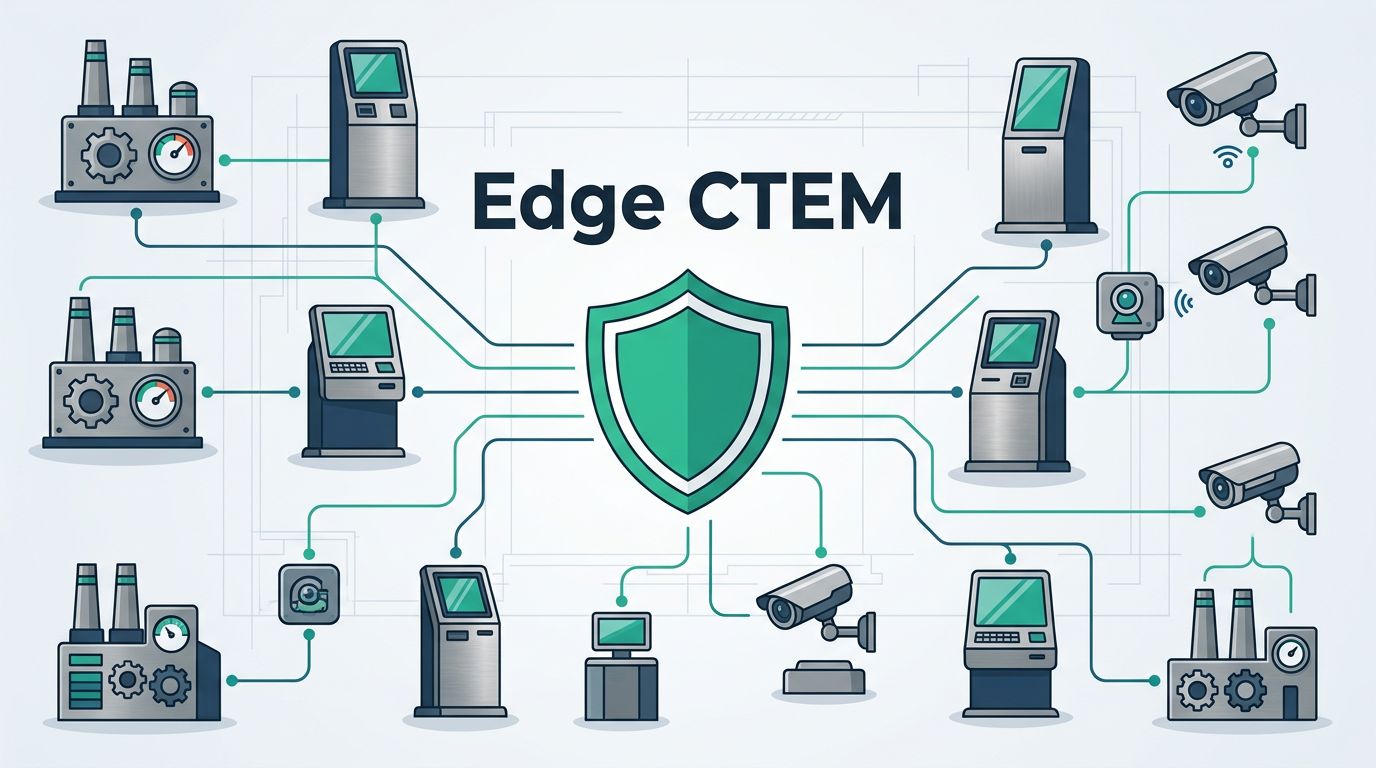
Edge devices power your operations, from factory sensors to retail kiosks. Yet they sit exposed, with intermittent connections and legacy firmware that attackers exploit daily. You need CTEM for edge devices to spot real risks fast, without disrupting uptime.
CTEM stands for Continuous Threat Exposure Management. It cycles through scoping assets, discovery, prioritization, validation, and mobilization. This approach fits 2026’s edge fleets, where over 21 billion IoT devices run AI at the edge but lack constant oversight.
Let’s break down how to apply it in your enterprise.
Key Challenges in Edge Device Security
Edge fleets face unique hurdles. Devices often run on real-time operating systems like Zephyr, with limited maintenance windows. Intermittent connectivity blocks traditional scans, and unmanaged endpoints hide in branches or factories.
Legacy systems compound issues. Many sensors and cameras ship with unpatched firmware, vulnerable to known exploits. Operational uptime demands mean you can’t reboot everything at once.
Attackers target these weak spots. They use AI-driven tools to probe for easy entry, like misconfigured ports on industrial robots. Recent breaches show 90% fewer incidents for CTEM adopters, but only 16% of teams fully implement it.

This image captures a typical manufacturing setup. A professional monitors risks while devices show glowing vulnerabilities. It highlights why passive scans fail here.
In addition, third-party supply chains add blind spots. You might not control every logistics tracker or healthcare monitor.
Risk-Based Prioritization in CTEM
Focus on threats that matter. Traditional vulnerability management chases CVSS scores, but CTEM ranks by exploit likelihood and business impact.
Start with asset scoping. Map your fleet, including air-gapped OT devices. Tools now discover unknown endpoints via passive monitoring.
Next, prioritize using multi-factor scoring. Combine EPSS (Exploit Prediction Scoring System), KEVs (Known Exploited Vulnerabilities), and your asset roles. For example, rank a factory PLC higher than a back-office printer if it controls production lines.
Validation confirms exploitability. Simulate attacks without downtime, using threat intel. This step trips up 96% of teams without automation.
For edge constraints, integrate with NAC and EDR. They trigger micro-segmentation or firmware pulls during brief windows.
Check Forescout’s CTEM overview for details on multi-factor scoring across IT, IoT, and OT.
Tailored Strategies for 2026 Edge Fleets
Adopt zero trust at the edge. Segment networks so a breached camera can’t reach core systems. Use cloud-powered classification for instant inventory.
AI boosts both sides. Defend with it by matching threats to your environment. Tools compress cycles: find instances, confirm exploits, route fixes by impact.
Handle intermittent connectivity with agentless discovery. Passive sensors track behavior even offline. When devices connect, push prioritized updates.
For legacy gear, apply principle mitigations. Network segmentation tops the list, per DoD practitioner guidance on edge devices. Enforce controls like firmware audits and access restrictions.
In retail, kiosks face public exposure. Prioritize those with high-traffic EPSS scores. Manufacturing? Focus on RTOS-secured robots first.
Remediation needs orchestration. Link CTEM to ITSM for automated tickets. Set rollback processes to protect uptime.
Phased CTEM Implementation Roadmap
Roll out in stages to respect constraints. This matches Gartner’s five-step loop, adapted for edge.
Phase 1: Scope and discover. Inventory assets quarterly. Use unified platforms for IT/OT visibility.
Phase 2: Prioritize and validate. Score risks weekly. Test top 10% with safe simulations.
Phase 3: Mobilize. Automate low-risk fixes; escalate high-impact ones. Track metrics like mean time to remediate.
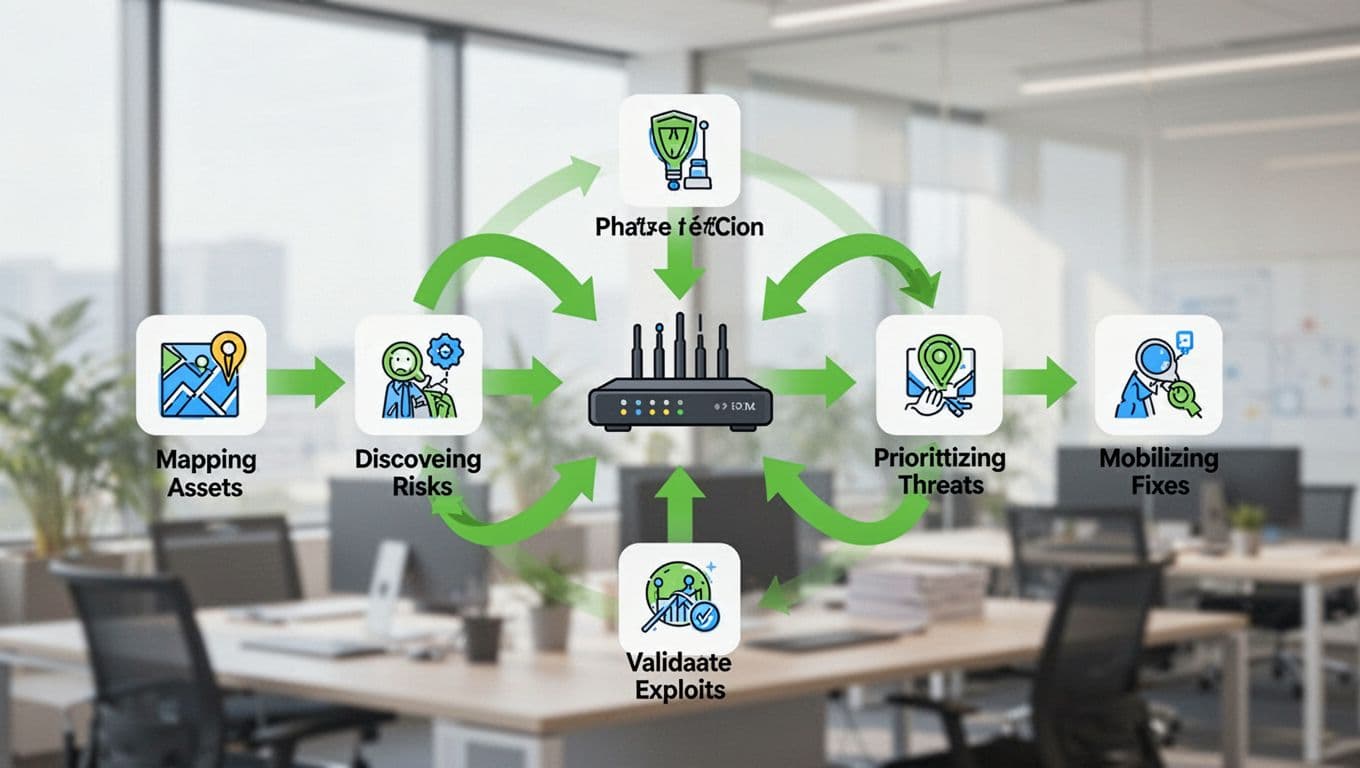
The roadmap above shows icons for each step around a device hub. Arrows link them in a continuous loop.
Full maturity takes six months. Start small: pilot on one site. Scale with metrics showing 50% better visibility.
Real-World Use Cases Across Industries
In manufacturing, a plant cut breaches by focusing CTEM on 500 sensors. They prioritized PLC exploits during nightly windows, using zero trust segments.
Healthcare fleets handle patient monitors. Intermittent Wi-Fi? Agentless tools discover exposures. Validation prevented ransomware via EPSS-ranked patches.
Logistics trackers in trucks use RTOS. CTEM mobilizes over-the-air updates when docked, balancing uptime.
Retail branches apply it to kiosks and cameras. Discovery found unmanaged devices; prioritization fixed public-facing ones first.
See Cycognito’s 2026 CTEM guide for more on extending to edge.
These cases prove risk-based CTEM works under real constraints.
Conclusion
CTEM for edge devices shifts you from reactive patches to continuous control. Prioritize by impact, validate exploits, and mobilize smartly to protect uptime.
Teams see fewer breaches and better visibility. Start your phased rollout now.
If skills gaps slow you, Book a Discovery Call with Bud Consulting. They source CTEM experts for edge fleets.
Your fleet stays secure.