table of contents
Boards demand clear views of cyber threats. Yet many reports drown them in tech jargon. The average cyber attack now costs businesses $80,850, up 50% from last year. You need templates that highlight business impacts, not just alerts.
These tools help CISOs and risk managers translate risks into board-friendly formats. They focus on trends, compliance, and decisions. Let’s walk through how to create them.
Start with Board Expectations
Know what your board cares about first. They want risk tied to revenue, reputation, and operations. Ask: Does this report show if we’re within our risk appetite?
Tailor content to their questions. For example, directors often probe material incidents and remediation progress. Use frameworks like NIST CSF 2.0’s new Govern function. It stresses leadership oversight on cyber plans.
NACD’s 2026 Director’s Handbook outlines six oversight principles. Boards track metrics over time for due care. NACD’s cyber risk handbook offers tools for this.
Survey your board quarterly. What keeps them up at night? Third-party risks? AI threats? Align templates to those priorities. This builds trust. Short sessions work best; aim for 15-minute updates.
Frequency matters too. Deloitte suggests quarterly deep dives plus incident alerts. Match your sector’s rules, like SEC disclosure pushes.
Steps to Build Effective Templates
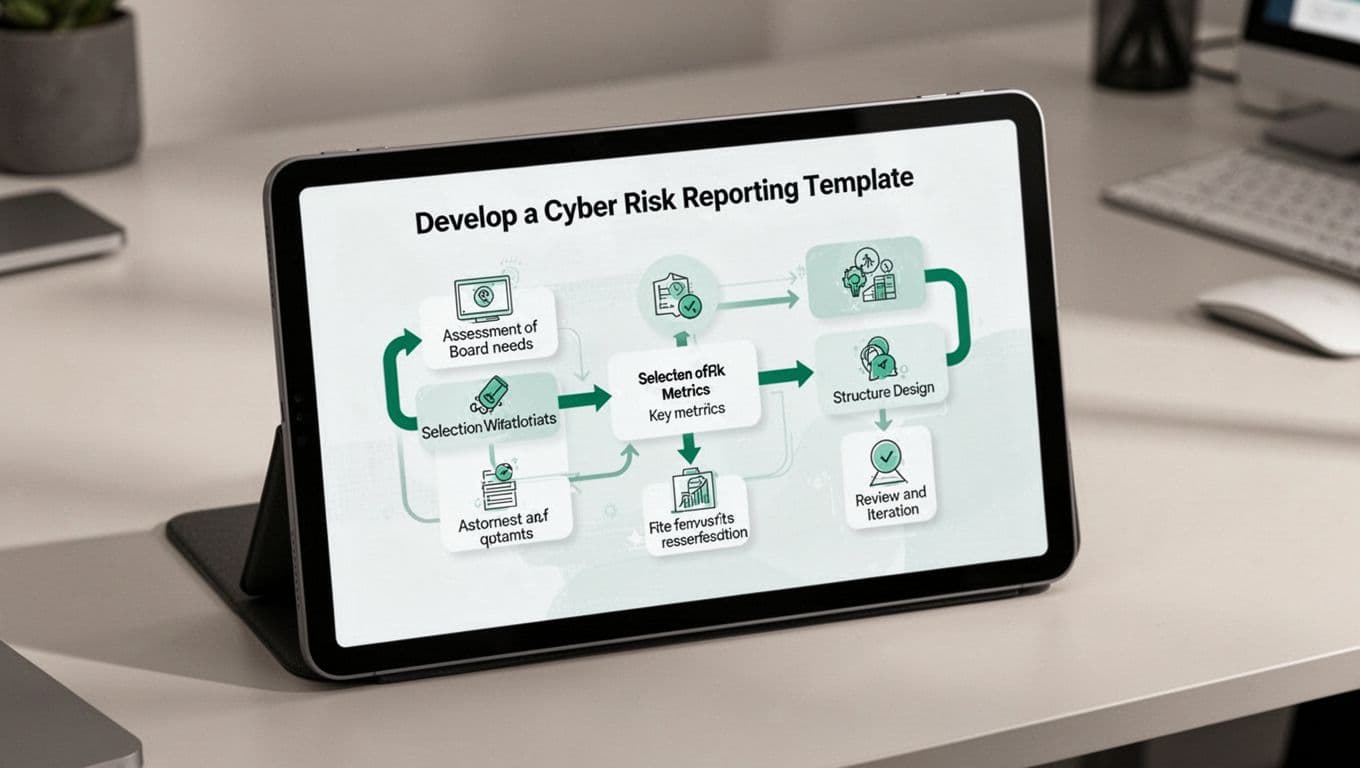
Create templates step by step. This keeps reports consistent and quick to update.
First, assess needs. List board priorities from past meetings. Include business impacts like downtime costs.
Next, pick metrics. Focus on five to seven key ones. Avoid overload.
Then, design structure. Use one page per category. Add visuals for trends.
Review and test. Share drafts with a small group. Iterate based on feedback.
COSO’s guidance integrates cyber into enterprise risk management. COSO’s cyber risk page shows how to apply their ERM framework. Start simple; refine over time.
Tools like Excel or PowerPoint suffice. Automate pulls from SIEM or GRC platforms later. Test in mock sessions. Does it prompt decisions?
Select Key Metrics for Reports
Metrics drive action. Boards need numbers that link cyber to business outcomes.
Track incident trends. Show counts by type, like ransomware at 11% of attacks. Compare year over year.
Measure control effectiveness. Report patch rates or MFA coverage. NIST CSF covers this in Protect and Detect.
Include compliance status. List NIST, ISO, or CMMC gaps. Add audit findings.

NACD’s board-level metrics tool groups them into categories. Use heat maps for risk scores. Trends matter more than snapshots.
Benchmark against peers. Insurance firms now ask about payout readiness. Tie metrics to budgets; show ROI on tools.
Keep it visual. Green for good, red for watch. One dashboard per report.
Cover Essential Reporting Categories
Structure around core areas. Threat landscape first. Summarize top vectors like phishing or supply chain attacks. Note velocity; attacks hit faster now.
Control effectiveness follows. Percent of assets protected. Break down by critical systems.
Third-party risk gets attention. Score vendors on security questionnaires. Flag high risks.
Incident trends: Material events only. Detail response time, costs, lessons.
Compliance posture: Regulatory heatmap. SEC wants timely disclosures.
Investment needs last. Prioritize spends with payback estimates.
Deloitte’s board reporting guide tailors to risk appetite. Add a decision summary: Approve budget? Adjust appetite?
NACD’s example reporting provides samples. Customize for your firm.
End each section with one question for discussion. This sparks board input.
Key Takeaways
Strong cyber risk reporting templates cut through noise. They tie threats to dollars and decisions. Build them around board needs, key metrics, and categories like incidents and compliance.
Start small. Use NIST and NACD for guidance. Test often.
Ready to strengthen your reports? Book a Discovery Call with Bud Consulting for tailored advice on risk teams.
Your board will thank you with better oversight.