table of contents
Board members and their assistants handle sensitive decisions daily. Yet they face sharper phishing risks than most employees. In 2026, business email compromise attacks hit executives hard, with impersonation making up 82% of incidents and CEOs targeted in half of them.
Thread hijacking now accounts for 28% of these scams. Attackers slip into real email chains to push fake wire transfers. Assistants often process these requests first, while boards deal with VIP fakes in 41% of their inboxes.
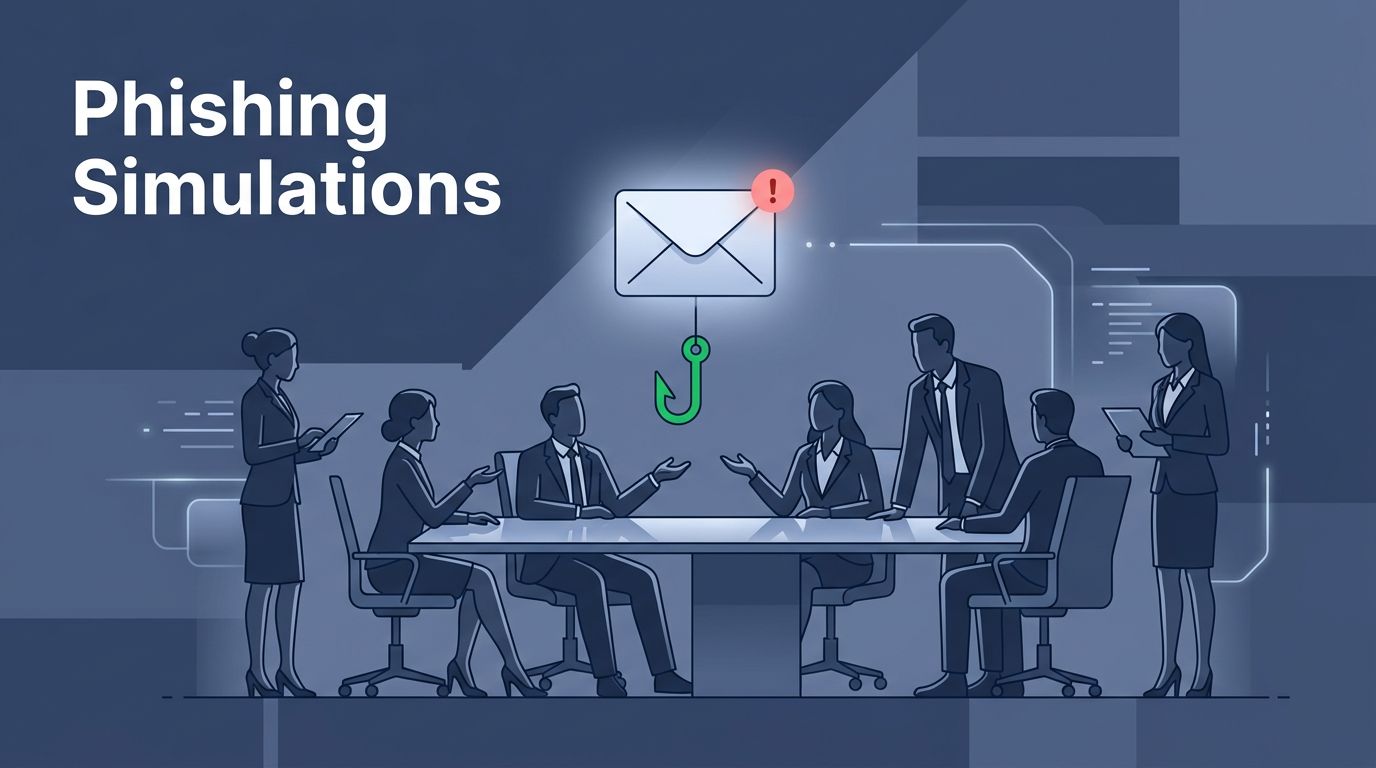
You can cut these risks with targeted phishing simulations. They build real habits without lectures. This post covers risks, scenario design, rollout tips, and pitfalls.
Unique Phishing Risks for Executives and Their Support Teams
Board members get hit differently. Scammers craft whaling attacks with public bios and conference talks. These aim for big wire transfers or IP theft. Execs see 41% VIP impersonations, five times the company average.
Assistants bear extra load. They manage emails, payments, and calendars for busy leaders. Callback phishing doubled last year; 43% of BEC lures now push a call to a bad number. Dual-channel tricks start with email, then switch to phone for credentials.

General employee training misses this. Boards ignore social media fakes on LinkedIn, where 56% of security leaders spot gaps. For details on whaling trends, check Vectra AI’s whaling attack overview. Assistants face fake board requests during M&A seasons.
These groups skip standard simulations because time matters. Busy schedules mean low participation. Yet their clicks cost millions; average BEC loss tops $125,000.
Target simulations here build vigilance. They spot patterns like urgent confidentiality flags. Results show better reporting rates than broad campaigns.
Why Target Simulations Beat Generic Training
Lectures bore executives. They nod along but forget under pressure. Simulations mimic real pressure. People learn by doing, not hearing.
Data backs this. Q1 2026 saw 10.7 million BEC attacks, up 26% in March alone, per Microsoft’s email threat report. Execs need practice spotting AI deepfakes or QR code lures, up 49%.
Assistants benefit too. They handle 50% of impersonation BEC as gatekeepers. Simulations teach quick verifies, like in-person checks for big asks.
Platforms track metrics: click rates, report times. Tailor for high-risk roles, as Sectricity recommends for executive support. This respects time while fixing gaps.
Short sessions work best. One realistic email per quarter reinforces habits. Results improve over time, with reporting up after three rounds.
Designing Realistic Phishing Scenarios
Start with current threats. Use thread hijacks where a “colleague” replies to an ongoing deal email. Add urgency: “Confidential: Approve this vendor payment now.”
For boards, mimic CEO fraud. Fake a peer board member requests data before a meeting. Include deepfake audio links, common in 2026.
Assistants get callback lures. Email from “CEO” says, “Call this number for invoice details.” Pair with a spoofed calendar invite.

Keep it respectful. No pop-ups or tricks that frustrate. Use templates from tools like those at TitanHQ for executive phishing. Test on a small group first.
Vary scenarios. One quarter, focus BEC wires. Next, social media fakes via WhatsApp. Track what fools them most.
Make feedback instant. If they click, explain the red flags. Praise reporters with a quick note. This boosts engagement.
Rollout Best Practices and Getting Buy-In
Align stakeholders early. Meet with the chief of staff and board chair. Share stats: BEC losses hit $2.9 billion globally. Show how simulations cut risks without big time asks.
Roll out quarterly. Send one email mid-week, avoid Mondays. Limit to 10-15 minutes total per sim.

Debrief in board packets. Use charts on report rates. For CEO fraud examples, see CyberSierra’s simulation ideas.
Integrate with culture. Tie to existing security days. Reward top reporters with small perks.
Measure success. Aim for 90% reporting after six months. Adjust based on data.
Pitfalls to Avoid in Executive Simulations
Don’t overload inboxes. One sim per person quarterly max. More annoys busy teams.
Skip fear tactics. Focus on skills, not shame. No public leaderboards.
Avoid generic templates. Customize for M&A or reporting seasons when risks peak.
Test tech first. Ensure mobile-friendly for tablets.
Watch for burnout. Survey after each round. Pause if needed.
Conclusion
Targeted phishing simulations protect boards and assistants from 2026’s BEC surge. They address unique risks like thread hijacks and callbacks through realistic practice.
Start small, align leaders, and track results. Habits form fast with consistent, respectful drills.
Stronger teams mean fewer breaches. Book a Discovery Call with Bud Consulting to build your program.