table of contents
Attackers hit five open-source tools in March 2026 alone. They started with Trivy, stole credentials, then jumped to Checkmarx, LiteLLM, Telnyx, and Axios. One poisoned package racked up 500,000 downloads in hours.
Firmware sits deep in devices, from OT systems to embedded gear. A single tainted update can spread silently across your enterprise. You need playbooks that work now, in 2026.
These steps draw from CISA and NIST guidance. They focus on procurement, verification, and response. Follow them to cut risks.
Spot the Real Threats in Firmware Chains
Firmware supply chain attacks target the code that boots your hardware. Attackers slip malware into vendor builds or updates. In OT environments, this means PLCs or medical devices run rogue instructions for months.
Recent stats show 1.2 million malicious packages out there. New ones surged 75% in 2025. Security tools get hit first because they touch build systems.
Consider enterprise examples. A factory’s vendor pushes an update with backdoors. Or embedded IoT gear ships with hidden exploits. These bypass network defenses.
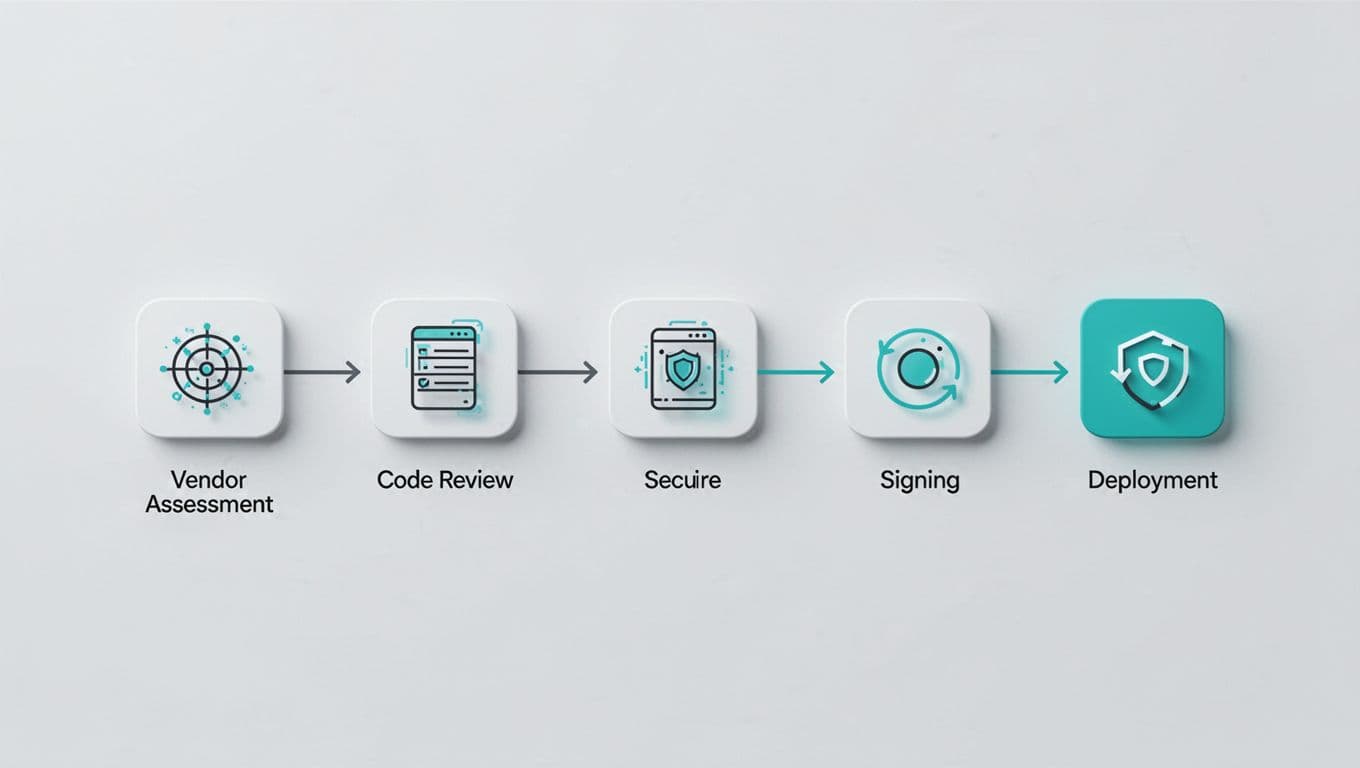
CISA warns of active flaws in management tools. NIST pushes hardware keys for maintainers. Your team must map the chain: vendors, builds, signing, deployment.
Start with inventory. List all firmware versions per device. Assign a supply chain risk manager. They review vendors quarterly.
Triggers include new procurements or alerts from CISA’s software supply chain defenses.
Secure Your Firmware Procurement
Procurement sets the foundation. Bad choices invite attacks. Demand proof from vendors upfront.
Playbook: Vendor Vetting Steps
- Require SBOMs and attestations. Every bid needs a software bill of materials. Check components against known CVEs. Owner: Procurement lead. Trigger: RFP issuance.
- Audit development practices. Ask for IEC 62443 compliance or NIST SSDF alignment. Review build logs if possible. Owner: Product security engineer. Trigger: Shortlist stage.
- Mandate secure boot and roots of trust. Contracts specify hardware TPMs or Pluton chips. No vendor without them. Owner: Supply chain manager. Trigger: Contract signing.
For details, see CISA’s customer guide for software supply chains.
In OT, test updates in digital twins first. Enterprises reject 20% of bids this way. It pays off.
Add clauses for breach alerts and audits. Prioritize vendors with reproducible builds.
Verify Firmware Integrity Every Time
Integrity checks catch tampering post-procurement. Use chains of trust from boot to runtime.
Playbook: Verification Routine
- Hash and sign all images. Generate SHA-512 hashes. Sign with enterprise keys. Owner: Firmware engineer. Trigger: Update arrival.
- Enforce secure boot. Devices measure bootloaders against known good values. Reject mismatches. Owner: Embedded team. Trigger: Power-on.
- Runtime attestation. Query hardware roots like TPM 2.0 for proofs. Integrate with SIEM. Owner: IT/OT defender. Trigger: Remote attestation schedule.
NIST SP 800-161 covers this in supply chain risk management. Their full PDF outlines multilevel assessments.
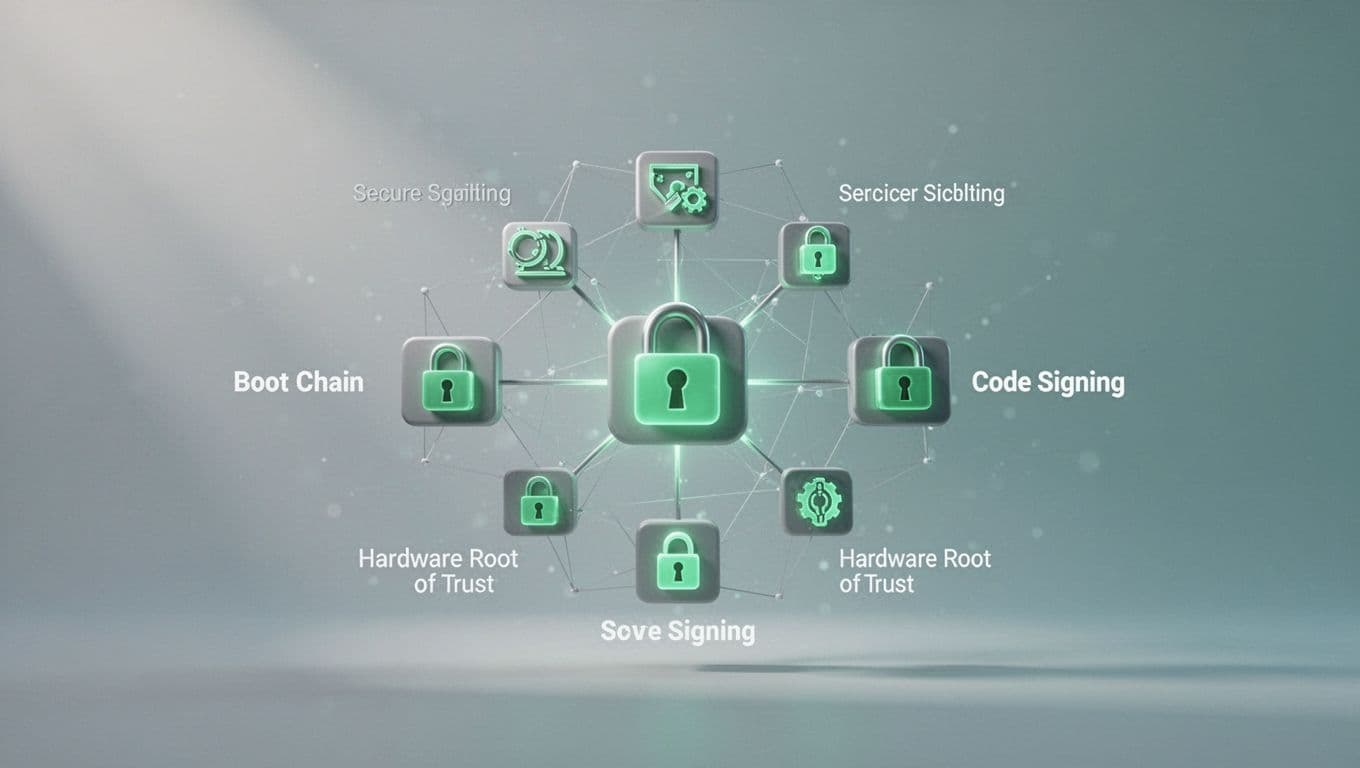
One hospital caught a fake BIOS this way. Alerts fired before patient monitors went live.
Scan for vulnerabilities weekly. Tools like Trivy help, but pin versions after March’s attacks.
Harden Builds and Manage Vulnerabilities
Your pipelines must resist compromise. Vendors handle most, but you control deployment.
Lock CI/CD with multi-factor hardware keys. NIST recommends this for top maintainers.
Quick Steps:
- Pin dependencies in lockfiles.
- Retain build artifacts two years.
- Stage rollouts: 10% first, monitor.
For vulnerabilities, feed SBOMs into scanners. Patch criticals in 72 hours.
In embedded setups, use air-gapped signing stations. OT teams version firmware strictly.
CISA’s SBOM page has generation tools.
Detect and Respond to Compromises
Detection spots anomalies fast. Response limits blast radius.
Playbook: Incident Handling
- Monitor for drifts. Baseline hashes. Alert on changes. Owner: SOC analyst. Trigger: Anomaly threshold.
- Isolate and attest. Quarantine devices. Run remote proofs. Owner: Incident responder. Trigger: Alert confirmation.
- Rollback and forensics. Deploy signed backups. Analyze via vendor audit rights. Owner: Security leader. Trigger: Compromise declared.

March 2026 showed human response lags. Automate with EDR for firmware.
Practice quarterly. Run failure injections.
Key Takeaways
Firmware supply chain attacks hit hard and fast. Playbooks on procurement, verification, hardening, and response build defenses.
Start with SBOMs and secure boot. They block most threats.
Your team stays ahead by acting now. Need talent for this? Book a Discovery Call with Bud Consulting.
Strong chains mean resilient operations.