table of contents
A campaign can launch in days, but the tools behind it often appear in minutes. That speed helps marketing teams test faster and report sooner, yet it also creates blind spots when people add apps, AI helpers, and agency workspaces without review.
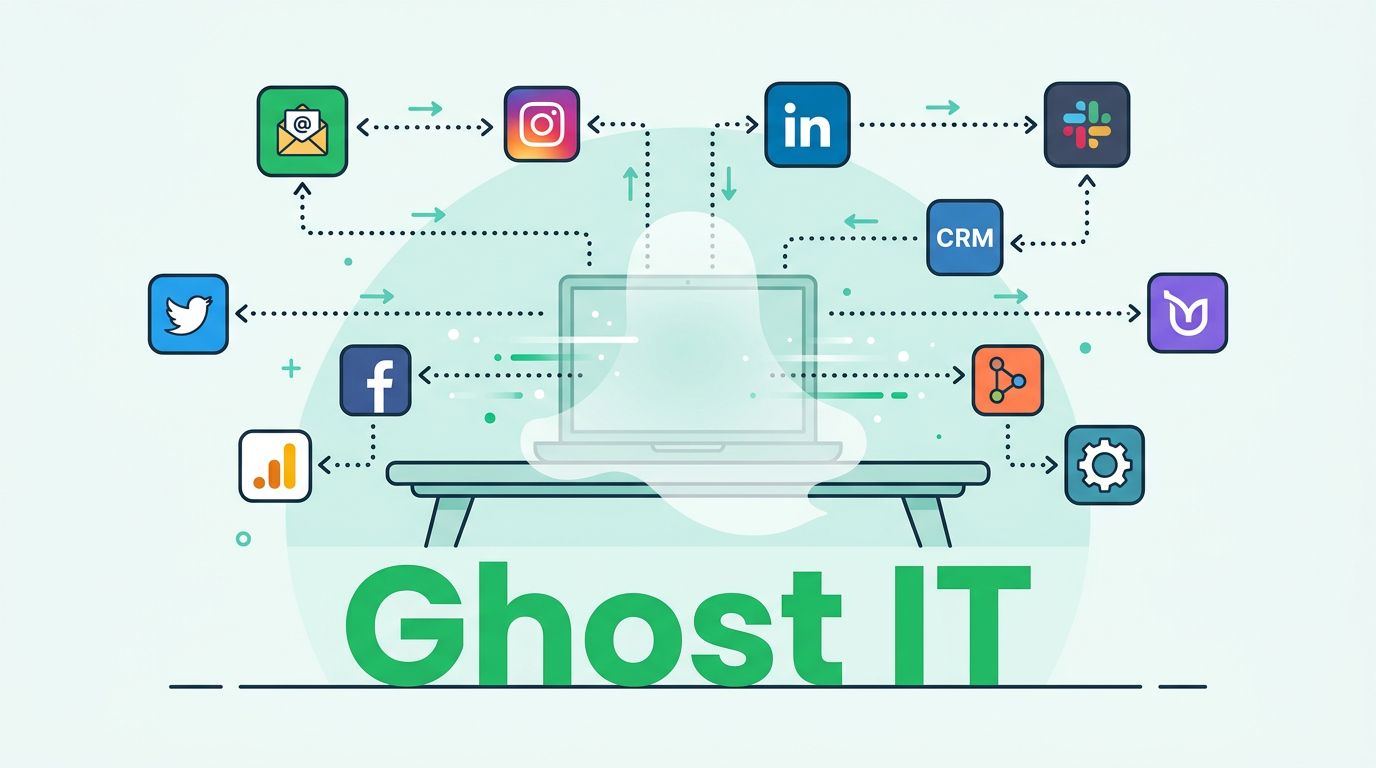
Ghost IT in marketing is usually a speed problem, not a discipline problem. A useful shortcut becomes a hidden system, then a hidden system becomes a place where data, access, and trust can drift. Your attack surface grows every time a new login, integration, or vendor account enters the stack.
What ghost IT looks like inside a marketing team
Ghost IT marketing often starts with one person trying to meet a deadline. A demand gen manager signs up for an AI copy tool. A field marketer connects a webinar platform. An agency opens a shared workspace for campaign assets. Each move seems small, but each one adds a login, a data path, and a vendor relationship.
Marketing work is built on experimentation, so new tools often show up before anyone asks for approval. Teams buy software on cards, through trials, or inside bundled services. They move fast because launch dates do not wait for quarterly review cycles. As a result, the team can end up with several tools that do the same job, plus a few nobody remembers owning.

When that happens, ghost IT stops being a side issue. It becomes part of daily operations, which means security has to map more accounts, more permissions, and more integrations than anyone planned for.
Why hidden marketing tools widen the attack surface
Your attack surface is every place an attacker can reach, or every place data can leak. In marketing, that includes CRM syncs, form builders, email tools, ad platforms, analytics tags, browser extensions, and AI assistants. A single OAuth grant can expose contacts, files, calendars, and campaign history.
That is why hidden SaaS matters. ZeroFox’s shadow IT attack surface article explains how unsanctioned tools create unseen entry points, and those entry points are hard to monitor once they are live.
The risk is not only external. An ex-contractor who still has access, a freelancer using a personal email, or a file integration that copies customer lists into another tenant can create the same opening. Attackers like these gaps because they are quiet and hard to trace.
Every hidden tool adds another place where identity, data, or logs can slip out of view.
That is also why attack surface management has to be practical. Teams need to know who can log in, what each app can touch, and which integrations still run after a campaign ends. Secure.com’s shadow IT risk guide is a useful reference for that kind of review.

Why 2026 makes the problem harder
The scale of the stack has changed. Recent 2026 data puts average app use near 830 per company, with large firms over 2,000. More than 61% of apps are shadow IT, and most AI tools are still unmanaged. In plain terms, the gap between what teams use and what IT can see keeps getting wider.
Marketing feels that gap first because the work depends on experiments. Teams test landing page builders, AI writing tools, social schedulers, personalization engines, and partner portals. Agencies add their own systems too. Each one may connect through third-party integrations to Google Drive, Slack, HubSpot, Salesforce, or a data warehouse. Those connections help campaigns move, but they also widen trust chains.
Privacy and compliance expectations are sharper in 2026 as well. Customer data, consent records, regional storage rules, and vendor data use terms now matter in everyday campaign work. A tool that looks harmless can still send data across borders, keep it longer than policy allows, or train on content you never meant to share. For a broader view of that shift, Shadow IT to Shadow AI shows how unmanaged AI now fits into the same risk pattern.
How to cut ghost IT without slowing campaigns
The fix is governance that supports speed. Start with one intake process for new tools. If a marketer needs a platform, the request should route through security, privacy, procurement, and RevOps. That sounds formal, but it stops ad hoc buying before it starts. Then keep an approved stack for common use cases, such as scheduling, webinars, forms, and AI writing.
A live asset inventory matters just as much. It should show every app, who owns it, what data it touches, and whether an agency or contractor can still reach it. Without that view, decommissioned tools keep tokens, webhooks, and integrations alive long after the campaign ends.

A simple control list keeps the work clear:
- Route new marketing tool requests through one intake process.
- Keep an approved stack for recurring use cases.
- Maintain a live asset inventory with owners and risk notes.
- Run quarterly access reviews for staff, agencies, and contractors.
- Run vendor assessments before data sharing.
- Build a decommissioning workflow for retired apps and tokens.
When marketing and security share the same inventory, ghost IT gets easier to contain. If your team needs help building that shared process, Book a Discovery Call with Bud Consulting is a practical place to start.
Ghost IT in marketing usually starts with speed, not bad intent. Still, every unsanctioned tool, AI plug-in, and agency workspace adds another path into your environment. The strongest teams keep the pace while putting clear guardrails around data, access, and vendor trust.
When marketing can move fast inside a visible stack, the attack surface stays smaller and the work stays cleaner.