table of contents
A PAM vault doesn’t reduce privileged access risk on its own. It needs clear ownership, defined controls, application onboarding, reporting, and business adoption.
An IAM PAM program owner connects identity strategy with daily delivery. The role gives security leaders one accountable owner for identity governance, privileged access, control improvements, and measurable risk reduction. It also gives engineers, application owners, auditors, and vendors a clear decision path.
The title varies by organization. The accountability should not.
What an IAM PAM program owner owns
An IAM PAM program owner is responsible for the program charter, roadmap, delivery plan, governance model, and results. The role covers both IAM and PAM where those capabilities are managed as one security program.
IAM controls answer questions about identity lifecycle and access rights. PAM controls focus on privileged accounts, elevated sessions, credentials, secrets, and high-risk actions. Identity governance and administration, or IGA, provides review, approval, certification, and access policy capabilities. PAM adds stronger controls around administrators, service accounts, emergency access, and privileged automation.
The program owner doesn’t need to configure every connector or write every policy. The role does need enough technical understanding to challenge designs, identify control gaps, and sequence work correctly.
A strong owner can explain:
- Which identities have access to critical systems.
- Why each person, service account, or workload has that access.
- Which privileged accounts are vaulted and monitored.
- How access is approved, reviewed, changed, and revoked.
- Which exceptions remain open and who accepts the risk.
- Whether the program is reducing exposure over time.
The role is different from an IAM engineer, PAM administrator, or IAM architect. Those roles may build and operate the platform. The owner manages priorities, dependencies, outcomes, and decisions across the workstreams.
The IAM manager responsibilities commonly include policy development, access management, and compliance monitoring. A program owner adds formal delivery governance and executive reporting to those operational duties.
Core responsibilities across IAM and PAM
The first responsibility is to define the program scope. This includes workforce identities, contractors, third parties, service accounts, machine identities, cloud roles, privileged users, and application access.
The scope should identify critical systems and the controls required for each one. A finance platform may need MFA, role-based access control, quarterly access reviews, PAM vaulting, session recording, and rapid revocation. A low-risk internal application may need a different control set.
The owner then turns risk and regulatory requirements into a delivery backlog. Common work includes:
- Building authoritative identity sources and joiner, mover, leaver processes.
- Connecting applications to an identity provider or IGA platform.
- Removing shared administrator accounts.
- Vaulting privileged credentials in CyberArk, Delinea, or another approved PAM platform.
- Applying just-in-time access and time-bound elevation.
- Recording privileged sessions where the risk requires it.
- Managing SSH keys, API secrets, application credentials, and service accounts.
- Creating access certification campaigns for sensitive systems.
- Integrating IAM and PAM events with a SIEM and incident response process.
- Closing audit findings and documenting control exceptions.
Sequencing matters. A PAM rollout can fail when teams try to onboard accounts before the inventory is accurate, ownership is confirmed, network paths are ready, and break-glass procedures are tested.
The program owner maintains an integrated plan with milestones, dependencies, risks, assumptions, issues, and decisions. A formal RAID log is useful, but only if owners and due dates remain current. An overdue risk without an escalation path is not program management. It is a record of delay.
Vendor coordination is another core duty. The owner may support tool selection, contract decisions, implementation partners, support models, and escalation routes. The owner also confirms that vendor delivery matches the approved architecture and control requirements.
Change management must be part of the plan. Administrators need training. Application teams need onboarding instructions. Service owners need to understand approval rules and emergency access. Senior leaders need clear reporting without platform-level detail.
Current IAM program roles often combine delivery planning, stakeholder coordination, audit support, and reporting. For example, an IAM program manager role at AbbVie lists substantial experience requirements, which reflects the level of coordination expected in a large enterprise environment.
KPIs that show whether the program is working
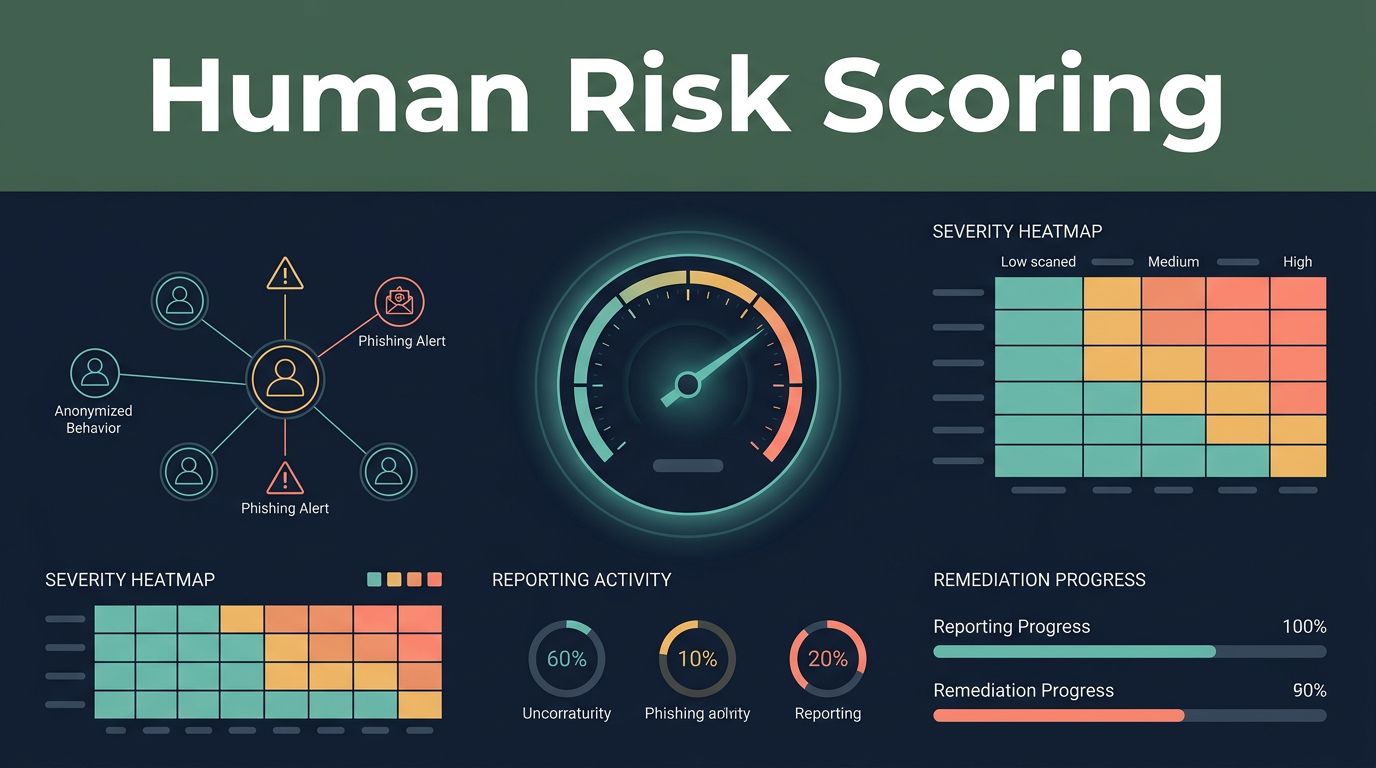
A dashboard should show more than project completion. Closing 90% of planned tasks doesn’t prove that privileged access risk has fallen.
The owner should report a balanced set of delivery, control, operational, and risk metrics. The exact targets depend on the organization’s baseline, regulatory obligations, and risk appetite.
| KPI area | Example measure | Why it matters |
|---|---|---|
| Privileged account coverage | Percentage of in-scope privileged accounts vaulted | Shows PAM adoption across critical assets |
| Access review quality | Percentage of high-risk access reviewed on schedule | Measures governance performance |
| Revocation | Mean time to revoke access after a trigger | Shows whether leaver controls work |
| Just-in-time access | Percentage of eligible privileged access granted temporarily | Measures reduction in standing privilege |
| Session control | Percentage of required sessions recorded and searchable | Supports investigation and accountability |
| Service accounts | Percentage with an owner, vault record, and rotation policy | Reduces unmanaged non-human identity risk |
| Exceptions | Number and age of approved control exceptions | Shows residual risk and overdue decisions |
| Delivery | Milestone completion, dependency age, and action closure rate | Measures program execution |
| Audit | Open findings, repeat findings, and evidence delivery time | Shows control reliability |
Metrics need definitions. “PAM coverage” can mean an account is stored in a vault, or it can mean the account is vaulted, rotated, monitored, and subject to approval. Those are different outcomes.
Use KRIs alongside KPIs. Track the number of orphaned privileged accounts, shared accounts, stale administrator memberships, failed password rotations, emergency access events, and privileged sessions without a business ticket.
Report trends, not isolated figures. A rising coverage rate with rising exception age may indicate that the program is expanding faster than governance can support. A lower number of standing privileges with more emergency access events may indicate that the operating model needs attention.
Executives need three answers:
- What risk has been reduced?
- What risk remains?
- What decision or investment is required?
The program owner should present those answers through a monthly operating report and a quarterly steering committee review. Technical dashboards can support the report, but they shouldn’t replace a clear risk position.
Stakeholders and the operating model
IAM and PAM programs fail when ownership stops at the security team. Identity controls touch almost every technology and business process.
The program owner normally works with the CISO, CIO, security architecture, IAM engineering, PAM operations, infrastructure, cloud platform teams, network engineering, application owners, HR, legal, privacy, internal audit, compliance, procurement, service management, and external vendors.
Each group needs a defined role. Security sets control requirements and risk priorities. IAM architects define the target design. Engineers build integrations and policies. Application owners confirm access needs and approve onboarding. HR provides authoritative employment data. Internal audit tests evidence. Procurement manages commercial dependencies.
A RACI is useful when it reflects actual decisions. It should identify who approves privileged access, who owns an application, who handles a failed rotation, who authorizes emergency access, and who accepts an exception.
The program owner should also establish decision forums:
- A working group for delivery issues and technical dependencies.
- A control forum for policy, exceptions, and risk decisions.
- A steering committee for funding, priority changes, and escalations.
A documented service model matters after implementation. Define who handles access requests, failed integrations, account lockouts, vault outages, emergency access, and audit evidence. Without this model, the project team becomes the permanent support desk.
How to establish or mature the program
Organizations at the beginning of the journey should start with an inventory and risk baseline. Identify privileged accounts, high-value systems, identity sources, existing access reviews, shared accounts, service accounts, and current authentication methods.
Prioritize systems by business impact and privilege risk. Do not onboard applications only because they are easy. Start with systems where compromise would create material operational, financial, regulatory, or safety consequences.
Next, define the minimum control standard. It should cover MFA, approval, least privilege, vaulting, credential rotation, session monitoring, access reviews, logging, break-glass access, and exception handling. Keep the standard clear enough for application owners to use.
A mature rollout usually follows this sequence:
- Confirm scope, ownership, risk, and control requirements.
- Clean identity and privileged account data.
- Establish platform integrations and network prerequisites.
- Pilot with a limited group of critical systems.
- Test approval, rotation, session monitoring, revocation, and recovery.
- Expand onboarding through repeatable service patterns.
- Measure coverage, exceptions, adoption, and control performance.
- Reassess the roadmap as cloud, automation, and business needs change.
The owner should separate platform delivery from control adoption. A connector can be complete while the business process remains weak. An application can be technically integrated while excessive access continues through broad groups.
Cloud and non-human identities need dedicated workstreams. Human access is only one part of the problem. Cloud roles, workload identities, CI/CD credentials, API keys, and service accounts can hold high privilege without appearing in traditional employee access reports.
Good program ownership creates repeatable onboarding. It defines required information, technical prerequisites, approval steps, testing evidence, support contacts, and exit criteria. This reduces one-off decisions and gives delivery teams a consistent process.
Hiring an IAM PAM program owner
Hiring should begin with the outcomes the role must own. A job description that lists only “IAM experience” will attract administrators, engineers, and project coordinators without showing who can run the full program.
Look for a candidate who has managed both delivery and controls. They should be able to discuss IAM architecture, PAM operations, access governance, audit evidence, vendor management, and executive communication.
Useful evidence includes:
- A roadmap that connected security risk to funded delivery.
- A PAM deployment involving privileged account discovery, vaulting, rotation, and session controls.
- An IGA or access review program with measurable completion and remediation.
- A cross-functional RACI and escalation process.
- A program dashboard that included KPIs and KRIs.
- A difficult dependency or exception that the candidate resolved.
- A control failure that led to a process or architecture change.
Technical certifications can help, but they shouldn’t replace delivery evidence. Relevant backgrounds may include CISSP, CISM, CRISC, vendor certifications for CyberArk or Delinea, and experience with Microsoft Entra ID, Active Directory, Okta, SailPoint, Saviynt, ServiceNow, or cloud IAM services.
Interview for ownership. Ask, “Which metric changed because of your work?” Ask, “What did you stop doing when the program became overloaded?” Ask, “How did you handle an application owner who refused PAM onboarding?”
The right candidate can explain trade-offs in business terms. They know when to escalate. They know when a control is insufficient. They know how to move delivery forward without hiding residual risk.
Organizations hiring for this role can Book A Call With Us to discuss IAM and PAM leadership requirements, skills gaps, and search support.
Conclusion
An IAM PAM program owner is accountable for more than a platform rollout. The role connects identity data, privileged access controls, governance, delivery, audit evidence, and business adoption.
The strongest programs use clear scope, named owners, risk-based priorities, measurable KPIs, and an operating model that continues after implementation. The strongest hires can manage technical detail without losing sight of decisions, funding, and residual risk.
When privileged access creates the first question during an incident, the organization should already know who owns the answer.