table of contents
You’ve sat through dozens of pitches. Founders dazzle with growth metrics and market size. Then they gloss over security in two slides.
One overlooked breach can wipe out your investment. Startups face rising threats, yet many skip basics. As an investor, you need tools to catch investment pitch red flags early.
This guide shows you what to watch. It covers real signs of trouble, smart questions, and proof that separates talk from action.
Why Security Checks Define Smart Investing
Startups promise big returns. Security gaps promise big losses. A single incident erases years of progress.
Investors lost billions to breaches last year. Founders often prioritize speed over safeguards. That’s fine for prototypes. Not for scale.
You see this in pitches. They claim “enterprise-grade” security without details. Real due diligence spots the difference between growing pains and reckless risks.
Early-stage teams lack full audits. That’s normal. But no plan at all signals poor governance. Ask for their roadmap first. It reveals priorities.
Strong founders own their gaps. They share pentest reports or SOC 2 timelines. Weak ones deflect. Spot that pattern to protect your portfolio.
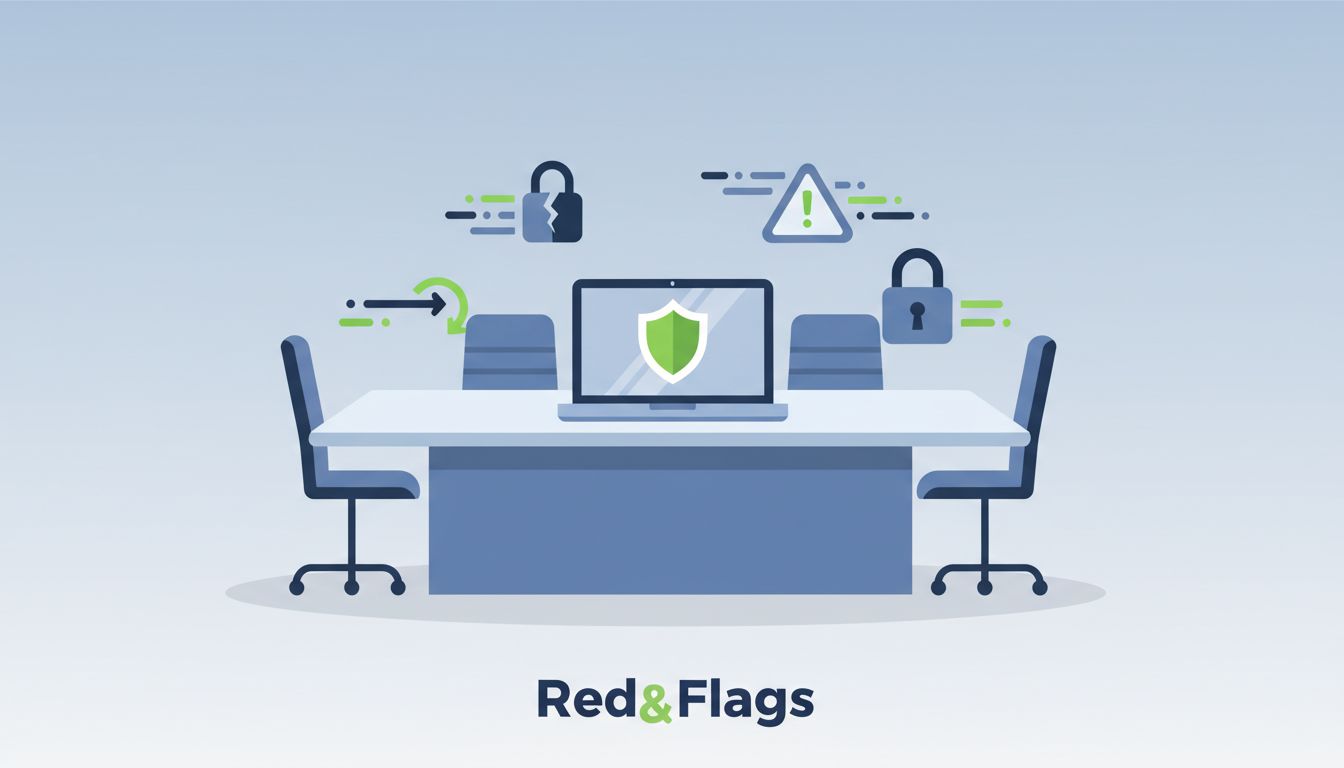
Key Red Flags to Watch
Pitches hide risks in vague claims. Founders say “we’re secure.” Look closer for proof.
No written policies top the list. Every startup needs data classification and access rules. Without them, breaches spread fast. A good sign? Policies tailored to their stack.
High staff churn in security roles warns of deeper issues. If engineers rotate often, controls suffer. Check LinkedIn for patterns.
Unclear vendor management raises alarms. Third parties cause most attacks. Founders should list key vendors and review processes.

Incident history matters too. Hiding past events erodes trust. Expect transparent summaries with fixes applied. For details on common pitfalls, see CyberDB’s 2026 investor checklist.
Another flag: over-reliance on one tool. It leaves blind spots. Balanced stacks cover identity, endpoints, and cloud.
These signs separate viable bets from traps. Note them during the pitch. Follow up later.
2026 Hot Spots: AI, Cloud, Ransomware Risks
Threats evolve fast. In 2026, AI drives attacks. Hackers craft phishing that fools filters. Pitches claiming AI defenses must prove it.
Ransomware hits every 11 seconds. Startups need immutable backups and detection. Vague “preparedness” won’t cut it. Demand behavioral monitoring details.
Cloud misconfigs expose data. Investors expect least-privilege access and regular scans. Founders ignoring multi-cloud risks miss enterprise deals.

Privacy rules tighten. GDPR fines hit non-compliant firms. Check for compliance mapping. Third-party software chains amplify supply attacks.
For a full Series A security checklist, review Lorikeet Security’s guide. Trends show investors favor predictive tools over reactive ones.
Pitches weak here face scrutiny. Push for specifics on these areas.
Verify Claims with Evidence
Talk is cheap. Evidence builds confidence. Founders should hand over docs during diligence.
Start with audits. SOC 2 Type II or a clear path to it sets the bar. Pentest reports from third parties prove real tests.
Policies count. Incident response plans list steps and contacts. Access controls detail RBAC and MFA enforcement.

Vendor records show questionnaires and risk scores. Customer security responses indicate maturity.
Acceptable proof includes dated vulnerability scans and fix timelines. No roadmap? Walk away.
Bud Consulting helps vet these gaps. Book a Discovery Call with Bud Consulting to strengthen your review process.
Questions That Uncover Truth
Probe with targeted asks. They force clarity.
On incidents: “What breaches occurred? What root causes and changes followed?” Good answers include timelines.
For AI claims: “How do you secure models against poisoning? Show detection logs.” Expect anomaly monitoring.
Cloud focus: “Describe your segmentation. Any recent misconfigs?” Multi-account strategies impress.
Ransomware prep: “Walk through your recovery test. Immutable backups in place?” Annual drills signal readiness.
Third-party risks: “How do you score vendors? Share a sample assessment.” Automated tools beat spreadsheets.
Weak responses dodge details. Strong ones reference evidence. Use these to gauge honesty.
| Red Flag | Follow-Up Question | Strong Evidence |
|---|---|---|
| No policies | “Share your access control policy.” | RBAC docs with MFA enforcement. |
| Hidden incidents | “Detail past events and fixes.” | Root cause report with timeline. |
| Vendor gaps | “How do you assess third parties?” | Risk-scored questionnaire. |
This table speeds your checks. Summarize: Always tie answers to docs.
Conclusion
Security red flags in pitches signal real portfolio risks. Spot vague claims, demand policies and audits, and grill on 2026 threats like AI and ransomware.
You now have a framework to separate hype from substance. Founders who prepare win deals. Those who don’t expose you.
Apply these steps next pitch. Your due diligence pays off in safer bets.