table of contents
Quantum computers loom closer each year. In 2026, they still can’t crack your encryption, but hackers grab data now to unlock it later. This “harvest now, decrypt later” risk hits long-term secrets like strategies or customer records hard.
You need quantum-resistant encryption to protect that data for decades. It uses math that quantum machines can’t easily break. As a leader, understanding the basics helps you steer your team toward safe upgrades without tech overload.
Let’s break down what this means for your business.
What Quantum-Resistant Encryption Means
Current encryption relies on tough math problems, like factoring huge numbers. RSA and ECC work well against regular computers. Quantum ones use qubits to solve those problems fast.
Quantum-resistant encryption swaps in new algorithms. These resist both classical and quantum attacks. Think of it as upgrading from a strong padlock to one that laughs at new lockpicks.
NIST leads the standards. Their picks include ML-KEM for key sharing and ML-DSA for signatures. You don’t code this yourself. Vendors build it into tools you already use.
Why Quantum Now Threatens Your Encryption
No quantum computer breaks RSA in 2026. Top systems have thousands of qubits at best, far short of the millions needed. Recent studies cut estimates to under 500,000 qubits, though. Progress speeds up.
The real danger is data stolen today. Attackers store it for future decryption. Your 2026 emails or files could expose trade secrets by 2035.
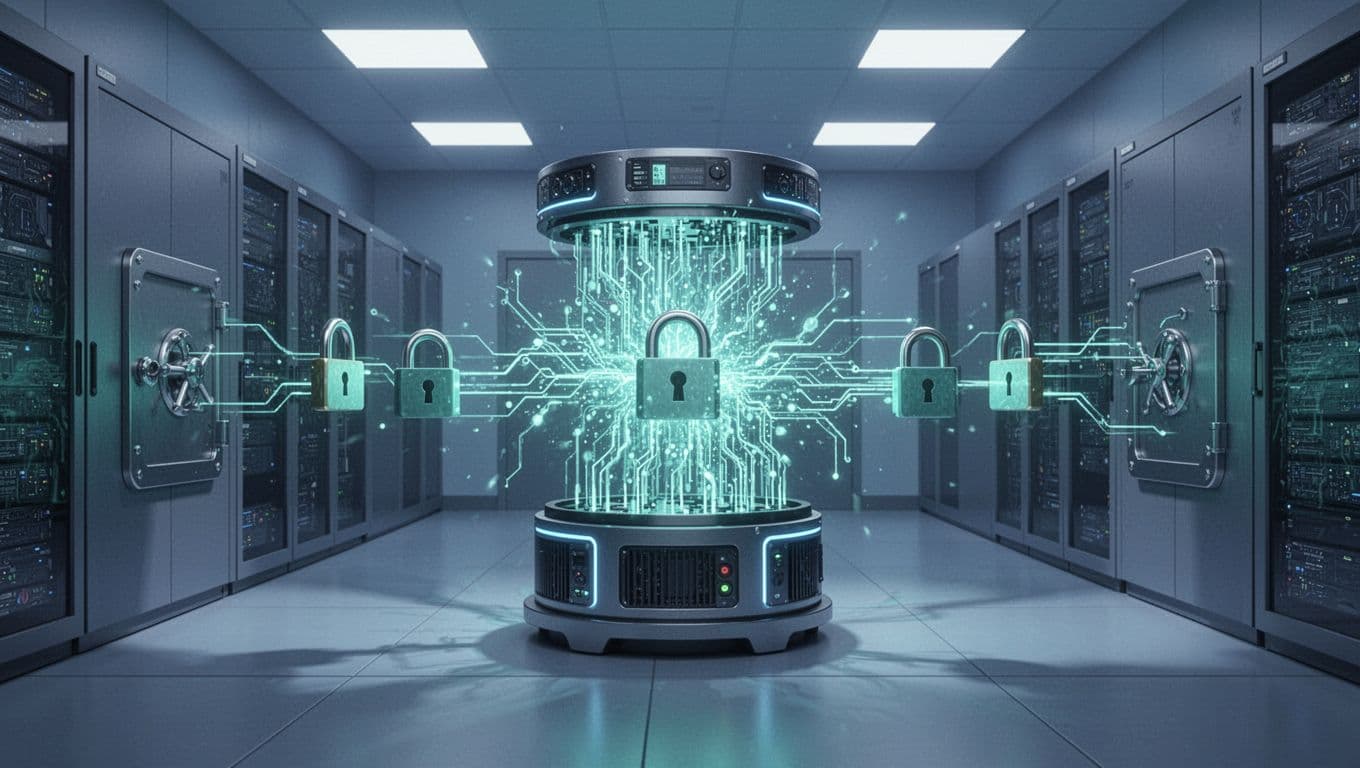
For details on quantum threats to internet security, check New Scientist’s report on machines nearing encryption-breaking power. Boards must act because delays cost more later.
NIST Standards You Should Know
NIST finalized three core standards in 2024: FIPS 203 (ML-KEM), FIPS 204 (ML-DSA), and FIPS 205 (SLH-DSA). Federal systems must use them soon. Businesses follow to stay compliant.
In March 2025, NIST picked HQC as a backup. Its draft comes this year, final in 2027. FALCON joins for signatures too.
These work now for email, e-commerce, and more. See NIST’s post-quantum cryptography page for full specs. Always check latest updates, as guidance evolves.
Google pushes migration by 2029. Your vendors likely support these already.
Key Business Risks in 2026
Data breaches hurt stock prices and trust. Quantum risks add long-term pain. Stolen pharma formulas or financial plans lose value over time.
Regulators ramp up. FedRAMP, CMMC, and ITAR demand quantum-safe crypto for contracts. EU follows suit. Non-compliance blocks deals or invites fines.
Third parties expose you too. Vendors with weak encryption create weak links. 91% of firms lack plans, per recent surveys. You stand out by starting now.
Phased shifts cut disruption. Data longevity matters most for high-value info.
Your Phased Migration Plan
Don’t rush a full swap. Inventory crypto use first: scan networks for RSA or ECC.
Next, prioritize. Protect new data with hybrids: old plus new methods. Test in labs.
Then deploy. Aim for 12-24 months per phase. Budget for hardware updates by September 2026 deadlines.
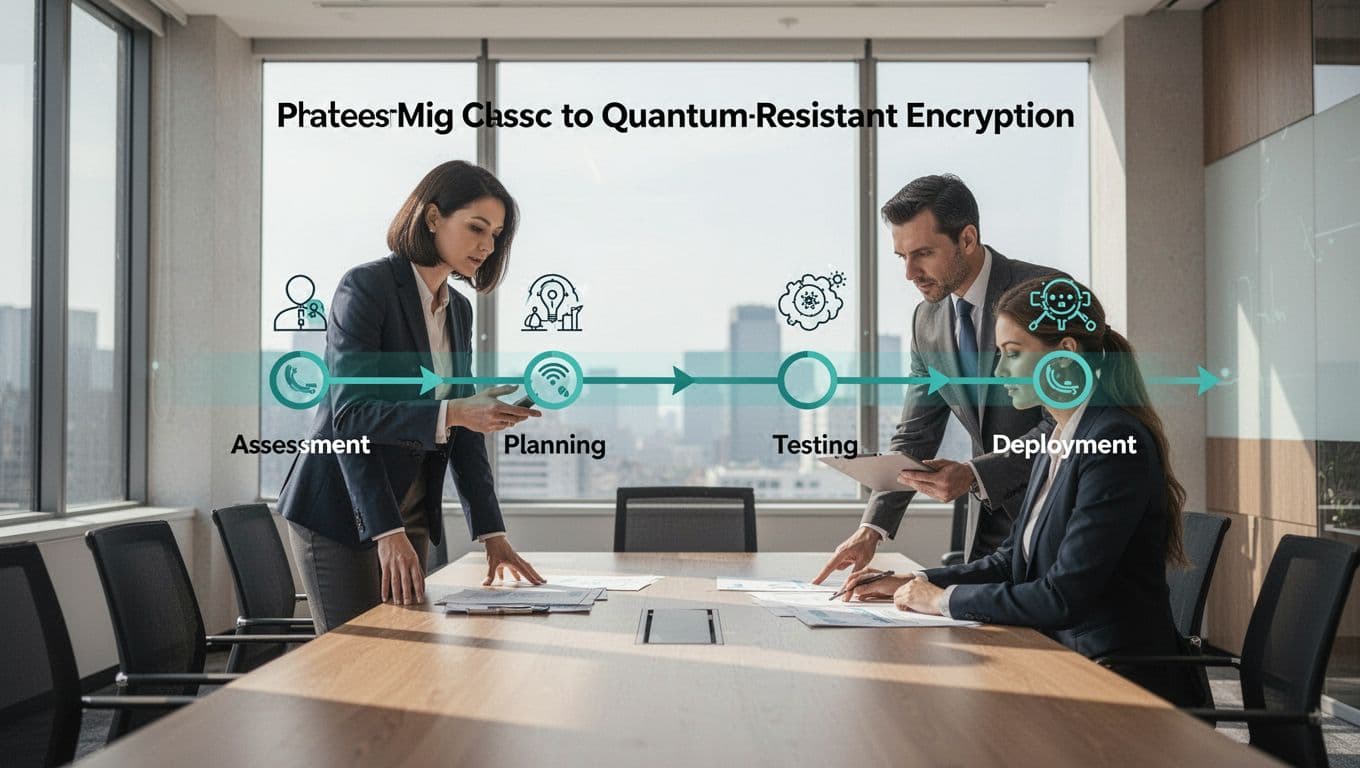
NIST’s migration guide outlines steps. For enterprise roadmaps, review Gray Group International’s 2026 prep overview.
Hire experts if gaps exist. Book a Discovery Call with Bud Consulting to vet security talent.
Questions to Ask Your IT and Security Teams
Push for clarity. Start meetings with these:
What crypto do we use now? List algorithms in apps, VPNs, and cloud.
Which data faces “harvest now” risks? Flag 10-year secrets.
Have we tested NIST standards? Show hybrid pilots.
What’s our migration timeline? Tie to compliance dates.
Who handles vendors? Demand their quantum plans.

These questions reveal gaps fast. Follow up quarterly.
Conclusion
Quantum-resistant encryption protects your future. NIST standards work today, but migration takes years. Start inventory and planning to beat “harvest now” threats and compliance rushes.
Leaders who grasp this guide smarter risks. Your data stays safe for decades. Check NIST sites often for updates, and act this year.