table of contents
Expanding your business overseas brings growth. It also exposes you to new threats. In May 2026, AI-driven attacks and supply chain disruptions hit global firms hard, with ransomware groups stealing data before encrypting files.
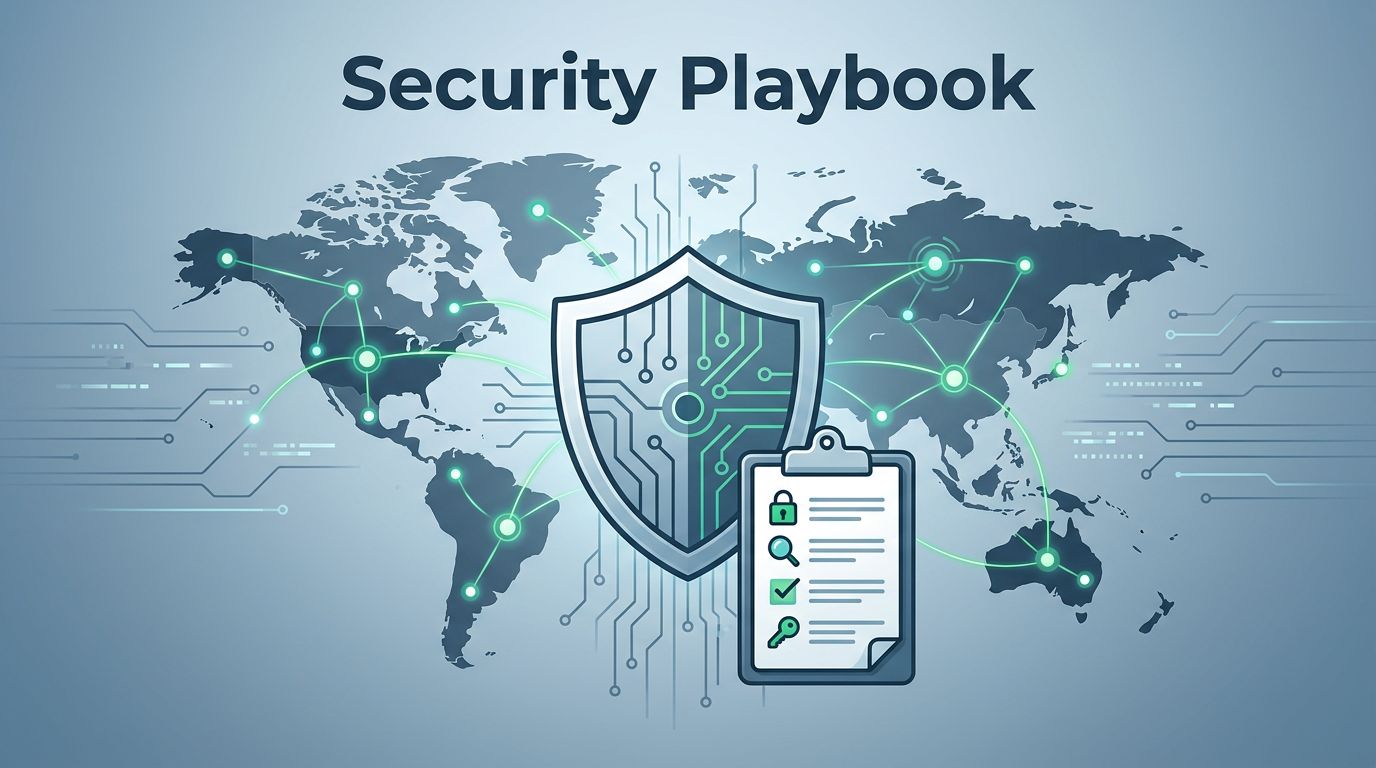
You face geopolitical volatility from US-China tensions and cyber-physical risks where hackers target ports and factories. A solid security playbook helps. It guides your team through risks in a structured way.
This playbook must stay risk-based and adaptable by region. Let’s walk through building one step by step.
Spot Key Risks Before You Expand
Start with threats specific to international moves. Businesses now deal with AI phishing that fools employees and zero-day exploits on edge devices. These rose 42% last year.
Supply chain attacks quadrupled in five years. One vendor breach can halt your operations across borders. Add geopolitical issues, like state hackers from China targeting cloud setups, up 266%.
Data privacy adds pressure. Rules like the EU’s updated GDPR and US Executive Order 14117 block sensitive data flows to certain countries. Check Freshfields on rising risks for international data transfers for details.
Duty-of-care expectations grow too. Employees in new regions expect protection from both cyber and physical harm.
Make a quick risk checklist:
- Map your attack surface, including third parties.
- Review local laws on data and monitoring.
- Assess cyber-physical links, like IoT in warehouses.
This base keeps your playbook focused on real dangers.
Assemble Your Cross-Functional Team
No one department handles this alone. Pull in security, legal, ops, and HR early. They bring views on threats, compliance, and people risks.
Aim for five to seven members. Include regional experts who know local customs. For example, a compliance lead flags data rules in Asia.
Meet weekly at first. Use tools like shared docs to track inputs.

This team reviews Forvis Mazars insights on cyber risks in expansion plans. They spot high-risk decisions, like shared services in volatile areas.
Cross-functional input makes the playbook practical. It avoids siloed mistakes.
Run a Thorough Risk Assessment
Next, score risks by region. Rank countries on cyber maturity, political stability, and supply chain exposure.
Use a simple matrix. Rate threats from low to high. Factor in 2026 trends like malware-free intrusions, now 82% of detections.
Test scenarios. What if a ransomware hit disrupts your new factory? Or a deepfake scams execs?
Consult local counsel here. They cover nuances you miss. For high-risk spots, see EY guidance on cyber pitfalls in those regions.
Document findings in phases:
- Identify assets and threats.
- Analyze impacts.
- Prioritize controls.
This step turns vague worries into clear actions.
Document Key Elements in Your Playbook
Now build the core document. Keep it concise, around 20-30 pages.
Cover these sections:
Incident Response: Tailor playbooks per region. Note local reporting times, often 24-72 hours.
Access Controls: Set baselines but adapt. Some countries ban certain monitoring.
Vendor Management: Vet suppliers deeply. Demand audits amid supply disruptions.
Training: Cover phishing and physical safety. Update for AI threats.
Include checklists for rollout, like hardware specs per country from Securitas Technology’s global security factors.

Store it in a central repo. Make versions editable by region.
Adapt the Playbook by Country and Region
One size never fits all. Tweak for local rules and threats.
In Europe, prioritize GDPR flows. Asia demands supply chain checks amid trade blocks.
Use templates. Base layer holds global standards. Overlays add region specifics, like China’s edge device bans.
Review quarterly. Cyber-physical convergence means factories need split networks now.
Track changes in a log. This keeps adaptations traceable.
Test and Update Your Playbook Often
A static plan fails fast. Run tabletop exercises twice a year. Simulate ransomware or geo-disruptions.
Measure effectiveness. Track metrics like response time or breach attempts.
Update for new threats. In 2026, AI defenses counter AI attacks. Patch zero-days in days, not weeks.

Build in reviews after events. Regional leads flag shifts.
This cycle ensures your playbook stays relevant.
Key Takeaways
A risk-based security playbook protects your international push. Focus on cross-functional teams and regular tests first. They handle 2026’s AI threats, privacy rules, and supply risks best.
You now have a framework to adapt across regions. Start small, scale as you grow.
Need help building your team? Book a Discovery Call with Bud Consulting to close skills gaps.
Your expansion succeeds with security in place.
(Word count: 982)