table of contents
A security control without a named owner is easy to ignore. It may exist on paper, but it won’t get fixed when it breaks.
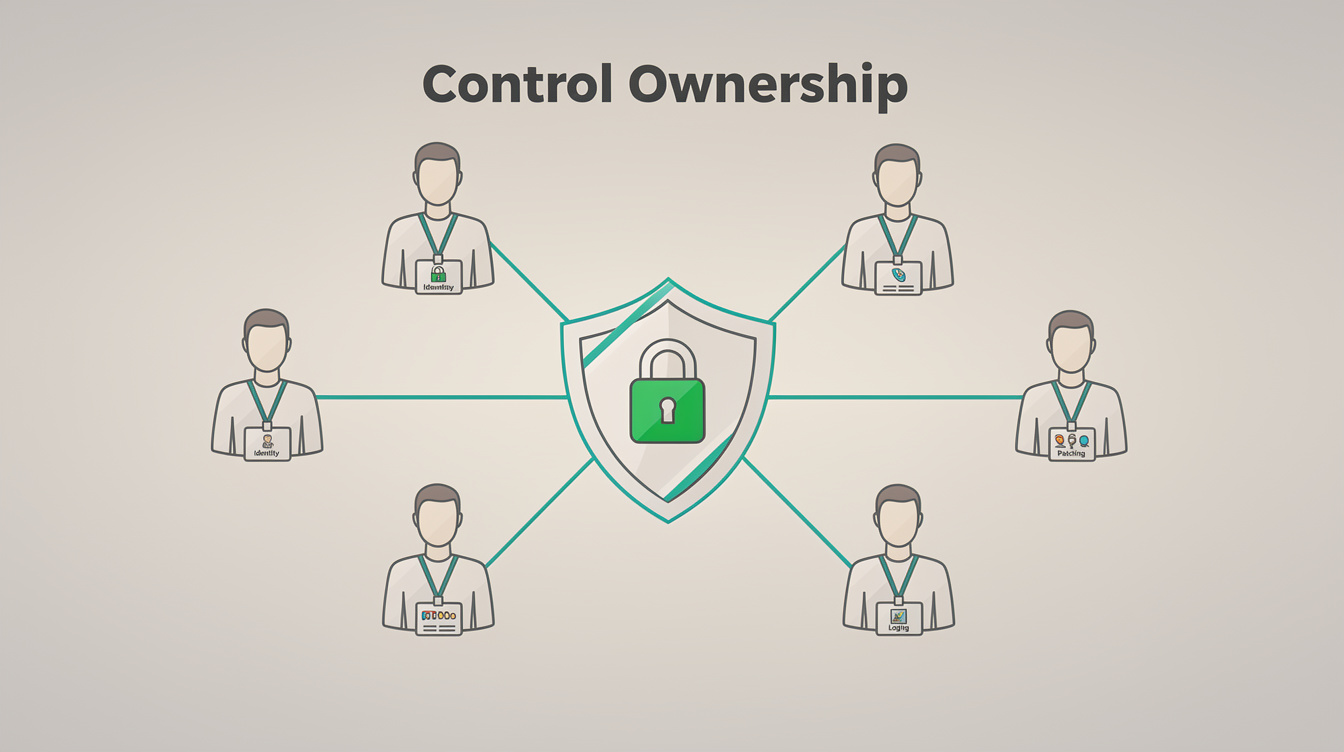
That gap shows up during audits, incident reviews, and risk meetings. Good security control ownership gives every important control one accountable person, even when several teams help run it.
As of 2026, strong programs tie ownership to governance, risk records, and control matrices. The process is practical, and it works best when the assignment is clear from the start.
Start With the Control, Not the Org Chart
Begin by listing the controls that matter most to your business. Focus on areas tied to real risk, customer commitments, legal duties, and recurring incidents.
Then map each control to the system, process, or service it protects. That gives you a better owner than a generic department name.
For example, identity controls often belong with the IAM lead. Patch control may sit with infrastructure or endpoint operations. Logging ownership usually belongs with the platform team that can change the settings and prove the data flows.
As of 2026, many teams use NIST CSF 2.0 Govern outcomes and CIS safeguards together. The NIST CSF and CIS crosswalk is useful when you need to connect broad governance goals to specific controls, while CIS Critical Security Control 6 shows how a control can be described in operational terms.
The point is simple, pick the owner from the work itself. If the person cannot influence the control, they should not own it.
Separate Accountability From Execution
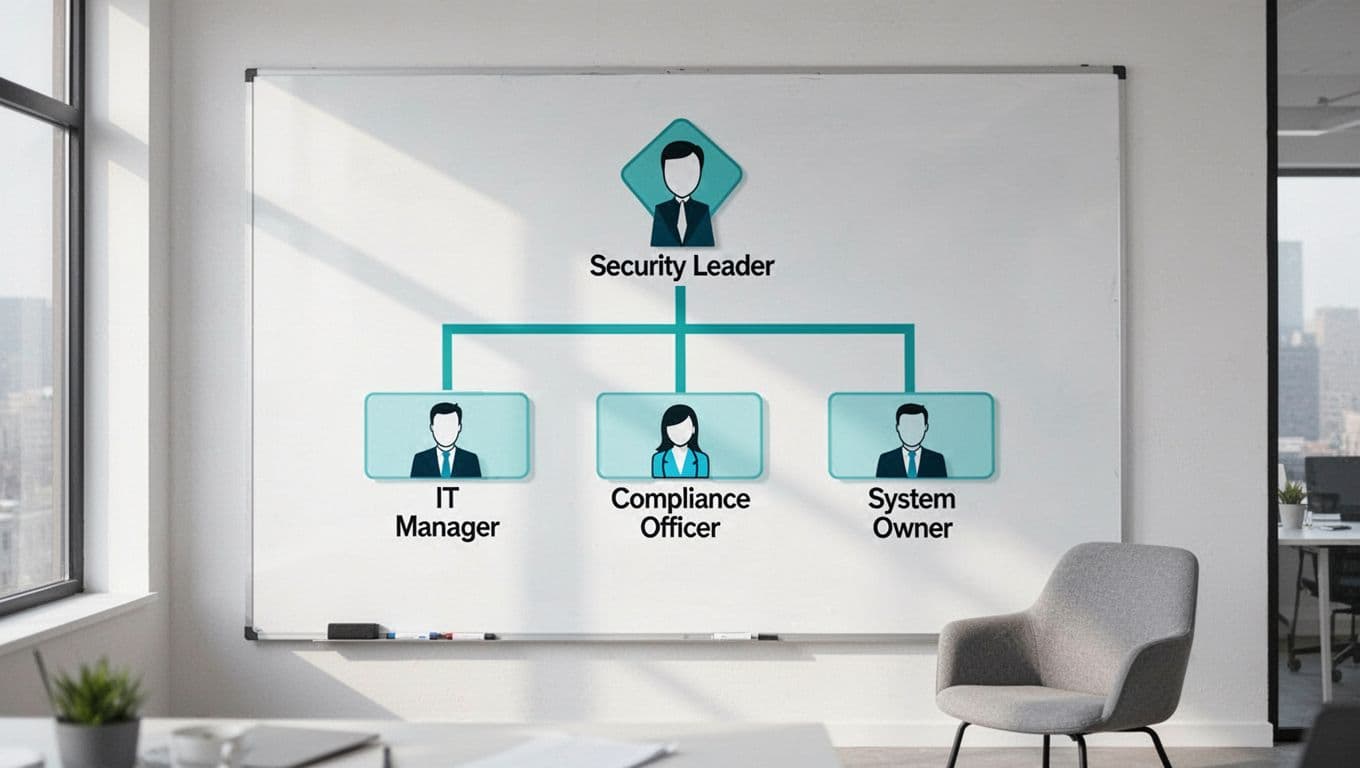
Accountability and execution are related, but they are not the same job. The accountable owner answers for the control’s outcome. The execution owner runs the daily tasks that keep it working.
One control can have many hands on it, but one name should answer for it.
That distinction matters because control failures often happen in the gaps between teams. A security analyst may review alerts, but the system owner may control the configuration. A GRC lead may track evidence, but the engineering team may be the one that can fix the issue.
| Role | Main responsibility | Example |
|---|---|---|
| Accountable owner | Answers for control health and risk | CISO, app owner, IAM director |
| Execution owner | Runs the control day to day | Engineer, analyst, administrator |
| Reviewer | Checks evidence and exceptions | GRC manager, audit lead |
A small company may have one person doing all three jobs. That can work for a while, but the roles still need to be named separately. Otherwise, handoffs get fuzzy and fixes slow down.
When control ownership is clear, escalation is faster. People know who can approve a change, who can gather proof, and who must accept the risk if the control stays weak.
Follow a Repeatable Assignment Process
A repeatable method keeps ownership from becoming a one-time email decision. It also makes the process easier to defend during audits and board reviews.

Use this order:
- Define the control in plain language and set the scope. Say what the control covers, and what it does not cover.
- Pick the accountable owner based on authority, access to evidence, and ability to drive change. The best owner is close to the risk and can remove blockers.
- Name the execution owner and backup owner. That keeps the control moving when someone is on leave or changes roles.
- Record the assignment in the policy, control matrix, and risk register. Put the same name in every place that decision appears.
- Review the assignment after major change, such as a new system, vendor switch, re-org, or incident.
A good example is MFA. The IAM leader may own the control, the service desk may handle user resets, and the security team may review exceptions. Each role matters, but only one person owns the outcome.
If the owner cannot explain the control, cannot access the evidence, or cannot escalate a fix, keep looking. Those are signs the assignment is weak.
Document Ownership Where People Already Work
Ownership only helps if people can find it. That means the assignment should live in the places your teams already use.
A simple record set works well:
| Artifact | What to record |
|---|---|
| Policy | Accountable owner, approval path, review cycle |
| Risk register | Control-linked risk, owner, treatment date |
| Control matrix | Control ID, owner, executor, evidence source |
One control without a record is a control without a home. The policy shows who has authority. The risk register shows who accepts or reduces exposure. The control matrix shows who runs the control and where proof lives.
This is where many programs get stuck. They name an owner in a meeting, but the name never lands in the official records. Later, nobody can tell if the owner changed, left the company, or inherited the control by accident.
Make the record current, and the control stays usable. Make it stale, and the assignment becomes decoration.
Why Ownership Keeps Controls Real
The best control sets fail when ownership is vague. The best programs stay steady because someone is clearly answerable for each control, each exception, and each review cycle.
As of 2026, mature teams track ownership drift the same way they track patch gaps. They watch for stale names, missing backups, and controls that have no clear path to action.
If your control map still has gaps, Book a Discovery Call with Bud Consulting and get help aligning the right people to the right controls.
When ownership is clear, security work moves faster, audits get cleaner, and risk stops hiding in plain sight.