table of contents
Rare security hires don’t come from a deep bench. They come from a system that keeps candidates moving before the need turns urgent.
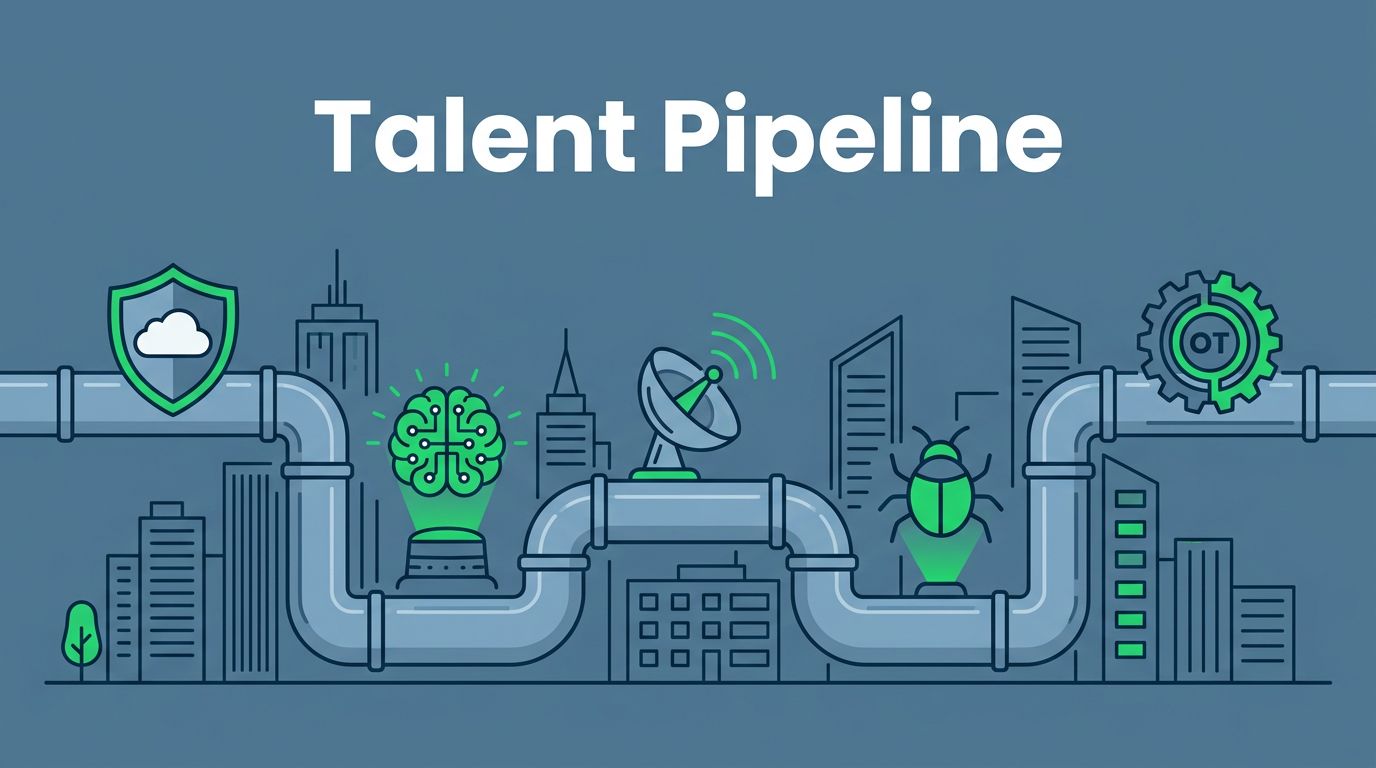
In 2026, cloud, AI, identity, and industrial risk keep pushing demand higher. That’s why roles like detection engineer, cloud security architect, malware analyst, product security engineer, and OT/ICS specialist stay hard to fill.
A strong security talent pipeline treats hiring like a program, not a scramble. It maps skills, opens more entry points, and gives people room to move up inside the business. Start with the roles themselves.
Why rare security roles need a different pipeline
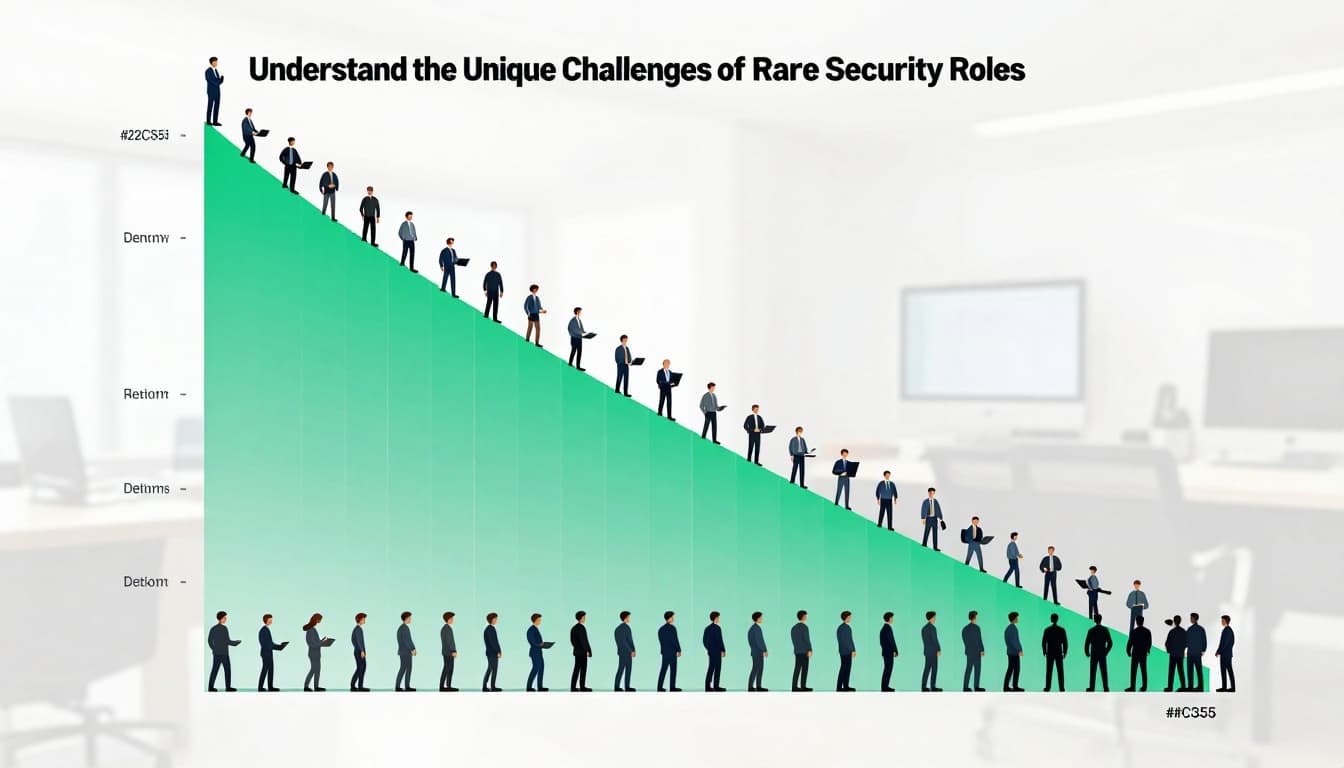
Rare roles fail when teams use a generic security job post. A cloud security architect is not the same as a SOC analyst. A product security engineer is not the same as a general app developer.
Recent 2026 market data still points to heavy demand for cloud and AI skills, plus a lasting shortage of experienced security talent. That means the usual “post and wait” model works poorly, especially for teams hiring in finance, healthcare, manufacturing, and SaaS. For a current market snapshot, see 2026 cybersecurity jobs data.
The fix starts with a narrower business problem. What risk are you trying to lower? What must the person ship in the first 6 months? If you can’t answer that, candidates will read the role as vague.
If the role takes 90 days to explain, the hiring plan is already too loose.
Start with a role scorecard, not a job ad
A good pipeline begins with a scorecard. It tells hiring teams what success looks like, what can be taught, and what cannot.
For mid-market teams, this may sit with one recruiter and one hiring manager. In enterprise, add HR, finance, and a security leader early. That keeps pay bands, scope, and level aligned before sourcing starts. The NIST employer guide on building your own talent pipeline is a useful model here.
A simple scorecard usually has three parts. First, the business outcome. Second, the core skills. Third, the proof you want in interview work.
| Role | Outcome to hire for | Adjacent backgrounds to consider | Proof to ask for |
|---|---|---|---|
| Detection engineer | Reduce alert noise and improve detections | SOC analyst, threat hunter, SIEM engineer | Write a detection for sample logs |
| Cloud security architect | Set guardrails across cloud platforms | Cloud engineer, DevOps lead, infrastructure architect | Review a landing zone design |
| Product security engineer | Lower risk in the SDLC | Software engineer, AppSec analyst, QA automation lead | Threat model a feature |
| OT/ICS security expert | Protect plant systems without stopping operations | Network engineer, controls engineer, plant IT | Walk through an incident scenario |
That table does two things. It gives recruiters search terms, and it gives managers a fair way to compare people from different paths.
Recruit from adjacent backgrounds and inside the company
The best rare security hires often come from close neighbors. A great detection engineer may have started in a SOC. A strong product security engineer may have spent years writing code. An OT/ICS specialist may come from plant operations or industrial networking.
The same idea works inside your company. Look at cloud engineers, developers, network admins, incident responders, and privacy staff. They already know your systems, your culture, and your risk profile. That shortens ramp time and cuts hiring risk.

The Business Roundtable cybersecurity workforce playbook makes the same point. Open more entry points, then give people a path forward.
A practical internal mobility path can look like this:
- Pair a security mentor with a high-potential engineer for 90 days.
- Give that person one real project, not a training-only assignment.
- Fund one certification or lab path tied to the next role.
- Publish the move as a normal career step, not a one-off exception.
This matters because rare roles are not only about sourcing. They’re about growing supply before the market forces your hand.
Cut time-to-fill without lowering the bar
Speed matters, but only if the bar stays clear. Too many teams add speed by skipping rigor. That usually backfires.
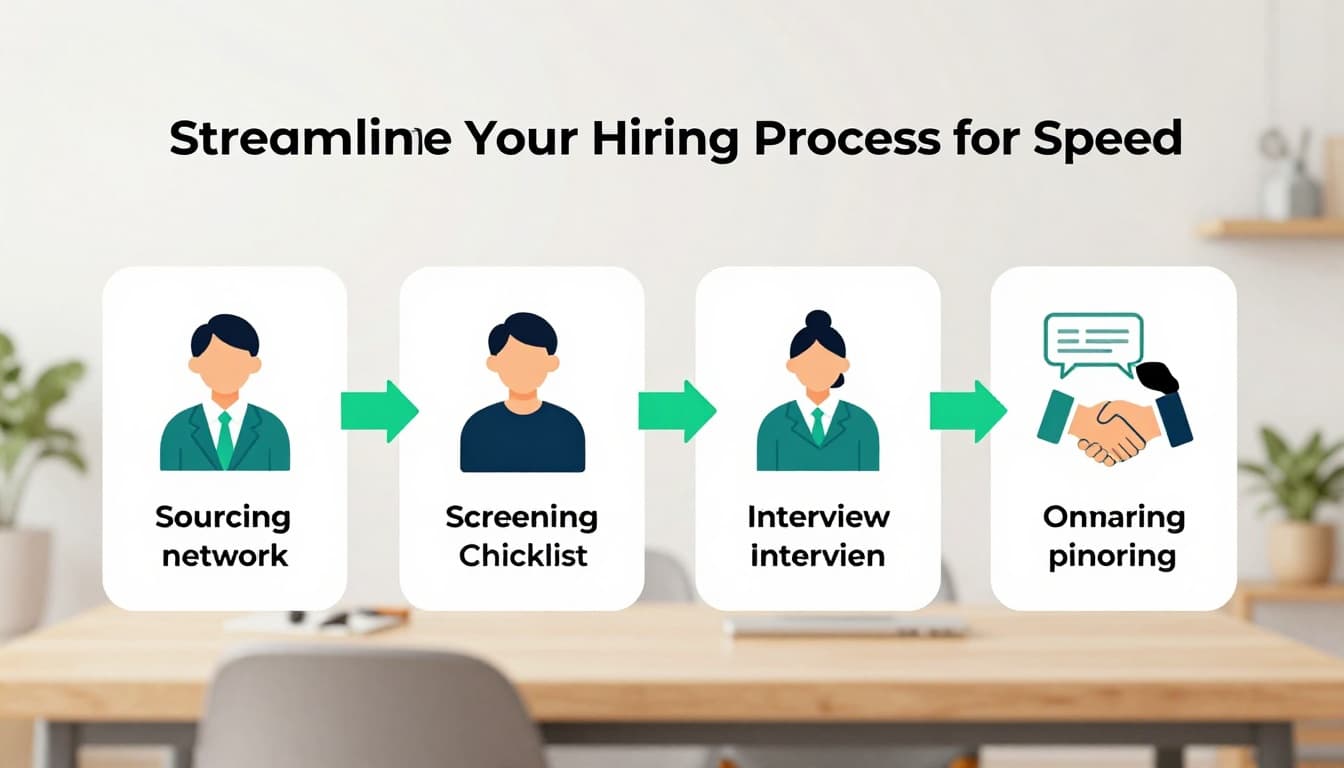
Instead, reduce friction in the process. Pre-approve salary bands. Cut interview loops to the people who truly need to meet the candidate. Use one strong work sample instead of five loose chats. Then set a feedback deadline of 24 hours after every interview.
For rare roles, a work sample should match the job. Ask a cloud security architect to review an IAM design. Ask a malware analyst to explain code behavior. Ask a product security engineer to threat model one feature. Keep the task short, and score it with a simple rubric.
That rubric should test three things. Can the person spot risk? Can they explain tradeoffs? Can they work with non-security teams? If the answer is yes, you have a hire worth moving forward.
When the search has already gone cold, a specialist partner can help reset the plan without wasting more weeks. Book a Discovery Call with Bud Consulting if you need support on hard-to-fill senior security roles.
Keep the pipeline alive after the hire
A pipeline dies when it only exists during open requisitions. The best teams keep warm candidates, silver medalists, internal prospects, and alumni in one shared view.
That view should track a few things. Where each person came from. Which role family they fit. What skill gap still exists. And when to re-engage them.
The CSET study on the cybersecurity workforce pipeline is a good reminder that pipeline health is a systems problem. If you only watch time-to-fill, you miss the bigger picture.
Instead, watch these signals:
- Time from first touch to interview.
- Interview-to-offer ratio by role family.
- Percentage of hires from adjacent backgrounds.
- Internal move rate into security roles.
- 6-month retention for rare hires.
Those numbers tell you whether the pipeline is growing or just reacting.
Rare security hiring will stay competitive through 2026 and beyond. The teams that win won’t be the ones with the loudest job posts. They’ll be the ones with clear role scorecards, wider entry points, and a process that moves fast without getting sloppy.
A security talent pipeline is not a one-time fix. It’s the structure that keeps hard-to-find expertise within reach when the next urgent role opens.