table of contents
Regulated industries face constant pressure. Fines hit millions for breaches in finance or healthcare. You know the stakes. A weak security team structure leaves gaps that regulators spot fast.
Teams often grow without a plan. That leads to silos and missed threats. This article breaks down practical designs for small, mid-market, and enterprise setups. You’ll see tradeoffs, real functions like SecOps and GRC, and steps for audit readiness.
Start with basics that fit your scale. Then build governance that holds up under scrutiny.
Why Security Team Structures Matter Now
Regulations demand proof of control. HIPAA in healthcare requires patient data safeguards. Finance follows FFIEC guidelines on IT management. Poor structures fail audits because accountability blurs.
Centralized leadership fixes this. One leader pulls in data from cyber, physical, and compliance groups. In 2026, unified systems connect alerts across departments. This setup catches fraud or ransomware early.
Consider banks. Separate teams mean slow responses to wire fraud. A solid structure shares intel in real time. Hospitals benefit too. Patient records stay safe when IAM and privacy align.
Tradeoffs show up here. Lean teams save costs but risk overload. Mature ones scale well yet add complexity. Pick based on revenue and threat level.
The FFIEC IT Examination Handbook stresses CISO independence. FFIEC guidance on IT management notes CISOs report to boards, not just IT. This avoids conflicts.
Zero Trust fits 2026 trends. Check every access. AI spots patterns humans miss. Yet without clear roles, these tools sit idle.
Your structure must document decisions. Regulators want trails. Cross-functional ties reduce risk. Teams that coordinate pass audits smoother.
Lean Structures for Small Teams
Small organizations need simple setups. A CISO leads with two direct reports: one SecOps analyst and one compliance officer. This covers basics without bloat.
The CISO owns risk strategy. They align with regs like GLBA for finance or HITRUST for healthcare. The analyst handles monitoring and incidents. Compliance focuses on docs and audits.
Costs stay low. No dedicated SOC yet. Use managed services for 24/7 eyes. Tradeoff: limited depth. One breach overwhelms the analyst.
Reporting matters. CISO goes straight to execs or board. This builds authority. In government contractors, CMMC demands this clarity.
Here’s a basic view of that hierarchy.
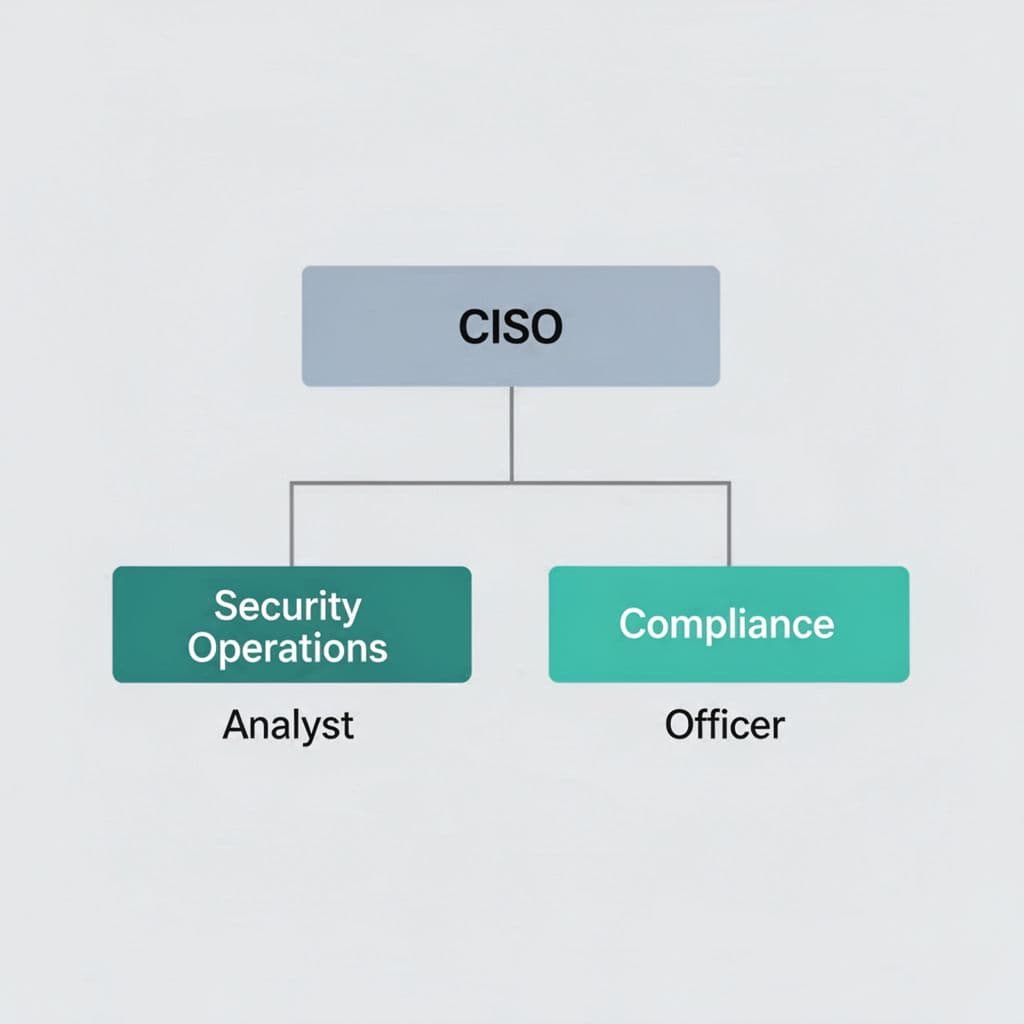
Daily work splits even. Analyst tunes alerts from cloud tools. Compliance maps controls to regs. CISO reviews quarterly.
Scale slowly. Add cloud security tasks to the analyst first. Document everything. Auditors check for gaps.
This works for firms under $50M revenue. It reduces risk 40% over ad-hoc teams, per industry benchmarks. Yet watch burnout. Cross-train to cover leaves.
Mid-Market Security Team Designs
Growth brings more threats. Mid-market teams (50-500 people) expand to five roles. CISO oversees a SecOps lead with two analysts, plus GRC specialist and IAM engineer.
SecOps lead runs monitoring. Analysts triage alerts. GRC handles policy and vendor risk. IAM locks down access.
Balance shines here. In-house SOC starts small. Outsource IR for big incidents. Tradeoff: higher headcount costs money. Savings come from fewer breaches.
Finance examples fit insurance firms. Third-party risk grows with vendors. GRC specialist audits them yearly.
Visualize the flow.
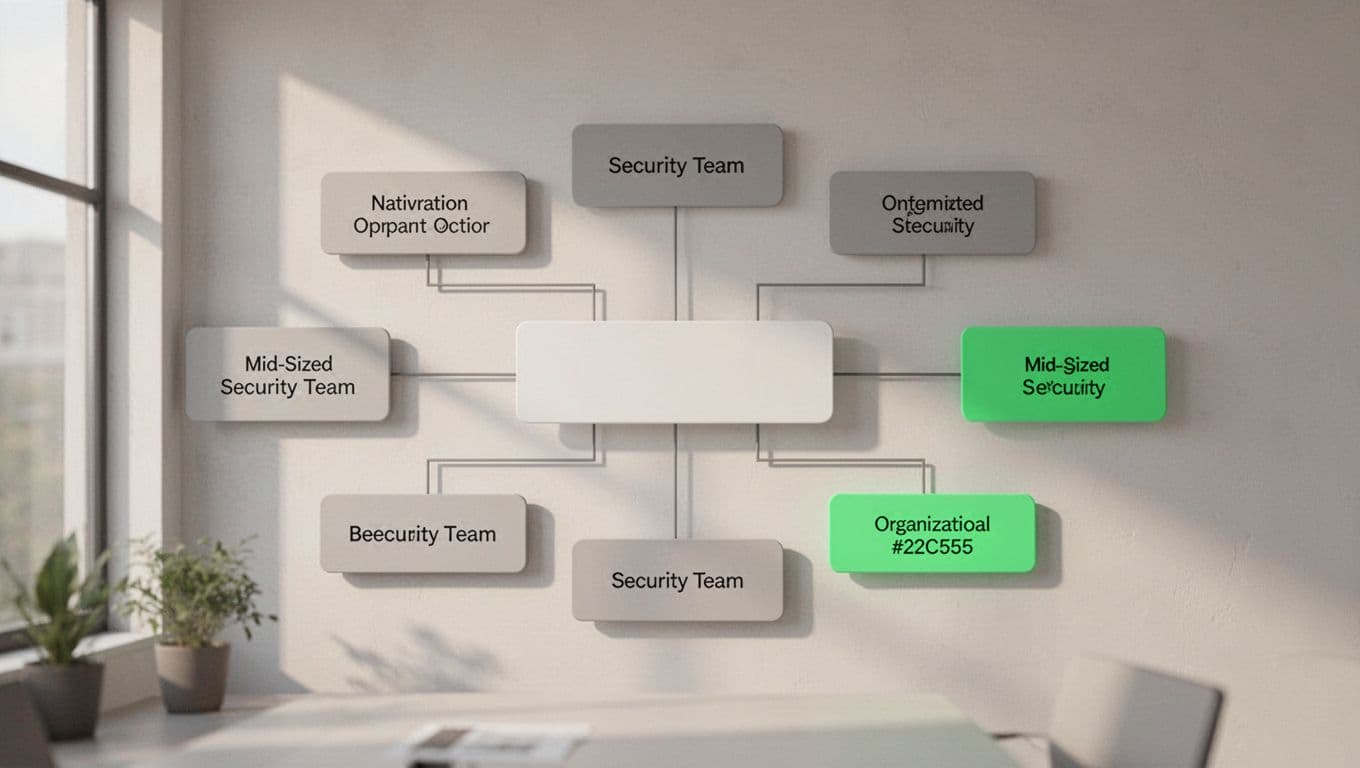
CISO meets business units weekly. This ties security to ops. Healthcare adds privacy duties to GRC. Regs like CCPA demand it.
2026 trends push AI triage. Analysts focus on response. Cloud security folds into IAM. Document handoffs clearly.
Common pitfall: siloed tools. Unify with SIEM platforms. This cuts alert fatigue 30%.
Hire versatile staff. One analyst covers AppSec basics. Audit trails prove coordination. Boards see value in risk reports.
Enterprise Security Organizations
Large firms need branches. CISO reports to a risk exec. Teams split into SecOps/SOC, AppSec, CloudSec, IAM, GRC, IR, and Privacy.
SecOps runs the SOC with tiers: analysts, hunters, responders. AppSec embeds in dev. CloudSec governs AWS or Azure.
Scale demands this. Thousands of endpoints mean dedicated roles. Tradeoff: coordination overhead. Use RACI matrices to clarify.
Banking mirrors Treasury models. Treasury report on financial sector roles shows cyber policy under risk leads.
See the full spread.
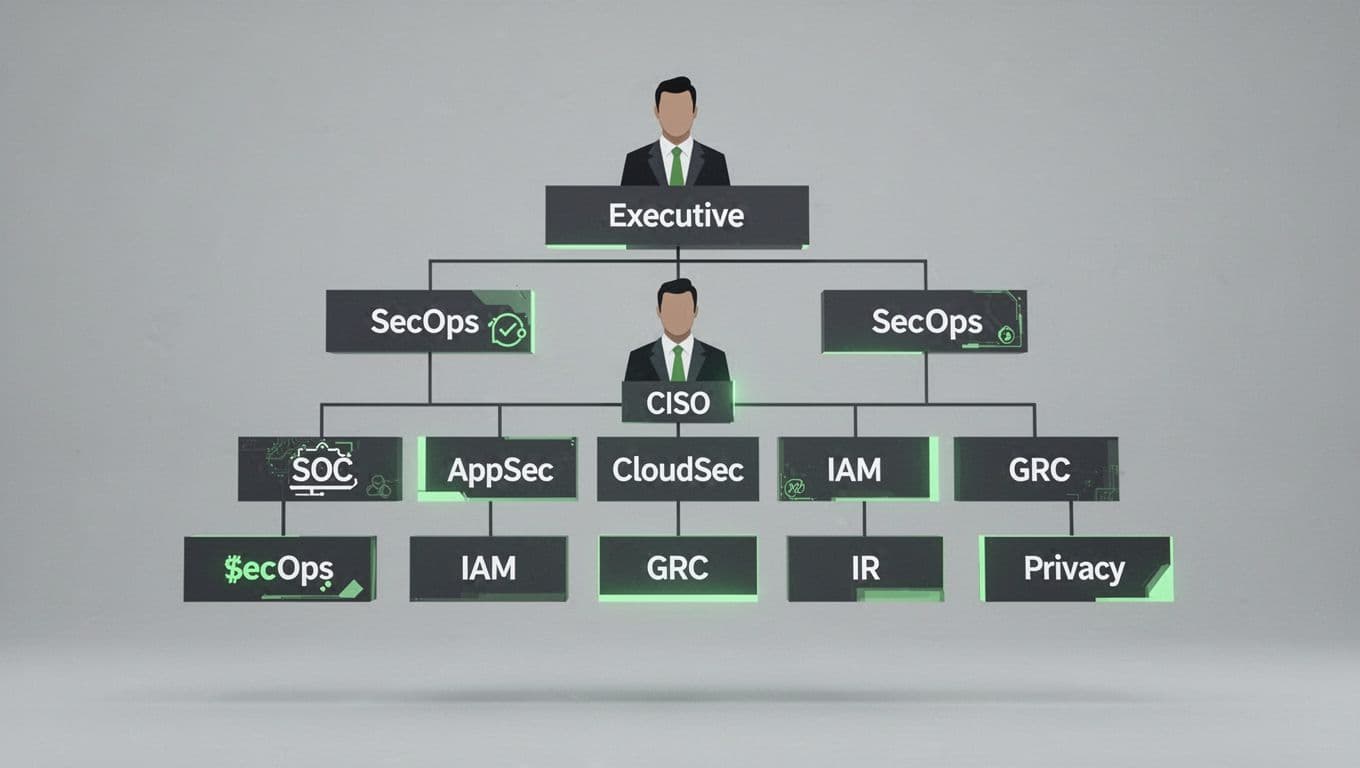
IR drills quarterly. Privacy handles GDPR overlaps. GRC tracks third-parties. CISO dashboards go to board monthly.
Government contractors layer CISA influences. CISA organizational chart inspires resilience focus.
AI augments SOC. Prompt engineers tune models. Zero Trust spans IAM and CloudSec.
Documentation peaks here. Automated reports feed audits. Cross-functional councils meet biweekly.
Organizing Key Security Functions
Functions define your structure. SecOps monitors threats. Start with a lead, scale to tiers.
IAM prevents unauthorized access. Dedicate an engineer mid-market up. Tie to HR for onboarding.
GRC builds policy. Specialists map to regs like SOX or NIST. They own vendor assessments.
AppSec shifts left in dev. Embed advisors. CloudSec audits configs daily.
IR plans responses. Tabletop with business units. Privacy integrates data flows.
SEI outlines these under CISO. SEI on CISO organizations lists engineering, ops, and more.
| Function | Small Team Role | Enterprise Leads |
|---|---|---|
| SecOps | Analyst covers | SOC manager + tiers |
| IAM | CISO handles | Dedicated team |
| GRC | Compliance officer | Policy + risk specialists |
| AppSec | Outsource | Dev embeds |
| CloudSec | Analyst tasks | Full audits |
| IR | Managed service | Drills + response |
| Privacy | GRC add-on | Standalone |
This table shows growth paths. Small teams outsource; enterprises internalize. Takeaway: align to risk profile.
Third-party risk sits in GRC. Annual questionnaires plus continuous monitoring cut exposures.
Governance and Audit Readiness
Governance sets tone. Board oversight ensures accountability. CISO presents risks quarterly.
Audit prep starts with docs. Policies, procedures, evidence logs. Cross-functional groups review.
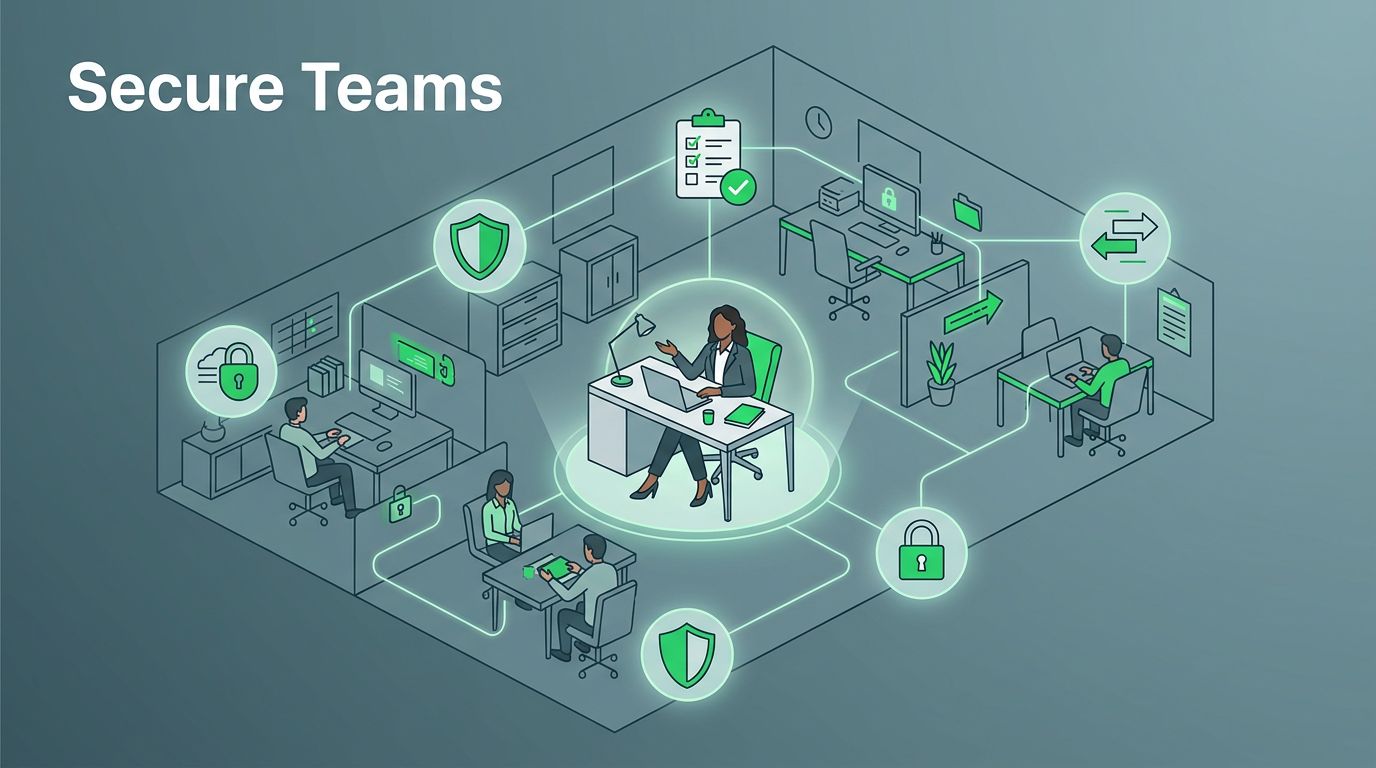
Teams meet often. IT, legal, ops join. This proves coordination.
Picture a typical session.

CSO Online on CISO reporting notes influence trumps lines. Yet structure aids proof.
2026 regs like SEC rules demand board reports. Use dashboards. Simulate audits yearly.
Risk reduction follows. Clear roles mean fast fixes. Fines drop when trails exist.
Tradeoffs in Team Design Choices
Lean saves budget. Mature adds resilience. Weigh revenue against threats.
Small: Quick decisions, high burnout risk.
Mid: Balance, skill gaps possible.
Enterprise: Depth, bureaucracy creeps.
Centralize reporting. IANS Research on security orgs shows growth patterns.
Hire for culture. Bud Consulting specializes here. Book a Discovery Call with Bud Consulting to fill gaps in IAM or leadership.
Common pitfalls: IT dominance. Move CISO out. Overstaff early. Grow with need.
Test structures. Annual reviews adjust.
Conclusion
Strong security team structures cut risks and ease audits. Start lean, scale smart. Centralize leadership, document flows.
Finance and healthcare thrive with clear roles in SecOps, GRC, and beyond. Tradeoffs favor your stage.
Build now. Regulators wait for no one. Your team sets the pace.